
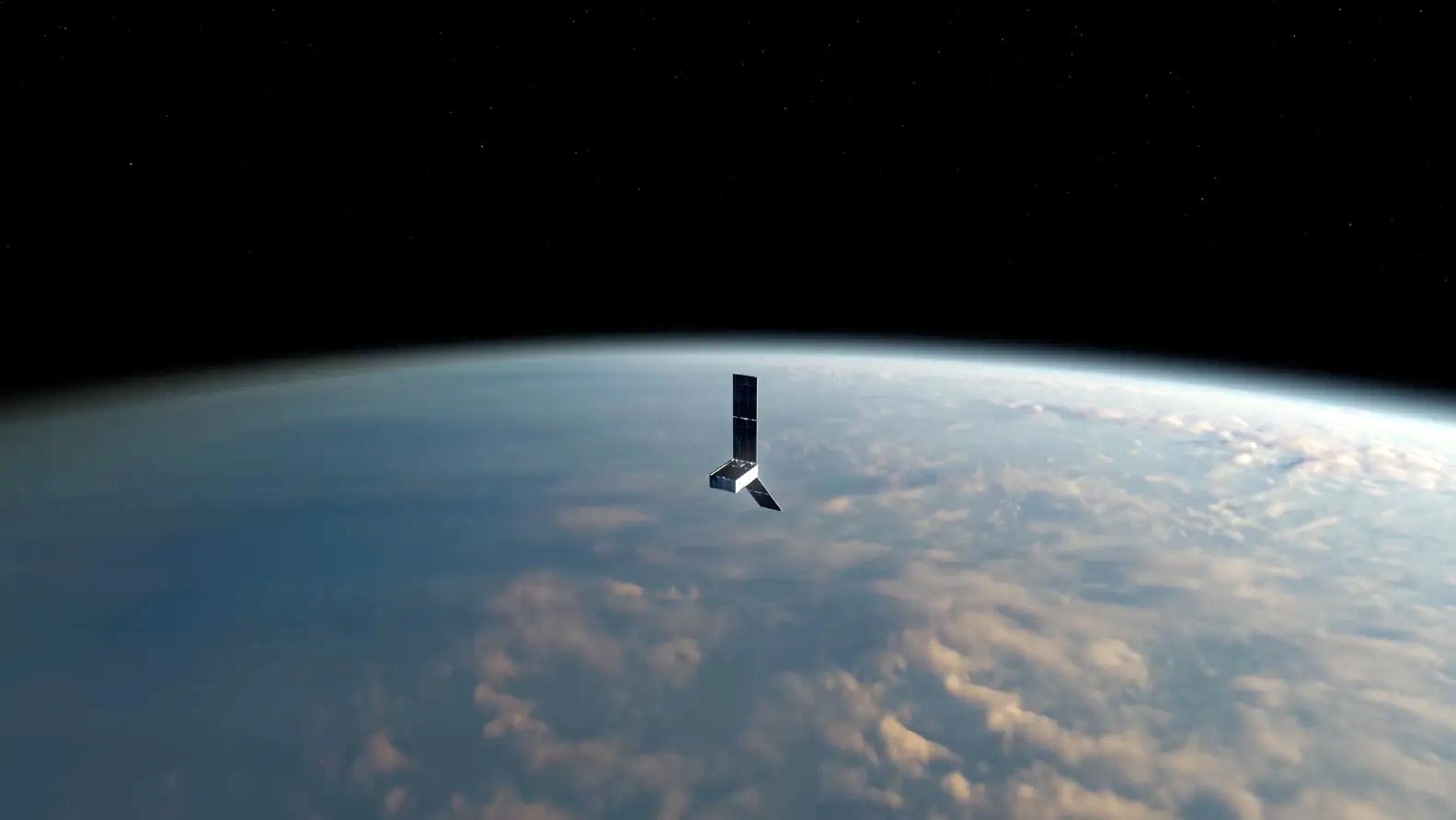
NASA’s PREFIRE mission, now extended through 2026, is shifting from the poles to a global view.
Its twin CubeSats measure far-infrared radiation, uncovering how ice, clouds, and moisture shape Earth’s heat balance—vital for predicting storms and climate shifts.
NASA Extends PREFIRE Mission to 2026
NASA’s PREFIRE (Polar Radiant Energy in the Far-InfraRed Experiment) mission has been extended until September 2026, and its scope is expanding from a polar focus to monitoring the entire planet. Using two CubeSats, each no larger than a shoebox, the mission studies how water vapor, clouds, and other parts of Earth’s system trap heat and prevent it from escaping into space. Insights from these measurements can improve forecasts, including predictions of storm activity and the severity of extreme weather.
Since its launch in spring 2024, PREFIRE has been examining how much heat Earth sends into space from the Arctic and Antarctic. While the tropics take in the greatest share of the Sun’s energy, winds, storms, and ocean currents carry much of that heat toward the colder polar regions, which receive far less sunlight. Ice, snow, and clouds in these regions then release some of the heat into space, primarily as far-infrared radiation. The difference between the heat absorbed in the tropics and the heat radiated out at the poles strongly influences global temperatures and helps drive Earth’s climate and weather systems.
Cutting-Edge Infrared Instruments Push Boundaries
At the center of PREFIRE are two advanced spectrometers created by NASA’s Jet Propulsion Laboratory in Southern California. These instruments detect light in the far-infrared portion of the electromagnetic spectrum and can sense 10 times more of these wavelengths than any comparable device. The data provides scientists with new details about processes such as the melting and freezing of surface ice, seasonal snow changes, and variations in cloud cover.
“The PREFIRE satellites show that at these longer wavelengths, the amount of radiation going into space can differ from one type of ice to another by as much as 5%,” said Brian Drouin, PREFIRE’s project scientist at JPL. “Measurements that look at the same areas but with shorter wavelengths do not show this difference.”
Expanding From Polar Focus to Global Reach
Although the PREFIRE CubeSats have been gathering data on the entire globe, the science team has concentrated their analysis on Earth’s polar regions for its prime mission. Going forward, they will expand their work to include data from the rest of the world.
“We have the capacity to collect data for the whole world, not just the poles. What we’ll be able to do is look at the size of ice particles in clouds that affect energy exchange between Earth and space,” said PREFIRE’s principal investigator, Tristan L’Ecuyer of the University of Wisconsin–Madison. “We’ll be able to incorporate the data into weather prediction models to improve forecasts and improve our understanding of how moisture circulates, which affects where storms form and how precipitation moves around the world.”
Dual CubeSats Capture Rapid Climate Changes
The satellites are in what’s called an asynchronous near-polar orbit, traveling near the poles with each pass but hours apart from one another. This provides two snapshots of the same area over time, enabling the mission to capture phenomena that occur on short timescales, such as cloud cover’s temporary effects on the temperature of the area beneath it.
More About PREFIRE
NASA’s PREFIRE (Polar Radiant Energy in the Far-InfraRed Experiment) is a pioneering mission designed to measure how Earth radiates heat into space, especially from polar regions where ice, clouds, and snow play a critical role in regulating the planet’s energy balance. The mission uses two shoebox-size CubeSats equipped with advanced spectrometers developed by NASA’s Jet Propulsion Laboratory, which can detect far-infrared wavelengths invisible to other instruments.
The spacecraft were built by Blue Canyon Technologies and launched aboard Rocket Lab USA’s Electron rockets from New Zealand in May and June 2024. Once in orbit, the satellites began collecting global data on heat loss, with a particular emphasis on the Arctic and Antarctic. This information is processed by the University of Wisconsin–Madison, whose researchers integrate it into models to better understand cloud behavior, ice dynamics, and storm development.
Managed by NASA’s Jet Propulsion Laboratory for the agency’s Science Mission Directorate, PREFIRE is expected to sharpen climate science and improve weather forecasting worldwide by revealing the hidden flows of heat that help drive storms, precipitation, and long-term climate patterns.
Never miss a breakthrough: Join the SciTechDaily newsletter.
Follow us on Google and Google News.
2 Comments
Awesome!
Wait, we still have NASA?