
Close Menu
    Facebook X (Twitter) Instagram
    SciTechDaily
    • Biology
    • Chemistry
    • Earth
    • Health
    • Physics
    • Science
    • Space
    • Technology
    Facebook X (Twitter) Pinterest YouTube RSS
    SciTechDaily
    Home»Chemistry»Natural Antifreeze: Ice-Binding Molecules Stop Ice Growth
    Chemistry

    Natural Antifreeze: Ice-Binding Molecules Stop Ice Growth

    By American Institute of PhysicsFebruary 20, 2021No Comments3 Mins Read
    Facebook Twitter Pinterest Telegram LinkedIn WhatsApp Email Reddit
    Share
    Facebook Twitter LinkedIn Pinterest Telegram Email Reddit
    Ice-Biasing Simulations
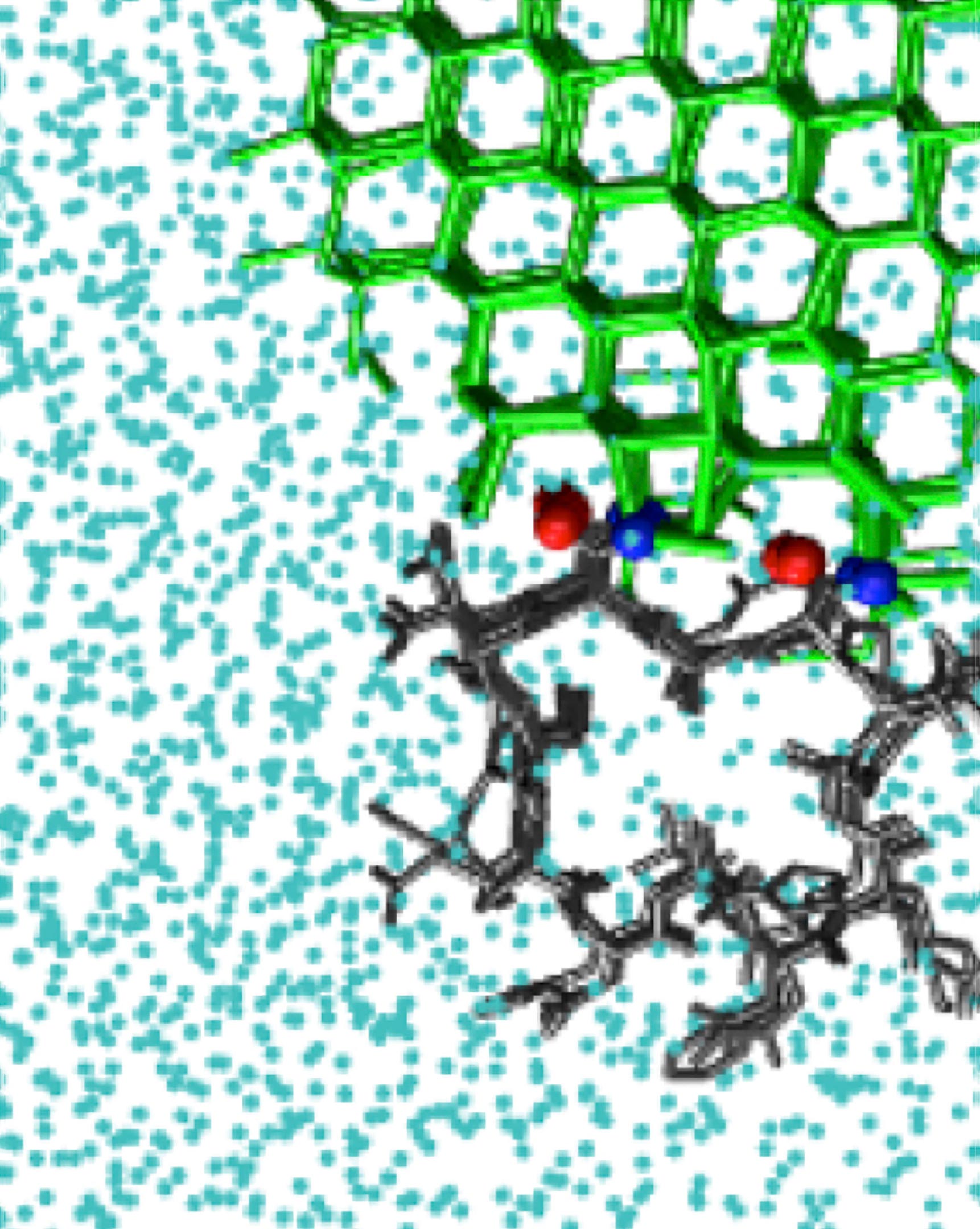
    Ice-biasing simulations can detect the ice-binding site of the hyperactive antifreeze protein from the beetle Tenebrio molitor, TmAFP. Credit: Pavithra M. Naullage

    New Simulations Uncover How Antifreeze Proteins Halt Ice Growth

    Certain molecules bind tightly to the surface of ice, creating a curved interface that can halt further ice growth. Some insects, plants, and sea-dwelling creatures contain protein molecules of this type that act as natural antifreeze agents, allowing the organisms to withstand freezing temperatures.

    In The Journal of Chemical Physics, by AIP Publishing, scientists report a computational method to model ice binding using a biasing technique to drive the formation of ice in the simulation.

    New Simulation Technique Reveals Binding Behavior

    Antifreeze proteins act by binding to an existing interface between ice and liquid water. The resulting curved surface stops the growth of ice. There are also ice-nucleating molecules that catalyze the formation of ice from supercooled liquid water.

    Both phenomena require an understanding of the way that molecules bind to ice. Understanding ice binding is important for applications as diverse as cryopreservation of organs and climate modeling, but no computational methods to efficiently model this phenomenon have existed to date.

    “The central advantage of the ice-biasing simulation approach is that it simultaneously identifies the ice-binding surface, the face of ice it binds to, and the mode of binding,” said author Valeria Molinero.

    All-Atom vs. Coarse-Grained Models

    The investigators created two types of models. One type is an all-atom model that contains all the atoms in the liquid and ice phases of water as well as in the antifreeze-type molecule. The other type of model studied is called a coarse-grained model, which saves computational resources by blending atoms together into simpler structures.

    The study looked at a number of molecules that bind ice, including polyvinyl alcohol, a synthetic ice-recrystallization inhibitor, as well as natural antifreeze proteins, such as one from the beetle Tenebrio molitor. Proteins present a simulation challenge, since they have very small surfaces that bind ice. This limits the size of the ice crystal they can bind.

    Uncovering Multiple Binding Surfaces

    Some systems possess more than one location where ice can bind. This is the case for the natural antifreeze protein in the sea-ice diatom Frailariopsis cylindrus. To determine whether a protein like this has more than one ice-binding surface, IBS, the investigators developed a method they dubbed “cap and repeat.”

    “In this strategy, we first performed a biased simulation to detect an IBS. Then, we cap that IBS to prevent ice formation on it and perform a second biasing simulation to find out whether ice forms in other sites,” said Molinero.

    The methods developed in this study show great promise for a number of applications, including finding molecules to protect frozen tissues during storage, furthering the understanding of natural antifreeze proteins, and in climate models, where ice nucleation in the atmosphere plays a key role.

    Reference: “Computationally efficient approach for the identification of ice-binding surfaces and how they bind ice” by Pavithra M. Naullage, Atanu K. Metya and Valeria Molinero, 3 November 2020, Journal of Chemical Physics.
    DOI: 10.1063/5.0021631

    Never miss a breakthrough: Join the SciTechDaily newsletter.
    Follow us on Google and Google News.

    American Institute of Physics Molecular Physics
    Share. Facebook Twitter Pinterest LinkedIn Email Reddit

    Related Articles

    Scientists Thought They Made a Mistake – But It Led to a Groundbreaking “Molecular Einstein” Discovery

    The Secrets of Life’s Most Essential Molecule: Scientists Unravel Water’s Mysterious Anomalies

    Electron Secrets at the Heart of Clean Energy Breakthrough

    Opposites Attract, Likes Repel? Scientists Overturn Fundamental Principle of Physics

    Redefining Molecular Physics: The Surprising Phenomenon of Kinetic Asymmetry

    Illuminating Science: X-Rays Visualize How One of Nature’s Strongest Bonds Breaks

    New Inorganic Material Discovered With Lowest Thermal Conductivity Ever Reported

    Breakthrough in Stabilization of Bio-Inspired Solar Energy Harvesting Materials

    Another Martini for Better Simulations: General Purpose Force Field for Coarse-Grained Molecular Dynamics

    Leave A Reply Cancel Reply

    • Facebook
    • Twitter
    • Pinterest
    • YouTube

    Don't Miss a Discovery

    Subscribe for the Latest in Science & Tech!

    Trending News

    Millions Take These IBS Drugs, But a New Study Finds Serious Risks

    Scientists Unlock Hidden Secrets of 2,300-Year-Old Mummies Using Cutting-Edge CT Scanner

    Bread Might Be Making You Gain Weight Even Without Eating More Calories

    Scientists Discover Massive Magma Reservoir Beneath Tuscany

    Europe’s Most Active Volcano Just Got Stranger – Here’s Why Scientists Are Rethinking It

    Alzheimer’s Symptoms May Start Outside the Brain, Study Finds

    Millions Take This Popular Supplement – Scientists Discover a Concerning Link to Heart Failure

    The Universe Is Expanding Too Fast and Scientists Can’t Explain Why

    Follow SciTechDaily
    • Facebook
    • Twitter
    • YouTube
    • Pinterest
    • Newsletter
    • RSS
    SciTech News
    • Biology News
    • Chemistry News
    • Earth News
    • Health News
    • Physics News
    • Science News
    • Space News
    • Technology News
    Recent Posts
    • Doctors Surprised by the Power of a Simple Drug Against Colon Cancer
    • Why Popular Diabetes Drugs Like Ozempic Don’t Work for Everyone: The “Genetic Glitch”
    • Scientists Create Improved Insulin Cells That Reverse Diabetes in Mice
    • Scientists Stunned After Finding Plant Thought Extinct for 60 Years
    • A Common Diabetes Drug May Hold the Key to Stopping HIV From Coming Back
    Copyright © 1998 - 2026 SciTechDaily. All Rights Reserved.
    • Science News
    • About
    • Contact
    • Editorial Board
    • Privacy Policy
    • Terms of Use

    Type above and press Enter to search. Press Esc to cancel.