
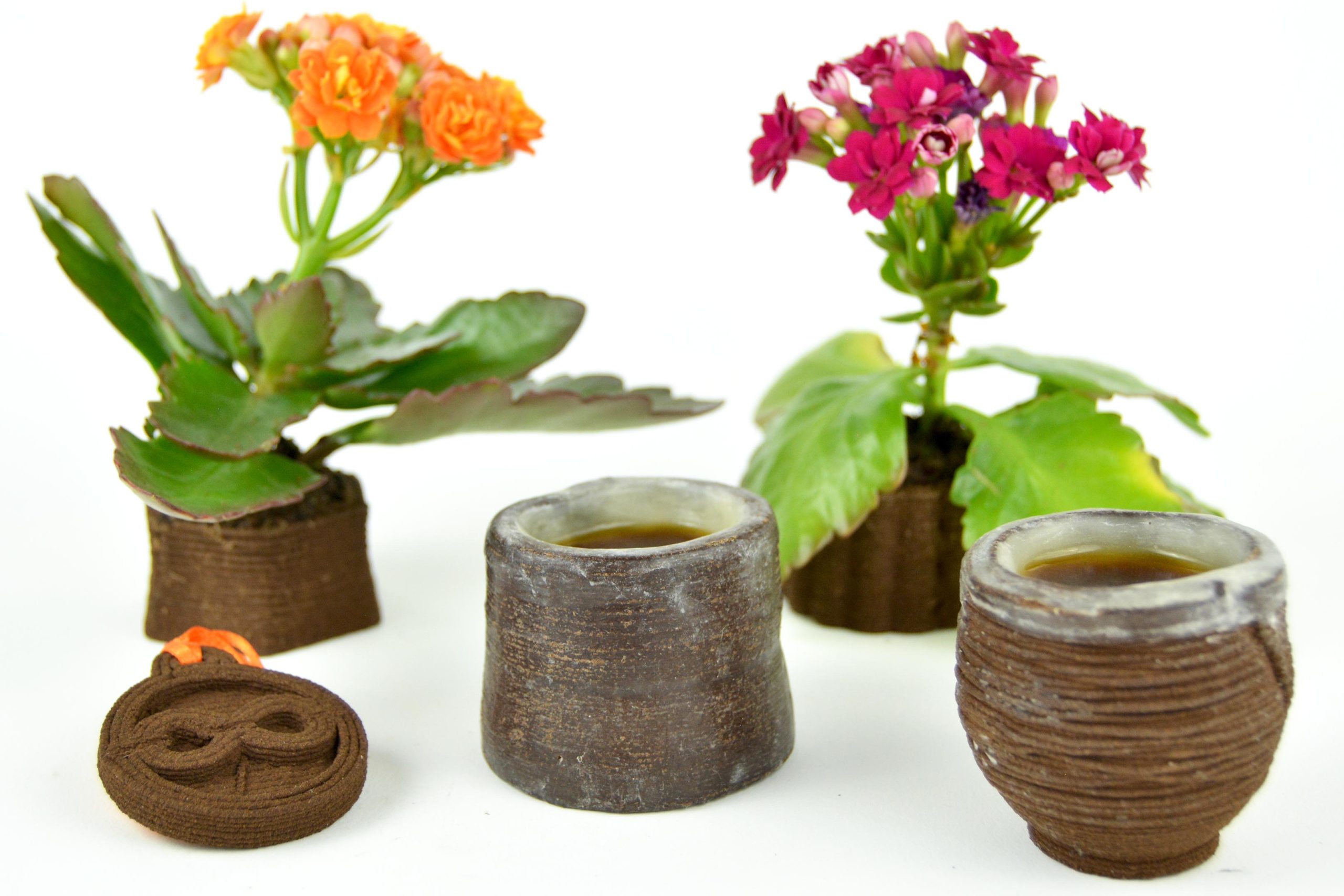
A new study highlights the potential of using old coffee grounds for 3D printing. Researchers developed a method that combines coffee grounds with sustainable ingredients to print items ranging from jewelry to espresso cups. The innovation began as a solution to manage excess coffee waste during the COVID-19 pandemic.
Coffee can do a lot of things: Wake you up, warm you up, and lessen that existential dread. It could also help reduce the waste from 3D printing, according to a new study.
That’s the vision behind a new project led by Michael Rivera, an assistant professor in the ATLAS Institute and Department of Computer Science at the University of Colorado Boulder. He and his colleagues have developed a method for 3D printing a wide range of objects using a paste made entirely out of old coffee grounds, water, and a few other sustainable ingredients.
The team has already experimented with using coffee grounds to craft jewelry, pots for plants, and even, fittingly, espresso cups. The technique is also simple enough that it will work, with some modifications, on most low-cost, consumer-grade 3D printers.
“You can make a lot of things with coffee grounds,” Rivera said. “And when you don’t want it anymore, you can throw it back into a coffee grinder and use the grounds to print again.”
The group presented its findings this summer at the Association for Computing Machinery’s Designing Interactive Systems conference in Pittsburgh.
For Rivera, the project is part of his mission to make 3D printing more sustainable—allowing artists, designers, engineers and more to quickly make graspable prototypes and other household objects without adding to landfills.
“Our vision is that you could just pick up a few things at a supermarket and online and get going,” Rivera said.
Good Ideas Come From Caffeine
That vision predictably began in a coffee shop.
When Rivera was a graduate student at Carnegie Mellon University, he often worked out of a café in Pittsburgh called Arriviste Coffee Roasters. The coffee shop contracted with a local group to pick up its used coffee grounds for composting, but during the COVID-19 pandemic, that wasn’t possible. The waste began to pile up.
“The owner told me, ‘I don’t know what to do with it. So I just throw it away,’” said Rivera, who joined CU Boulder as a postdoctoral researcher in 2022. “I looked at the grounds and said, ‘Maybe I can do something with them.’”
Rivera explained that most consumer 3D printers on the market today print with thermoplastics of some kind. The most common is polylactic acid, or PLA. This material is, theoretically, compostable, but only a fraction of composting facilities will accept it.
“If you throw it in a landfill, which is where the majority of PLA ends up, it will take up to 1,000 years to decompose,” Rivera said.
He realized he could solve several problems at the same time: Reduce plastic waste, find something to do with all those used grounds and enjoy some warm cups of coffee in the process.
Grounds for Celebration
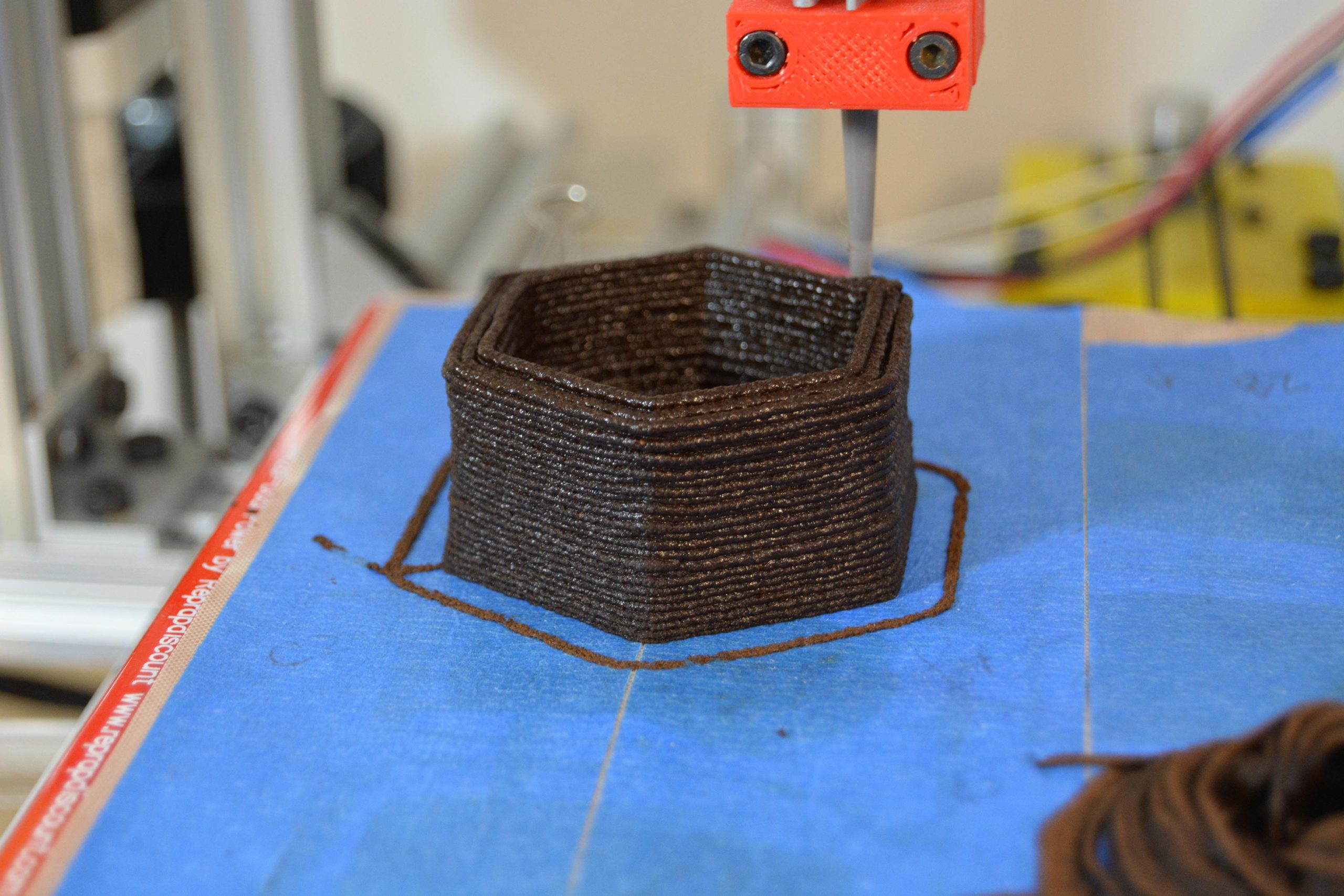
The team’s method is pretty simple, Rivera noted: He and his colleagues mix dried coffee grounds with two other powders that they buy online: cellulose gum and xanthan gum. Both are common additives in food and degrade easily in a compost bin. Next, the researchers mix in water.
“You’re pretty much shooting for the consistency of peanut butter,” Rivera said.
You can’t load that ooze directly into a 3D printer. First, Rivera does a little jury-rigging, modifying a printer with plastic tubes and a syringe filled with coffee paste. But the group’s creations are surprisingly hardy. When dried, the coffee grounds material is about as tough as unreinforced concrete.
“We’ve made objects with a ton of usage,” Rivera said. “We’ve dropped them, and they haven’t broken yet.”
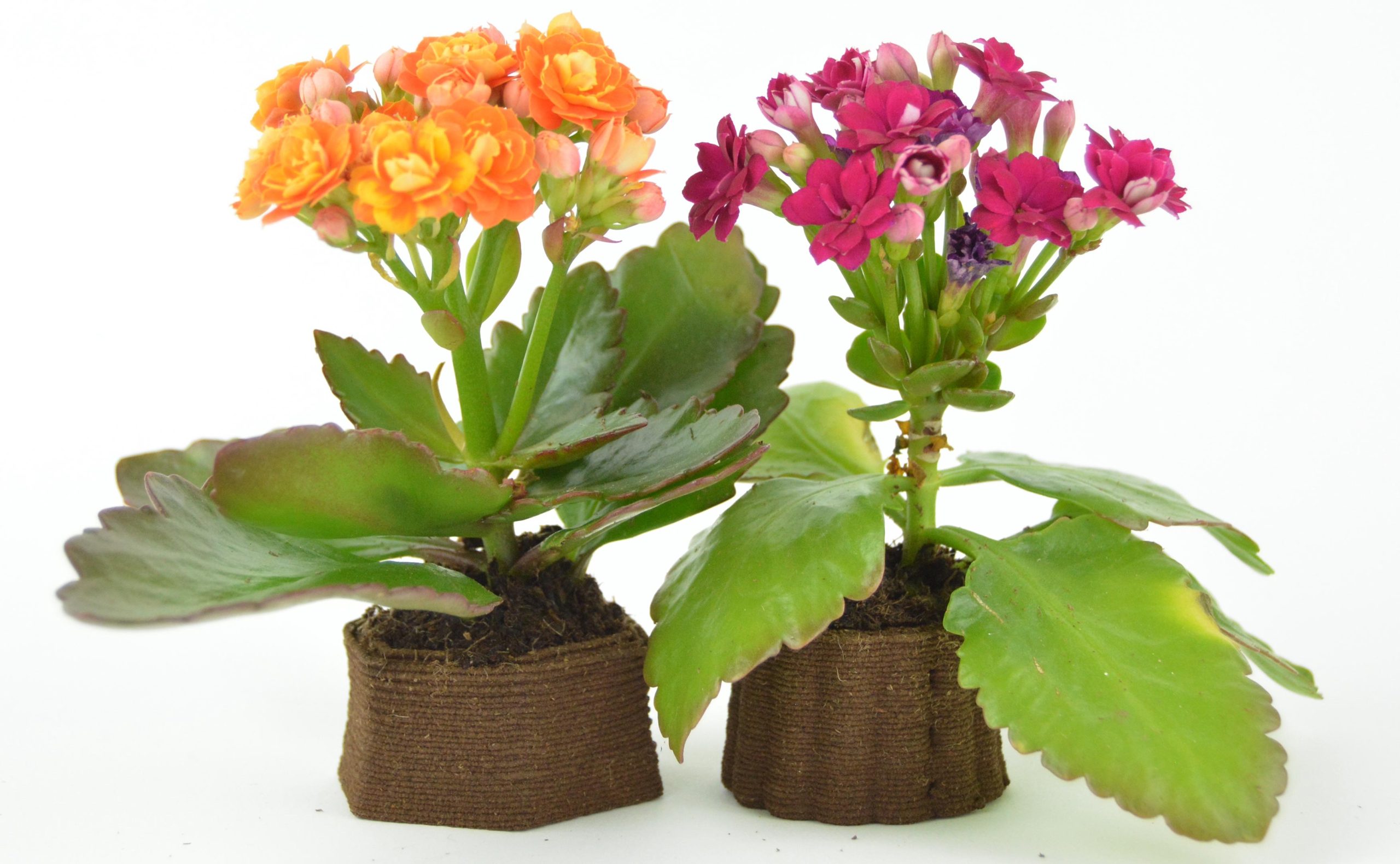
He sees a lot of potential for turning coffee grounds into tangible objects. Rivera, for example, has made small planters out of coffee grounds, which can be used to grow seedlings for acid-loving plants like tomatoes. Once the plants get tall enough, you can plant them, pot and all, in the soil. The team can also add activated charcoal to its grounds to make parts that can conduct electricity, such as buttons for sustainable electronics.
Rivera noted that printing with coffee grounds may never become a widespread practice. Instead, he sees the project as a step toward discovering other kinds of sustainable 3D printing materials that could, one day, replace plastics.
As it turns out, you really can achieve anything with coffee.
Reference: “Designing a Sustainable Material for 3D Printing with Spent Coffee Grounds” by Michael L. Rivera, S. Sandra Bae and Scott E. Hudson, 10 July 2023, DIS ’23.
DOI: 10.1145/3563657.3595983
Never miss a breakthrough: Join the SciTechDaily newsletter.
Follow us on Google and Google News.
1 Comment
My grandma had the right idea for coffee grounds -she put them into her garden.