
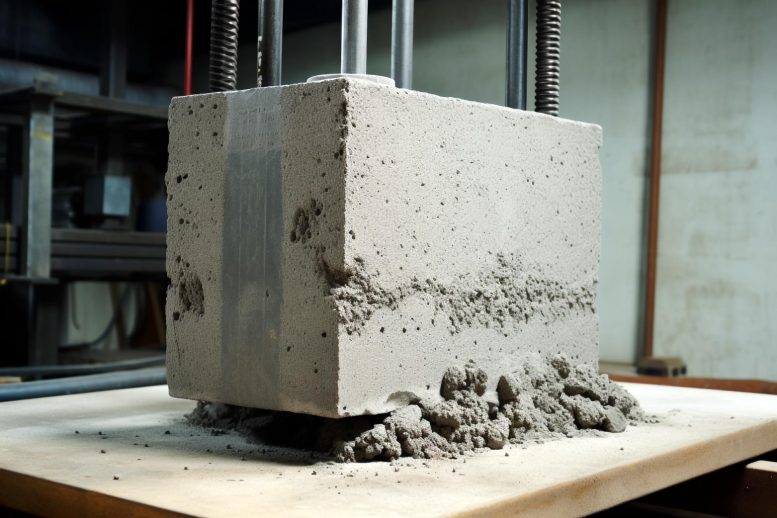
Scientists have developed a technique to strengthen concrete using used coffee grounds, potentially reducing waste in landfills and decreasing reliance on natural sand in construction.
Engineers in Australia have found a way of making stronger concrete with roasted used coffee grounds, to give the drink-additive a “double shot” at life and reduce waste going to landfills.
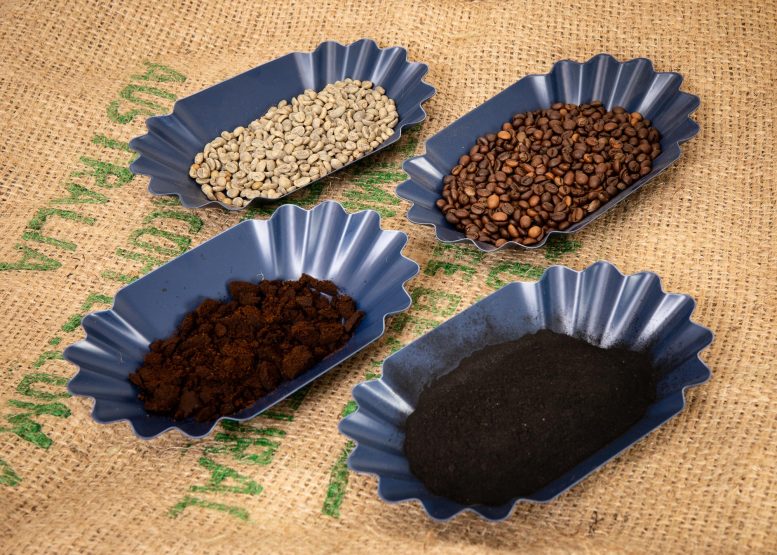
Lead author Dr. Rajeev Roychand from RMIT University said the team developed a technique to make concrete 30% stronger by turning waste coffee grounds into biochar, using a low-energy process without oxygen at 350 degrees Celsius.
“The disposal of organic waste poses an environmental challenge as it emits large amounts of greenhouse gases including methane and carbon dioxide, which contribute to climate change,” said Roychand, from the School of Engineering.
Australia generates 75 million kilograms of ground coffee waste every year – most of it goes to landfills. Globally, 10 billion kilograms of spent coffee is generated annually.
Groundbreaking Use of Coffee Grounds
Published in the Journal of Cleaner Production, the study by RMIT engineers is the first to prove that waste coffee grounds can be used to improve concrete.
“The inspiration for our work was to find an innovative way of using the large amounts of coffee waste in construction projects rather than going to landfills – to give coffee a ‘double shot’ at life,” said Roychand, a Postdoctoral Research Fellow at RMIT.
“Several councils that are battling with the disposal of organic waste have shown interest in our work.
“They have already engaged us for their upcoming infrastructure projects incorporating pyrolyzed forms of different organic wastes.”
Pyrolysis involves heating organic waste in the absence of oxygen.
Recycling in the Construction Industry
Joint lead author, Dr. Shannon Kilmartin-Lynch, a Vice-Chancellor’s Indigenous Postdoctoral Research Fellow at RMIT, said construction industries around the world could play a role in transforming this waste into a valuable resource.
“Inspiration for my research, from an Indigenous perspective, involves Caring for Country, ensuring there’s a sustainable life cycle for all materials and avoiding things going into landfill to minimize the impact on the environment,” said Kilmartin-Lynch from RMIT’s School of Engineering.
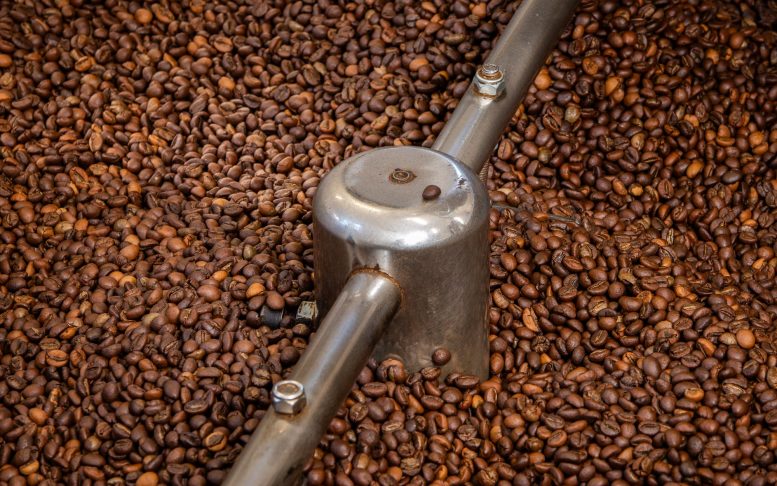
“The concrete industry has the potential to contribute significantly to increasing the recycling of organic waste such as used coffee.
“Our research is in the early stages, but these exciting findings offer an innovative way to greatly reduce the amount of organic waste that goes to landfill.”
Preserving a Precious Natural Resource
Corresponding author and research team leader Professor Jie Li said the coffee biochar can replace a portion of the sand that was used to make concrete.
“The ongoing extraction of natural sand around the world – typically taken from river beds and banks – to meet the rapidly growing demands of the construction industry has a big impact on the environment,” Li said.
50 billion tonnes of natural sand are used in construction projects globally every year.
“There are critical and long-lasting challenges in maintaining a sustainable supply of sand due to the finite nature of resources and the environmental impacts of sand mining,” Li said.
“With a circular-economy approach, we could keep organic waste out of landfills and also better preserve our natural resources like sand.”
Co-researcher Dr. Mohammad Saberian said the construction industry needed to explore alternative raw materials to ensure its sustainability.
“Our research team has gained extensive experience in developing highly optimized biochars from different organic wastes, including wood biochar, food-waste biochar, agricultural waste biochar, and municipal solid-waste biochar, for concrete applications,” Saberian said.
Future Directions
The researchers plan to develop practical implementation strategies and work towards field trials. The team is keen to collaborate with various industries to develop their research.
Reference: “Transforming spent coffee grounds into a valuable resource for the enhancement of concrete strength” by Rajeev Roychand, Shannon Kilmartin-Lynch, Mohammad Saberian, Jie Li, Guomin Zhang and Chun Qing Li, 21 July 2023, Journal of Cleaner Production.
DOI: 10.1016/j.jclepro.2023.138205
RMIT co-authors are Dr. Rajeev Roychand, Dr. Shannon Kilmartin-Lynch, Dr. Mohammad Saberian, Professor Jie Li, Professor Guomin (Kevin) Zhang and Professor Chun-Qing Li.
The authors acknowledge the support from ARUP Australia Pty Ltd, Earth Systems Pty Ltd, and RMIT University, including the Strategic Capability Deployment Fund, Rheology and Materials Characterisation Laboratory, the X-Ray Facility, and the Microscopy and Microanalysis Facility.
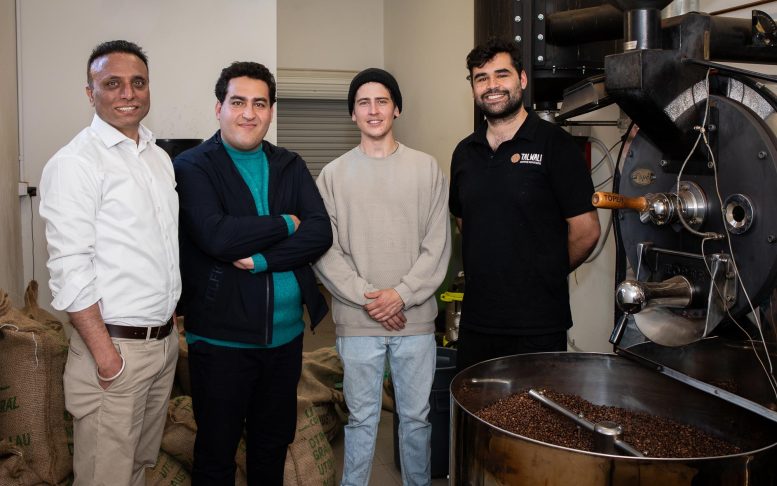
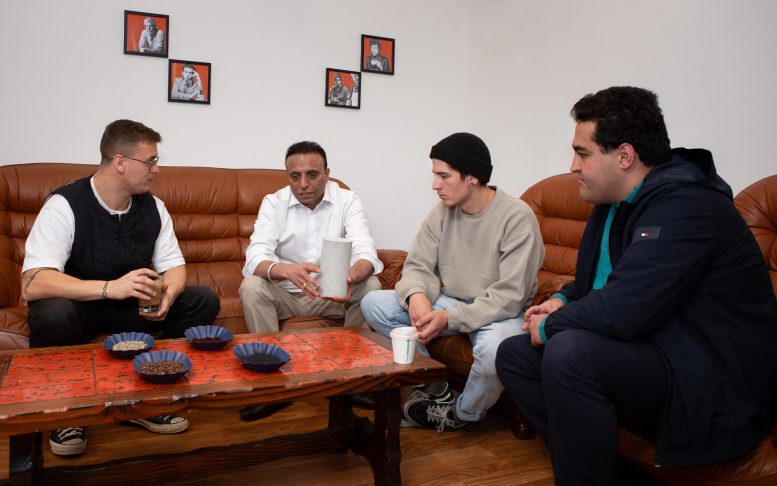
The authors also acknowledge the Indigenous-owned coffee supplier Talwali Coffee Roasters for providing used ground coffee for the research.
Never miss a breakthrough: Join the SciTechDaily newsletter.
Follow us on Google and Google News.
1 Comment
“turning waste coffee grounds into biochar, using a low-energy process without oxygen at 350 degrees Celsius”
How do they heat the grounds to a temperature that high?
How much energy does that take? What are the greenhouse emissions from that process?