
Close Menu
    Facebook X (Twitter) Instagram
    SciTechDaily
    • Biology
    • Chemistry
    • Earth
    • Health
    • Physics
    • Science
    • Space
    • Technology
    Facebook X (Twitter) Pinterest YouTube RSS
    SciTechDaily
    Home»Health»Nerve Repair “Glue” – Molecule Identified for Regulating the Repair of Injured Nerves
    Health

    Nerve Repair “Glue” – Molecule Identified for Regulating the Repair of Injured Nerves

    By University of QueenslandMarch 16, 2022No Comments4 Mins Read
    Facebook Twitter Pinterest Telegram LinkedIn WhatsApp Email Reddit
    Share
    Facebook Twitter LinkedIn Pinterest Telegram Email Reddit
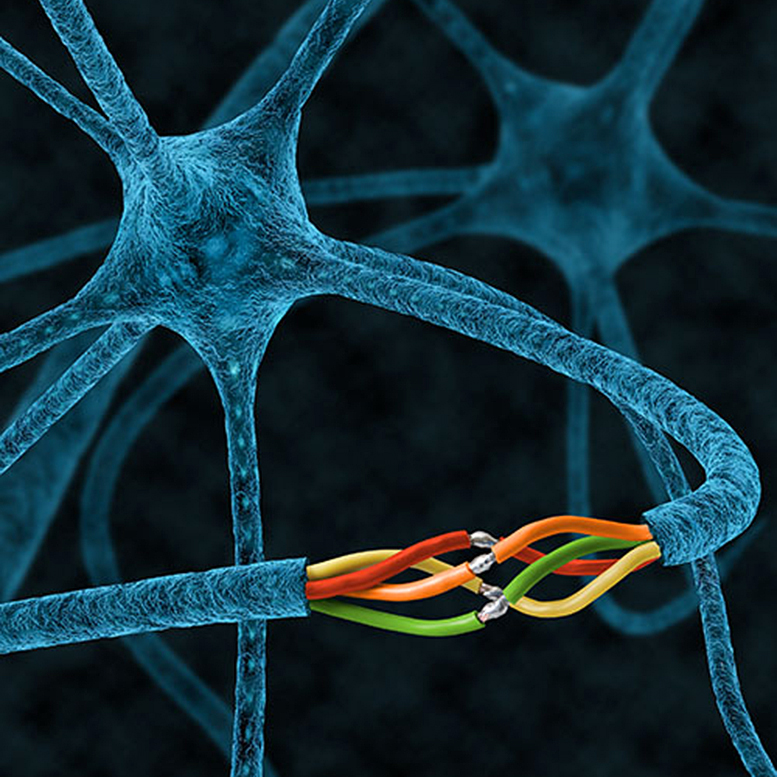
    QBI Nerve Repair
    Injured axons of the nematode C. elegans and other invertebrate species are able to rejoin with their separated segments, preventing degeneration and restoring the original axonal tract in a process known as axonal fusion. Ho et al. identify a metalloprotease of the ADAM family, ADM-4, as a key component necessary for axonal fusion to proceed. They reveal that ADM-4 is activated by the lipid phosphatidylserine, and functions by interacting with and stabilizing the fusogen EFF-1 for membrane merging. These findings open the possibility of a better molecular control of axonal fusion that could be exploited in nerve repair in mammals. Credit: Nick Valmas

    Researchers at The University of Queensland have identified a molecule essential for regulating the repair of injured nerves, which could help people recover from nerve damage.

    The finding was made using the nematode worm C. elegans which has long been studied by researchers for its ability to self-repair nerve cells.

    Professor Massimo Hilliard and his team at UQ’s Queensland Brain Institute (QBI) have identified that the enzyme ADM-4 is an essential protein regulating the molecular glue, or fusogen, needed for nerve repair.

    “We have shown that animals lacking ADM-4 cannot repair their nerves by fusion,” Professor Hilliard said. “ADM-4 must function within the injured neuron to stabilize the fusogen EFF-1 and allow the membranes of the separated nerves to merge.

    “An exciting part of this discovery is that ADM-4 is similar to a mammalian gene, opening up the possibility that one day we may harness this process in humans.”

    Study first author, Dr. Xue Yan Ho, said the nematode provided a great platform for these studies.
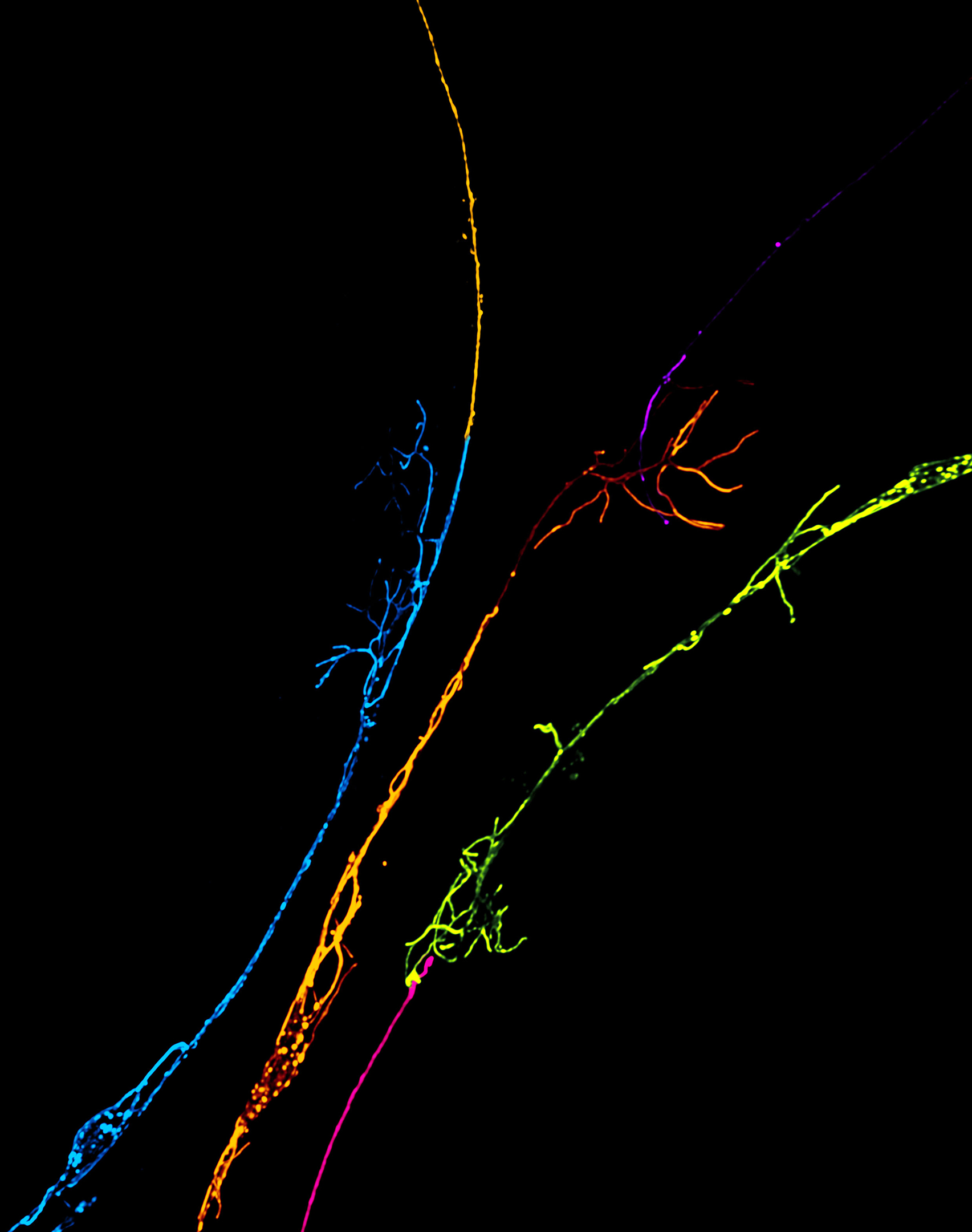
    QBI Nerve Repair “Glue”
    Three axons of the nematode C. elegans repaired by fusion. Injured axons in C. elegans and other invertebrate species are able to rejoin with their separated segments, preventing degeneration and restoring the original axonal tract in a process known as axonal fusion. Ho et al. identify a metalloprotease of the ADAM family, ADM-4, as a key component necessary for axonal fusion to proceed. They reveal that ADM-4 is activated by the lipid phosphatidylserine, and functions by interacting with and stabilizing the fusogen EFF-1 for membrane merging. These findings open the possibility of a better molecular control of axonal fusion that could be exploited in nerve repair in mammals. Credit: Xue Yan Ho and Nick Valmas

    “Our goal is to uncover the molecules and understand their role in nerve repair in C. elegans,” Dr. Ho said. “If we can understand how to control this process, we can apply this knowledge to other animal models.

    “The hope is that one day, we can induce the same mechanical process in people who have had a nerve injury. We are still a long way from this goal, but the discovery of ADM-4’s role is an important step forward.”

    Understanding Axonal Fusion in Nerve Regeneration

    Nerve cells communicate using long, cable-like structures called axons.

    As they are long and thin, they are very susceptible to breaking, which stops nerve cells from communicating and leads to issues like paralysis.

    A few years ago, Professor Hilliard and his team discovered that C. elegans could spontaneously re-join two separated axon fragments, a process called axonal fusion.

    QBI’s Associate Professor Victor Anggono helped the team define the molecular mechanisms of this process.

    “Using neurosurgery to stitch together damaged nerves has limited success,” A/Professor Anggono said.

    “A different approach using gene technology to directly provide the molecular glue, or activate the fusogen regulator ADM-4, or using pharmacology to activate these components, may facilitate complete regeneration.”

    This latest research was published in Science Advances.

    Reference: “The metalloprotease ADM-4/ADAM17 promotes axonal repair” by Xue Yan Ho, Sean Coakley, Rumelo Amor, Victor Anggono and Massimo A. Hilliard, 16 March 2022, Science Advances.
    DOI: 10.1126/sciadv.abm2882

    Never miss a breakthrough: Join the SciTechDaily newsletter.
    Follow us on Google and Google News.

    Brain Nervous System Neuroscience University of Queensland
    Share. Facebook Twitter Pinterest LinkedIn Email Reddit

    Related Articles

    Flavanols Break the Rules of Nutrition: Scientists Uncover the Surprising Way They Boost the Brain

    Unlocking the Secrets of Youth: Scientists Identify Blood Factor That Can Turn Back Time in the Aging Brain

    Brain Gains: Scientists Discover How To Replicate the Cognitive Benefits of Exercise

    COVID-19 Can Cause Brain Cells To Fuse – Leading to Chronic “Long COVID” Neurological Symptoms

    Compound in Mushrooms Discovered To Magnify Memory by Boosting Nerve Growth

    Cleaning Up Toxic “Protein Clumps” Could Prevent Dementia

    Researchers Have Discovered an Exercise “Sweet Spot” To Reverse Cognitive Decline

    Neural Connection Between Infant Stress & Depression in Teenage Girls

    Disrupted Sleep Patterns Linked to Alzheimer’s

    Leave A Reply Cancel Reply

    • Facebook
    • Twitter
    • Pinterest
    • YouTube

    Don't Miss a Discovery

    Subscribe for the Latest in Science & Tech!

    Trending News

    Artificial Sweeteners May Harm Future Generations, Study Suggests

    Splashdown! NASA Artemis II Returns From Record-Breaking Moon Mission

    What If Consciousness Exists Beyond Your Brain

    Scientists Finally Crack the 100-Million-Year Evolutionary Mystery of Squid and Cuttlefish

    Beyond “Safe Levels”: Study Challenges What We Know About Pesticides and Cancer

    Researchers Have Found a Dietary Compound That Increases Longevity

    Scientists Baffled by Bizarre “Living Fossil” From 275 Million Years Ago

    Your IQ at 23 Could Predict Your Wealth at 27, Study Finds

    Follow SciTechDaily
    • Facebook
    • Twitter
    • YouTube
    • Pinterest
    • Newsletter
    • RSS
    SciTech News
    • Biology News
    • Chemistry News
    • Earth News
    • Health News
    • Physics News
    • Science News
    • Space News
    • Technology News
    Recent Posts
    • What if Dark Matter Has Two Forms? Bold New Hypothesis Could Explain a Cosmic Mystery
    • Researchers Expose Hidden Chemistry of “Ore-Forming” Elements in Biology
    • Geologists Reveal the Americas Collided Earlier Than We Thought
    • 20x Difference: Study Reveals True Source of Airborne Microplastics
    • Scientists Uncover Hidden Force Powering Yellowstone’s Supervolcano
    Copyright © 1998 - 2026 SciTechDaily. All Rights Reserved.
    • Science News
    • About
    • Contact
    • Editorial Board
    • Privacy Policy
    • Terms of Use

    Type above and press Enter to search. Press Esc to cancel.