
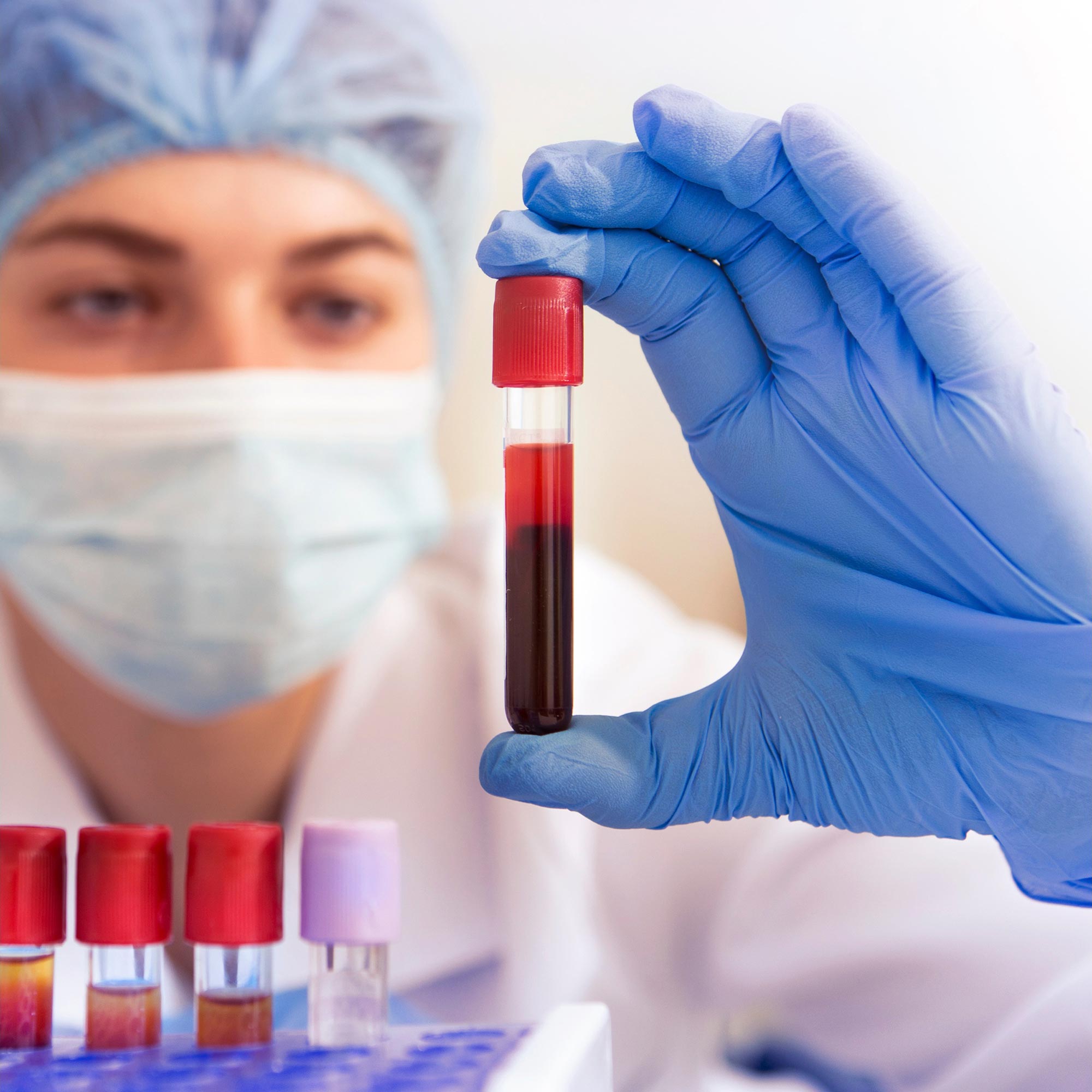
In a study with 991 adults, German scientists show that the most common forms of frontotemporal dementia as well as the neurological diseases amyotrophic lateral sclerosis and progressive supranuclear palsy can be recognized by blood testing.
Their procedure is not yet ready for routine medical use, but in the long term, it could facilitate disease diagnosis and advance the development of new therapies. The findings published in the journal Nature Medicine are based on the measurement of certain proteins in the blood, which serve as biomarkers.
Overview of Neurodegenerative Diseases
Frontotemporal dementia (FTD), amyotrophic lateral sclerosis (ALS), and progressive supranuclear palsy (PSP) form a spectrum of neurodegenerative diseases with overlapping symptoms characterized by dementia, behavioral symptoms, paralysis and muscle wasting, movement impairment and other serious impairments. In Germany, it is estimated that up to 60,000 people are affected by one of these diseases. Although they are relatively rare, their consequences for health are nevertheless severe.
“As yet, there is no cure for any of these diseases. And, with current methods, it is not possible to reach a conclusive diagnosis of the molecular pathology of these diseases during a patient’s lifetime, since brain tissue must be examined,” explains Prof. Anja Schneider, a research group leader at the German Centre for Neurodegenerative Diseases (DZNE) and Director of the Department of Old Age Psychiatry and Cognitive Disorders at UKB.
Advances in Diagnostics and Biomarkers
“However, a diagnosis of the underlying pathology is required for the development of therapies and for stratifying patients according to their disease. Only such stratification allows targeted and therefore potentially effective disease-modifying treatments to be tested,” continues Schneider, who is also affiliated with the University of Bonn.
“We now show that PSP, a behavioral variant of FTD, and the vast majority of ALS cases with the exception of a particular mutation can be recognized by blood testing and this also applies to their underlying pathology. Our study is the first to find pathology specific biomarkers.
“Initially, application is likely to be in research and therapy development. But in the long term, I consider it realistic that these biomarkers will also be used for diagnosis in medical routine. However, further studies are required for this. In fact, it would be particularly important to determine how these biomarkers develop longitudinally, that is, over the course of a disease, and how early they rise in the disease course.”
Breakthrough in Protein Detection for Diagnosis
The new blood test, which is based on the measurement of so-called tau and TDP-43 proteins, could provide decisive evidence for diagnosis. There is a particularly strong need for the “behavioral variant of FTD” which was investigated here. This is because the symptoms of this most common type of FTD can be due to two different pathologies – i.e. abnormal processes – in the brain, which can generally only be differentiated by analyzing tissue after death.
Only in those few cases where the disease is genetic can DNA analysis provide certainty during a patient’s lifetime. The blood test now enables a precise diagnosis to be made during a patient’s lifetime, even if there is no mutation. This, in turn, is a prerequisite for testing new therapies against these various FTD pathologies in clinical trials.
Abnormal Aggregates in Disease Identification
“It is well known that tau and TDP-43 proteins play key roles in FTD, ALS and PSP, as they form abnormal aggregates in the brain in these diseases. The events differ between the diseases, however. Our investigations suggest that blood levels of the proteins reflect these disease processes,” says Schneider.
“We have found that the combination of both markers is required for the diagnosis of behavioral FTD, respectively its subtypes, whereas TDP-43 is sufficient for ALS and the tau protein for PSP. However, for the tau marker, we are actually looking at two specific variants, so-called isoforms, of the tau protein.”
Tiny Bubbles of Lipids
The method employs a special twist: This is because the proteins are not measured directly in the blood plasma. Such measurements turned out to be inconclusive, especially because tau proteins free-floating in blood are usually fragmented.
Instead, Schneider and colleagues determined the levels of two forms of tau proteins and those of TDP-43 proteins found inside so-called vesicles. These are tiny bubbles of lipids that are secreted by cells of the body and that can ultimately enter the bloodstream. Through multi-stage preparation, which included centrifugation of the blood samples, the researchers were able to capture the proteins contained in vesicles.
Collaborative Research
The results are based on data and blood samples from study collectives in Germany and Spain with a total of 991 adults. They were affected by FTD, ALS, PSP or belonged to a control group with healthy individuals. This situation with independent groups of volunteers allowed the findings to be extensively validated.
On the one hand, this involved the so-called DESCRIBE cohorts: As part of these research initiatives, DZNE, along with several German university hospitals, is compiling data and biosamples from people with neurodegenerative diseases. This ensemble comprised more than 700 patients. From the Spanish side, the “Sant Pau” cohort, which is run by the “Hospital de la Santa Creu i Sant Pau” in Barcelona, joined the project with over 200 participants.
“With these relatively rare diseases, you have to work across sites and institutes in order to be able to include as many study participants as possible and thus reach statistically robust results,” explains Schneider. “Such undertakings are an integral part of the strategy of DZNE, for which we have established structures and procedures over the years. This is complex to do, but it pays off. Our study is a good example of collaboration in medical research – within Germany and beyond.”
Reference: “Plasma extracellular vesicle tau and TDP-43 as diagnostic biomarkers in FTD and ALS” by Madhurima Chatterjee, Selcuk Özdemir, Christian Fritz, Wiebke Möbius, Luca Kleineidam, Eckhard Mandelkow, Jacek Biernat, Cem Doğdu, Oliver Peters, Nicoleta Carmen Cosma, Xiao Wang, Luisa-Sophia Schneider, Josef Priller, Eike Spruth, Andrea A. Kühn, Patricia Krause, Thomas Klockgether, Ina R. Vogt, Okka Kimmich, Annika Spottke, Daniel C. Hoffmann, Klaus Fliessbach, Carolin Miklitz, Cornelia McCormick, Patrick Weydt, Björn Falkenburger, Moritz Brandt, René Guenther, Elisabeth Dinter, Jens Wiltfang, Niels Hansen, Mathias Bähr, Inga Zerr, Agnes Flöel, Peter J. Nestor, Emrah Düzel, Wenzel Glanz, Enise Incesoy, Katharina Bürger, Daniel Janowitz, Robert Perneczky, Boris S. Rauchmann, Franziska Hopfner, Olivia Wagemann, Johannes Levin, Stefan Teipel, Ingo Kilimann, Doreen Goerss, Johannes Prudlo, Thomas Gasser, Kathrin Brockmann, David Mengel, Milan Zimmermann, Matthis Synofzik, Carlo Wilke, Judit Selma-González, Janina Turon-Sans, Miguel Angel Santos-Santos, Daniel Alcolea, Sara Rubio-Guerra, Juan Fortea, Álvaro Carbayo, Alberto Lleó, Ricardo Rojas-García, Ignacio Illán-Gala, Michael Wagner, Ingo Frommann, Sandra Roeske, Lucas Bertram, Michael T. Heneka, Frederic Brosseron, Alfredo Ramirez, Matthias Schmid, Rudi Beschorner, Annett Halle, Jochen Herms, Manuela Neumann, Nicolas R. Barthélemy, Randall J. Bateman, Patrizia Rizzu, Peter Heutink, Oriol Dols-Icardo, Günter Höglinger, Andreas Hermann and Anja Schneider, 18 June 2024, Nature Medicine.
DOI: 10.1038/s41591-024-02937-4
Never miss a breakthrough: Join the SciTechDaily newsletter.
Follow us on Google and Google News.