
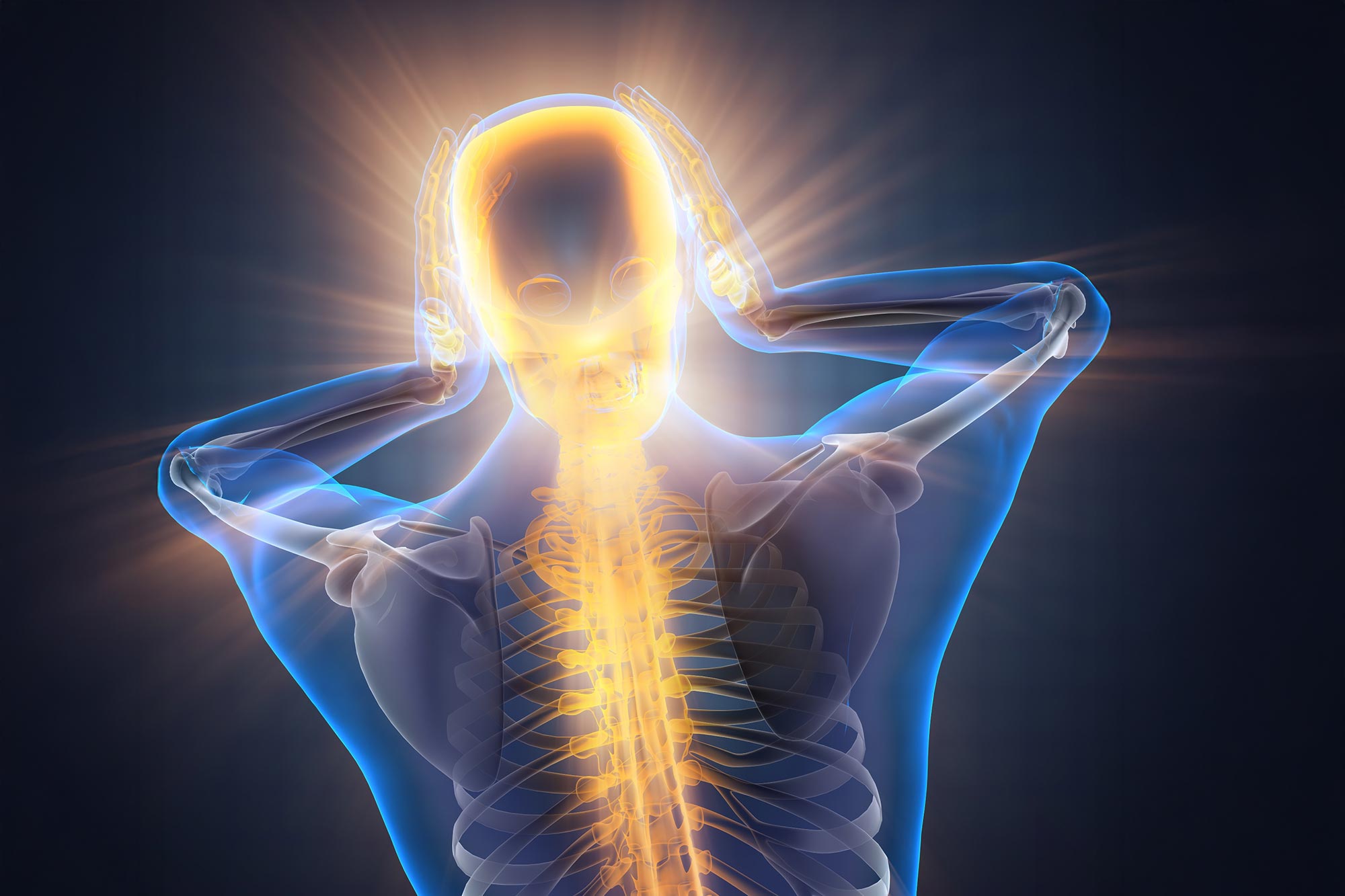
Frontotemporal dementia (FTD) can strike in middle age, often going unrecognized or misdiagnosed as other conditions.
A new UCSF-led study funded by the NIH has uncovered changes in spinal fluid proteins that could signal the disease’s onset early.
Recognizing Dementia in Middle Age
Dementia is typically seen in older adults, but when it appears in middle age, it’s often missed or misdiagnosed. The most common form in these younger cases is frontotemporal dementia (FTD), which can look like depression, schizophrenia, or even Parkinson’s disease before the correct diagnosis is made.
Now, thanks to an NIH-funded study, researchers at UC San Francisco have uncovered promising new clues about how FTD begins. Their discovery could lead to better tools for diagnosis and help more patients join clinical trials earlier. The study was published today (May 16) in Nature Aging.
A Unique Look at Inherited FTD
To understand how FTD develops, the team analyzed spinal fluid from 116 people with inherited FTD and compared it to samples from 39 of their healthy relatives. Since these cases were inherited, the diagnosis was genetically confirmed. This gave scientists a rare opportunity to study the disease in living patients, something that isn’t possible with non-inherited forms of FTD, which can only be confirmed after death.
The analysis revealed changes in over 4,000 proteins. Many of the altered proteins were linked to problems with RNA regulation, which controls how genes are expressed in the brain. Others pointed to disruptions in how brain cells connect and communicate. These changes could serve as the earliest biological signs of FTD, emerging long before symptoms are clearly visible in middle age.
FTD’s Devastating Impact in Midlife
“FTD affects people in the prime of their lives, stripping them of their independence,” said Rowan Saloner, PhD, professor in the UCSF Memory and Aging Center and corresponding author of the paper. “But there’s no definitive way to diagnose it in living patients, unlike other dementias like Alzheimer’s disease.”
Toward Early Detection and Targeted Care
“If we’re able to identify FTD early on, perhaps using some of the proteins we’ve identified, we can direct patients to the right resources, get them into the right therapeutic trials, and, ultimately, we hope, provide them with precision treatments.”
Reference: “Large-scale network analysis of the cerebrospinal fluid proteome identifies molecular signatures of frontotemporal lobar degeneration” by Rowan Saloner, Adam M. Staffaroni, Eric B. Dammer, Erik C. B. Johnson, Emily W. Paolillo, Amy Wise, Hilary W. Heuer, Leah K. Forsberg, Argentina Lario-Lago, Julia D. Webb, Jacob W. Vogel, Alexander F. Santillo, Oskar Hansson, Joel H. Kramer, Bruce L. Miller, Jingyao Li, Joseph Loureiro, Rajeev Sivasankaran, Kathleen A. Worringer, Nicholas T. Seyfried, Jennifer S. Yokoyama, Salvatore Spina, Lea T. Grinberg, William W. Seeley, Lawren VandeVrede, Peter A. Ljubenkov, Ece Bayram, Andrea Bozoki, Danielle Brushaber, Ciaran M. Considine, Gregory S. Day, Bradford C. Dickerson, Kimiko Domoto-Reilly, Kelley Faber, Douglas R. Galasko, Tania Gendron, Daniel H. Geschwind, Nupur Ghoshal, Neill Graff-Radford, Chadwick M. Hales, Lawrence S. Honig, Ging-Yuek R. Hsiung, Edward D. Huey, John Kornak, Walter Kremers, Maria I. Lapid, Suzee E. Lee, Irene Litvan, Corey T. McMillan, Mario F. Mendez, Toji Miyagawa, Alexander Pantelyat, Belen Pascual, Joseph Masdeu, Henry L. Paulson, Leonard Petrucelli, Peter Pressman, Rosa Rademakers, Eliana Marisa Ramos, Katya Rascovsky, Erik D. Roberson, Rodolfo Savica, Allison Snyder, Anna Campbell Sullivan, M. Carmela Tartaglia, Marijne Vandebergh, Brad F. Boeve, Howie J. Rosen, Julio C. Rojas, Adam L. Boxer, Kaitlin B. Casaletto and on behalf of the ALLFTD Consortium, 16 May 2025, Nature Aging.
DOI: 10.1038/s43587-025-00878-2
The patients came from the ALLFTD Consortium, which is helmed by study co-authors Adam Boxer, MD, PhD, and Howie Rosen, MD, of UCSF, and Brad Boeve, MD, of the Mayo Clinic. Kaitlin Casaletto, PhD, professor in the UCSF Memory and Aging Center, is the senior author of the study.
Other UCSF authors are Adam Staffaroni, PhD, Emily Paolillo, PhD, Amy Wise, Hilary Heuer, PhD, Argentina Lario Lago, PhD, Julia Webb, Joel Kramer, PsyD, Bruce Miller, MD, Jennifer Yokoyama, PhD, William Seeley, MD, Salvatore Spina, MD, PhD, Lea Grinberg, MD, PhD, Lawren VandeVrede, MD, PhD, Peter Ljubenkov, MD, Suzan Lee, MD, and Julio Rojas, MD, PhD. For all authors, see the paper.
The work was supported in part by the National Institute on Aging, the National Institute of Neurological Diseases and Stroke, the National Center for Advancing Translational Sciences, and the National Institutes of Health (U19 AG063911, U54 NS092089, U01 AG045390, AG038791, AG032306, AG016976, K23AG059888, K23AG073514, AG019724, AG058233, P30 AG062422, R01AG072475, K23AG061253, R01AG032289, R01AG048234, K24AG045333, U24 AG021886). It was also supported by the Alzheimer’s Association, Association for Frontotemporal Degeneration, the BlueField Project to Cure FTD, CurePSP, Larry L. Hillblom Foundation, the Rainwater Charitable Foundation. For all funding, see the paper.
Never miss a breakthrough: Join the SciTechDaily newsletter.
Follow us on Google and Google News.
1 Comment
I don’t remember.