
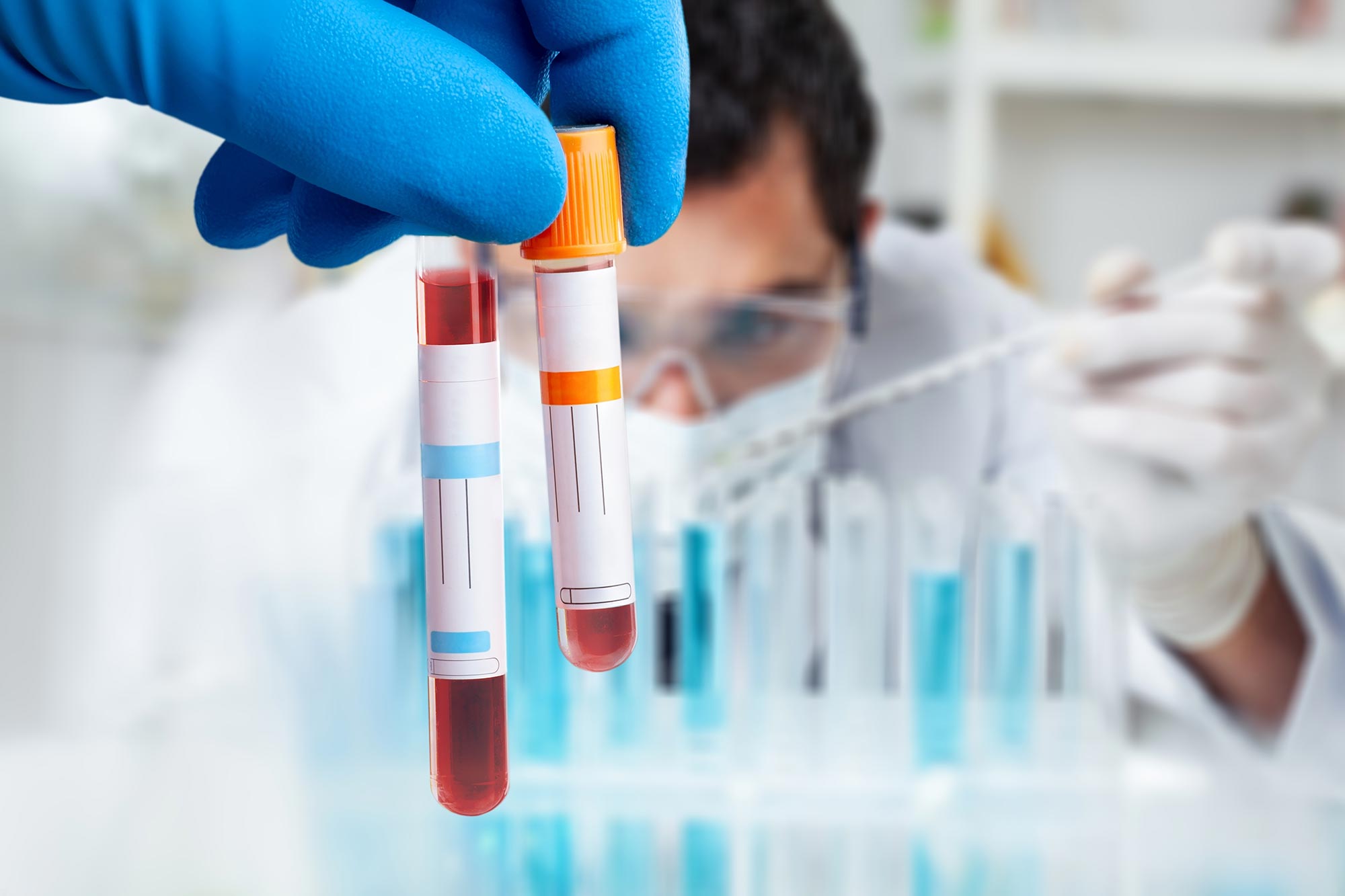
A landmark study has uncovered that a simple blood test could reveal early warning signs of Alzheimer’s years before symptoms appear.
By analyzing blood biomarkers in more than 5,700 Hispanic and Latino adults, researchers at UC San Diego identified proteins tied to memory loss and cognitive decline, even in otherwise healthy individuals. This breakthrough offers hope for faster, less invasive, and more affordable screening.
Blood-Based Clues to Alzheimer’s Detection
A landmark study involving Hispanic and Latino adults has found that self-reported memory and thinking problems are linked to blood-based biomarkers. Researchers at the University of California, San Diego School of Medicine say this discovery could open the door to a simple blood test for diagnosing Alzheimer’s disease and related dementias. Such a test would be faster, less invasive, and more affordable than the screening methods currently in use. The findings were published in JAMA Network Open.
“We need ways to identify underlying neurodegenerative diseases earlier in patients with cognitive symptoms,” said corresponding author Freddie Márquez, Ph.D., a postdoctoral scholar in the Department of Neurosciences at UC San Diego School of Medicine. “This study highlights the promise of blood-based biomarkers as a more accessible and scalable tool for understanding cognitive decline, particularly in populations that have been underserved by traditional methods.”
Current Blood Tests: Expensive and Limited
At present, the Food and Drug Administration (FDA) has cleared only one blood test to assist in diagnosing Alzheimer’s disease. This test, called the Lumipulse G pTau217/Aβ42 plasma ratio, can detect Alzheimer’s-related proteins in the blood but remains costly and is only offered in specialized medical centers. Whether blood tests can be consistently relied upon for early Alzheimer’s detection across wider populations is still uncertain.
To investigate this further, the UC San Diego team drew on data from the Study of Latinos–Investigation of Neurocognitive Aging. This clinical study involved participants from the Hispanic Community Health Study/Study of Latinos, the largest and most detailed long-term investigation of Hispanic and Latino health and disease in the United States.
Alzheimer’s Risk and Representation in Research
“Hispanic and Latino adults are thought to be more likely to get Alzheimer’s and related dementias, and this group is projected to have the largest increases in disease prevalence over the coming decades,” said senior author Hector M. González, Ph.D., professor in the Department of Neurosciences at UC San Diego School of Medicine. “Despite this, they’re still significantly underrepresented in Alzheimer’s and dementia research, which is something our study aimed to address.”
The researchers tested the blood of 5,712 Hispanic and/or Latino adults between the ages of 50 and 86, looking for proteins that are present in the brain in people with Alzheimer’s disease, such as amyloid beta and tau proteins. They also assessed participants for subjective cognitive decline, which refers to a decline in cognitive status that the individual themself perceives.
The researchers found:
- Higher blood levels of NfL (nerve cell injury marker) and GFAP (brain inflammation marker) were associated with more self-reported declines in thinking, planning and overall cognitive performance. Higher blood levels of NfL and tau protein (ptau-181) were also associated with more self-reported declines in memory.
- Blood levels of amyloid-beta protein (Aβ42/40), a protein well-known to be associated with Alzheimer’s disease in the brain, showed no associations with subjective cognitive decline.
- Even in cognitively healthy individuals, associations between NfL and self-reported declines in cognitive performance remained, suggesting that NfL may be detecting early changes in cognition.
In addition to providing evidence that blood-based biomarkers can be used to detect Alzheimer’s and related dementias early, the researchers also note that a strength of their study is its diverse population.
“By including participants from underrepresented communities, we’re able to better understand how social determinants of health and comorbidities may influence cognitive trajectories and dementia risk,” added Márquez. “This makes our findings especially relevant for real-world settings.”
Proceeding With Caution
However, the researchers also caution that it will take further research for this approach to make its way into widespread clinical practice, and that even when this happens, the test will still be just one tool in a clinician’s diagnostic arsenal.
It’s important to note that there’s still a lot we don’t know about the utility of blood-based biomarkers for Alzheimer’s detection,” said Márquez. “These tests have tremendous potential, but they should complement existing approaches, not replace them.”
Reference: “Alzheimer Disease Biomarkers and Subjective Cognitive Decline Among Hispanic and/or Latino Adults” by Freddie Márquez, Wassim Tarraf, Kevin Gonzalez, Deisha F. Valencia, Ariana M. Stickel, Natasha Z. Anita, Daniela Sotres-Alvarez, Bonnie E. Levin, Michael A. Yassa, Haibo Zhou, Martha Daviglus, Amber Pirzada, Zachary T. Goodman, Bharat Thyagarajan, Linda C. Gallo and Hector M. González, 5 September 2025, JAMA Network Open.
DOI: 10.1001/jamanetworkopen.2025.31038
Additional coauthors of the study include Kevin Gonzalez, Deisha F. Valencia and Natasha Z. Anita at UC San Diego, Wassim Tarraf at Wayne State University, Ariana M. Stickel and Linda C. Gallo at San Diego State University, Daniela Sotres-Alvarez and Haibo Zhou at University of North Carolina at Chapel Hill, Bonnie E. Levin and Zachary T. Goodman at University of Miami, Michael A. Yassa at UC Irvine, Martha Daviglus and Amber Pirzada at University of Illinois at Chicago and Bharat Thyagarajan at University of Minnesota.
This study was funded, in part, by grants from the National Institute on Aging (R01AG075758). The Hispanic Community Health Study/Study of Latinos (HCHS/SOL) is a collaborative study supported by contracts from the NHLBI to the University of North Carolina (grant Nos. HHSN268201300001I/N01-HC-65233), University of Miami (grant Nos. HHSN268201300004I/N01-HC-65234), Albert Einstein College of Medicine (grant Nos. HHSN268201300002I/N01-HC-65235), University of Illinois at Chicago (grant Nos. HHSN268201300003I/N01- HC-65236 Northwestern University), and San Diego State University (grant Nos. HHSN268201300005I/N01-HC-65237).
Never miss a breakthrough: Join the SciTechDaily newsletter.
Follow us on Google and Google News.
1 Comment
Please what are the food combinations that may raise dementia risk? Thanks.