
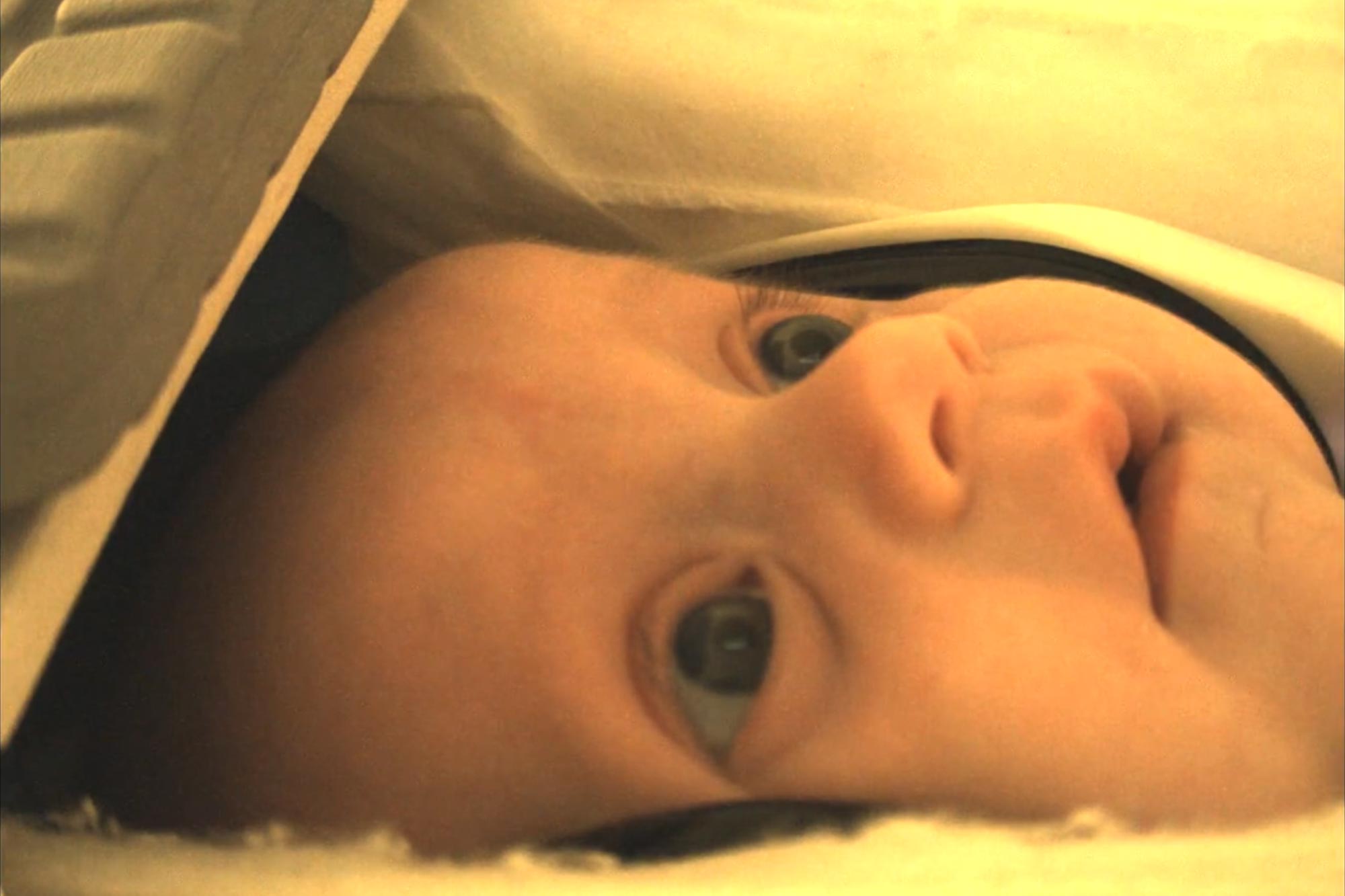
Even at just two months old, babies’ brains are already quietly sorting the world into meaning.
New findings from neuroscientists at Trinity College Dublin reveal that babies just two months old can already organize what they see into distinct object categories. This ability appears far earlier than scientists once believed and suggests that key elements of visual thinking are present almost from the start of life.
The research blends advanced brain imaging with artificial intelligence to shed light on how infants process the world around them. Together, these tools offer a clearer picture of what babies may be thinking during their earliest months and how learning begins before language develops.
The study was published today (February 2) in the journal Nature Neuroscience and was carried out by researchers from the Trinity College Institute of Neuroscience (TCIN) and the School of Psychology.
What Is Happening Inside a Baby’s Mind
“Parents and scientists have long wondered what goes on in a baby’s mind and what they actually see when they view the world around them. This research highlights the richness of brain function in the first year of life,” explains Dr. Cliona O’Doherty, lead author of the study, who conducted the work while at Trinity’s Cusack Lab.
“Although at two months, infants’ communication is limited by a lack of language and fine motor control, their minds were already not only representing to how things look, but figuring out to which category they belonged. This shows that the foundations of visual cognition are already in place from very early on and much earlier than expected.”
Scanning Awake Infant Brains
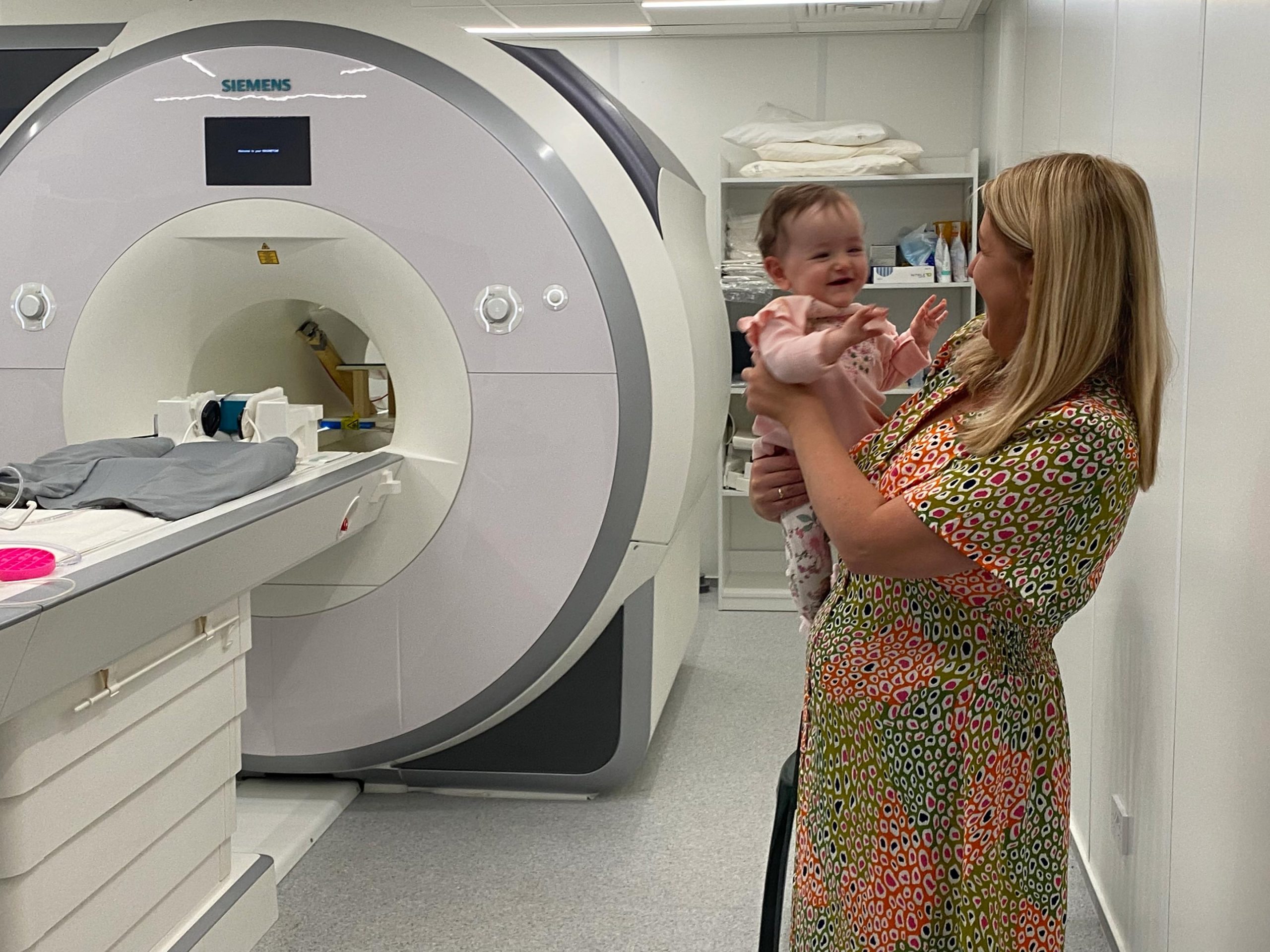
With support from the Coombe and Rotunda Hospitals in Dublin, the FOUNDCOG research team enrolled 130 infants who were two months old. During the experiment, each baby lay comfortably on a beanbag while wearing sound-cancelling headphones. They watched bright, colorful images for 15-20 minutes, long enough for researchers to collect detailed brain data.
Using functional MRI (fMRI), the team measured patterns of brain activity as the babies viewed images from 12 familiar visual categories, such as cat, bird, rubber duck, shopping cart, and tree.
How Artificial Intelligence Helped Decode Baby Vision
After collecting the brain scans, researchers applied artificial intelligence models to analyze how infant brains represented different visual categories. They compared patterns of activity along visual recognition pathways in the brain with patterns produced by the AI models, allowing them to better understand how babies distinguish between types of objects.
“This study represents the largest longitudinal study with functional magnetic resonance imaging (fMRI) of awake infants. The rich dataset capturing brain activity opens up a whole new way to measure what babies are thinking at a very early age. It also highlights the potential for neuroimaging and computational models to be used as a diagnostic tool in very young infants,” says team leader Rhodri Cusack, the Thomas Mitchell Professor of Cognitive Neuroscience at Trinity’s School of Psychology and Trinity College Institute of Neuroscience.
“Babies learn much more quickly than today’s AI models, and by studying how they do this, we hope to inspire a new generation of AI models that learn more efficiently, so reducing their economic and environmental costs.”
Why These Findings Matter
Dr. Anna Truzzi, now based at Queen’s University Belfast and a co-author of the study, emphasized how new the approach is. “Until recently, we could not reliably measure how specific areas of the infant brain interpreted visual information. By combining AI and neuroimaging, our study offers a very unique insight, which helps us to understand much more about how babies learn in their first year of life.
“The first year is a period of rapid and intricate brain development. This study provides new foundational knowledge which will help guide early-years education, inform clinical support for neurodevelopmental conditions, and inspire more biologically-grounded approaches in artificial intelligence.”
Professor Eleanor Molloy, a neonatologist at Children’s Health Ireland and a co-author, highlighted the importance of the study’s success with awake brain scans. “There is a pressing need for greater understanding of how neurodevelopmental disorders change early brain development, and awake fMRI has considerable potential to address this.”
Dr. O’Doherty is now based at Stanford University, and Dr. Anna Truzzi is a Senior Lecturer in the School of Psychology at Queen’s University Belfast.
Artwork inspired by the research was created by artist Cian McLoughlin during his time as Artist in Residence at the Trinity College Institute of Neuroscience in 2024, along with an accompanying exhibition essay.
Reference: “Infants have rich visual categories in ventrotemporal cortex at 2 months of age” by Cliona O’Doherty, Áine T. Dineen, Anna Truzzi, Graham King, Lorijn Zaadnoordijk, Keelin Harrison, Enna-Louise D’Arcy, Jessica White, Chiara Caldinelli, Tamrin Holloway, Anna Kravchenko, Jörn Diedrichsen, Ailbhe Tarrant, Angela T. Byrne, Adrienne Foran, Eleanor J. Molloy and Rhodri Cusack, 2 February 2026, Nature Neuroscience.
DOI: 10.1038/s41593-025-02187-8
Never miss a breakthrough: Join the SciTechDaily newsletter.
Follow us on Google and Google News.
1 Comment
Zev Bronski’s novel “Permanent Dark” deals with the phenomenon of fetal intelligence and the ethics of fetal consent in abortion.