
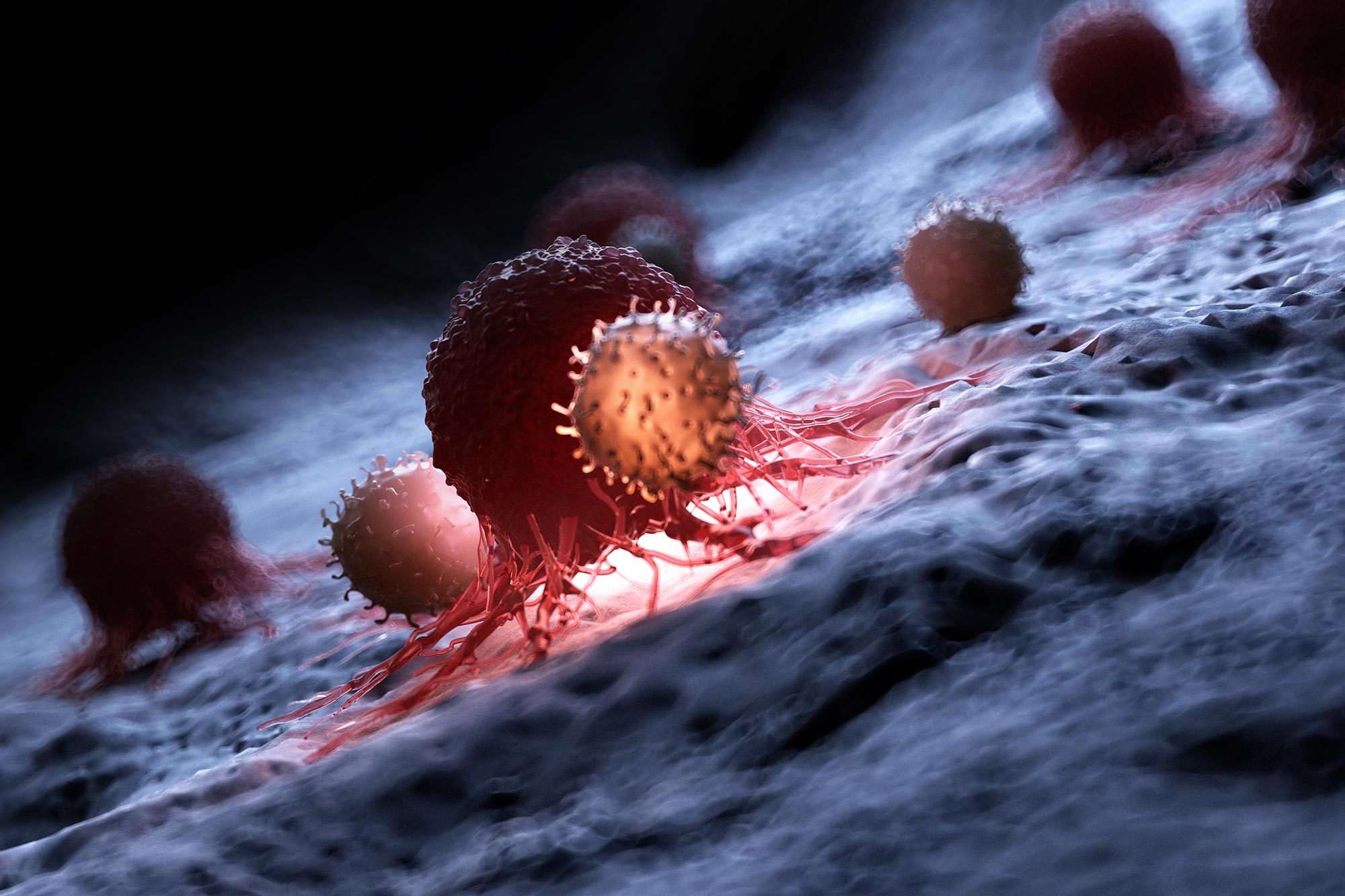
Researchers have created a Trojan Horse–style cancer therapy that hides viruses inside tumor-homing bacteria, letting them slip past immune defenses and destroy cancer from the inside out.
Scientists at Columbia Engineering have developed a new cancer treatment that teams up bacteria and viruses to fight tumors. In findings published in Nature Biomedical Engineering, the Synthetic Biological Systems Lab demonstrated a method in which a virus is concealed inside a bacterium that naturally seeks out tumors. This allows the virus to evade the body’s immune defenses and activate once it reaches the cancer site.
The system takes advantage of each microbe’s strengths: bacteria’s ability to locate and invade tumors and viruses’ ability to infect and destroy cancer cells. The research, led by Tal Danino, an associate professor of biomedical engineering at Columbia Engineering, produced a platform named CAPPSID (short for Coordinated Activity of Prokaryote and Picornavirus for Safe Intracellular Delivery). The team collaborated with Charles M. Rice, a virology expert from The Rockefeller University.
Engineering Microbe Cooperation
“We aimed to enhance bacterial cancer therapy by enabling the bacteria to deliver and activate a therapeutic virus directly inside tumor cells, while engineering safeguards to limit viral spread outside the tumor,” says co-lead author Jonathan Pabón, an MD/PhD candidate at Columbia.
The scientists believe their mouse-based experiments mark the first instance of intentionally engineering bacteria and viruses to work together against cancer.
Bridging Biology and Virology
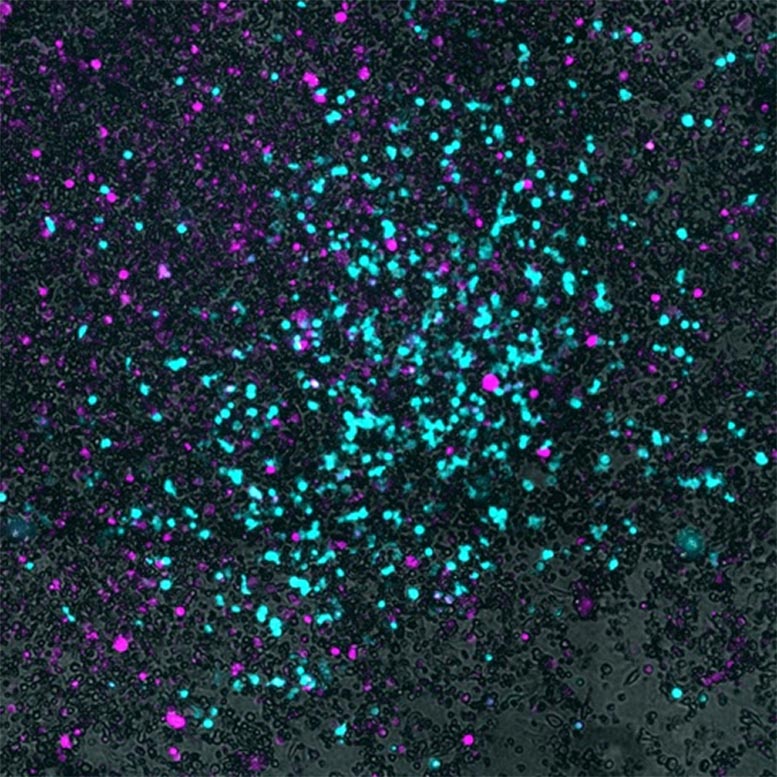
The method unites bacterial tumor-targeting instincts with the virus’s precision in infecting and killing cancer cells. “By bridging bacterial engineering with synthetic virology, our goal is to open a path toward multi-organism therapies that can accomplish far more than any single microbe could achieve alone,” says Zakary S. Singer, a co-lead author and former postdoctoral researcher in Tal Danino’s lab.
“This is probably our most technically advanced and novel platform to date,” says Danino, who is also affiliated with the Herbert Irving Comprehensive Cancer Center at Columbia University Irving Medical Center and Columbia’s Data Science Institute.
Sneaking Past the Immune System
One of the biggest hurdles in oncolytic virus therapy is the body’s own defense system. If a patient has antibodies against the virus — from a prior infection or vaccination — those antibodies can neutralize it before it reaches a tumor. The Columbia team sidestepped that problem by tucking the virus inside tumor-seeking bacteria.
“The bacteria act as an invisibility cloak, hiding the virus from circulating antibodies, and ferrying the virus to where it is needed,” Singer says.
Pabón says this strategy is especially important for viruses that people are already exposed to in daily life.
“Our system demonstrates that bacteria can potentially be used to launch an oncolytic virus to treat solid tumors in patients who have developed immunity to these viruses,” he says.
Targeting the Tumor
The system’s bacterial half is Salmonella typhimurium, a species that naturally migrates to the low-oxygen, nutrient-rich environment inside tumors. Once there, the bacteria invade cancer cells and release the virus directly into the tumor’s interior.
“We programmed the bacteria to act as a Trojan horse by shuttling the viral RNA into tumors and then lyse themselves directly inside of cancer cells to release the viral genome, which could then spread between cancer cells,” Singer says.
By exploiting the bacteria’s tumor-homing instincts and the virus’s ability to replicate inside cancer cells, the researchers created a delivery system that can penetrate the tumor and spread throughout it — a challenge that has limited both bacteria- and virus-only approaches.
Safeguarding Against Runaway Infections
A key concern with any live virus therapy is controlling its spread beyond the tumor. The team’s system solved that problem with a molecular trick: making sure the virus couldn’t spread without a molecule it can only get from the bacteria. Since the bacteria stay put in the tumor, this vital component (called a protease) isn’t available anywhere else in the body.
“Spreadable viral particles could only form in the vicinity of bacteria, which are needed to provide special machinery essential for viral maturation in the engineered virus, providing a synthetic dependence between microbes,” Singer says. That safeguard adds a second layer of control: even if the virus escapes the tumor, it won’t spread in healthy tissue.
“It is systems like these — specifically oriented towards enhancing the safety of these living therapies — that will be essential for translating these advances into the clinic,” Singer says.
Further Research and Clinical Applications
This publication marks a significant step toward making this type of bacteria-virus system available for future clinical applications.
“As a physician-scientist, my goal is to bring living medicines into the clinic,” Pabón says. “Efforts toward clinical translation are currently underway to translate our technology out of the lab.”
Looking ahead, the team is testing the approach in a wider range of cancers, using different tumor types, mouse models, viruses, and payloads, with an eye to developing a “toolkit” of viral therapies that can sense and respond to specific conditions inside a cell. They are also evaluating how this system can be combined with strains of bacteria that have already demonstrated safety in clinical trials.
Reference: “Engineered bacteria launch and control an oncolytic virus” by Zakary S. Singer, Jonathan Pabón, Hsinyen Huang, William Sun, Hongsheng Luo, Kailyn Rhyah Grant, Ijeoma Obi, Courtney Coker, Charles M. Rice and Tal Danino, 15 August 2025, Nature Biomedical Engineering.
DOI: 10.1038/s41551-025-01476-8
Danino, Rice, Singer, and Pabón have filed a patent application (WO2024254419A2) with the U.S. Patent and Trademark Office related to this work.
Authors: Zakary S. Singer, Jonathan Pabón, Hsinyen Huang, William Sun, Hongsheng Luo, Kailyn Rhyah Grant, Ijeoma Obi, Courtney Coker, Charles M. Rice & Tal Danino
Funding/Acknowledgments: The researchers thank J. T. Poirier, NYU Langone, for input and the infectious cDNA clone of SVA. T.D. discloses support for the research described in this study from the Department of Defence (BC160541) and the National Institutes of Health (R01EB029750). Z.S.S. discloses support for the research described in this study from the National Institutes of Health (F32CA225145).
Never miss a breakthrough: Join the SciTechDaily newsletter.
Follow us on Google and Google News.
1 Comment
Nice. I can only wonder when all of this cancer-shattering stuff comes on line to benefit the hoi-polloi of the world living in health systems where medical care is organised and paid for by the State (you know, through that un-America thing, a socially responsible taxation system).