
Close Menu
    Facebook X (Twitter) Instagram
    SciTechDaily
    • Biology
    • Chemistry
    • Earth
    • Health
    • Physics
    • Science
    • Space
    • Technology
    Facebook X (Twitter) Pinterest YouTube RSS
    SciTechDaily
    Home»Technology»New Energy-Efficient AI System-on-Chip Runs on Solar Power
    Technology

    New Energy-Efficient AI System-on-Chip Runs on Solar Power

    By Swiss Center for Electronics and Microtechnology – CSEMJune 17, 2021No Comments4 Mins Read
    Facebook Twitter Pinterest Telegram LinkedIn WhatsApp Email Reddit
    Share
    Facebook Twitter LinkedIn Pinterest Telegram Email Reddit
    AI System-on-Chip
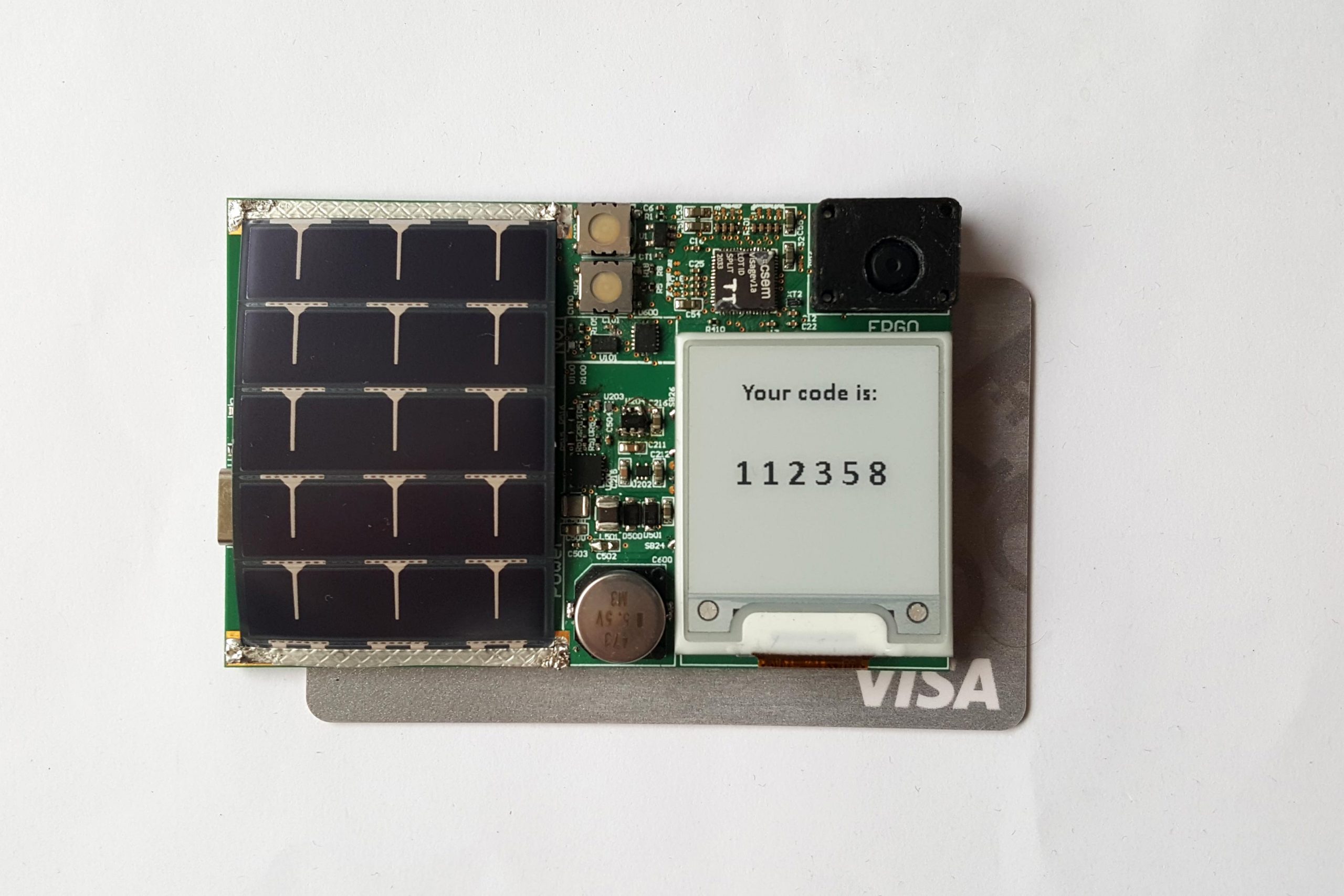
    The system runs on a tiny battery or a small solar cell and executes AI operations at the edge — i.e., locally on the chip rather than in the cloud. Credit: CSEM

    A novel CSEM chip uses dual AI engines to perform edge processing efficiently, reducing energy and data security concerns while enabling standalone smart devices.

    AI is used in an array of extremely useful applications, such as predicting a machine’s lifetime through its vibrations, monitoring the cardiac activity of patients, and incorporating facial recognition capabilities into video surveillance systems. The downside is that AI-based technology generally requires a lot of power and, in most cases, must be permanently connected to the cloud, raising issues related to data protection, IT security,  and energy use.

    CSEM engineers may have found a way to get around those issues, thanks to a new system-on-chip they have developed. It runs on a tiny battery or a small solar cell and executes AI operations at the edge — i.e., locally on the chip rather than in the cloud. What’s more, their system is fully modular and can be tailored to any application where real-time signal and image processing is required, especially when sensitive data are involved. The engineers will present their device at the prestigious 2021 VLSI Circuits Symposium in Kyoto this June.


    CSEM engineers have developed an integrated circuit that can carry out complicated artificial-intelligence operations like face, voice and gesture recognition and cardiac monitoring. Powered by either a tiny battery or a solar panel, it processes data at the edge and can be configured for use in just about any type of application. Credit: CSEM

    Breakthrough in On-Chip Architecture

    The CSEM system-on-chip works through an entirely new signal processing architecture that minimizes the amount of power needed. It consists of an ASIC chip with a RISC-V processor (also developed at CSEM) and two tightly coupled machine-learning accelerators: one for face detection, for example, and one for classification. The first is a binary decision tree (BDT) engine that can perform simple tasks but cannot carry out recognition operations.

    “When our system is used in facial recognition applications, for example, the first accelerator will answer preliminary questions like: Are there people in the images? And if so, are their faces visible?” says Stéphane Emery, head of system-on-chip research at CSEM. “If our system is used in voice recognition, the first accelerator will determine whether noise is present and if that noise corresponds to human voices. But it can’t make out specific voices or words — that’s where the second accelerator comes in.”
    AI System-on-Chip Runs on Solar Power
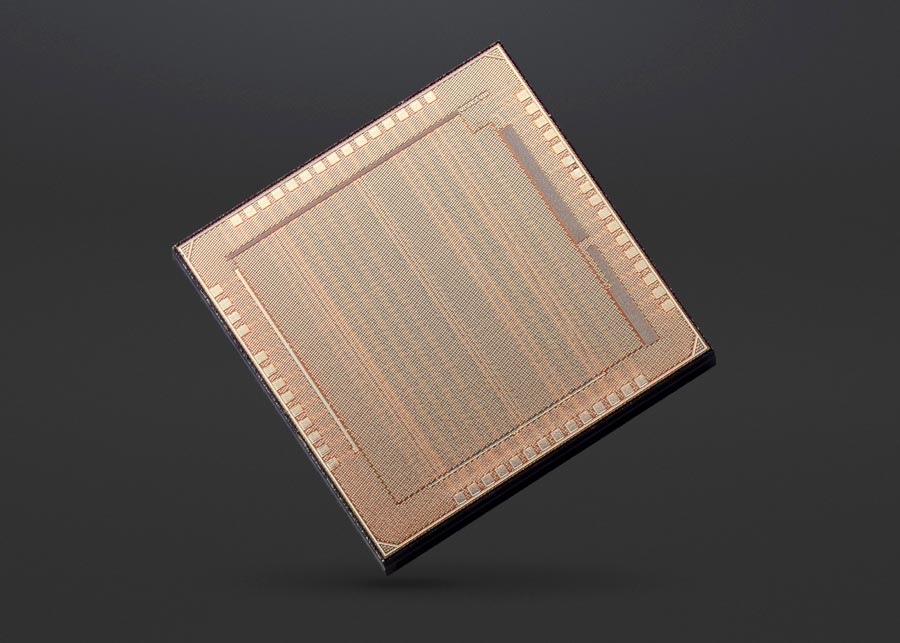
    The integrated circuit can carry out complicated artificial-intelligence operations like face, voice and gesture recognition and cardiac monitoring. Credit: CSEM

    The second accelerator is a convolutional neural network (CNN) engine that can perform these more complicated tasks — recognizing individual faces and detecting specific words — but it also consumes more energy. This two-tiered data processing approach drastically reduces the system’s power requirement, since most of the time only the first accelerator is running.

    Modularity and Application Versatility

    As part of their research, the engineers enhanced the performance of the accelerators themselves, making them adaptable to any application where time-based signal and image processing is needed. “Our system works in basically the same way regardless of the application,” says Emery. “We just have to reconfigure the various layers of our CNN engine.”

    The CSEM innovation opens the door to an entirely new generation of devices with processors that can run independently for over a year. It also sharply reduces the installation and maintenance costs for such devices, and enables them to be used in places where it would be hard to change the battery.

    Never miss a breakthrough: Join the SciTechDaily newsletter.
    Follow us on Google and Google News.

    Artificial Intelligence Electrical Engineering
    Share. Facebook Twitter Pinterest LinkedIn Email Reddit

    Related Articles

    AI Boosted by Parallel Convolutional Light-Based Processors

    Smarter Artificial Intelligence Technology in a New Light-Powered Chip

    Good Vibrations for New Energy: Nanogenerator “Scavenges” Power From Surroundings

    Brain-Inspired Electronic System Could Make Artificial Intelligence 1,000 Times More Energy Efficient

    Powerful Photon-Based Processing Units Enable Complex Artificial Intelligence

    Engineers Put Tens of Thousands of Artificial Brain Synapses on a Single Chip for Portable AI Devices

    Engineers Design Ion-Based Device That Operates Like an Energy-Efficient Brain Synapse

    New Integrated 3D-Circuit Architecture With Spiraling Memory for More Efficient AI

    Breaking the Size and Speed Limit of Modulators for Next Generation Internet and Communication Networks

    Leave A Reply Cancel Reply

    • Facebook
    • Twitter
    • Pinterest
    • YouTube

    Don't Miss a Discovery

    Subscribe for the Latest in Science & Tech!

    Trending News

    The Universe Is Expanding Too Fast and Scientists Can’t Explain Why

    “Like Liquid Metal”: Scientists Create Strange Shape-Shifting Material

    Early Warning Signals of Esophageal Cancer May Be Hiding in Plain Sight

    Common Blood Pressure Drug Shows Surprising Power Against Deadly Antibiotic-Resistant Superbug

    Scientists Uncover Dangerous Connection Between Serotonin and Heart Valve Disease

    Scientists Discover a “Protector” Protein That Could Help Reverse Hair Loss

    Bone-Strengthening Discovery Could Reverse Osteoporosis

    Scientists Uncover Hidden Trigger Behind Stem Cell Aging

    Follow SciTechDaily
    • Facebook
    • Twitter
    • YouTube
    • Pinterest
    • Newsletter
    • RSS
    SciTech News
    • Biology News
    • Chemistry News
    • Earth News
    • Health News
    • Physics News
    • Science News
    • Space News
    • Technology News
    Recent Posts
    • A Common Diabetes Drug May Hold the Key to Stopping HIV From Coming Back
    • Ancient “Syphilis-Like” Disease in Vietnam Challenges Key Scientific Assumptions
    • Drinking Alcohol To Cope in Your 20s Could Damage Your Brain for Life
    • Scientists Crack Alfalfa’s Chromosome Mystery After Decades of Debate
    • Ancient Ant-Plant Alliance Collapses As Predatory Wasps Move In
    Copyright © 1998 - 2026 SciTechDaily. All Rights Reserved.
    • Science News
    • About
    • Contact
    • Editorial Board
    • Privacy Policy
    • Terms of Use

    Type above and press Enter to search. Press Esc to cancel.