
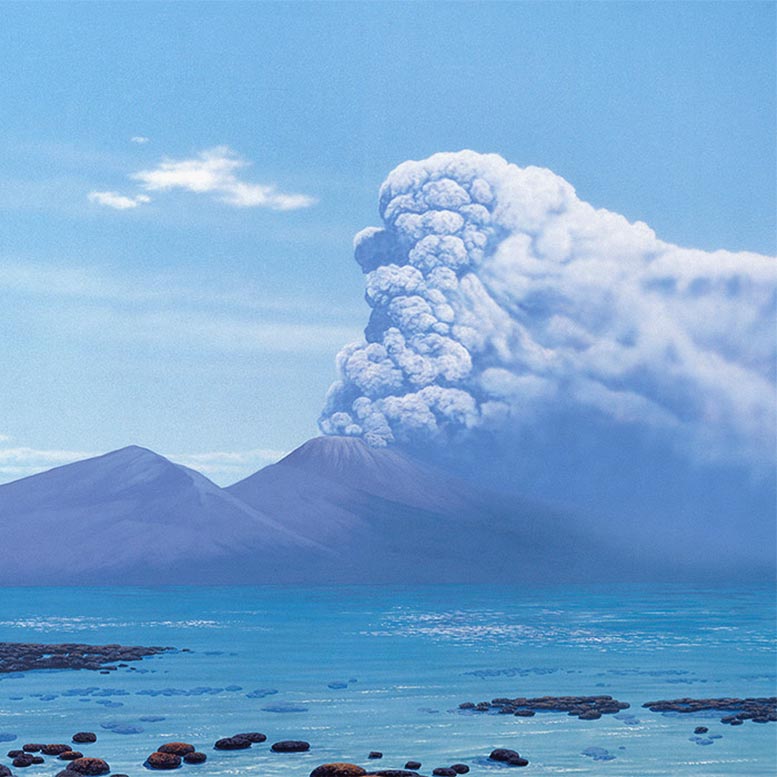
Analysis of the rock record rules out atmospheric oxygen before the Great Oxygenation Event.
New research challenges prior findings of early atmospheric oxygen on Earth, showing that earlier detected oxygen signals were likely from volcanic activity. This reevaluation indicates very low oxygen levels existed before the Great Oxygenation Event, reshaping our understanding of Earth’s prehistoric conditions.
Evidence arguing for a “whiff of oxygen” before the Earth’s Great Oxygenation Event 2.3 billion years ago is chemical signatures that were probably introduced at a much later time, according to research published in Science Advances.
The result rewinds previous research findings that atmospheric oxygen existed prior to the so-called Great Oxygenation Event–known to researchers as “GOE”– and has the potential to rewrite what is known of the planet’s past.
“Without the whiff of oxygen reported by a series of earlier studies, the scientific community needs to critically reevaluate its understanding of the first half of Earth’s history,” said Sarah Slotznick, an assistant professor of earth sciences at Dartmouth and first author of the study.
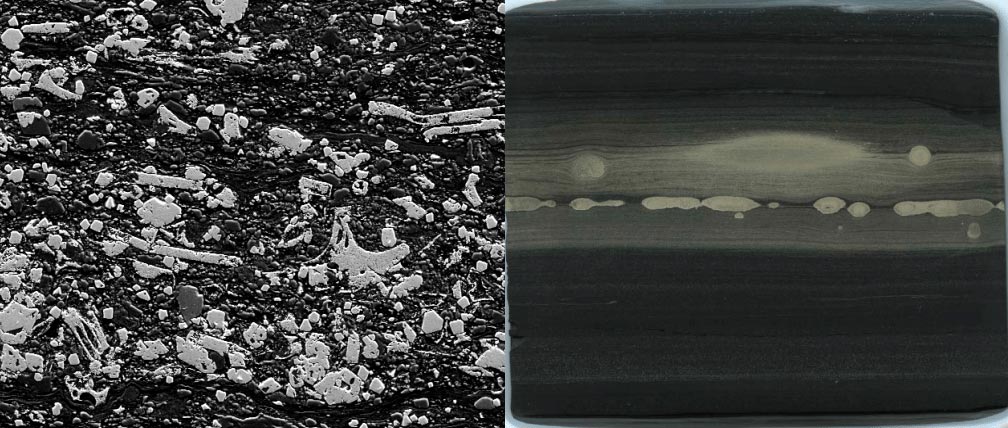
The study indicates that the chemical data originally determined to suggest atmospheric oxygen earlier in Earth’s history may have been introduced by events hundreds of millions of years later.
Additional analysis conducted as part of the study reconfirms that Earth’s atmosphere featured exceedingly low oxygen levels prior to 2.3 billion years ago.
“We used new tools to investigate the origins of the signals of trace oxygen,” said Jena Johnson, an assistant professor of earth and environmental sciences at the University of Michigan and co-author of the study. “We found that a series of changes after the sediments were deposited on the seafloor were likely responsible for the chemical evidence of oxygen.”
The Initiation of Oxygenation
For decades, scientists have debated when measurable levels of oxygen first appeared in Earth’s atmosphere. The idea of the Great Oxygenation Event has developed over the last century and is thought to be when oxygen levels began to increase over 2 billion years ago, paving the way for the rise of complex cells, animals, and eventually humans.
More recently, however, research on chemical signals correlated to oxygen has suggested earlier transient appearances of oxygen, known as “whiffs.”
In 2007, two parallel studies found evidence of such a whiff of oxygen based on samples of the 2.5-billion-year-old Mount McRae Shale, part of a heavily studied 2004 drill core collected in Western Australia by the NASA Astrobiology Drilling Program.
“When the results came out a decade ago, they were startling,” said Joseph Kirschvink, professor of geobiology at Caltech, a member of the Earth-Life Science Institute at the Tokyo Institute of Technology, and a co-author of the new study. “The findings seemed to contradict abundant evidence from other geological indicators that argued against the presence of free oxygen before the Great Oxygenation Event.”
A Research Origin Story
The 2007 studies were based on evidence of oxidation and reduction of molybdenum and sulfur, two elements that are widely used to test for the presence of atmospheric oxygen since it cannot be measured directly in rock. The findings raised fundamental questions about the early evolution of life on Earth.
The observation of early oxygen was taken by some research groups to support earlier findings that microscopic cyanobacteria—early innovators in photosynthesis—pumped oxygen into the ancient atmosphere but that other Earth processes kept oxygen levels low.
The 2007 studies, including their implications about the origin of life and its evolution, have been widely accepted and have served as the basis for a series of other research papers over the last 14 years.
The new study dates back to 2009, when a Caltech-led team began efforts to conduct additional analysis. The team, some of whom have since moved to other institutions, took over a decade to collect and analyze data, resulting now in the first published study that directly refutes the finding of a whiff of early oxygen.
“Rocks this old tell a complicated story that goes beyond what the world was like when the mud was deposited,” said Woodward Fischer, a professor of geobiology at Caltech and co-author of the study. “These samples also contain minerals that formed long after their deposition when ancient environmental signals were mixed with younger ones, confusing interpretations of the conditions on ancient Earth.”
A Matter of Approach
The 2007 research papers that found the whiff of oxygen prior to Earth’s full oxygenation used bulk analysis techniques featuring geochemical assessments of powdered samples sourced from throughout the Mount McRae Shale. Rather than conducting a chemical analysis on powder, the new research inspected specimens of the rock using a series of high-resolution techniques.
For the new study, the research team recorded images of the 2004 drill core on a flatbed optical scanner. Based on those observations, they then collected thin samples for additional analyses. The suite of approaches used on the physical specimens, including synchrotron-based X-ray fluorescence spectroscopy, gave the team additional insight into the geology and chemistry of the samples as well as the relative timing of processes that were identified.
According to the research paper: “Our collective observations suggest that the bulk chemical datasets pointing toward a ‘whiff’ of oxygen developed during post-depositional events.”
The new analysis shows that the Mount McRae Shale formed from organic carbon and volcanic dust. The research indicates that molybdenum came from volcanoes and subsequently concentrated during what has been previously characterized as the whiff interval. During a series of chemical and physical changes that turned these sediments into rock, fracturing created pathways for several distinct fluids to carry in signals of oxidation hundreds of millions of years after the rocks formed.
“Our observations of abundant pyroclastic glass shards and intercalated tuff beds, paired with the recent insight that volcanic glass is a major host of [molybdenum], offers a new explanation for the [molybdenum] enrichments in the ‘whiff’ interval,” the paper says.
Looking Back to Point a Way Forward
If the molybdenum was not from oxygen-based weathering of rocks on land and concentration in the ocean, its presence does not support the original finding of early atmospheric oxygen. By using a totally different methodology than that used in the first studies that found a whiff of oxygen, the new research also calls into question research that followed from those studies using the same style of bulk techniques.
“Our new, high-resolution data clearly indicates that the sedimentary context of chemical signals has to be carefully considered in all ancient records,” said Johnson.
In addition to providing an alternate explanation for oxygen proxies that were found in the Mount McRae Shale, the team confirmed that the level of atmospheric oxygen at the time before the Great Oxygenation Event was very low, calling it “negligible” in the approximate period 150 million years before the abrupt change.
The findings call into question the early existence of cyanobacteria, instead supporting other hypotheses that oxygen-generating photosynthesis evolved only shortly before the Great Oxygenation Event.
“We expect that our research will generate interest both from those studying Earth and those looking beyond at other planets,” said Slotznick. “We hope that it stimulates further conversation and thought about how we analyze chemical signatures in rocks that are billions of years old.”
Reference: “Re-examination of 2.5 Ga ‘Whiff’ of Oxygen Interval Points to Anoxic Ocean Before GOE” by Sarah P. Slotznick, Jena E. Johnson, Birger Rasmussen, Timothy D. Raub, Samuel M. Webb, Jian-Wei Zi, Joseph L. Kirschvink and Woodward W. Fischer, 5 January 2022, Science Advances.
DOI: 10.1126/sciadv.abj7190
Birger Rasmussen, of the University of Western Australia and China University of Geosciences; Timothy D. Raub, of the University of St Andrews and the Geoheritage Research Institute; Samuel Webb, of SLAC National Accelerator Laboratory; and Jian-Wei Zi, of the China University of Geosciences, all contributed to the study.
Never miss a breakthrough: Join the SciTechDaily newsletter.
Follow us on Google and Google News.
2 Comments
“The result rewinds previous research findings that atmospheric oxygen existed prior to the so-called Great Oxygenation Event”
This should serve as a caution to those who are absolutely convinced that the world is warming because of human activity, and that the results will be catastrophic.
Science is rarely “settled” for more than a few decades. Paradigm shifts are very common. All good scientists keep an open mind and are willing to entertain different interpretations of the data underpinning the consensus paradigm. Those who call themselves scientists, but have closed minds, are dogmatists of the religious variety.
This person didn’t like the science so they made some crap up. No more grants for that Incel. Follow the science ret*rds.