
New Mitigation Strategy Bears Great Potential
Permafrost soils in the Arctic are thawing. As they do, large additional quantities of greenhouse gases could be released, accelerating climate change. In Russia, experiments are now being conducted in which herds of horses, bison, and reindeer are being used to combat this effect. A study from Universität Hamburg, just released in the Nature journal Scientific Reports, now shows for the first time that this method could indeed significantly slow the loss of permafrost soils.
Theoretically speaking, 80 percent of all permafrost soils around the globe could be preserved until the year 2100, as has now been demonstrated by Prof. Christian Beer from Universität Hamburg’s Center for Earth System Research and Sustainability (CEN), an expert on the permanently frozen soils found throughout the Northern Hemisphere. If no action is taken to prevent it, half of the world’s permafrost will thaw by 2100. The new study explores a somewhat unconventional countermeasure: resettling massive herds of large herbivores.
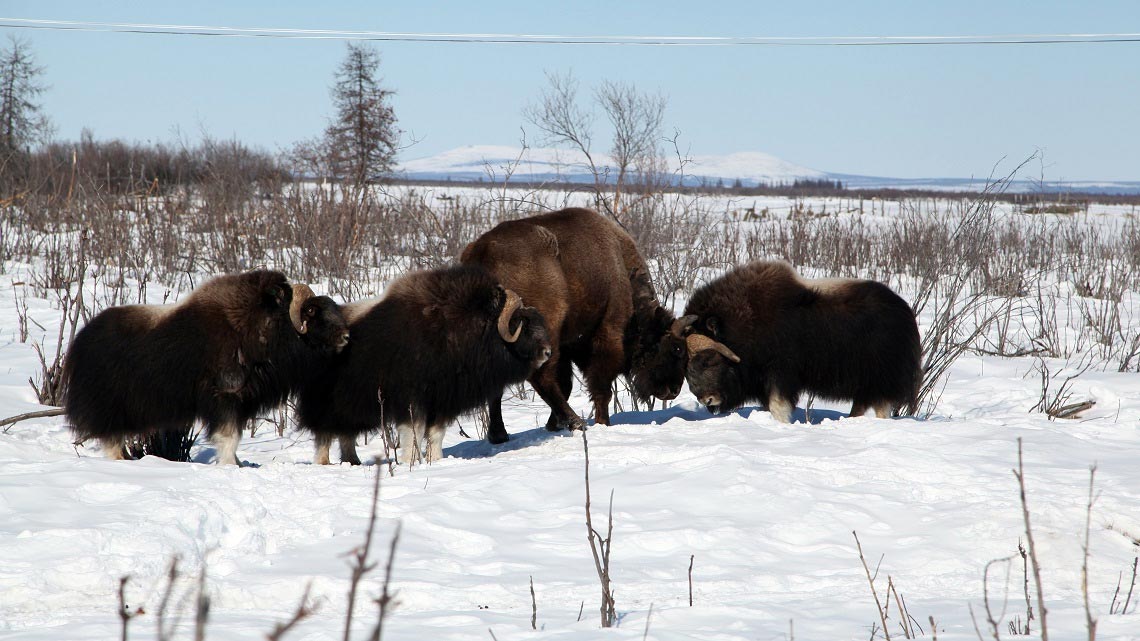
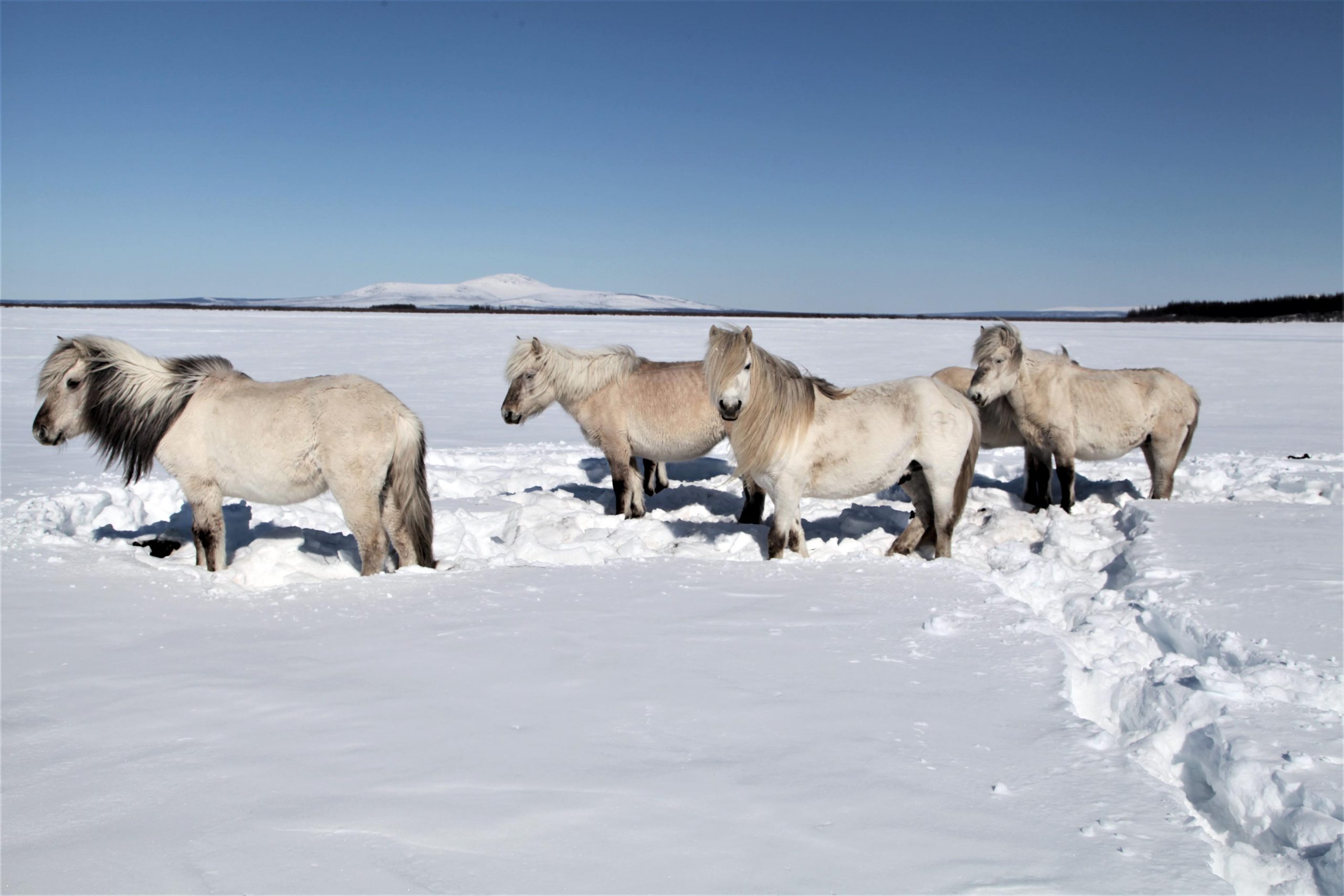
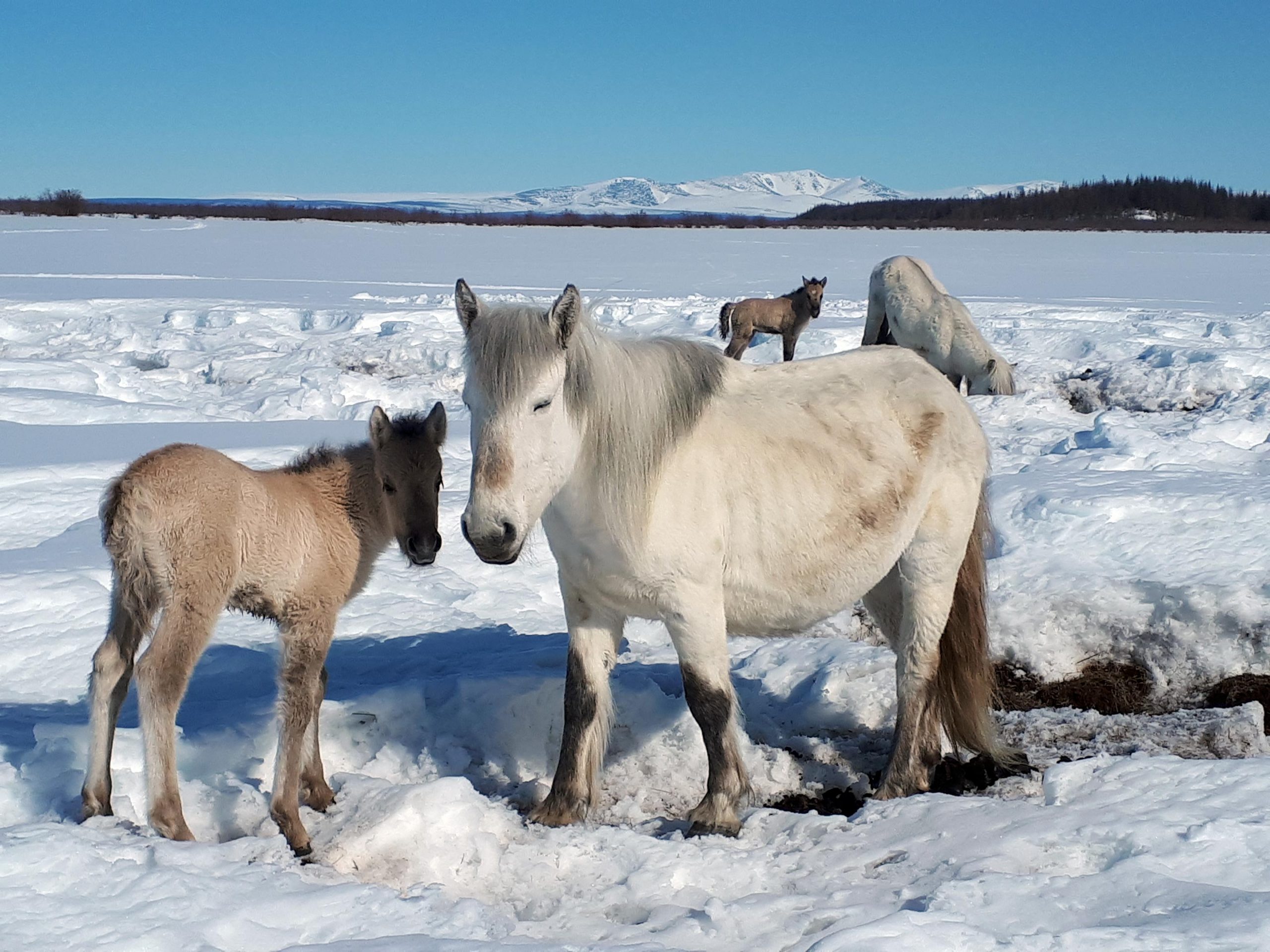
The inspiration came from Pleistocene Park in Chersky, a city in northeast Russia. Russian scientists Sergey and Nikita Zimov resettled herds of bison, wisents, reindeer, and horses there more than 20 years ago, and have been observing the effects on the soil ever since. In winter the permafrost in Chersky is ca. minus 10 degrees Celsius (14 degrees Fahrenheit); at temperatures down to minus 40 degrees Celsius (minus 40 degrees Fahrenheit), the air is far colder. Thanks to ample snowfall, there is a thick layer of snow cover that insulates the ground from the frigid air, keeping it “warm.” When the snow cover is scattered and compressed thanks to the grazing animals’ stamping hooves, its insulating effect is dramatically reduced, intensifying the freezing of the permafrost. “This type of natural manipulation in ecosystems that are especially relevant for the climate system has barely been researched to date – but holds tremendous potential,” Beer says.
The long-term experiments conducted in Russia show that, when 100 animals are resettled in a 1 km² area, they cut the mean snow cover height in half. Christian Beer and his colleagues wanted to determine what effect this could produce when applied to all Arctic permafrost soils as a whole. Could the animals’ influence, at least in theory, even be enough to mitigate intensive warming of the atmosphere and stop the thawing of the permafrost?
For the purposes of his study, Beer used a special climate model that can simulate such temperature processes on the land surface over the course of an entire year. The results show: if emissions continue to rise unchecked (scenario RCP 8.5 in the latest IPCC Assessment Report), we can expect to see a 3.8-degree Celsius (6.8-degree Fahrenheit) increase in permafrost temperatures, which would cause half of all permafrost to thaw. In contrast, with animal herds the ground would only warm by ca. 2.1 degrees Celsius (3.8 degrees Fahrenheit) – 44 percent less, which would be enough to preserve 80 percent of the current soils, as the model shows.
“It may be utopian to imagine resettling wild animal herds in all the permafrost regions of the Northern Hemisphere,” the Earth system expert concedes. “But the results indicate that using fewer animals would still produce a cooling effect. What we’ve shown here is a promising method for slowing the loss of our permanently frozen soils, and with it, the decomposition and release of the enormous carbon stockpiles they contain.”
Beer and his team also considered the potential side effects of the approach. For example, in summer the animals destroy the cooling moss layer on the ground, which warms it additionally. This aspect was also taken into account in the simulations, but the positive impact of the snow effect in winter is several times greater. As a next step, Beer plans to collaborate with biologists, in order to investigate how the animals would actually spread across the landscape.
Reference: “Protection of Permafrost Soils from Thawing by Increasing Herbivore Density” by Christian Beer, Nikita Zimov, Johan Olofsson, Philipp Porada and Sergey Zimov, 17 March 2020, Scientific Reports.
DOI: 10.1038/s41598-020-60938-y
Never miss a breakthrough: Join the SciTechDaily newsletter.
Follow us on Google and Google News.