
Close Menu
    Facebook X (Twitter) Instagram
    SciTechDaily
    • Biology
    • Chemistry
    • Earth
    • Health
    • Physics
    • Science
    • Space
    • Technology
    Facebook X (Twitter) Pinterest YouTube RSS
    SciTechDaily
    Home»Space»New Hubble Image of Globular Cluster NGC 121
    Space

    New Hubble Image of Globular Cluster NGC 121

    By Hubble Space TelescopeJuly 14, 2014No Comments2 Mins Read
    Facebook Twitter Pinterest Telegram LinkedIn WhatsApp Email Reddit
    Share
    Facebook Twitter LinkedIn Pinterest Telegram Email Reddit
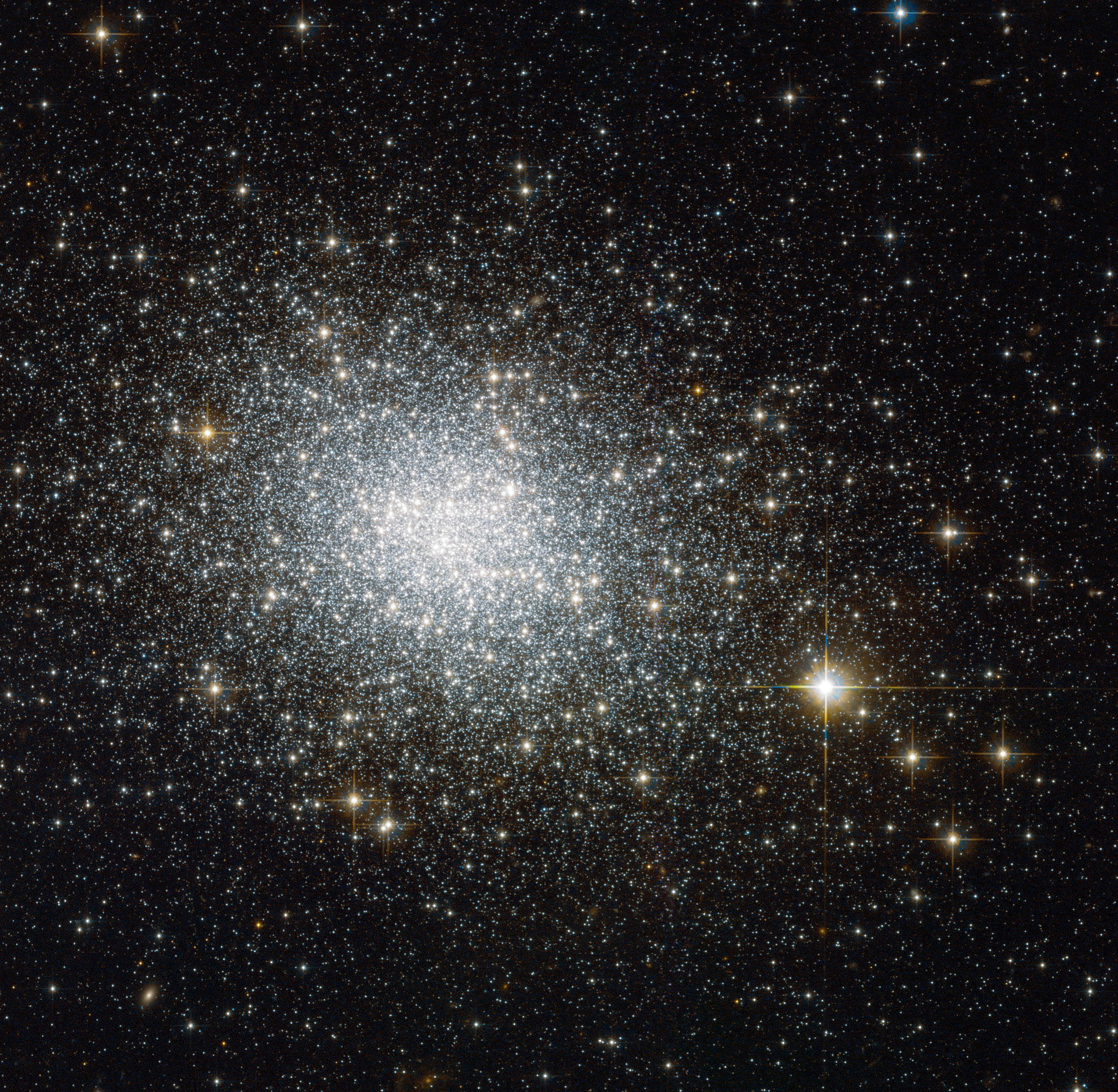
    Hubbble Image of Globular Cluster NGC 121
    This image shows NGC 121, a globular cluster in the constellation of Tucana (The Toucan). Credit: ESA/Hubble & NASA; Acknowledgement: Stefano Campani

    This newly released Hubble image shows globular cluster NGC 121.

    This image shows NGC 121, a globular cluster in the constellation of Tucana (The Toucan). Globular clusters are big balls of old stars that orbit the centers of their galaxies like satellites — the Milky Way, for example, has around 150.

    NGC 121 belongs to one of our neighboring galaxies, the Small Magellanic Cloud (SMC). It was discovered in 1835 by English astronomer John Herschel, and in recent years it has been studied in detail by astronomers wishing to learn more about how stars form and evolve.

    Stars do not live forever — they develop differently depending on their original mass. In many clusters, all the stars seem to have formed at the same time, although in others we see distinct populations of stars that are of different ages. By studying old stellar populations in globular clusters, astronomers can effectively use them as tracers for the stellar population of their host galaxies. With an object like NGC 121, which lies close to the Milky Way, Hubble is able to resolve individual stars and get a very detailed insight.

    NGC 121 is around 10 billion years old, making it the oldest cluster in its galaxy; all of the SMC’s other globular clusters are 8 billion years old or younger. However, NGC 121 is still several billions of years younger than its counterparts in the Milky Way and in other nearby galaxies like the Large Magellanic Cloud. The reason for this age gap is not completely clear, but it could indicate that cluster formation was initially delayed for some reason in the SMC, or that NGC 121 is the sole survivor of an older group of star clusters.

    This image was taken using Hubble’s Advanced Camera for Surveys (ACS). A version of this image was submitted to the Hubble’s Hidden Treasures image processing competition by contestant Stefano Campani.


    Never miss a breakthrough: Join the SciTechDaily newsletter.
    Follow us on Google and Google News.

    Astronomy Hubble Space Telescope
    Share. Facebook Twitter Pinterest LinkedIn Email Reddit

    Related Articles

    A Morphing Spiral Galaxy Amongst Friends

    Hubble Views Magnificent Lopsided Galaxy NGC 2276

    Hubble Captures Fantastic Detail of Eponymous Spiral Galaxy NGC 691

    Spectacular Image Captured by Hubble Shows a Strangely Contorted Spiral Galaxy

    A Distant Spiral in Virgo: Extraordinary Detail Seen in a Galaxy 150 Million Light-Years Away From Earth

    Magnetic Monsters: Hubble Tracks Down Location of Mysterious Radio Signals From Intergalactic Space

    A Menagerie of Galaxies: Hubble Captures a Cluster With Galaxies of All Shapes and Sizes

    How Habitable Are Planets That Orbit Red Dwarfs – The Most Common Type of Stars in the Galaxy?

    Cosmic Silver Lining: Hubble Spots V565 Surrounded by Four Prominent Diffraction Spikes

    Leave A Reply Cancel Reply

    • Facebook
    • Twitter
    • Pinterest
    • YouTube

    Don't Miss a Discovery

    Subscribe for the Latest in Science & Tech!

    Trending News

    The Universe Is Expanding Too Fast and Scientists Can’t Explain Why

    “Like Liquid Metal”: Scientists Create Strange Shape-Shifting Material

    Early Warning Signals of Esophageal Cancer May Be Hiding in Plain Sight

    Common Blood Pressure Drug Shows Surprising Power Against Deadly Antibiotic-Resistant Superbug

    Scientists Uncover Dangerous Connection Between Serotonin and Heart Valve Disease

    Scientists Discover a “Protector” Protein That Could Help Reverse Hair Loss

    Bone-Strengthening Discovery Could Reverse Osteoporosis

    Scientists Uncover Hidden Trigger Behind Stem Cell Aging

    Follow SciTechDaily
    • Facebook
    • Twitter
    • YouTube
    • Pinterest
    • Newsletter
    • RSS
    SciTech News
    • Biology News
    • Chemistry News
    • Earth News
    • Health News
    • Physics News
    • Science News
    • Space News
    • Technology News
    Recent Posts
    • The Simple Habit That Could Help Prevent Cancer
    • Forgotten Medicinal Plant Shows Promise in Fighting Dangerous Superbugs
    • Millions Take These IBS Drugs, But a New Study Finds Serious Risks
    • 5 Common Myths About Learning a New Language, Debunked
    • The Neanderthal “Love Story” Isn’t What It Seems
    Copyright © 1998 - 2026 SciTechDaily. All Rights Reserved.
    • Science News
    • About
    • Contact
    • Editorial Board
    • Privacy Policy
    • Terms of Use

    Type above and press Enter to search. Press Esc to cancel.