
Close Menu
    Facebook X (Twitter) Instagram
    SciTechDaily
    • Biology
    • Chemistry
    • Earth
    • Health
    • Physics
    • Science
    • Space
    • Technology
    Facebook X (Twitter) Pinterest YouTube RSS
    SciTechDaily
    Home»Technology»New Manufacturing Method Enables Ultra-Efficient Atomic Computers That Use 100x Less Power
    Technology

    New Manufacturing Method Enables Ultra-Efficient Atomic Computers That Use 100x Less Power

    By American Chemical SocietyNovember 28, 2019No Comments3 Mins Read
    Facebook Twitter Pinterest Telegram LinkedIn WhatsApp Email Reddit
    Share
    Facebook Twitter LinkedIn Pinterest Telegram Email Reddit
    Atomic-Scale Ultra-Efficient Computer
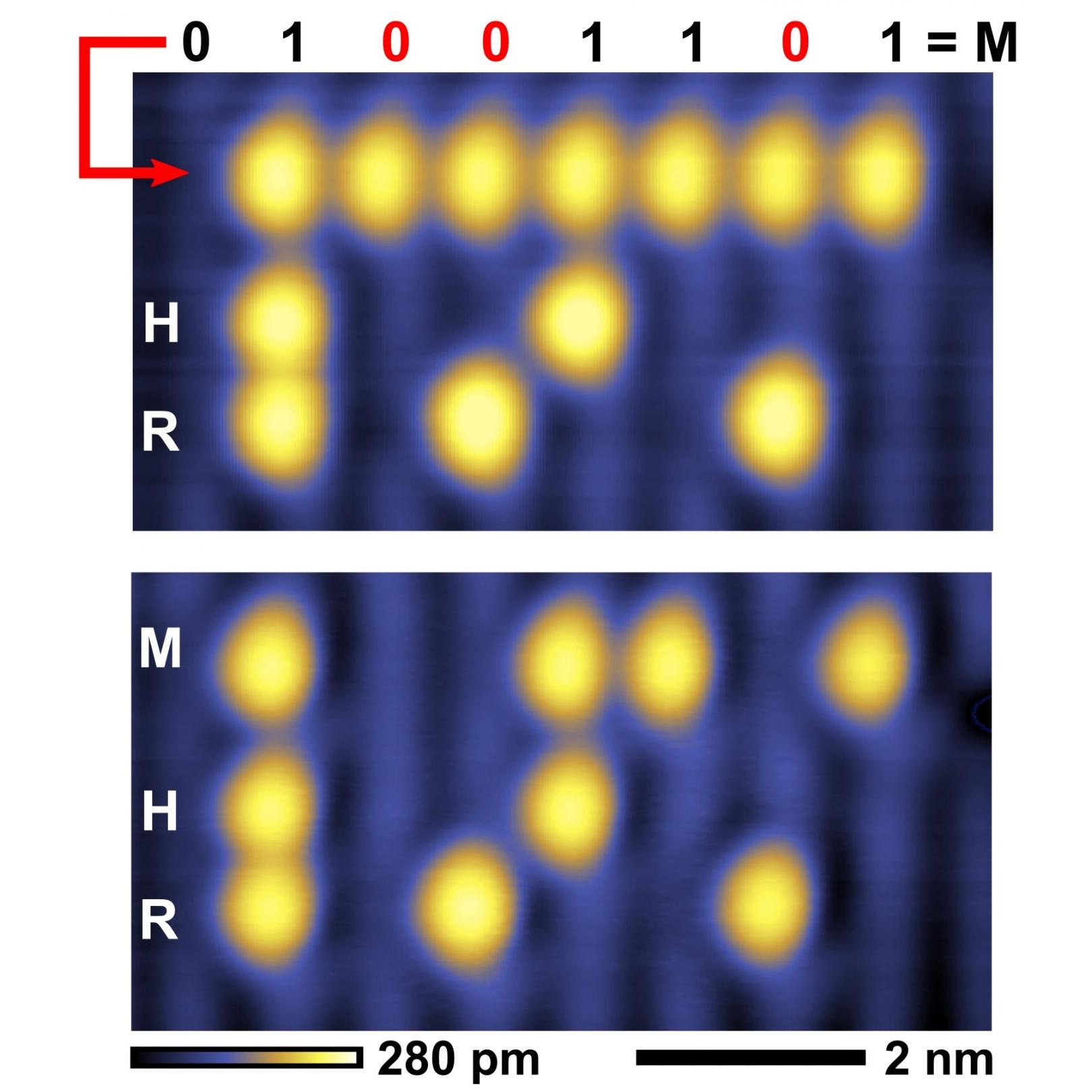
    Researchers rewrote the binary data in the first line of a 24-bit memory array (top image, red arrow) using molecules of hydrogen to encode the letter “M” (bottom image). Credit: Adapted from ACS Nano 2019, DOI: 10.1021/acsnano.9b07637

    As computers continue to infiltrate almost every aspect of modern life, their negative impact on the environment grows. According to recent estimates, the electricity required to power today’s computers releases a total of more than 1 gigatonne of carbon emissions to the atmosphere each year. Now, researchers reporting in ACS Nano have developed a new manufacturing process that could enable ultra-efficient atomic computers that store more data and consume 100 times less power.

    Scientists have previously manipulated single atoms to make ultra-dense memory arrays for computers, which store more data in a much smaller space than conventional hard drives and consume much less power. In a technique known as hydrogen lithography, researchers use the tip of a scanning tunneling microscope (STM) to remove single atoms of hydrogen bonded to a silicon surface. The pattern of silicon atoms bound to or lacking a hydrogen atom forms a binary code that stores the data. However, there is a bottleneck when rewriting the data because the STM tip must pick up and deposit hydrogen atoms at precise locations. Roshan Achal, Robert Wolkow, and colleagues wanted to develop a more efficient method to rewrite atomic memory arrays.

    The researchers prepared silicon surfaces covered with hydrogen atoms. With hydrogen lithography, they removed certain atoms to write data. The scientists found that by taking away an extra hydrogen atom next to a bit they wanted to rewrite, they could create a reactive site that attracted hydrogen gas that was infused into the chamber. Binding of a single hydrogen gas (H2) molecule to the two adjacent sites erased the sites so that a new binary code could be written. Using hydrogen gas as a molecular eraser to rewrite the data was much faster and easier than bringing in individual hydrogen atoms on an STM tip. The researchers demonstrated the technique’s ability to rewrite a small 24-bit memory array. The new method allows 1,000-times-faster fabrication of atomic-scale computers, making them ready for real-world manufacture, the researchers say.

    Reference: “Detecting and Directing Single Molecule Binding Events on H-Si(100) with Application to Ultradense Data Storage” by Roshan Achal, Mohammad Rashidi, Jeremiah Croshaw, Taleana R. Huff and Robert A. Wolkow, 27 November 2019, ACS Nano.
    DOI: 10.1021/acsnano.9b07637

    The authors acknowledge funding from the National Sciences and Engineering Research Council of Canada, Alberta Innovates-Technology Futures, National Research Council Canada, and Quantum Silicon.

    Never miss a breakthrough: Join the SciTechDaily newsletter.
    Follow us on Google and Google News.

    American Chemical Society Computers Nanotechnology Popular
    Share. Facebook Twitter Pinterest LinkedIn Email Reddit

    Related Articles

    Microrobots Swarm the Seas, Capturing Microplastics and Bacteria [Video]

    Hair Regeneration: AI Helps Design Baldness Treatment That Works Better Than Testosterone or Minoxidil

    Bacteria-Sized Metallic Robots Take On Microplastics – And Win by Breaking Them Down

    COVID-19 Coronavirus Breathalyzer Test Developed

    Scientists Create Synthetic Red Blood Cells That Mimic Natural Ones, Plus Have New Abilities

    High Resolution 3D Printer Prints 5 Meters per Second

    Quantum Computers to Arrive with Single-Atom-Sized Transistors

    Physicists Work on Nano Loudspeakers to Make Better MRIs, Quantum Computers

    Using Lasers to Cool Semiconductors

    Leave A Reply Cancel Reply

    • Facebook
    • Twitter
    • Pinterest
    • YouTube

    Don't Miss a Discovery

    Subscribe for the Latest in Science & Tech!

    Trending News

    Scientists Uncover Potential Brain Risks of Popular Fish Oil Supplements

    Scientists Discover a Surprising Way To Make Bread Healthier and More Nutritious

    After 60 Years, Scientists Uncover Unexpected Brain Effects of Popular Diabetes Drug Metformin

    New Research Uncovers Hidden Side Effects of Popular Weight-Loss Drugs

    Scientists Rethink Extreme Warming After Surprising Ocean Discovery

    Landmark Study Links Never Marrying to Significantly Higher Cancer Risk

    Researchers Discover Unknown Beetle Species Just Steps From Their Lab

    Largest-Ever Study Finds Medicinal Cannabis Ineffective for Anxiety, Depression, PTSD

    Follow SciTechDaily
    • Facebook
    • Twitter
    • YouTube
    • Pinterest
    • Newsletter
    • RSS
    SciTech News
    • Biology News
    • Chemistry News
    • Earth News
    • Health News
    • Physics News
    • Science News
    • Space News
    • Technology News
    Recent Posts
    • Researchers Uncover Source of Strange Deformation in Earth’s Largest Continental Rift
    • Scientists Solve Mystery of Where the Colorado River Vanished Millions of Years Ago
    • Not Just Alzheimer’s: Scientists Uncover Clues to a Second, Overlooked Disorder
    • Scientists Uncover Dangerous Connection Between Serotonin and Heart Valve Disease
    • Scientists Discover a “Protector” Protein That Could Help Reverse Hair Loss
    Copyright © 1998 - 2026 SciTechDaily. All Rights Reserved.
    • Science News
    • About
    • Contact
    • Editorial Board
    • Privacy Policy
    • Terms of Use

    Type above and press Enter to search. Press Esc to cancel.