
Close Menu
    Facebook X (Twitter) Instagram
    SciTechDaily
    • Biology
    • Chemistry
    • Earth
    • Health
    • Physics
    • Science
    • Space
    • Technology
    Facebook X (Twitter) Pinterest YouTube RSS
    SciTechDaily
    Home»Biology»New “Missing Link” Fossil Reveals Origin of Arthropod Breathing System
    Biology

    New “Missing Link” Fossil Reveals Origin of Arthropod Breathing System

    By University of ManchesterFebruary 8, 2022No Comments3 Mins Read
    Facebook Twitter Pinterest Telegram LinkedIn WhatsApp Email Reddit
    Share
    Facebook Twitter LinkedIn Pinterest Telegram Email Reddit
    Erratus Sperare
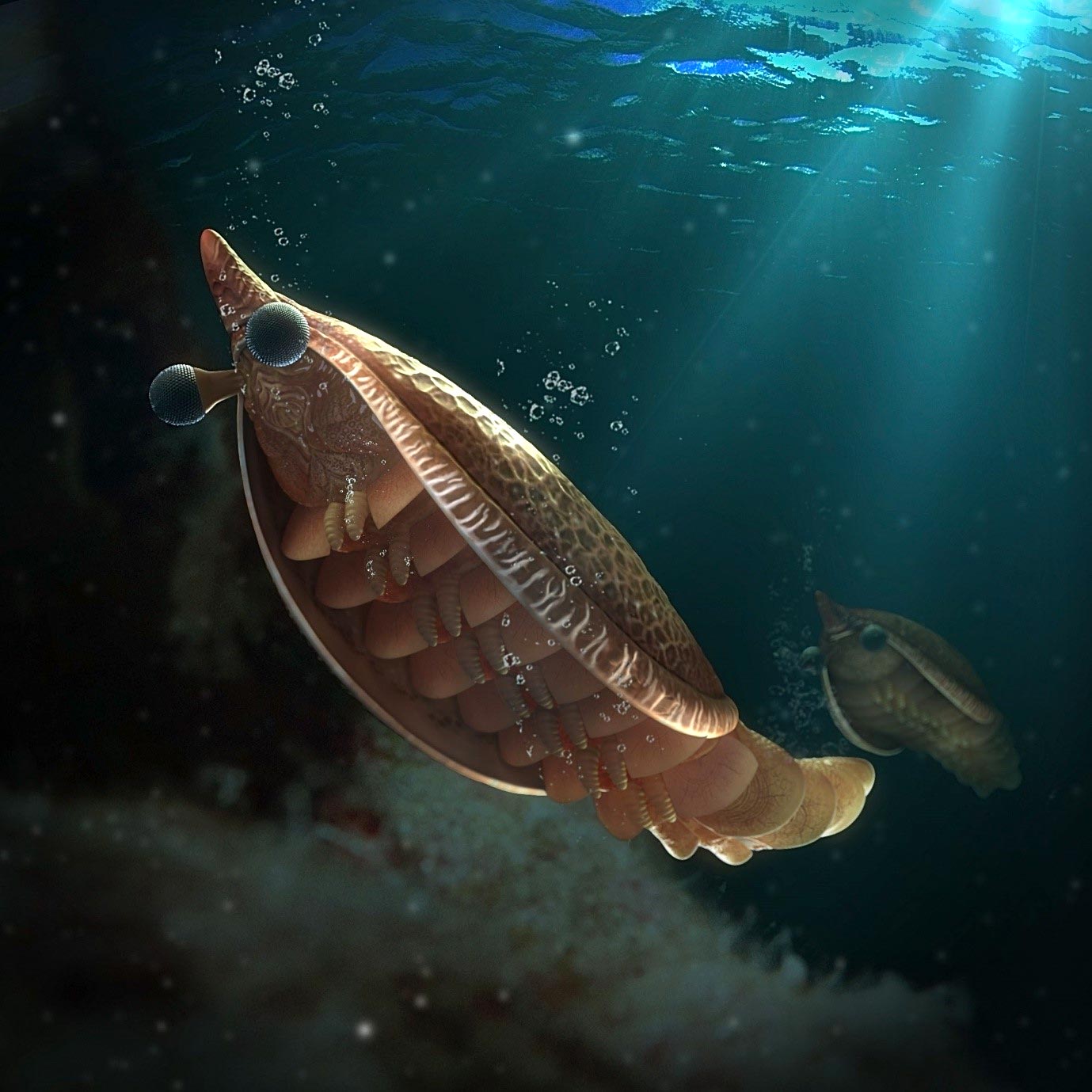
    Erratus Sperare — the new missing link fossil. Credit: The University of Manchester

    A newly discovered fossil, Erratus sperare, provides crucial evidence for the evolution of gills in arthropods, linking ancient specialized flaps to the biramous limbs of modern species. This discovery also suggests these gills evolved into wings and lungs.

    University of Manchester research fellow David Legg, in collaboration with a team of international scientists from China, Switzerland, and Sweden, has today announced a new fossil that reveals the origin of gills in arthropods.

    Arthropods, the group of animals that includes creepy crawlies like spiders and woodlice, are the largest phylum in the animal kingdom and are found everywhere from the deepest ocean trench to the top of Mount Everest.

    Research published on February 7, 2022, shows the newest addition to the group is a 520-million-year-old (about 10 times as old as the dinosaurs) organism called Erratus sperare. Erratus sperare was discovered in the Chengjiang Fossil Site, a UNESCO World Heritage Site located in Yunnan, China. The Chengjiang Fossil Site preserves an ancient underwater ecosystem which included the relatives of some well-known arthropod fossils like trilobites and anomalocarids.

    “Thanks to this new fossil, Erratus sperare, we now have a much clearer idea. These gills also probably went on to evolve into the wings of insects and the lungs of terrestrial arthropods like spiders so were a very important innovation.”

    Dr. David Legg

    Evolution of Biramous Limbs

    Modern water-dwelling arthropods have biramous limbs, legs that have two parts – one for breathing and one for walking – but how such specialized limbs evolved was a mystery. Some of the earliest fossil arthropods, like Anomalocaris, had swimming flaps that may have doubled as gills, but until now researchers didn’t know how arthropods made the jump from these specialized flaps to the biramous limbs of modern arthropods.

    Erratus sperare provides the missing link between arthropods that used such specialized flaps and arthropods with biramous limbs. It has both legs and flaps.

    Dr. David Legg, one of the authors of this study, said: “Fish aren’t the only organisms that have gills! Arthropods have gills too… they just have them on their legs. When it came to arthropods, however, we just weren’t sure where these gills came from.

    “Thanks to this new fossil, Erratus sperare, we now have a much clearer idea. These gills also probably went on to evolve into the wings of insects and the lungs of terrestrial arthropods like spiders so were a very important innovation.”

    Reference: “The evolution of biramous appendages revealed by a carapace-bearing Cambrian arthropod” by Dongjing Fu, David A. Legg, Allison C. Daley, Graham E. Budd, Yu Wu and Xingliang Zhang, 7 February 2022, Philosophical Transactions of the Royal Society B Biological Sciences.
    DOI: 10.1098/rstb.2021.0034

    Never miss a breakthrough: Join the SciTechDaily newsletter.
    Follow us on Google and Google News.

    Fossils Paleontology University of Manchester
    Share. Facebook Twitter Pinterest LinkedIn Email Reddit

    Related Articles

    Researchers Discover 305 Million-Year-Old “Early Spider” Fossil

    Pentecopterus – A Giant Sea Scorpion from the Prehistoric Seas

    New Species of Horned Dinosaur – Regaliceratops Peterhewsi

    Paleontologists Announce the Discovery of Bird-Like Dinosaur Anzu Wyliei

    Research Reveals First Complete Chemical Analysis of ‘Dinobird’ Feathers

    Discovery of ‘Bird-Dinosaur’ Eosinopteryx Challenges Bird Evolution Theory

    Nyasasaurus, Oldest Dinosaur Believed to Be 243 Million Years Old

    Silurian Fossil of Dibasterium Durgae Untangles Horseshoe Crab Past

    Pegomastax Africanus, A Miniature Dinosaur That Thrived in Southern Africa

    Leave A Reply Cancel Reply

    • Facebook
    • Twitter
    • Pinterest
    • YouTube

    Don't Miss a Discovery

    Subscribe for the Latest in Science & Tech!

    Trending News

    Scientists Uncover Potential Brain Risks of Popular Fish Oil Supplements

    Scientists Discover a Surprising Way To Make Bread Healthier and More Nutritious

    After 60 Years, Scientists Uncover Unexpected Brain Effects of Popular Diabetes Drug Metformin

    New Research Uncovers Hidden Side Effects of Popular Weight-Loss Drugs

    Scientists Rethink Extreme Warming After Surprising Ocean Discovery

    Landmark Study Links Never Marrying to Significantly Higher Cancer Risk

    Researchers Discover Unknown Beetle Species Just Steps From Their Lab

    Largest-Ever Study Finds Medicinal Cannabis Ineffective for Anxiety, Depression, PTSD

    Follow SciTechDaily
    • Facebook
    • Twitter
    • YouTube
    • Pinterest
    • Newsletter
    • RSS
    SciTech News
    • Biology News
    • Chemistry News
    • Earth News
    • Health News
    • Physics News
    • Science News
    • Space News
    • Technology News
    Recent Posts
    • Scientists Discover Hidden Pathway Inside Catalysts That Defies Decades of Assumptions
    • Scientists Finally Crack Decades-Old Mystery of “Breathing” Lasers
    • “Like Liquid Metal”: Scientists Create Strange Shape-Shifting Material
    • Early Warning Signals of Esophageal Cancer May Be Hiding in Plain Sight
    • Researchers Have Discovered a THC-Free Cannabis Compound That May Replace Opioids
    Copyright © 1998 - 2026 SciTechDaily. All Rights Reserved.
    • Science News
    • About
    • Contact
    • Editorial Board
    • Privacy Policy
    • Terms of Use

    Type above and press Enter to search. Press Esc to cancel.