
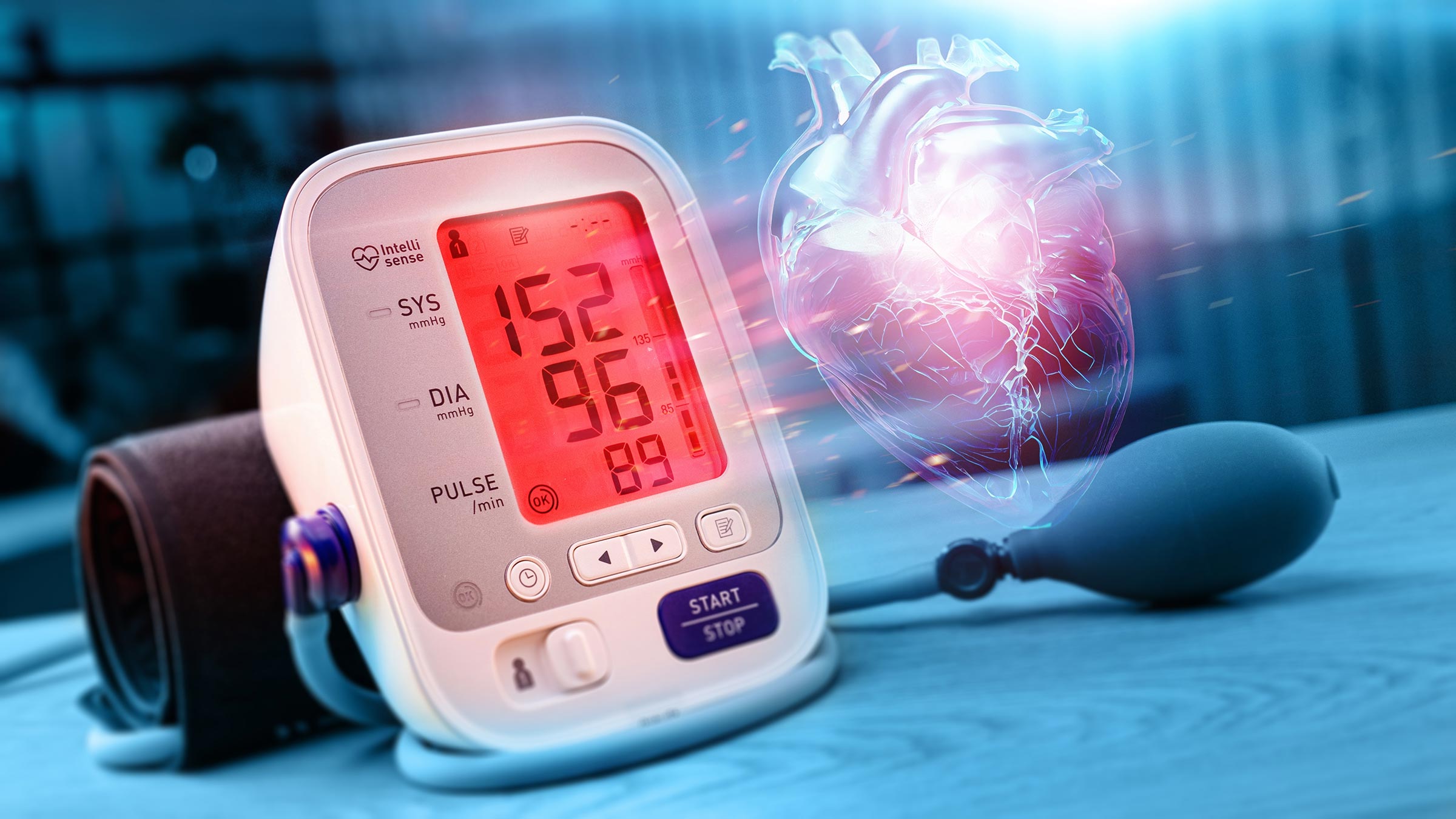
A new drug lowered blood pressure and improved kidney health markers in high-risk patients. Phase 3 trials will test its long-term effects.
Preliminary research suggests that adding the new medication baxdrostat to standard treatment may help lower blood pressure and slow the progression of kidney disease in individuals with chronic kidney disease who also have uncontrolled hypertension. The findings were presented at the American Heart Association’s Hypertension Scientific Sessions 2025.
The study was also recently published in the Journal of the American Society of Nephrology.
Chronic kidney disease and high blood pressure are strongly interconnected, and when either condition is poorly managed, they can result in severe complications including heart attack, stroke, heart failure and progression to kidney failure. One of the key factors in this relationship is aldosterone, a hormone produced by the adrenal glands.
Aldosterone promotes sodium retention, which increases water retention and raises blood pressure. Persistently high levels of this hormone can cause blood vessels to become thickened and less flexible, leading to damage in the heart and scarring in the kidneys. This makes aldosterone an important player in both high blood pressure and chronic kidney disease.
“These findings are encouraging for people living with chronic kidney disease and high blood pressure, two conditions that often go hand-in-hand and create a dangerous cycle,” said lead study author Jamie P. Dwyer, M.D., a professor of medicine in the division of nephrology and hypertension at University of Utah Health in Salt Lake City. “High blood pressure can worsen kidney function and declining kidney function can further elevate blood pressure, and these outcomes can be life-altering for patients.”
Trial design and participant profile
The purpose of the study was to evaluate whether adding baxdrostat to standard therapy is both safe and effective for lowering blood pressure in individuals who have chronic kidney disease (advanced enough that they are expected to develop kidney failure or eventually need a transplant) and uncontrolled hypertension. These patients continued to have high blood pressure even while taking either an angiotensin-converting enzyme (ACE) inhibitor or an angiotensin receptor blocker (ARB), two common treatments that target a group of hormones involved in blood pressure regulation.

At the start of the trial, participants had an average systolic blood pressure of 151 mm Hg despite ongoing treatment and laboratory confirmation of kidney disease. Urine tests measuring the protein albumin showed an average level of 714 mg per gram of creatinine, well above the threshold of 30 that can indicate kidney disease. Blood samples used to calculate the estimated glomerular filtration rate (eGFR), a key marker of kidney function, revealed an average value of 44 mL/min/1.73. Persistent eGFR levels below 60 are considered evidence of chronic kidney disease.
Blood pressure reduction after treatment
Of 195 initial study participants, 192 were randomized to begin treatment with low-dose (0.5 mg-1 mg) or high-dose baxdrostat (2 mg-4 mg) or a placebo in addition to standard care. Three people finished the study early due to adverse events, their own decision to leave the study or for other reasons.
After 26 weeks:
- Participants taking either dose of baxdrostat experienced an average systolic blood pressure reduction that was 8.1 mm Hg greater than the decrease seen in the placebo group, equal to about a 5% drop.
- Elevated potassium levels, a known side effect of drugs that block the renin-angiotensin-aldosterone system, were reported in 41% of those on baxdrostat compared with 5% of participants on placebo. Most of these cases were mild or moderate in severity.
- No deaths or unexpected safety concerns occurred during the trial. Serious adverse events were reported in 9% of people receiving baxdrostat and 3% of those in the placebo group.
In an exploratory analysis, the researchers looked at the amount of albumin lost in the urine, a type of protein that when found in the urine in high amounts is a predictor of cardiovascular and kidney disease. They found the urine albumin level was 55% lower in those taking baxdrostat than in those taking a placebo, comparable to the reduction seen with medications that delay the progression of kidney disease.
“The reduction in urine albumin gives us hope that baxdrostat may also help delay kidney damage. This potential is now being tested in two large Phase 3 trials to determine if baxdrostat delays the progression of kidney disease,” said Dwyer.
“These new findings are reassuring that this new class of antihypertensive medications are likely to have both kidney- and cardio-protective benefits and to be safe and effective for broad patient populations,” said Jordana B. Cohen, M.D., M.S.C.E., immediate past chair of the American Heart Association’s Hypertension and Kidney Cardiovascular Science Committee. “Patients with chronic kidney disease were historically often excluded from drug studies. It is particularly reassuring to know that patients with chronic kidney disease, who have very high rates of hypertension and elevated renin-angiotensin aldosterone activity, were represented in their own study, tolerated the medication well, and had both blood pressure and albuminuric benefits. This medication class could be a game changer in the management of hypertension in this patient group.” Cohen, who was not involved in this study, is deputy director and associate professor of medicine and epidemiology in the Perelman School of Medicine at the University of Pennsylvania.
Study details, background and design:
- The trial enrolled 195 adults with an average age of 66. Among them, 32% were women, 40% were non-Hispanic white, and 80% had Type 2 diabetes. Research was carried out across 71 sites in the United States. Three participants were excluded from randomization and the final analysis.
- Every participant had uncontrolled high blood pressure (systolic pressure of at least 140 mm Hg, or 130 mm Hg or higher for those with Type 2 diabetes) despite already receiving the maximum tolerated dose of either an angiotensin-converting enzyme inhibitor or an angiotensin receptor blocker. At enrollment, the average systolic blood pressure was 151.2 mm Hg.
- All participants also had chronic kidney disease but had not yet reached kidney failure (eGFR values ranged between 25-75 mL/min/1.73, with an average of 44 mL/min/1.73 at the start of the study). Urine albumin-creatinine ratio, another marker of kidney damage, averaged 713.8, with values of 100 mg/g or more used as an indicator of disease.
- Of the 195 individuals, 192 were randomized into one of three groups: a low-dose baxdrostat group (0.5 mg per day, increased to 1 mg per day after two weeks), a high-dose baxdrostat group (2 mg per day, increased to 4 mg per day after two weeks), or a placebo group.
- After 26 weeks, blood pressure and kidney function were re-evaluated. The primary outcome measured was the change in systolic blood pressure across the three groups, with adverse events also monitored and recorded.
- Baxdrostat belongs to a class of medications that block aldosterone production. These drugs are being investigated as potential treatments for high blood pressure, chronic kidney disease, and heart failure. At present, baxdrostat has not been approved for clinical use by the U.S. Food and Drug Administration.
Reference: “Efficacy and Safety of Baxdrostat in Participants with CKD and Uncontrolled Hypertension: A Randomized, Double-Blind, Placebo-Controlled Trial” by Jamie P. Dwyer, Noha Maklad, Ola Vedin, John Monyak, Robin Myte, Glenn M. Chertow, Hiddo J.L. Heerspink and Dustin J. Little, 6 September 2025, Journal of the American Society of Nephrology.
DOI: 10.1681/ASN.0000000849
The study was funded by AstraZeneca, developer of baxdrostat.
Never miss a breakthrough: Join the SciTechDaily newsletter.
Follow us on Google and Google News.
17 Comments
What about a pill that stabilize low/high blood pressure?
Very interesting i have ckd and hypertension which sometimes is out of control
My Blood pressure is running pretty high for the last 3 months
190/130 and I take 40mg of lisenoprele
I’m type 2 diabetic with high blood pressure. Looking for help with blood pressure without a ton of side effects.
What about a pill that stabilizes both low/high blood pressure?
Tell me more.
Diagnosed with CHF and CKD.
High blood pressure has dropped after daily exercise of 20-30 minutes at the Y.
Blood pressure occasionally over 190/101 but has dropped to 140/78.
89 years old.
In the mean time while waiting for approval of Baxdrostat ,is Lisinopril good to take?I take 40mg every night and blood pressure is still high! I had 1/3 of my right kidney removed due to cancer that had not spread, does that mean I still have kidney disease?
I’m not a doctor, but I would say you need to try a new blood pressure medication. You HAVE TO CONTROL your blood pressure. Lisinopril worked for me until I developed kidney disease. Keep trying different ones, until you find one or two that works for you. High blood pressure is hard on your kidneys and other organs. So you need to get that until control. I keep track of salt intake. For me, keeping it at 1600 mg a day helps. I wish you the best.
In the end it does not matter since insurance companies (united healthcare) will not help pay for perscriptions unless you bend over and kiss their ring, yes I have united healthcare with NO help at all from them so what does it matter if a scrip would help unless you can afford to pay 100% for your healthcare along with the premiums you pay ever month
More studies now to be done.
i am very interested in the trial i have high blood pressure and high heredity cholesterol i take a high dose of statin daily
many thanks
Jen
I would love to find a medication that helps lower my blood pressure , mine is sometimes in the 200’s top no and in the 150’s on the bottom. I have high blood pressure since I was pregnant with my youngest daughter who turns 30 this year. I’m living on 4 different blood pressure medications . Nothing has brought it down. I was diagnosed a few years ago with Graves disease. I am not on medication for it right now . I would love to use a new medication for my blood pressure and to protect my kidneys. I get Kidney stones and have had to have surgery 4 times. I know my weight plays a roll right now and I have tried everything to lose it. I lose some and it comes right back. If I listen to my stomach I would never eat , my brain tells me all the time I’m not hungry, my stomach tells me it feels nauseous. So it’s crazy . But yes I would love something to help for my blood pressure to be lower. I woke up the other morning my blood pressure was 261/118. I felt nothing. So yes please.
I lowered my blood pressure with keto. Carbs and sugar raise blood pressure. Not salt. I use sea salt almost every day. Sea salt regulates blood pressure and heart rate. Since doing keto, my blood pressure has been perfect for the last 12 months. Around 118/70. Fix your health with diet, not medication.
Diet plays a vital role in health and supplements too medicine has too many side effects
You need to get to a hospital immediately. I’m a registered nurse and your blood pressure is deadly. I’ve had many patients in the ICU with malignant hypertension but have NEVER seen a pressure like yours. Go to the ER STAT!
I have high blood pressure , on meds for it. My kidneys are being in decrease mood a little . But need the blood pressure meds . I would to able to check it out.