
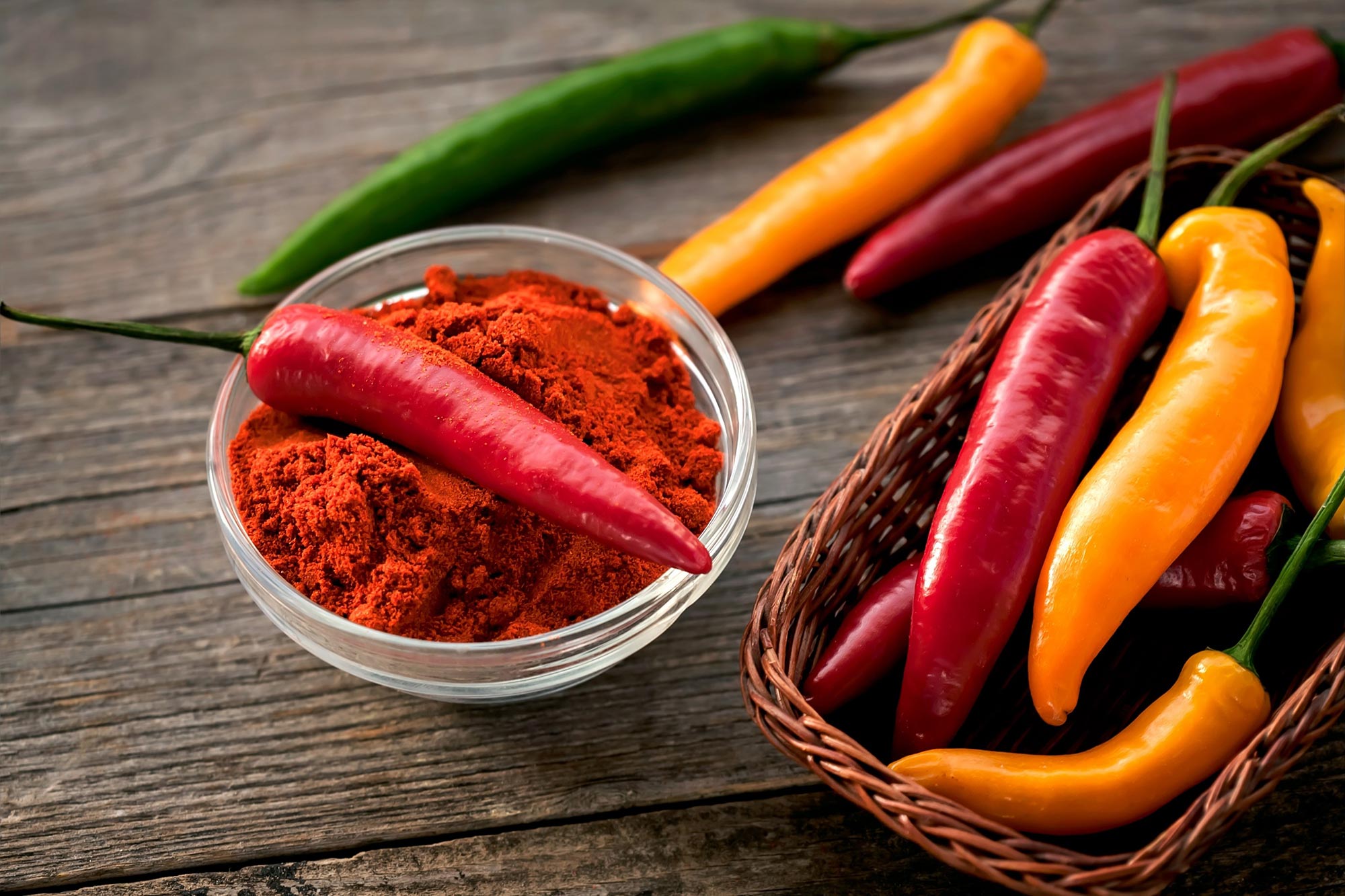
If you love spicy food, you are not alone. But scientists are taking a closer look at whether eating a lot of chili peppers could affect your cancer risk.
Could your love of spicy food come with hidden risks? A growing body of research suggests that chili peppers, a staple in many cuisines worldwide, may play a complex role in cancers of the digestive system.
Gastrointestinal cancers, including colorectal, stomach, and esophageal cancers, are among the leading causes of cancer-related illness and death worldwide. Because these diseases are often detected late, researchers are eager to identify lifestyle factors that might help prevent them.
Chili peppers are a major part of diets across the globe. They contain capsaicin, the compound that gives them their heat. Capsaicin has been linked to beneficial effects in lab studies, such as reducing inflammation. At the same time, some research suggests it may also encourage the growth of certain cancer cells, which has made its overall impact unclear.
What the Research Shows
To better understand this, researchers reviewed existing studies on chili pepper consumption and gastrointestinal cancer risk. They analyzed 14 studies involving more than 11,000 people, including over 5,000 cancer cases.
Overall, people who ate the most chili peppers were about 64% more likely to develop gastrointestinal cancers compared to those who ate the least. However, the results were not the same for every type of cancer.
The strongest link was seen with esophageal cancer. People with high chili pepper intake were nearly three times more likely to develop this type of cancer.
In contrast, no statistically significant increase in risk was found for stomach or colorectal cancers, although stomach cancer showed a non-significant trend toward higher risk (about 77% higher in the highest intake group).
The researchers wrote that their findings “suggest that chili pepper is a risk factor for certain GI cancers (e.g., EC).”
Where people live also seemed to make a difference. Higher risks were observed in studies from Asia, Africa, and North America, while studies from Europe and South America actually showed a lower risk. One possible explanation is how much chili pepper people typically consume. In some regions, intake is much higher, which could influence the results.
Regional Differences and Possible Explanations
The team noted that “geographical regions influence the risk of GI cancers,” and said this should be considered when making dietary recommendations.
Scientists also have some ideas about why the esophagus may be more affected. Capsaicin can activate heat and pain receptors, creating the burning sensation associated with spicy foods. Over time, repeated irritation could make the esophagus more vulnerable. Differences in how quickly tissues renew themselves in different parts of the digestive system may also play a role.
Still, the researchers caution that the evidence is not definitive. All of the studies included were observational, meaning they cannot prove that chili peppers directly cause cancer.
More research is needed to understand how much chili pepper is safe and whether moderate consumption carries the same risks as very high intake.
Reference: “Association between chili pepper consumption and risk of gastrointestinal-tract cancers: A meta-analysis” by Changchang Chen, Man Zhang, Xutong Zheng and Hongjuan Lang, 10 October 2022, Frontiers in Nutrition.
DOI: 10.3389/fnut.2022.935865
Never miss a breakthrough: Join the SciTechDaily newsletter.
Follow us on Google and Google News.
5 Comments
“New Reseach Finds Shocking Link Between Chili Peppers and Cacer”.
Yesterday an article appeated on this website with the title;
“Eating Chili Peppers Linked to Longer Life”.
I guess we’re suppose to choose what to believe, as usual.
Typo- “Cacer” should read “Cancer”.
“New Research Finds” and “10 October 2022, Frontiers in Nutrition”. interesting
One thing that stood out to me with the esophogeal cancer increase is that acid reflux (GERD) is often aggravated by chili pepper consumption, and increased reflux has been linked to that. Additionally, and I know this may come across as crude, Europeans often consume less food (I’m a somewhat overweight American for full disclosure). I’ve personally had GERD and when I overeat, it can trigger it. I’ve had it happen with chili peppers, but also had times where I could eat them and have no reflux issues – it all depends on how full my stomach is. So to me, the evidence could possibly be pointing more to that than the chili pepper, just like you might be able to link pepperoni consumption to the same increase. It would also line up with possible stomach cancer.
that makes sense