
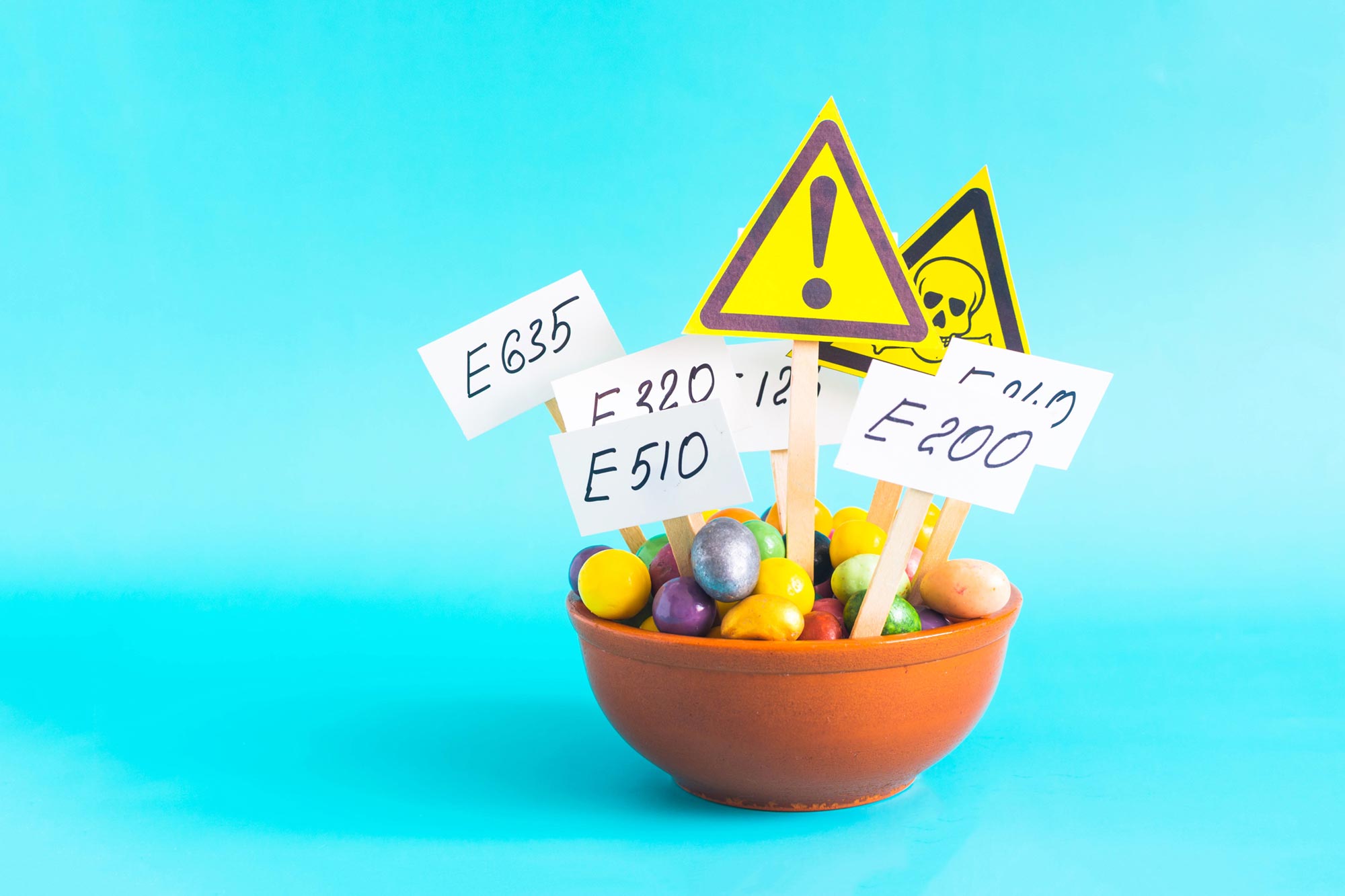
Researchers say the results could have meaningful implications for public health, especially because these additives are so widely used.
A new study from France, published in The BMJ, suggests that people who consume higher amounts of food preservatives may face a slightly increased risk of developing cancer. These additives are a routine part of many industrially processed foods and beverages, where they are used to keep products fresh for longer periods.
The researchers caution that the findings do not prove preservatives cause cancer. Still, they say the results add meaningful evidence to an ongoing scientific discussion and may justify a closer look at current regulations governing how these substances are used, with consumer protection in mind.
Food preservatives play a central role in modern diets by slowing spoilage and extending shelf life. While laboratory experiments have shown that some preservatives can damage cells and DNA, clear evidence linking everyday consumption to cancer in people has been limited until now.
To better understand potential long-term effects, the research team analyzed detailed dietary and health data collected between 2009 and 2023, examining how exposure to preservative food additives related to cancer risk in adults over time.
Study Design and Population
Their findings are based on 105,260 participants aged 15 years and older (average age 42 years; 79% women) enrolled in the NutriNet-Santé cohort study who were free of cancer and completed regular 24-hour brand-specific dietary records over an average 7.5-year period. Health questionnaires and official medical and death records were then used to track cancer cases up to December 31, 2023.
A total of 17 individual preservatives were analyzed including citric acid, lecithins, total sulfites, ascorbic acid, sodium nitrite, potassium sorbate, sodium erythorbate, sodium ascorbate, potassium metabisulfite, and potassium nitrate.
Preservatives were grouped into non-antioxidants (which inhibit microbial growth or slow chemical changes that lead to spoilage) and antioxidants (which delay or prevent food deteriorating by removing or limiting oxygen levels in packaging).
During the follow-up period, 4,226 participants received a diagnosis of cancer, comprising 1,208 breast, 508 prostate, 352 colorectal, and 2,158 other cancers.
Of the 17 individually studied preservatives, 11 were not associated with cancer incidence, and no link was found between total preservatives and cancer incidence.
The study followed 105,260 individuals aged 15 years and older (average age 42 years; 79% women) enrolled in the NutriNet-Santé cohort. All participants were free of cancer at the outset and regularly completed 24 hour brand-specific dietary records over an average period of 7.5 years. Cancer diagnoses were identified through health questionnaires as well as official medical and death records, with follow-up continuing until 31 December 2023.
Preservatives Associated With Higher Cancer Risk
Researchers assessed intake of 17 commonly used preservatives, including citric acid, lecithins, total sulfites, ascorbic acid, sodium nitrite, potassium sorbate, sodium erythorbate, sodium ascorbate, potassium metabisulfite, and potassium nitrate.
For analysis, the additives were divided into two categories. Non-antioxidant preservatives limit microbial growth or slow chemical reactions that cause food to spoil, while antioxidant preservatives help protect foods by reducing exposure to oxygen during storage.
During the study period, 4,226 participants were diagnosed with cancer. This included 1,208 cases of breast cancer, 508 prostate cancers, 352 colorectal cancers, and 2,158 cancers affecting other parts of the body.
When the preservatives were analyzed individually, 11 of the 17 showed no association with cancer risk. The researchers also found no evidence linking overall preservative intake to total cancer incidence, highlighting that any potential risk appears to be limited to specific compounds rather than preservatives as a whole.
Implications for Regulation and Public Health
However, they say this was a large study based on detailed dietary records linked to food databases over 14 years and results are consistent with existing experimental data suggesting adverse cancer-related effects of several of these compounds.
As such, they conclude: “This study brings new insights for the future re-evaluation of the safety of these food additives by health agencies, considering the balance between benefit and risk for food preservation and cancer.”
In the meantime, they call on manufacturers to limit the use of unnecessary preservatives, and support recommendations for consumers to favor freshly made, minimally processed foods.
From a policy perspective, preservatives offer clear benefits by extending shelf life and lowering food costs, which can be particularly important for populations with lower incomes, point out US researchers in a linked editorial.
However, they say the widespread and often insufficiently monitored use of these additives, with uncertainties of their long term health effects, call for a more balanced approach.
Findings from NutriNet-Santé may prompt regulatory agencies to revisit existing policies, such as setting stricter limits on use, requiring clearer labeling, and mandating disclosure of additive contents, while collaborative global monitoring initiatives, similar to those implemented for trans fatty acids and sodium, could also support evidence-based risk assessments and guide reformulation by the food industry, they write.
“At the individual level, public health guidance is already more definitive about the reduction of processed meat and alcohol intake, offering actionable steps even as evidence on the carcinogenic effects of preservatives is evolving,” they conclude.
Reference: “Preservatives and risk of cancer” by Xinyu Wang and Edward Giovannucci, 7 January 2026, BMJ.
DOI: 10.1136/bmj.r2613
Funding: European Research Council, French National Cancer Institute, French Ministry of Health, IdEx Université de Paris, Bettencourt-Schueller Foundation
Never miss a breakthrough: Join the SciTechDaily newsletter.
Follow us on Google and Google News.
9 Comments
Unless my memory is incorrect, it seems to me that one class of carcinogenic chemical is any molecule that has a shape similar to any amino acid. There are a lot of reasons for chemicals to be carcinogenic. Many poisons exert their effect by bonding to other molecules that are necessary for life. For example, nitrates, carbon monoxide, and cyanide all kill by bonding with hemoglobin so strongly that oxygen and carbon dioxide are both excluded. In effect, that is also caused by the similarity between them. Completely avoiding carcinogenic compounds will probably never be possible. That doesn’t mean it’s ok to add chemicals to food that have no purpose other than making the food a little prettier. Now, we realize that even plastic bits may cause serious health issues. That will be very difficult to address, since we have saturated all water sources, and possibly the air with little bits of plastic.
“However, they say this was a large study based on detailed dietary records linked to food databases over 14 years and results are consistent with existing experimental data suggesting adverse cancer-related effects of several of these compounds.”
It would be helpful to know *which* compounds allegedly have adverse cancer-related effects. And how strong is the evidence? “consistent with existing experimental data *suggesting* adverse cancer-related effects” does not appear to be compelling evidence.
Was this written by an AI or a terrible writer? The introductory paragraphs are essentially identical to the middle paragraphs. Not once does the article say which of the preservatives are linked to cancer.
AI slop if I had to guess.
Plus the article failed to even mention which preservatives were associated with the correlation.
This site it turning to straight garbage.
Article link: doi:10.1136/bmj-2025-084917
100% ridiculous article saying absolutely nothing
The study can be accessed through the DOI which is an editorial from the BMJ issue.
Today’s journalists have no reason to suspect that they are serving up pablum. Most would read this article and say “well done, here is a cookie, honey”
Even the original referenced paper is unsatisfying. Too many variables. Not enough data to establish much in the way of statistical confidence, except maybe that added nitrates and nitrites may be culpable. None of this should be unexpected. Nitrites are associated with the production of potent cancer-causing nitrosamines under conditions of low pH, heat, and contact with certain amine compounds. I try not to eat nitrite-cured meat for that reason.