
Researchers developed a model to assess how life might spread between planets via panspermia and proposed methods for detecting its occurrence.
One of the fundamental themes in astrobiology is to seek to ascertain the origin and distribution of life in the cosmos. As part of this, the field also deals with how life may be transferred from one planetary system to another. Recent research may give insight into how we could detect traces of this intriguing process in the future.
Florida Tech assistant professor of astrobiology Manasvi Lingam, along with researchers from Ecole Polytechnique Federale de Lausanne in Switzerland and University of Rome in Italy, recently completed the paper, “Feasibility of Detecting Interstellar Panspermia in Astrophysical Environments,” which has been accepted for publication in The Astronomical Journal.
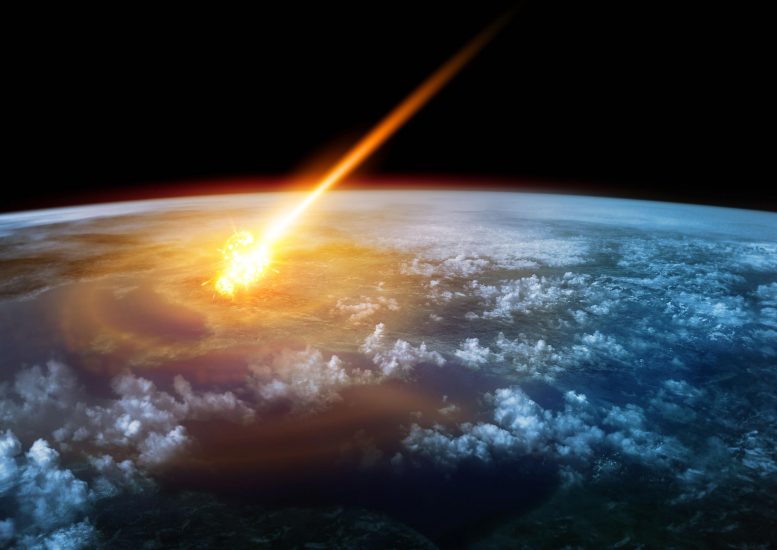
The research analyzes the process of how planets are bombarded by rocks, and how life-carrying microbes that may be on those rocks spread from one planet to bring life to another one. Life on planets might have been initiated by panspermia, a millennia-old theory that microbes living amid space dust, comets, and asteroids are transferred to the planet as these objects collide with its surface. In their paper, Lingam and his team present a sophisticated mathematical model that factors in how long microbes survive, the rates at which the particles disperse, and the velocities of ejecta – the material forced out as a result of impact – to assess the prospects for detecting interstellar panspermia.
Modeling Microbial Transfer Across Stars
The paper shows that the correlations between pairs of life-bearing planetary systems may serve as an effective diagnostic of interstellar panspermia, provided that the velocity of the microbe-bearing ejecta is greater than relative velocities of stars. The team generated hands-on estimates of the model parameters for various astrophysical environments and concluded that open clusters and globular clusters (i.e., tightly clustered environments) appear to represent the best targets for assessing the viability of interstellar panspermia.
Like a chain reaction in a nuclear reactor, life on planets can be initiated by the collision of one life-bearing object hitting one planet (thereby seeding it), and the microbe-bearing objects on that planet being subsequently ejected into space and then spreading across multiple planets in the area. In addition to this mechanism of panspermia, scientists also believe that life can also be created from nonliving systems in a process known as abiogenesis. By examining biological signatures on planets, Lingam and his team conducted research that indicates how far and how effectively panspermia can reach neighboring planets.
Mathematical Tools to Distinguish Life’s Origins
“What we showed is that there were certain environments where panspermia is more conducive, and other environments where it is less,” Lingam said. “The second thing we showed is that differentiating between the two hypotheses (panspermia and abiogenesis) can be undertaken using a mathematical quantity known as a pair-wise correlation function. If you have a non-zero function, it would imply that panspermia is operational, and if you have a zero function it means that life is created on worlds independently of one another.”
For Lingam, the paper may give way to not only understanding which planets are impacted by the travels of living organisms, but also to providing a better grasp of how those on Earth may be biologically connected with other lifeforms in our solar system. For example, the microbes on Mars may potentially come from panspermia involving Earth in some fashion.
“If we were to detect life on Mars, we would need to come up with good diagnostic tools to understand whether this life is truly a second genesis, originating completely independent from life on Earth, or if it was seeded from life on Earth,” Lingam said. “There is evidence that early Mars was very habitable, had flowing water, and the temperatures may have been warmer as well. In principle, life could have originated on Mars first, then died out or went underground, but then that life could have spread to Earth, in which case we would have a Martian ancestry.”
Reference: “Feasibility of Detecting Interstellar Panspermia in Astrophysical Environments” by Claudio Grimaldi, Manasvi Lingam and Amedeo Balbi, 21 June 2021, The Astronomical Journal.
DOI: 10.3847/1538-3881/abfe61
arXiv: 2105.03295
Lingam’s research on panspermia led him last year to be commissioned by Cambridge University Press, as part of their prestigious Cambridge Astrobiology series, to author a comprehensive book on this subject. The book is scheduled for release some time in 2022 or 2023.
Never miss a breakthrough: Join the SciTechDaily newsletter.
Follow us on Google and Google News.
1 Comment
So, tell me, genius, where did the “life-carrying microbes” come from?