
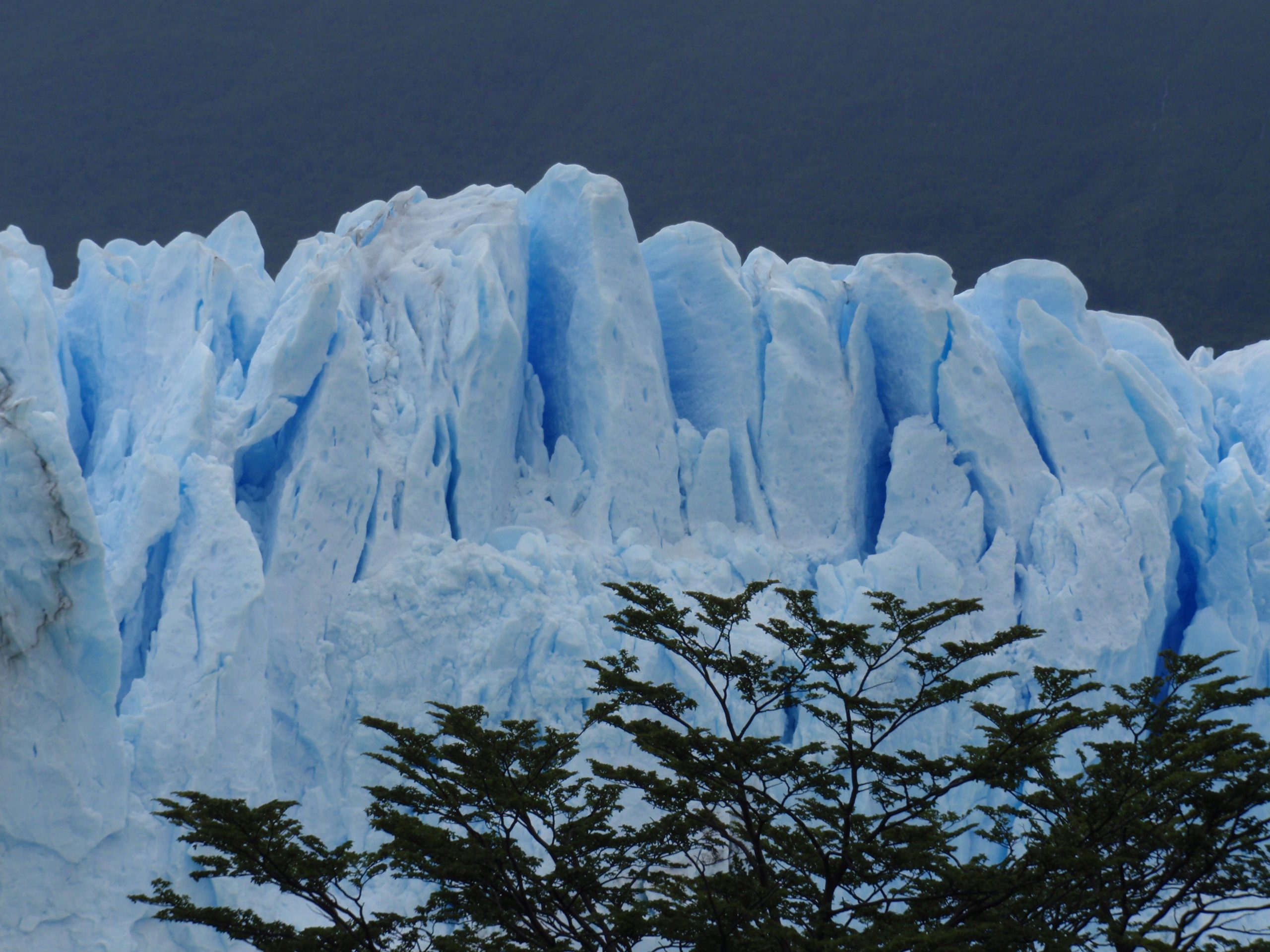
Southern Patagonia’s glaciers are safeguarded by snowfall, but rapid warming could lead to their melt. Limiting warming to 1.5°C is crucial, emphasizing the need for global emission cuts and further research on maritime glaciers.
In a time of rapidly shrinking glaciers, Southern Patagonia has remarkably retained a significant portion of its ice. However, a recent study in Scientific Reports by INSTAAR postdoctoral researcher Matthias Troch indicates that this resilience may soon reach its breaking point.
Before making predictions, Troch and his collaborators looked back in time. They used an equation that, when plugged into NASA’s ice-sheet and sea-level system model, simulated glacial dynamics for the past six millennia. The results showed that precipitation, not temperature, was the main culprit of glacier fluctuation during around 4,500, of the past 6,000 years, or 76 percent of the time. In more recent years, increased snowfall protected the glaciers from rising global temperatures.
Hyper-Focused Simulations and Key Evidence
These simulations were hyper-focused. The researchers singled out three connected glaciers on the wetter, ocean-facing side of the Patagonia range in Southern Chile. The region came with a distinct scientific advantage. In 2005, a team aboard the American research vessel Nathaniel B. Palmer collected a sediment core from a nearby fjord. Troch and his collaborators got their hands on the sediment core and used it to validate and refine their model. In essence, they had a physical piece of evidence to provide proof that they were on the right track.
Once they had reconciled the numerical model with the sediment core, the researchers began to ask questions about the future. In particular, they were interested in what would happen to the glaciers under different emissions scenarios. If humanity stopped burning fossil fuels today, would the glaciers remain protected? What if we continued to increase our greenhouse gas emissions?
The Future of Patagonia’s Glaciers: Hope or Hazard?
Troch and his colleagues found that increased snowfall would continue to protect the glaciers from melt if regional warming was curbed at 1.5 degrees Celsius above turn-of-the-century levels. This benchmark is attainable. Yet, to limit warming to this level, humanity would need to rapidly decarbonize — temperatures are on track to climb to 2.8 degrees Celsius in Patagonia by the end of the century if current emissions persist.
“The study underscores the need for deep emission cuts to protect glaciers, which is vital to limit global sea-level rise,” Troch said.
The researchers also modeled what would happen if we didn’t cut back, and the outlook was not so sunny. A warmer, wetter climate could lead to rapid melt.
“This could push glaciers into a new regime dominated by rain rather than snowfall,” Troch explained.
Troch hopes that research like his will bolster the global call-to-action for green policies and practices. While news about the climate is often gloomy, there are still many harms that can be prevented if humanity strives for sustainability.
“If we can limit emissions there is hope for protecting maritime glaciers,” Troch said.
Troch also hopes that the study will catalyze further research into maritime glaciers around the world. The conclusions drawn in Southern Patagonia might be replicated in Norway, Alaska, Iceland, or New Zealand. The only way to find out is further research.
Reference: “Precipitation drives western Patagonian glacier variability and may curb future ice mass loss” by Matthias Troch, Henning Åkesson, Joshua K. Cuzzone and Sebastien Bertrand, 5 November 2024, Scientific Reports.
DOI: 10.1038/s41598-024-77486-4
Never miss a breakthrough: Join the SciTechDaily newsletter.
Follow us on Google and Google News.
5 Comments
“The results showed that precipitation, not temperature, was the main culprit of glacier fluctuation during around 4,500, of the past 6,000 years, or 76 percent of the time.”
As unskillful as climate models are, with ensembles always running warm, the regional predictions for precipitation are even less skillful, sometimes predicting drought of varying degrees, while other models predict a range of flooding for the same region(s).
The basic problem seems to be the assumption that anthropogenic CO2 is responsible for virtually all of the recent warming, and hence changes in other meteorological parameters. During the COVID shutdowns, which occurred primarily during the Fall-Winter-Spring of the 2019-2020 seasonal ramp-up phase of CO2, there was no discernible difference in the general shape, slope, or normalized-peak of the graph of the monthly CO2 concentrations, even with double-digit percentage declines of anthropogenic CO2 in the late-Winter. Yet, during warm El Nino years, there IS a notable increase in the slope and peak of the CO2 seasonal ramp-up.
https://wattsupwiththat.com/2021/06/11/contribution-of-anthropogenic-co2-emissions-to-changes-in-atmospheric-concentrations/
https://wattsupwiththat.com/2022/03/22/anthropogenic-co2-and-the-expected-results-from-eliminating-it/
This is probably because human contributions only amount to about 4% of the total annual CO2 flux, and sinks are unable to differentiate between natural and anthropogenic sources. Therefore, an annual change of -10% of 4% (0.4%) gets lost in the noise. More importantly, a decline of even -50% of anthropogenic emissions (2%) annually (Impossible!) would take decades (ignoring for the moment that there is no agreement on how much a doubling of CO2 warms the Earth) for a significant change in the rate of warming. Also, as human emissions increase the partial pressure of atmospheric CO2, it suppresses out-gassing from the oceans; absent that increased partial pressure, the oceans can contribute more CO2 to make up for what humans don’t emit.
Most probably, the assumed sensitivity of climate to a doubling of CO2 is much too high and there are other unidentified things contributing to the recent warming, which is why there is poor correlation between both long-term (geological) CO2 concentrations and warming, and short-term changes in CO2 (anthropogenic) CO2 emissions and a temperature change either way.
Attempting a quick fix with changes to anthropogenic CO2 or CH4 is a fools errand, giving hope to people that a reduction in our standard of living, higher tax rates, and less freedom for self-determination (“Pursuit of Happiness”) will keep climate from changing. The one thing that is constant is change. We would be far better off looking for ways to mitigate undesirable changes than signing over our freedoms of choice to bureaucrats who think that they know better how to run our lives.
NZ glaciers? Personal experience being that the glacier on which I once walked to work 50 years ago now having become a lake, I won’t hold my CO2-raddled breath about its survival aka the Patagonian model discussed here. And the same applies to some other NZ glaciers, which even on NZ’s very wet west coast, sort of cousin to Patagonia, have either gone into prolonged retreat since the 1890s or have vanished completely. Quite what the rates of retreat have been per year, I don’t know; but since 1974, where I used to walk has melted quickly. The melt was obvious to the eye during just 4 consecutive years .
“Specific flux activity over land and oceans separately can be seen in Figure 7 which shows WOMBAT’s estimates of surface flux — excluding fossil fuel emissions — using data from a single satellite mode (Land Glint [LG]). Figure 7 also shows that WOMBAT’s estimates largely agree with flux estimates from the first OCO-2 model intercomparison project (MIP; Crowell et al. 2019). The first row of Figure 7 shows that the combined effects of land and ocean flux lead to Earth’s surface absorbing about 4 petagrams of carbon (PgC) per year on average. Unfortunately, humans are emitting on the order of 10 PgC per year of CO2 into the atmosphere. This addition of approximately 6 PgC per year means that CO2 levels in the atmosphere will only keep increasing, and thus continue to exacerbate climate change.”
“This Web-Project was supported by Australian Research Council Discovery Project DP190100180 and NASA ROSES grants 17-OCO2-17-0012 and 20-OCOST20-0004.”
Quotes from University of Wollongong WOMBAT project. Your thoughts?
A search using the information you provided led me to a website at the University of Wollongong ( https://www.uow.edu.au/media/2023/pilot-project-uses-satellite-to-track-carbon-dioxide-emissions-from-100-countries.php ). While the title on the NASA animation provided says it shows fossil fuel emissions by country, I doubt that the high flux rate in the virtually uninhabited Aleutian Chain is from fossil fuels. That is, it appears to be an aggregation of all sources and sinks. While showing sources by country may be useful for negotiations on who is going to pay how much for mitigations, it doesn’t really allow us to tease out natural from anthropogenic sources. And, I doubt that any country will want to pay for their volcanic emissions. Also, it doesn’t speak to the ocean flux, which OCO-2 did. Additionally, what does it tell us about industrial contributions from Canada, versus wildfires, and Winter respiration of their boreal forests? So, despite being 6 years later than the initial OCO-2 map, it doesn’t provide us with a lot of information on the specific source(s). In fact, the original OCO-2 map released at the 2014 AGU meeting ( https://www.eoportal.org/ftp/satellite-missions/o/OCO2_040422/OCO2_Auto10.jpeg ) shows the Amazon Basin and South Africa as being major sources of CO2; one does not get that impression from the NASA map of fluxes by country. Therefore, my first take is that there is contradictory information that needs to be explained better to know what to make of it.
I only gave the link ( https://academic.oup.com/jrssig/article/20/1/14/7034191?login=false ) a cursory read. I seems to me to give a correct description of what is going on with the CO2 seasonality, particularly in the northern hemisphere, where the CO2 range is greatest. However, despite their claim of being able to invert the OCO-2 data and derive the amount and location of sinks, it isn’t obvious to me how they do that. As authors, I think they have failed to make their claim compelling.
Thanks for your thoughts.