
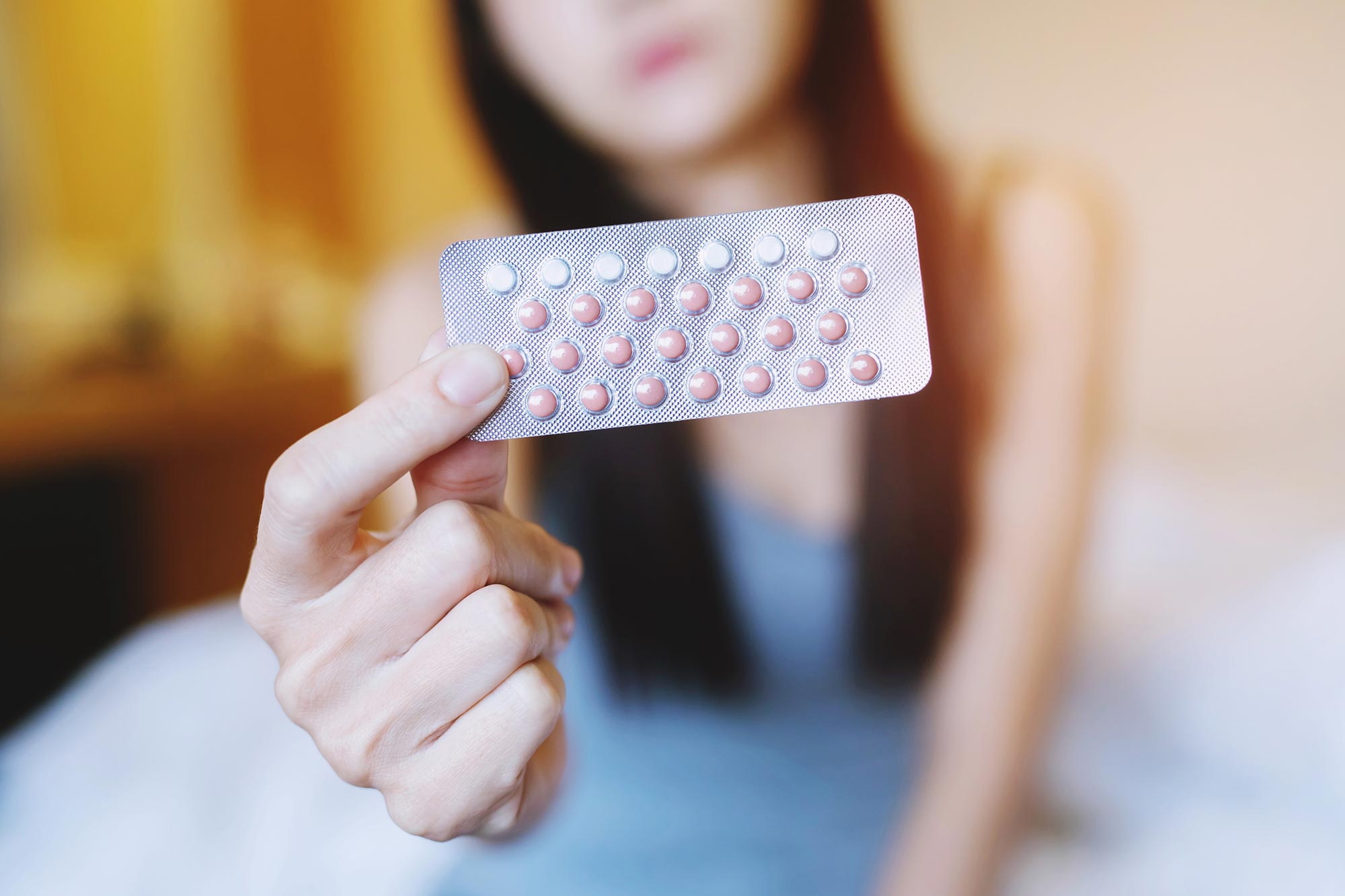
Research indicates that hormonal birth control can influence emotions and memory, shaping the daily reality of women worldwide.
Hormonal birth control is a fact of life for millions of women. In the United States alone, the Centers for Disease Control and Prevention reports that more than 60 million women of reproductive age have used some form of contraception. While the primary reason is to prevent pregnancy, many also rely on it to help manage health conditions such as endometriosis, polycystic ovary syndrome, and irregular menstrual cycles.
Beyond its physical effects, many women say that birth control influences their emotional well-being. Shifts in mood, changes in weight, and periods of emotional turbulence are commonly shared experiences. Now, new research from Rice University suggests the impact may reach further, affecting both emotions and memory in unexpected ways.
According to the study, which appears in the journal Hormones and Behavior, hormonal contraceptives seem to influence how women process emotions in the moment as well as how they recall emotional experiences later on.
“For women, the findings highlight what many have long suspected: Birth control can affect more than reproductive health,” said Beatriz Brandao, a graduate student in Rice’s Department of Psychological Sciences and lead author of the study. “Hormonal birth control does more than prevent pregnancy — it also influences brain areas involved in emotions and memory, which are central to mental health.”
How the Study Worked
Researchers compared women using hormonal contraceptives with women who were naturally cycling. Participants viewed positive, negative, and neutral images while applying different emotion regulation strategies, such as distancing, reinterpretatio,n or immersion, and later completed a memory test.
Women on hormonal contraceptives showed stronger emotional reactions compared to naturally cycling women. When they used strategies like distancing or reinterpretation, they remembered fewer details of negative events, though their general memory remained intact. In other words, they could recall the overall event but not all of the specifics. That gap may actually be helpful, allowing women to move on instead of replaying unpleasant details. Strategies like immersion boosted memory for positive images in both groups, making happy moments stick more clearly.
The findings add weight to a question many women have had but few studies have answered: How does birth control affect not just the body but the mind? Emotion regulation and memory are tied to mental health outcomes such as depression, and this research suggests hormonal contraceptives may influence those processes in subtle but meaningful ways.
Researchers’ Perspectives
“We were surprised to find that when women on hormonal birth control used strategies like distancing or reinterpretation, they remembered fewer details of negative events,” Brandao said. “That reduced memory for unpleasant experiences may actually be protective.”
“These results are novel and shed light on how hormonal contraceptives may influence emotion and memory processes in important ways,” said Bryan Denny, associate professor of psychological sciences at Rice and co-author of the study. “Beatriz’s work is ongoing and programmatic, allowing for continued investigation of these processes in women taking hormonal contraceptives as well as in naturally cycling women.”
“These findings are very exciting,” said Stephanie Leal, adjunct assistant professor of psychological sciences at Rice, assistant professor at UCLA and senior author of the study. “They suggest that hormonal birth control has the ability to modulate both how women can regulate their emotions as well as how that regulation may influence memory, especially toward negative experiences.”
Brandao and her collaborators plan to expand the work by studying naturally cycling women across different menstrual phases and by comparing types of hormonal contraceptives, such as pills versus IUDs.
“Ultimately, our goal is to understand how reproductive hormones — whether natural or synthetic — shape emotional health so that women can make more informed choices about their reproductive and mental health,” Brandao said.
Reference: “Emotion regulation strategies differentially impact memory in hormonal contraceptive users” by Beatriz M. Brandao, Madelyn Castro, Jacob B. Buergler, Kayla R. Clark, Bryan T. Denny and Stephanie L. Leal, 14 August 2025, Hormones and Behavior.
DOI: 10.1016/j.yhbeh.2025.105805
Never miss a breakthrough: Join the SciTechDaily newsletter.
Follow us on Google and Google News.