
By studying bacterial lipids in ancient coal, scientists showed that a drop in CO2 cooled Earth by about 3°C, transforming Antarctica from lush forests to ice sheets.
New research led by the University of Bristol demonstrates that a decline in the concentration of atmospheric CO2 played a major role in driving Earth’s climate from a warm greenhouse into a cold icehouse world around 34 million years ago. This transition could be partly reversed in the next centuries due to the anthropogenic rise in CO2.
Between 40 and 34 million years ago, Earth’s climate underwent a major climatic transition. Before 40 million years ago, during the Eocene, Antarctica was covered by lush forests, but by 34 million years ago, in the Oligocene, these forests had been replaced by thick continental ice sheets, as we know Antarctica today. The main driver of this greenhouse to icehouse transition is widely debated, and little information is available about how climate changed on land. An international team led by Dr. Vittoria Lauretano and Dr. David Naafs at the University of Bristol used molecular fossils preserved in ancient coals to reconstruct land temperature across this transition.
Unlocking Climate Clues From Molecular Fossils
The team used a new approach based on the distribution of bacterial lipids preserved in ancient wetland deposits. It was developed as part of the ERC-funded project, The Greenhouse Earth System (TGRES), which also funded this study. The TGRES PI and paper co-author Rich Pancost, from the University’s School of Chemistry, explained: “These compounds originally comprised the cell membranes of bacteria living in ancient wetlands, with their structures changing slightly to help the bacteria adapt to changing temperature and acidity. Those compounds can then be preserved for tens of millions of years, allowing us to reconstruct those ancient environmental conditions.”
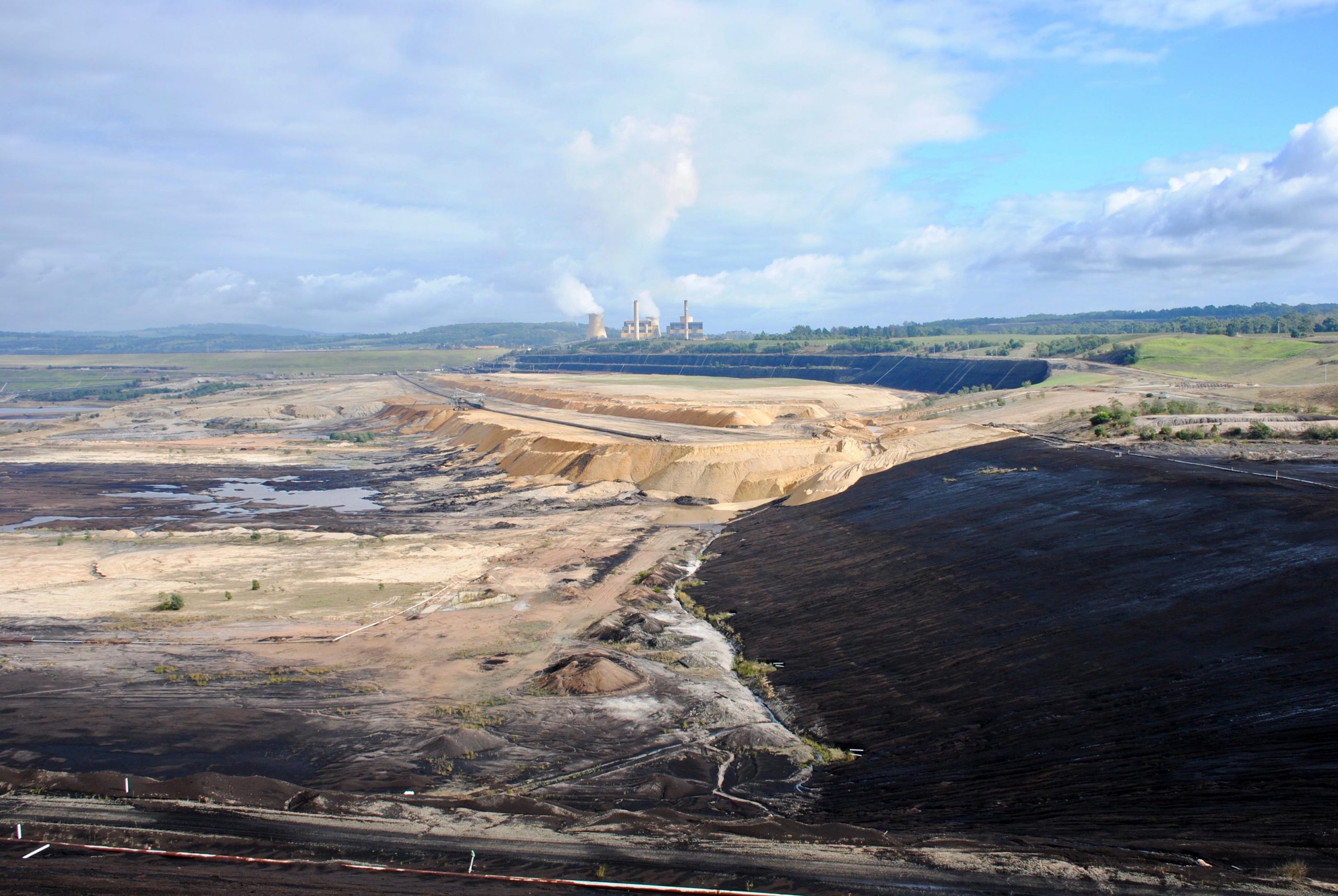
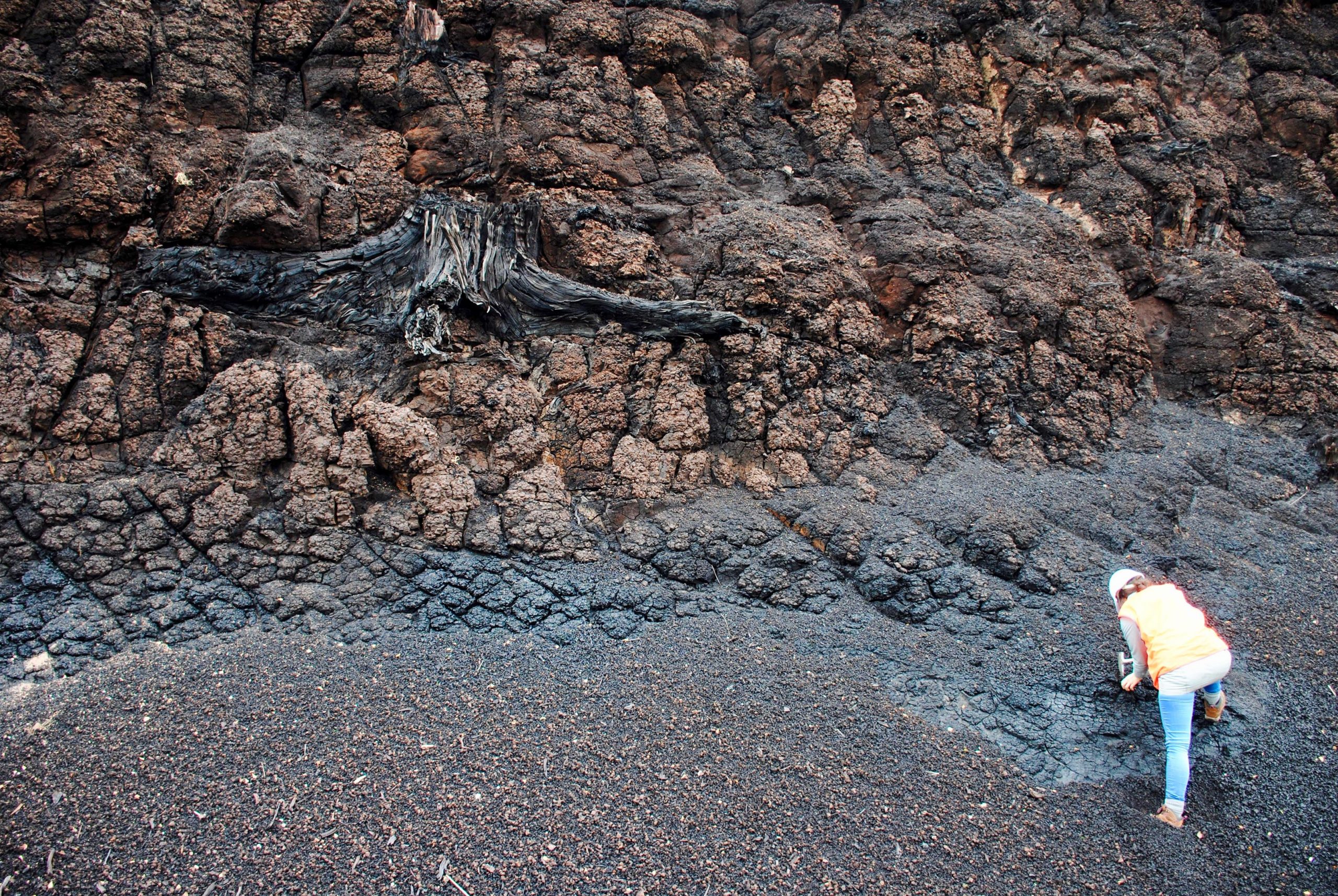
To reconstruct temperature change across the greenhouse to icehouse transition, the team applied their new approach to coal deposits from the southeast Australian Gippsland Basin. These remarkable deposits span over 10 million years of Earth’s history and have been extensively characterized by collaborators on the study from the University of Melbourne, Dr. Vera Korasidis, and Prof. Malcolm Wallace.
The new data show that land temperatures cooled alongside the oceans and by a similar magnitude of about 3C (5.4F). To explore the causes of that temperature decline, the team conducted climate model simulations, Crucially, only simulations that included a decline in atmospheric CO2 could reproduce a cooling consistent with the temperature data reconstructed from the coals.
These results provide further evidence that atmospheric CO2 plays a crucial role in driving Earth’s climate, including the formation of the Antarctic ice sheet.
Reference: “Eocene to Oligocene terrestrial Southern Hemisphere cooling caused by declining pCO2” by Vittoria Lauretano, Alan T. Kennedy-Asser, Vera A. Korasidis, Malcolm W. Wallace, Paul J. Valdes, Daniel J. Lunt, Richard D. Pancost and B. David A. Naafs, 2 August 2021, Nature Geoscience.
DOI: 10.1038/s41561-021-00788-z
Never miss a breakthrough: Join the SciTechDaily newsletter.
Follow us on Google and Google News.
6 Comments
It is well established that the Oligocene was a period of abundant volcanism, particularly in what is now California. The dust from the eruptions could easily account for reduced global temperatures.
The farther one goes back in time, the less certain radiogenic dating becomes. Besides the percentage uncertainty resulting from the process of extracting and measuring the isotopes, there is an issue of uncertainty in the age of the dated crystals with respect to the fossil or sedimentary layer of interest. It depends on the sedimentation rate, which is variable in time and location.
On the other hand, ice cores from Antarctica provide annual layers that can actually be counted, like tree rings. Studies of cores from there have shown that the temperature increased some 800 years BEFORE the CO2 started to rise. Thus, there is good evidence that CO2 is responding to temperature changes, rather than driving it. How often do you read about that?
The science is NOT settled! This study, like so many others, depends on models that are poorly vetted and are known to run warm, and don’t do much better at predicting regional precipitation than flipping a coin; sometimes different models contradict each other! The models have numerous well-known problems; most notably, they cannot handle the physics and thermodynamics of clouds from first principles at the resolution of individual clouds. Therefore, they do what is called “parameterize the cloud energy exchanges.” They do this by making best-guess assumptions about how the clouds behave. This level of ‘hand-waving’ may be correct — or maybe not! Science has been wrong many times before. That is why physicists and astronomers are still trying to invalidate Einstein’s work 100 years after the fact.
“The new data show that land temperatures cooled alongside the ocean’s and by a similar magnitude of about 3C.”
This is unlikely! Water has a much higher specific heat than either air or surficial materials. Water cools much more slowly for the same amount of heat loss. That is why ocean temperatures are so constant year round. The ARGO buoy program has confirmed that modern waters are warming much more slowly than the land.
The difference in specific heat should give the researchers pause in their conclusions that the oceans and land cooled by the same amount!
Dear Mr. Clyde Spenser,
I do appreciate your scientific knowledge and excellent vocabulary. I am not going to put anyone down for their knowledge, lack thereof or make argument. I only would like to point out that in reality it will not matter what is “driving” the warming or not driving it, and it won’t matter who’s right or wrong. The stark REALITY is that the climate is changing RAPIDLY and that EVERY lifeform including US, on this planet must have very specific conditions in order to live. Those conditions have been disrupted and the very delicate balance that keeps those conditions just right for life has been set off balance except THIS time instead of that change taking millions of years it has taken only a couple HUNDRED years. There is NO form of life on Earth that has the ability to compete with that, and therefore will not be able to adapt. Adaptation takes MILLENIA. The point is not what is “driving” the change, but that the change is not comparible to ANYTHING else on record within our process of comprehension, scale of evolution or mathematic equation. NOTHING can compare nor compete with THIS change therefore making this one, “unprecedented.”
One of the reasons I comment here so frequently is that I’m of the opinion that the public is getting poor quality, biased information from the media. What’s worse, the quality of the science being done by climatologists seems to be poor compared to the other sciences. If I’m right, then it is understandable you would hold the opinions that you do.
It DOES matter what is driving the warming. If it is Man, then we have a chance to make changes that will stop the warming, although with the world population being what it is, the changes won’t be easy or painless. If the warming is mostly natural, then adaptation is probably the best route and the sacrifices being demanded are self-flagellation.
As to how rapidly the climate is actually changing, I disagree with you. The seasonal global change is a range from about -126 deg F to 134 deg F, or about 260 deg total. Sometimes the temperature can change nearly 100 deg in a few hours. Yet people and animals fill every climate zone on Earth. What we see is that the average global temperature has apparently increased from pre-industrial times (coming out of a little ice age) to today by about 2 deg F, with ups and downs, and most of the increase occurring at night and during the Winter, particularly in the Arctic. Actually, I would say that the temperature is remarkably stable. It has been much warmer, as during the Paleocene-Eocene Thermal Maximum, and much colder during the several Ice House stages in Earth’s history. We live at a time when the temperatures are rather average, although cooler than when higher rates of evolution prevailed.
As to the RATE of change being “unprecedented,” a real scientist would not be quick to make such a claim. The farther back in time one goes, the less certain dates are. The rate of change is a measure of the change divided by the amount of time the change took. The denominator has high rates of uncertainty for all but recent measurements. There may well have been much higher rates of change, but there isn’t good evidence to support it. There are some glaciologists that have suggested that the end of the last ice age was caused by warming that only took decades, not the millions of years you suggest. Consider this:
https://en.wikipedia.org/wiki/Early_Holocene_sea_level_rise#/media/File:Post-Glacial_Sea_Level.png
There are some animals and plants that have evolved with very narrow environmental requirements, and as specialists, are vulnerable to ANY changes. Others, such as the coyote, and many ‘weeds,’ are generalists and are very wide spread, just like humans. Indeed, a problem the world is dealing with now is humans spreading exotic animals and plants around the world where the conditions are different from where they came from, but still they prosper, particularly when they have no natural enemies.
You are basically reciting the official catechism of Anthropogenic Global Warming, and were it true, one should be concerned. However, I think that it is overstated. Reading outside the popular literature intended for laymen, one might get a different view.
You might want to hold your pinky out more and your nose up higher when making that last statement that completely disengages anyone you’re trying to woo.
Why do you assume that I’m trying to “woo” anyone. I’m a scientist, not a politician. I’m calling it like I see it.