
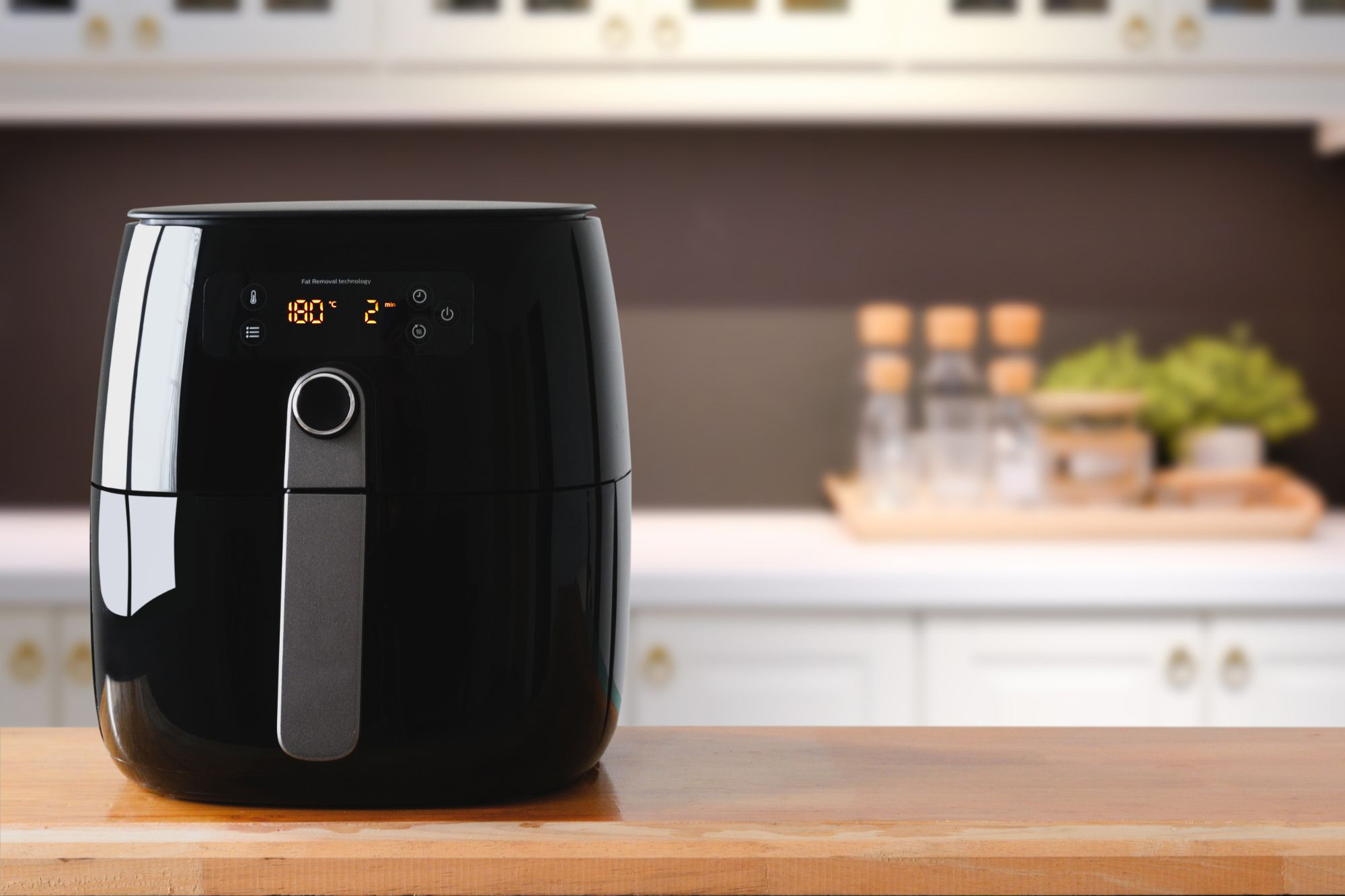
A study from the University of Birmingham shows that air fryers emit far less indoor air pollution than other cooking methods like pan or deep frying, which are significant sources of particulate matter and VOCs.
A new study has revealed that air fryers generate only a small fraction of the indoor air pollution compared to other cooking methods, such as pan frying and deep frying.
Cooking is a key source of indoor air pollution and, while plenty of research has been done to show the energy efficiencies available with air-frying, less is known about the environmental benefits.
Most people spend more than 80 percent of their time indoors, so the effects of indoor pollutants, which include a range of acute symptoms and chronic conditions such as cardiovascular, neurodegenerative, and respiratory diseases, are a major health concern.
The researchers, based in the University of Birmingham’s School of Geography, Earth and Environmental Sciences, used a campus-based research kitchen to bridge the gap between laboratory-based chamber experiments measuring pollution from different cooking methods and less well-controlled testing in domestic kitchens. Their results are published in Indoor Air.
Methodology: Cooking Methods and Pollution Measurement
In the experiments, the researchers cooked chicken breast using five different methods: pan-frying, stir-frying, deep-fat frying, boiling,g and air-frying, in a well-controlled research kitchen. They measured the levels of particulate matter and volatile organic compounds (VOCs) emitted by each method.
For particulate matter, the team measured peak concentrations in micrograms per cubic meter of air. For pan frying, the peak concentration was 92.9; for stir-frying it was 26.7, for deep frying 7.7, for boiling 0.7 and for air-frying it was 0.6.
For VOCs, the results were measured in ‘parts per billion’, or ppb. The relative levels of pollution were in a similar order across the different cooking methods as for the particulate matter emissions, with pan-frying recording 260 ppb of VOCs; deep frying 230 ppb, stir-frying 110 ppb; boiling 30 ppb and air-frying 20 ppb. The researchers have also identified and quantified the specific VOCs that are mostly strongly emitted during the cooking activities.
Key Findings and Recommendations
Lead author Professor Christian Pfrang said: “There are a number of factors that will affect the levels of pollution from cooking alongside the method used, including the amount of oil used, and the temperature of the stove. What we can say with certainty, however, is that improving the ventilation in kitchens by opening windows or using extractor fans, will help to disperse polluting particles and reduce personal exposure.”
For both particulate matter and VOCs, the researchers continued to measure pollution after the cooking process had finished. They recorded substantially higher levels of pollutants in the kitchen for well over an hour after the food had been cooked despite the cooking process only taking ca. 10 minutes.
Professor Pfrang added: “It’s also really important to understand that particles will remain in the air for quite some time after you have finished cooking, so continuing to ventilate, or keeping extractor fans turned on for a period of time will really help to avoid the build-up of this indoor pollution and reduce the potential for the pollutants to be transported and distributed throughout the house with the associated higher personal exposures.”
Reference: “Impact of Cooking Methods on Indoor Air Quality: A Comparative Study of Particulate Matter (PM) and Volatile Organic Compound (VOC) Emissions” by Ruijie Tang, Ravi Sahu, Yizhou Su, Adam Milsom, Ashmi Mishra, Thomas Berkemeier and Christian Pfrang, 25 November 2024, Indoor Air.
DOI: 10.1155/2024/6355613
Never miss a breakthrough: Join the SciTechDaily newsletter.
Follow us on Google and Google News.