
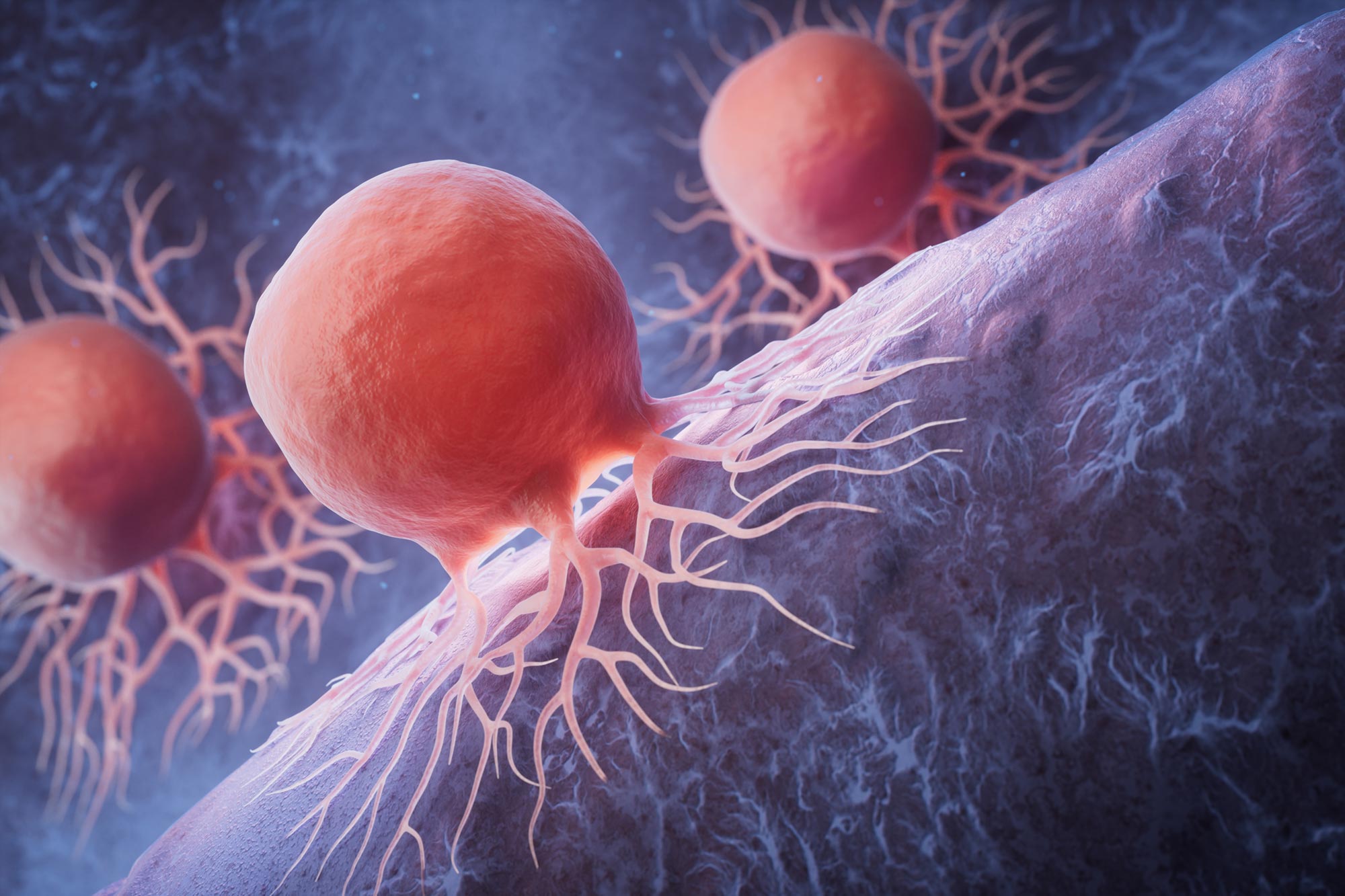
A new study suggests that overstimulating key cancer-growth pathways, rather than shutting them down, could offer a novel way to target pancreatic tumors driven by KRAS mutations.
New research points to a possible way to fight pancreatic cancer by turning the disease’s own growth signals against it.
The research, published in the journal Aging, focused on pancreatic ductal adenocarcinoma, the most common form of pancreatic cancer and one of the hardest to treat. A major reason this cancer is so aggressive is KRAS, a gene that helps control when cells grow and divide. When KRAS mutates, it can act like a stuck accelerator, pushing cancer cells to grow, survive, and spread.
The study was led by first author Kweku Ofosu-Asante and corresponding author Nazarius S. Lamango of the Florida A&M University College of Pharmacy and Pharmaceutical Sciences, Institute of Public Health in Tallahassee, Florida.
Addressing a Major Gap in KRAS-Targeted Treatments
KRAS mutations are common in several cancers and appear in most pancreatic adenocarcinomas. In recent years, drugs such as sotorasib and adagrasib have shown that KRAS can be targeted, ending the long-held view that the protein was nearly impossible to drug. However, those treatments mainly work against one specific KRAS mutation, called KRAS G12C. Many pancreatic cancers are driven by other KRAS mutations, leaving a major gap in treatment options.
The study tested experimental compounds called PCAIs, which were designed to disrupt abnormal KRAS-related activity in cancer cells. Unlike some current KRAS drugs that focus on a single mutation, PCAIs may work more broadly by interfering with the signals that help cancer cells survive, move, and spread.
Researchers tested 15 PCAI compounds in pancreatic cancer cells with KRAS mutations. Two were especially effective: NSL-YHJ-2-45 and NSL-YHJ-2-27. Both reduced cancer cell survival at relatively low doses in laboratory experiments.
The team then focused on NSL-YHJ-2-27. In addition to slowing cancer cell growth, it sharply reduced the cells’ ability to move. At just 1 μM, the compound blocked more than 90% of pancreatic cancer cell migration, an important finding because spreading to other parts of the body is a major reason pancreatic cancer is so deadly.
The compound also weakened the internal structures cancer cells use to change shape and crawl through tissue. After treatment, the cells became rounder, lost their stretched-out extensions, and were far less mobile.
Turning Growth Signals Into a Liability
Unexpectedly, NSL-YHJ-2-27 did not simply shut down KRAS-linked growth signals. Instead, it pushed key growth pathways into overdrive. The study suggests that this overload may become harmful to the cancer cells, raising internal stress and helping trigger cell death.
This stress was linked to a sharp increase in reactive oxygen species, unstable molecules that can damage cells when they build up. Treated cells also showed signs of apoptosis, a controlled form of cell death.
The researchers saw similar effects in three-dimensional tumor spheroids, which more closely resemble real tumors than flat cell cultures. PCAI treatment caused these tumor-like clusters to break apart, reduced their ability to invade surrounding material, and increased cancer cell death. At 10 μM, NSL-YHJ-2-27 reduced invasion by 84% in PANC-1 spheroids and 96% in MIA PaCa-2 spheroids.
The compound also changed the activity of 88 genes. Some genes linked to tumor suppression and stress response became more active, while genes tied to cancer growth, adhesion, and invasion were reduced.
Potential Across Multiple KRAS Mutations
“One class of such promising agents is the PCAIs that were designed to target oncogenic G-proteins in a manner that is different from the KRASG12C-targeting drugs.”
According to the authors, this broader approach could be important. In the study, PCAIs worked in two pancreatic cancer cell lines with different KRAS mutations: PANC-1 cells, which carry KRAS G12D, and MIA PaCa-2 cells, which carry KRAS G12C. That suggests the compounds may have potential against more than one KRAS-driven cancer type.
The findings are still early. The work was done in cancer cells and tumor-like spheroids, not in patients. More studies, including animal research, will be needed to learn whether PCAIs are safe, selective, and effective in living systems.
Even so, the results highlight an intriguing strategy for a cancer with few effective treatments. The study suggests that PCAIs deserve further investigation as possible treatment candidates for pancreatic cancer and other cancers driven by KRAS mutations.
Reference: “The anticancer effects of PCAIs in pancreatic cancer cells involve MAPK and PI3K/AKT pathways hyperactivation” by Kweku Ofosu-Asante, Jassy Mary S. Lazarte, Amarender Goud Burra and Nazarius S. Lamango, 3 June 2026, Oncotarget.
DOI: 10.18632/oncotarget.28879
Never miss a breakthrough: Join the SciTechDaily newsletter.
Follow us on Google and Google News.