
New research from Yale University reveals that patients with different types of attention-deficit/hyperactivity disorder (ADHD) have impairments in unique brain systems, indicating that there may not be a one-size-fits-all explanation for the cause of the disorder.
Based on performance on behavioral tests, adolescents with ADHD fit into one of three subgroups, where each group demonstrated distinct impairments in the brain with no common abnormalities between them.
The study, published in the journal Biological Psychiatry: Cognitive Neuroscience and Neuroimaging, has the potential to radically reframe how researchers think about ADHD.
“This study found evidence that clearly supports the idea that ADHD-diagnosed adolescents are not all the same neurobiologically,” said first author Michael Stevens, Ph.D., Adjunct Professor of Psychiatry at Yale and Director of the Clinical Neuroscience and Development Laboratory at Olin Neuropsychiatry Research Center in Hartford.
Rather than a single disorder with small variations, the findings suggest that the diagnosis instead encompasses a “constellation” of different types of ADHD in which the brain functions in completely different ways, researchers said.
The researchers tested 117 adolescents with ADHD to assess different types of impulsive behavior — a typical feature of ADHD. Three distinct groups emerged based on the participants’ performance. One group demonstrated impulsive motor responses during fast-moving visual tasks (a measure of executive function), one group showed a preference for immediate reward, and the third group performed relatively normal on both tasks, compared to 134 non-ADHD adolescents.
“These three ADHD subgroups were otherwise clinically indistinguishable for the most part,” Stevens said. “Without the specialized cognitive testing, a clinician would have had no way to tell apart the ADHD patients in one subgroup versus another.”
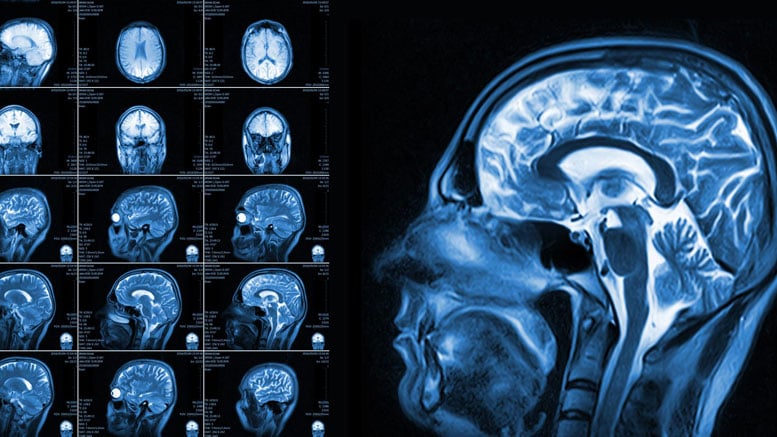
Stevens and colleagues, including study co-author Godfrey D. Pearlson, MBBS, MA, Professor of Psychiatry and of Neuroscience at Yale, then used functional magnetic resonance imaging (fMRI), a technique that allows researchers to make connections between behavior and brain function, to investigate how these different impulsivity-related test profiles related to brain dysfunction.
“Far from having a core ADHD profile of brain dysfunction, there was not a single fMRI-measured abnormality that could be found in all three ADHD subgroups,” Stevens said. Instead, each subgroup had dysfunction in different brain regions related to their specific type of behavioral impairment.
It will take more research to prove that ADHD is a collection of different disorders, but this study provides a big step in that direction, Stevens said.
“Ultimately, by being open to the idea that psychiatric disorders like ADHD might be caused by more than one factor, it might be possible to advance our understanding of causes and treatments more rapidly,” he said.
Reference: “Functional Neuroimaging Evidence for Distinct Neurobiological Pathways in Attention-Deficit/Hyperactivity Disorder” by Michael C. Stevens, Godfrey D. Pearlson, Vince D. Calhoun and Katie L. Bessette, 6 August 2017, Biological Psychiatry: Cognitive Neuroscience and Neuroimaging.
DOI: 10.1016/j.bpsc.2017.09.005
Never miss a breakthrough: Join the SciTechDaily newsletter.
Follow us on Google and Google News.
3 Comments
ADHD is fake, says neurologist Richard Saul
https://nypost.com/2014/01/04/adhd-does-not-exist/
ADHD is fake, says neurologist Richard Saul, “ADHD makes a great excuse,” Saul notes. “The diagnosis can be an easy-to-reach-for crutch. Moreover, there’s an attractive element to an ADHD diagnosis, especially in adults — it can be exciting to think of oneself as involved in many things at once, rather than stuck in a boring rut.”
https://nypost.com/2014/01/04/adhd-does-not-exist/
Dear parents who drug their kids… https://www.youtube.com/watch?v=MaWTOedTnRs