
Close Menu
    Facebook X (Twitter) Instagram
    SciTechDaily
    • Biology
    • Chemistry
    • Earth
    • Health
    • Physics
    • Science
    • Space
    • Technology
    Facebook X (Twitter) Pinterest YouTube RSS
    SciTechDaily
    Home»Biology»Newly Discovered Marine Fungus Attacks and Kills Toxic Algae
    Biology

    Newly Discovered Marine Fungus Attacks and Kills Toxic Algae

    By Yokohama National UniversityJanuary 5, 2026No Comments4 Mins Read
    Facebook Twitter Pinterest Telegram LinkedIn WhatsApp Email Reddit
    Share
    Facebook Twitter LinkedIn Pinterest Telegram Email Reddit
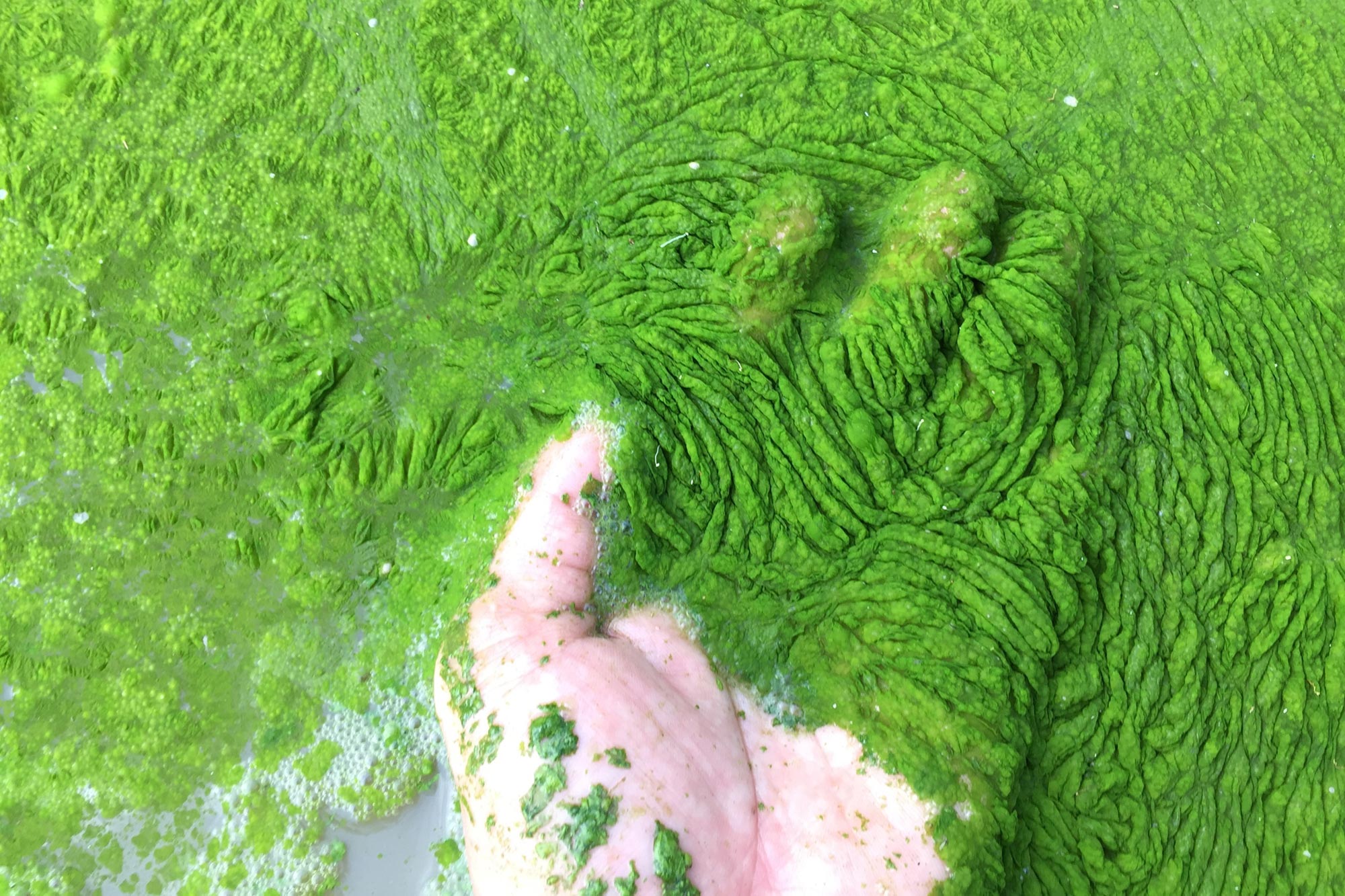
    Hand Harmful Algae Bloom
    Algal blooms are episodes of rapid and excessive growth of algae in aquatic environments, driven primarily by high nutrient availability and favorable conditions such as warm temperatures and abundant sunlight. These blooms can disrupt ecosystems, degrade water quality, and, in some cases, produce toxins that pose risks to wildlife and human health. Credit: Shutterstock

    Scientists have identified a marine fungus that was previously unknown and is capable of killing toxic algae known to threaten human health.

    Scientists at Yokohama National University in Japan have identified a previously unknown marine fungus capable of killing algae that form harmful blooms.

    The organism, named Algophthora mediterranea, is a microscopic chytrid fungus that can infect many different hosts. This unusually wide host range points to chytrid fungi, a diverse group of aquatic fungi, as potentially more important players in marine ecosystems than researchers had recognized before.

    Importantly, the fungus acts as a lethal parasite of the alga Ostreopsis cf. ovata, a species responsible for toxic blooms that can negatively affect human health. The research describing this discovery was published online in the journal Mycologia.

    Toxic algae

    Algal blooms are becoming increasingly common in oceans, rivers, and lakes around the world. They occur when algae grow rapidly and uncontrollably, usually fueled by excess nutrients and warmer water conditions, leading to poor water quality and widespread ecological disruption. Some blooms also release toxins that can harm both animals and people.
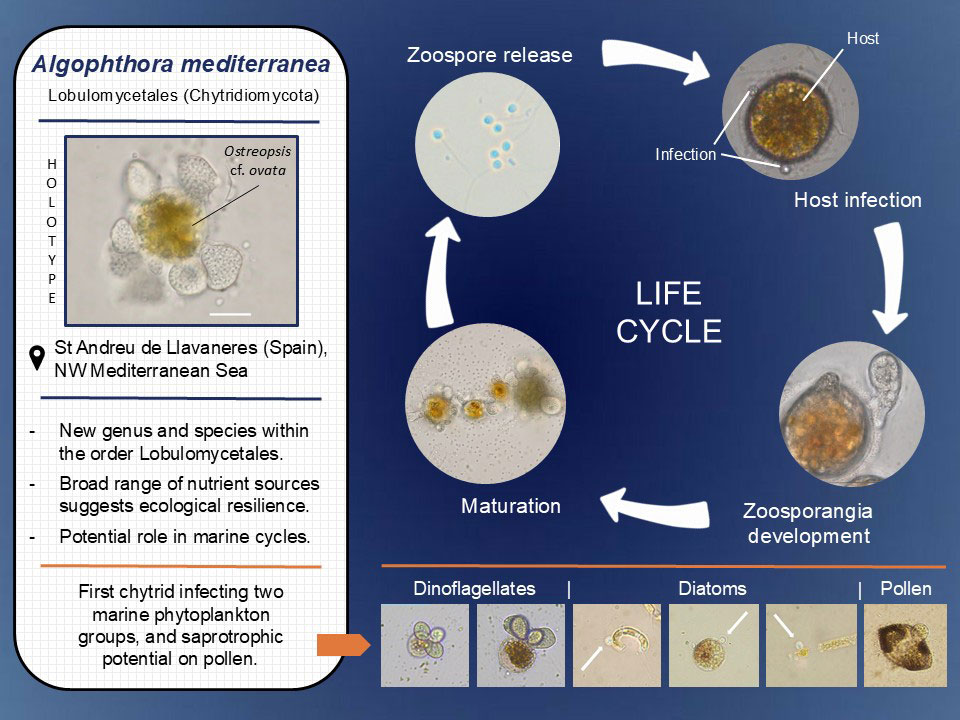
    Life Cycle of Algophthora mediterranea
    This graphical abstract illustrates the life cycle of Algophthora mediterranea, a newly discovered parasitic marine fungus, infecting the harmful dinoflagellate Ostreopsis cf. ovata and other microalgae. The diagram shows key developmental stages—including zoospore release, host attachment, intracellular growth, and sporangium formation—alongside microscopic images of infected host cells. Credit: Yokohama National University

    Huge blooms of Ostreopsis cf. ovata have been increasingly reported in the Mediterranean in the past few decades. The alga produces a toxin called ovatoxin (OVTX), which can cause major issues in humans including a runny nose, cough, breathlessness, conjunctivitis, itching, and dermatitis.

    Algae-killer

    Algophthora mediterranea was discovered in Spanish seawater in 2021 by the team from the Institut de Ciències del Mar (ICM) in Spain, led by Dr. E. Garcés and Dr. A. Reñé, and it has now been described by Professor Maiko Kagami and PhD student Núria Pou-Solà, both from YOKOHAMA National University.

    DNA analysis confirmed the fungus represents not only a new species but also a new genus. The team have named the new genus Algophthora, combining ‘alga’ and the Greek word ‘phthora’, meaning ‘destruction’.

    The fungus was found as a parasite in cells of O. cf. ovata, which it kills within days. Further analysis showed it can also infect several other species of algae and can even feed off pollen grains.

    “Although previous DNA-based surveys have revealed a wide diversity of marine fungi, only a handful of parasitic species have ever been isolated, and their ecology has remained largely unknown,” said Pou-Solà. “Our newly described species stands out for its unusually broad host range and distinctive feeding strategy, demonstrating that some chytrid fungi possess remarkable ecological resilience.”

    The researchers isolated the fungus and took time-lapse photos every ten minutes for four days. Samples of the fungus were also analyzed using scanning electron microscopy (SEM), where a focused beam of electrons scans the surface of a sample, creating a high-resolution image. The fungus was then sampled for DNA.

    “The next step is to investigate how such versatile parasites operate within complex marine communities,” said Kagami. “Ultimately, our goal is to understand how parasitic fungi contribute to — and potentially shape — the ocean’s biogeochemical cycles, an ecosystem role that has been largely overlooked until now.”

    “In the future, we aim to build the necessary knowledge to improve our predictive capacity and support the management of harmful algal blooms,” adds Pou-Solà.

    Reference: “Algophthora mediterranea, gen. et sp. nov.: Novel dinoflagellate- and diatom-infecting generalist marine chytrid from the Mediterranean Sea” by Núria Pou-Solà, Kensuke Seto, Alan Denis Fernández-Valero, Jordina Gordi, Esther Garcés, Albert Reñé and Maiko Kagami, 15 December 2025, Mycologia.
    DOI: 10.1080/00275514.2025.2577604

    Funding: Spanish Ministry of Science, Innovation, and Universities, Japan Society for the Promotion of Science, Japan Science and Technology Agency

    Never miss a breakthrough: Join the SciTechDaily newsletter.
    Follow us on Google and Google News.

    Algae Ecology Marine Biology Microbiology Yokohama National University
    Share. Facebook Twitter Pinterest LinkedIn Email Reddit

    Related Articles

    Toxic Algae Found on Basque Coast: Should Swimmers Be Worried?

    Coral Bleaching: Catalyst for Microbial Mayhem Below the Surface

    Scientists Resurrect “Forgotten” Genus of Symbiotic Algae Living in Marine Animals

    Reef-Building Corals and the Microscopic Algae Within Their Cells Genetically Evolve in Tandem

    Missing Link Identified: Mystery of Photosynthetic Algae Evolution Finally Solved

    Toxic “Dead Zone” – Surge in Nitrogen Has Turned Sargassum Into the World’s Largest Harmful Algal Bloom

    Littlest Shop of Horrors: Hungry Green Algae Prefer to Eat Bacteria Alive

    Marine Worm Thrives on Steady Diet of Deadly Poisons

    Jacques Cousteau Predicted Detrimental Change in Coral Reefs

    Leave A Reply Cancel Reply

    • Facebook
    • Twitter
    • Pinterest
    • YouTube

    Don't Miss a Discovery

    Subscribe for the Latest in Science & Tech!

    Trending News

    Bone-Strengthening Discovery Could Reverse Osteoporosis

    Scientists Uncover Hidden Trigger Behind Stem Cell Aging

    Scientists Find Way to Reverse Fatty Liver Disease Without Changing Diet

    Could Humans Regrow Limbs? New Study Reveals Promising Genetic Pathway

    Scientists Reveal Eating Fruits and Vegetables May Increase Your Risk of Lung Cancer

    Scientists Reverse Brain Aging With Simple Nasal Spray

    Scientists Uncover Potential Brain Risks of Popular Fish Oil Supplements

    Scientists Discover a Surprising Way To Make Bread Healthier and More Nutritious

    Follow SciTechDaily
    • Facebook
    • Twitter
    • YouTube
    • Pinterest
    • Newsletter
    • RSS
    SciTech News
    • Biology News
    • Chemistry News
    • Earth News
    • Health News
    • Physics News
    • Science News
    • Space News
    • Technology News
    Recent Posts
    • Men vs. Women: Scientists Uncover Dramatic Differences in How the Immune System Ages
    • Eating Chili Peppers Linked to Longer Life
    • Bread Might Be Making You Gain Weight Even Without Eating More
    • 4,000-Year-Old Tablets Reveal Lost Magic, Medicine, and Ancient Kings
    • AI Meets Quantum Computing and the Predictions Get Scary Accurate
    Copyright © 1998 - 2026 SciTechDaily. All Rights Reserved.
    • Science News
    • About
    • Contact
    • Editorial Board
    • Privacy Policy
    • Terms of Use

    Type above and press Enter to search. Press Esc to cancel.