
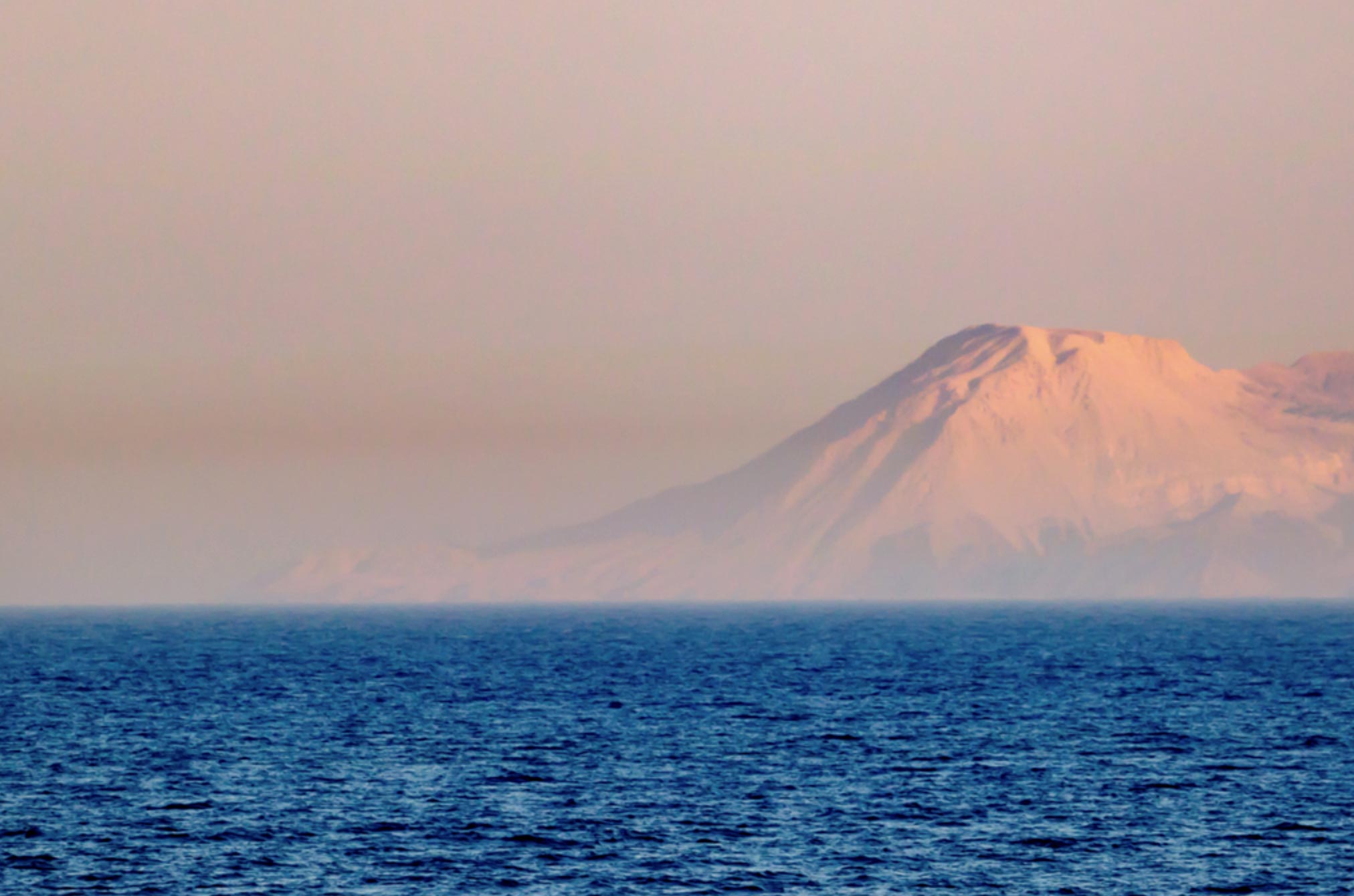
Scientists found that human-made pollution in the Middle East is a major source of air pollution, responsible for 53% of aerosol impact and posing serious health and climate risks.
Desert dust was assumed to be the primary contributor to elevated air pollution across the Middle East. Now, an international team of scientists including researchers from King Abdullah University of Science & Technology (KAUST) has shown that pollution from anthropogenic sources contributes to health risks and is an important climate factor across the region.
“The conventional thinking was that dust carried by storms over the Arabian Peninsula dominated air quality over the region,” says Sergey Osipov from the Max Planck Institute (MPI) for Chemistry. His team worked on the project with KAUST’s Georgiy Stenchikov and Alexander Ukhov, and colleagues from King Saud University and The Cyprus Institute.
Anthropogenic Sources and Health Risks
“Our research has demonstrated that hazardous fine particulate matter, which is distinct from the less harmful coarse desert dust particles, is largely anthropogenic in origin and is a leading health risk factor, as well a significant contributor to climate change,” Osipov says.
Air pollution accounts for around 745 per 100,000 excess deaths per year in the region, says Osipov, which is similar to other leading health risk factors, such as tobacco smoking and high cholesterol.
Previous modeling studies on air quality across the Middle East tend to overestimate the fraction of the desert dust, obscuring the contribution to poor air quality from anthropogenic sources, adds Osipov. “Such models produce semi correct answers for the wrong reason, because they poorly represent a significant component of anthropogenic fine particle pollution in the region.”
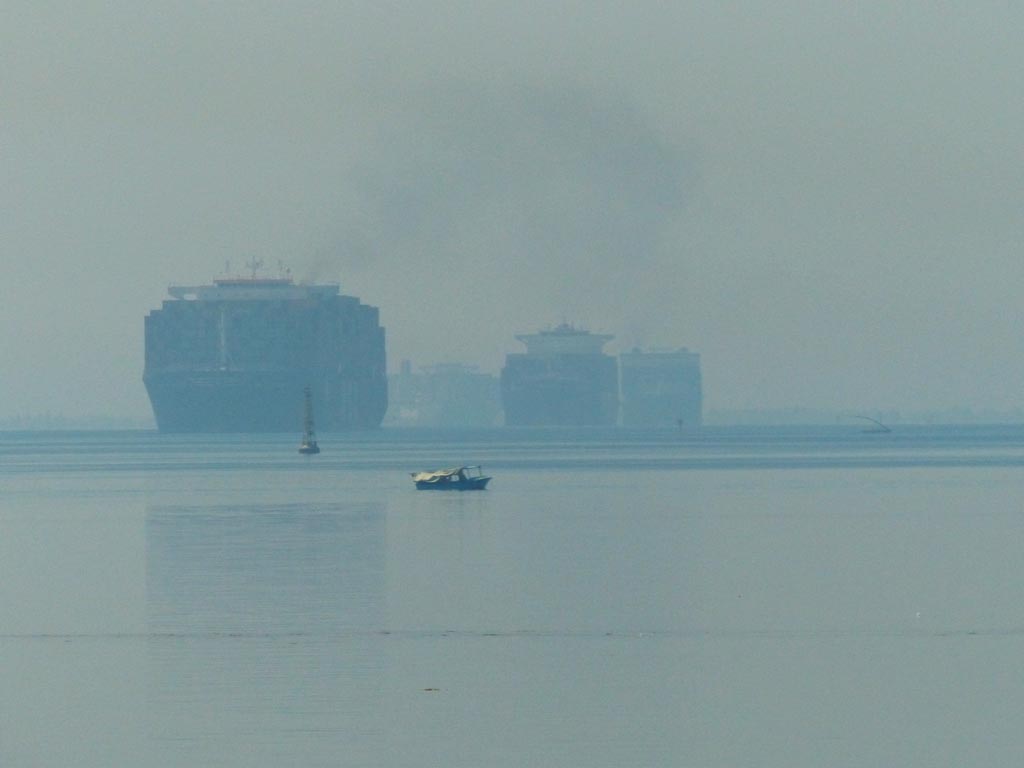
The lack of observation data, combined with a poor representation of emission sources, has “significantly hindered our ability to model the chemical composition of the atmosphere in the region,” says Osipov.
To address this scarcity of data, the researchers, led by Jos Lelieveld from MPI for Chemistry, collected measurements taken at sea as part of the international collaboration, called Air Quality and climate in the Arabian Basin (AQABA). The measurements, collected over two months during the summer of 2017, covered various ambient conditions ranging from pristine in the remote atmosphere to heavy pollution and dust storms.
Analysis of the AQABA data provided comprehensive constraints on the dust size distribution, which allowed a more realistic simulation of the mass flux and life cycle of dust. As a result, the team was able to model the realistic chemical composition of the aerosol across the entire size range.
Impact of Anthropogenic Pollution on Regional Climate
“We found that particulate matter from anthropogenic sources accounted for around 53 percent of aerosol visible optical depth and induces a radiative forcing on the climate equivalent to that of the natural dust in the region,” says Osipov. “Our study highlights how anthropogenic air pollution is a leading health risk and important climactic factor across the Middle East.”
Reference: “Severe atmospheric pollution in the Middle East is attributable to anthropogenic sources” by Sergey Osipov, Sourangsu Chowdhury, John N. Crowley, Ivan Tadic, Frank Drewnick, Stephan Borrmann, Philipp Eger, Friederike Fachinger, Horst Fischer, Evgeniya Predybaylo, Mohammed Fnais, Hartwig Harder, Michael Pikridas, Panos Vouterakos, Andrea Pozzer, Jean Sciare, Alexander Ukhov, Georgiy L. Stenchikov, Jonathan Williams and Jos Lelieveld, 22 September 2022, Nature Communications.
DOI: 10.1038/s43247-022-00514-6
Never miss a breakthrough: Join the SciTechDaily newsletter.
Follow us on Google and Google News.