
Close Menu
    Facebook X (Twitter) Instagram
    SciTechDaily
    • Biology
    • Chemistry
    • Earth
    • Health
    • Physics
    • Science
    • Space
    • Technology
    Facebook X (Twitter) Pinterest YouTube RSS
    SciTechDaily
    Home»Space»Occupants Check Into NASA’s “Robot Hotel” Aboard the Space Station
    Space

    Occupants Check Into NASA’s “Robot Hotel” Aboard the Space Station

    By NASA’s Goddard Space Flight CenterJuly 29, 2020No Comments4 Mins Read
    Facebook Twitter Pinterest Telegram LinkedIn WhatsApp Email Reddit
    Share
    Facebook Twitter LinkedIn Pinterest Telegram Email Reddit
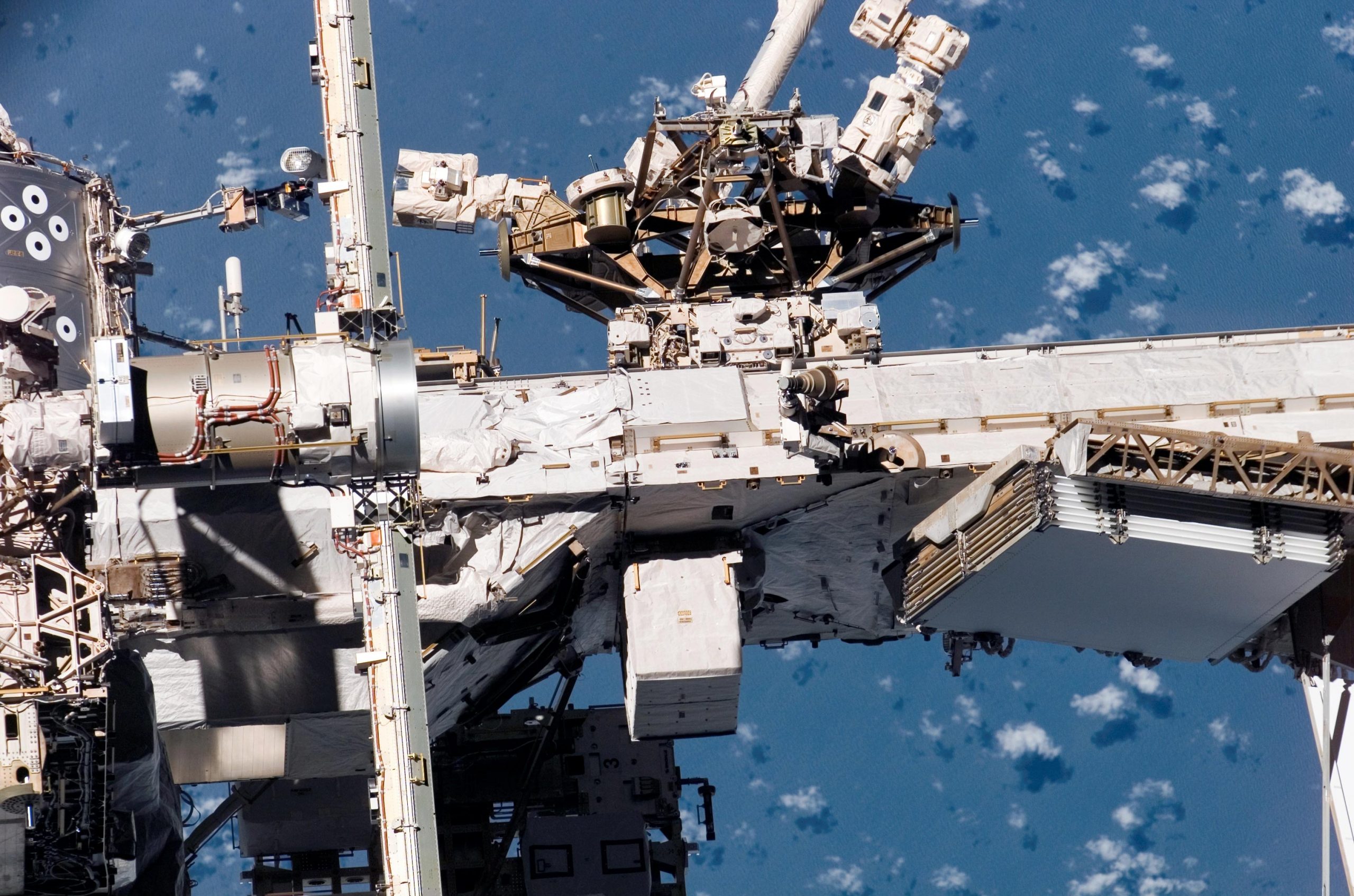
    Mobile Base System Mobile Transporter
    The Mobile Base System moves on the Mobile Transporter rail car along truss rails covering the length of the space station. It provides a movable platform for Canadarm2 and Dextre and can access any of the eight worksites that feature power connections. Credit: NASA

    Storage is just as important aboard the International Space Station as it is on Earth. While the space station is about the size of a football field, the living space inside is much smaller than that. Just as you wouldn’t store garden tools in a house when you could store them in a shed outside, astronauts now have a “housing unit” in which they can store tools for use on the exterior of the space station.

    On December 5, 2019, a protective storage unit for robotic tools called Robotic Tool Stowage (RiTS) was among the items launched to station as part of SpaceX’s 19th commercial resupply services mission for NASA. As part of a spacewalk on July 21, NASA astronauts Robert Behnken and Chris Cassidy installed the “robot hotel” where the tools are stored to the station’s Mobile Base System (MBS), where it will remain a permanent fixture. The MBS is a moveable platform that provides power to the external robots. This special location allows RiTS to traverse around the station alongside a robot that will use the tools it stores.
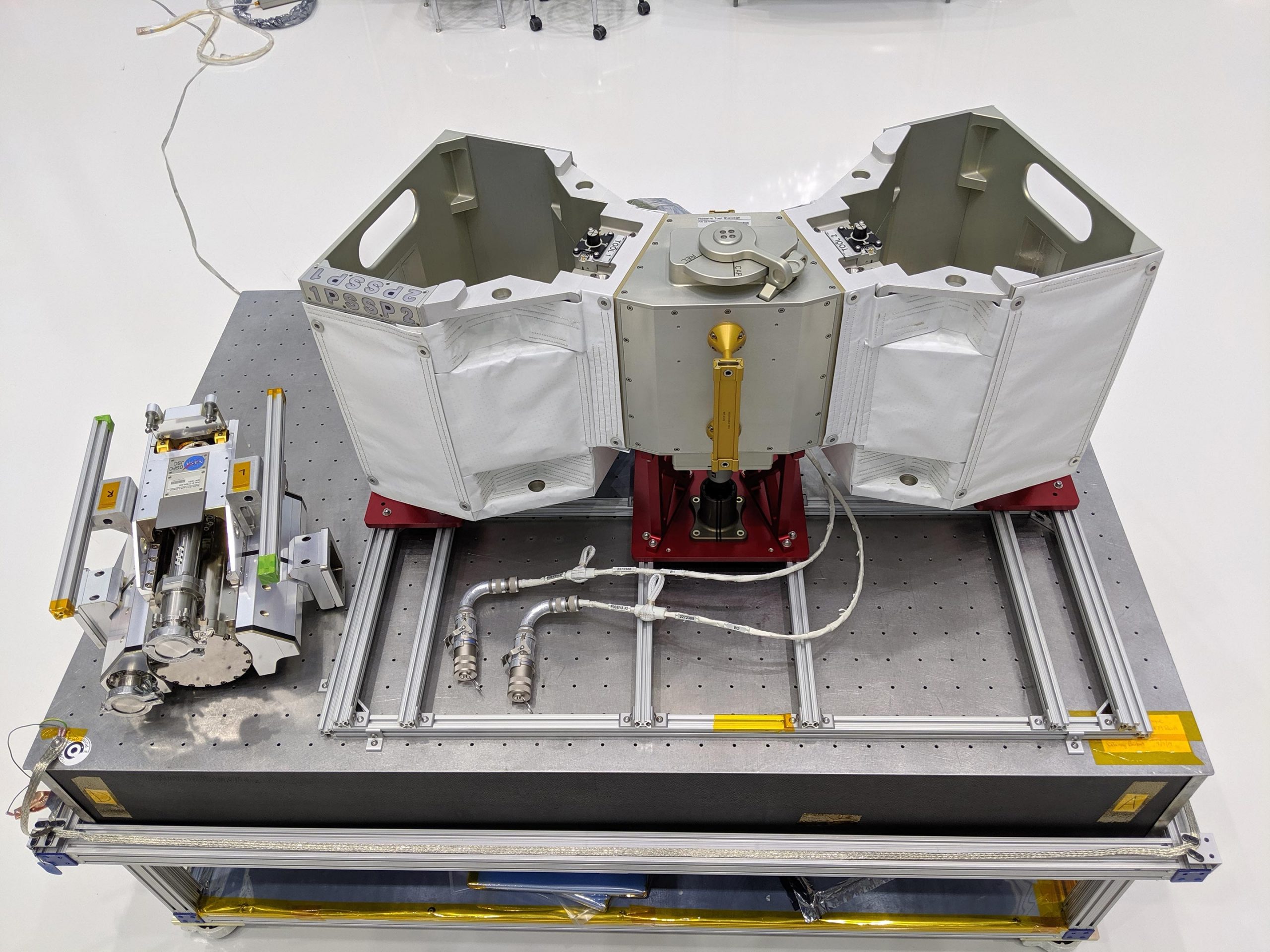
    RELL Engineering Development Unit and RiTS Flight Unit
    RELL Engineering Development Unit (left) pictured alongside RiTS. Credit: NASA

    “RiTS provides thermal and physical protection for tools stored on the outside of the station, not only freeing up room on board but also allowing the Canadian Space Agency’s Dextre robot to access them more quickly,” said RiTS Hardware Manager Mark Neuman.

    The first step in the RiTS installation process involved preparing the unit inside the space station. The astronauts unpacked RiTS’ occupants from storage – two units of a tool called the Robotic External Leak Locator (RELL) – and affixed them inside RiTS’ aluminum housing.
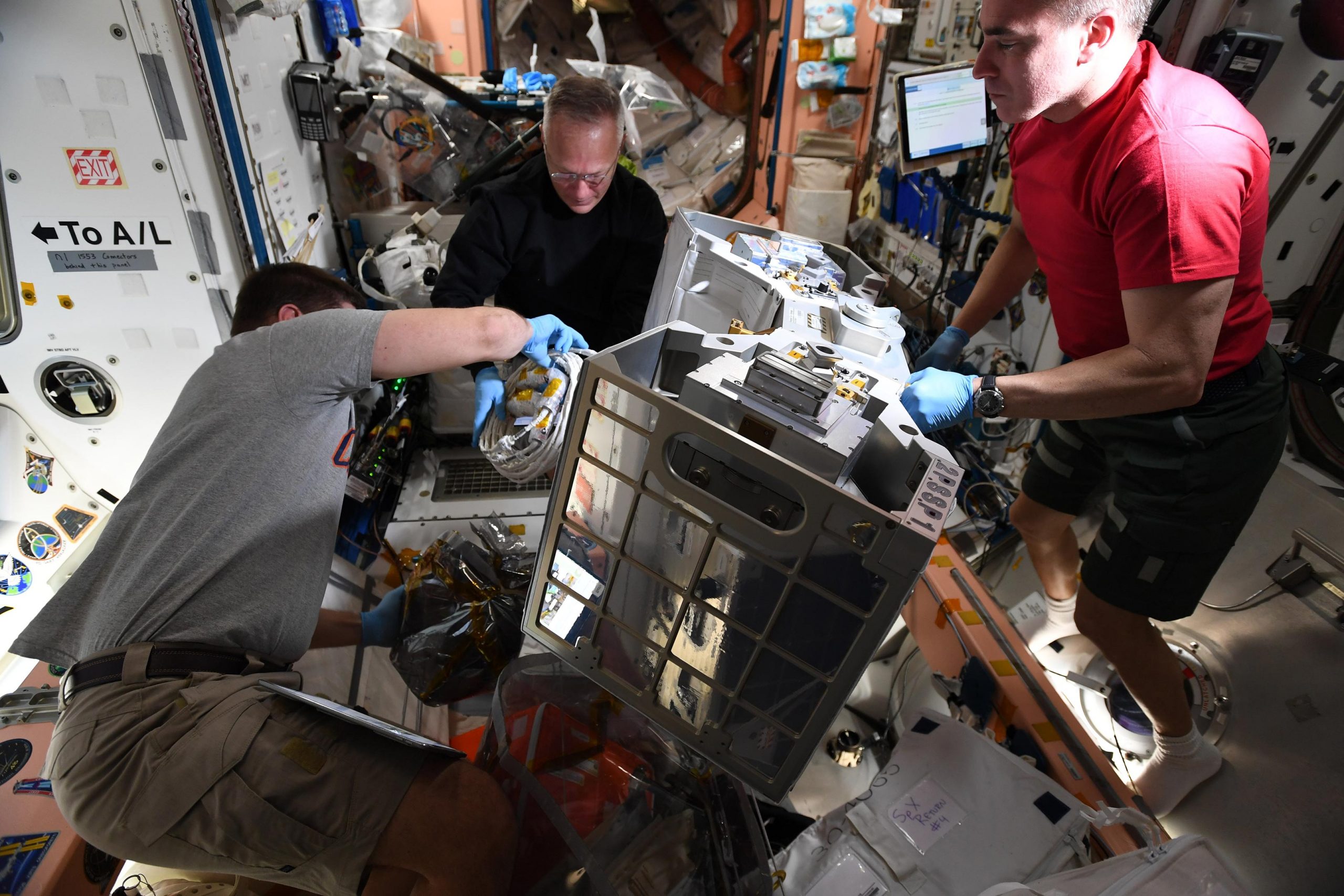
    Astronauts RiTS Installation
    Astronauts Robert Behnken, Doug Hurley, and Chris Cassidy prepare RiTS for installation. Credit: NASA

    “RELL is a great example how robots with the right tools can simplify life for astronauts,” said Neuman. “Dextre can use RELL to detect ammonia leaks, eliminating the need for astronauts to perform the same task during a spacewalk.”

    The ability to locate and repair ammonia leaks efficiently is important since ammonia is used to operate the station’s cooling system.

    Mobile Base System Mobile Transporter
    The Mobile Base System moves on the Mobile Transporter rail car along truss rails covering the length of the space station. It provides a movable platform for Canadarm2 and Dextre and can access any of the eight worksites that feature power connections. Credit: NASA

    The installation of RiTS makes the leak location process much more streamlined. Before RiTS, the RELL tools were stored inside the station, and deploying RELL depended on airlock availability and involved waiting an additional 12 hours to allow for RELL’s gas analyzer to clear itself of internal gases. With RiTS, the only variable is Dextre’s availability, expediting the search for leaks.

    After it was prepared on the station, RiTS – loaded with the two RELL units – was sent outside with the spacewalking astronauts who attached it to the MBS. This was the first task during a spacewalk to upgrade International Space Station systems. The installation required the astronauts to mechanically attach RiTS to an available worksite socket then mate two electrical cables to unused power outlets on the MBS. The power connection was critical to enabling heaters within RiTS that keep the RELL tools from getting too cold.

    RiTS Installed on ISS
    RiTS installed on the space station. Credit: NASA TV

    Although RiTS will be used on the station, human-robot collaborations like this have the potential to be applied to other endeavors that involve human habitats in space, including Gateway.

    RiTS was developed by NASA’s Exploration & In-space Services projects division at the agency’s Goddard Space Flight Center in Greenbelt, Maryland, in partnership with NASA’s Johnson Space Center in Houston.

    Never miss a breakthrough: Join the SciTechDaily newsletter.
    Follow us on Google and Google News.

    International Space Station NASA NASA Goddard Space Flight Center Robotics
    Share. Facebook Twitter Pinterest LinkedIn Email Reddit

    Related Articles

    NASA Unveils Game-Changing Augmented Reality in Spacecraft Engineering

    Astronauts Set for Spacewalk To Seal NICER Telescope’s Light Leak

    NASA’s Atmospheric Waves Experiment Successfully Installed on Space Station

    Light-Speed Ahead: NASA’s Pioneering Leap Into Laser Data Transmission

    NASA’s Honey Astrobee Robot Returns to Space

    NASA’s ILLUMA-T: Pioneering the Next Era of Laser Space Communications

    NASA Celebrates 3 Years of Astrobee Robotic Free-Flyers Buzzing on Space Station

    NASA’s Laser Communications Relay Demonstration – Bringing Optical Speeds to the Final Frontier

    “Robot Hotel” Launching to the International Space Station on SpaceX Falcon 9 Rocket

    Leave A Reply Cancel Reply

    • Facebook
    • Twitter
    • Pinterest
    • YouTube

    Don't Miss a Discovery

    Subscribe for the Latest in Science & Tech!

    Trending News

    AI Could Detect Early Signs of Alzheimer’s in Under a Minute – Far Before Traditional Tests

    What if Dark Matter Has Two Forms? Bold New Hypothesis Could Explain a Cosmic Mystery

    This Metal Melts in Your Hand – and Scientists Just Discovered Something Strange

    Beef vs. Chicken: Surprising Results From New Prediabetes Study

    Alzheimer’s Breakthrough: Scientists Discover Key Protein May Prevent Toxic Protein Clumps in the Brain

    Quantum Reality Gets Stranger: Physicists Put a Lump of Metal in Two Places at Once

    Scientists May Have Found the Key to Jupiter and Saturn’s Moon Mystery

    Scientists Uncover Brain Changes That Link Pain to Depression

    Follow SciTechDaily
    • Facebook
    • Twitter
    • YouTube
    • Pinterest
    • Newsletter
    • RSS
    SciTech News
    • Biology News
    • Chemistry News
    • Earth News
    • Health News
    • Physics News
    • Science News
    • Space News
    • Technology News
    Recent Posts
    • What if Your Memories Never Happened? Physicists Take a New Look at the Boltzmann Brain Paradox
    • Students Found an Ancient Star That Shouldn’t Be in the Milky Way
    • Astronomers Solve 50-Year Mystery and Reveal Hidden Culprit Behind Strange X-Ray Emissions
    • One of the Universe’s Largest Stars May Be Getting Ready To Explode
    • Scientists Discover Enzyme That Could Supercharge Ozempic-Like Weight Loss Drugs
    Copyright © 1998 - 2026 SciTechDaily. All Rights Reserved.
    • Science News
    • About
    • Contact
    • Editorial Board
    • Privacy Policy
    • Terms of Use

    Type above and press Enter to search. Press Esc to cancel.