
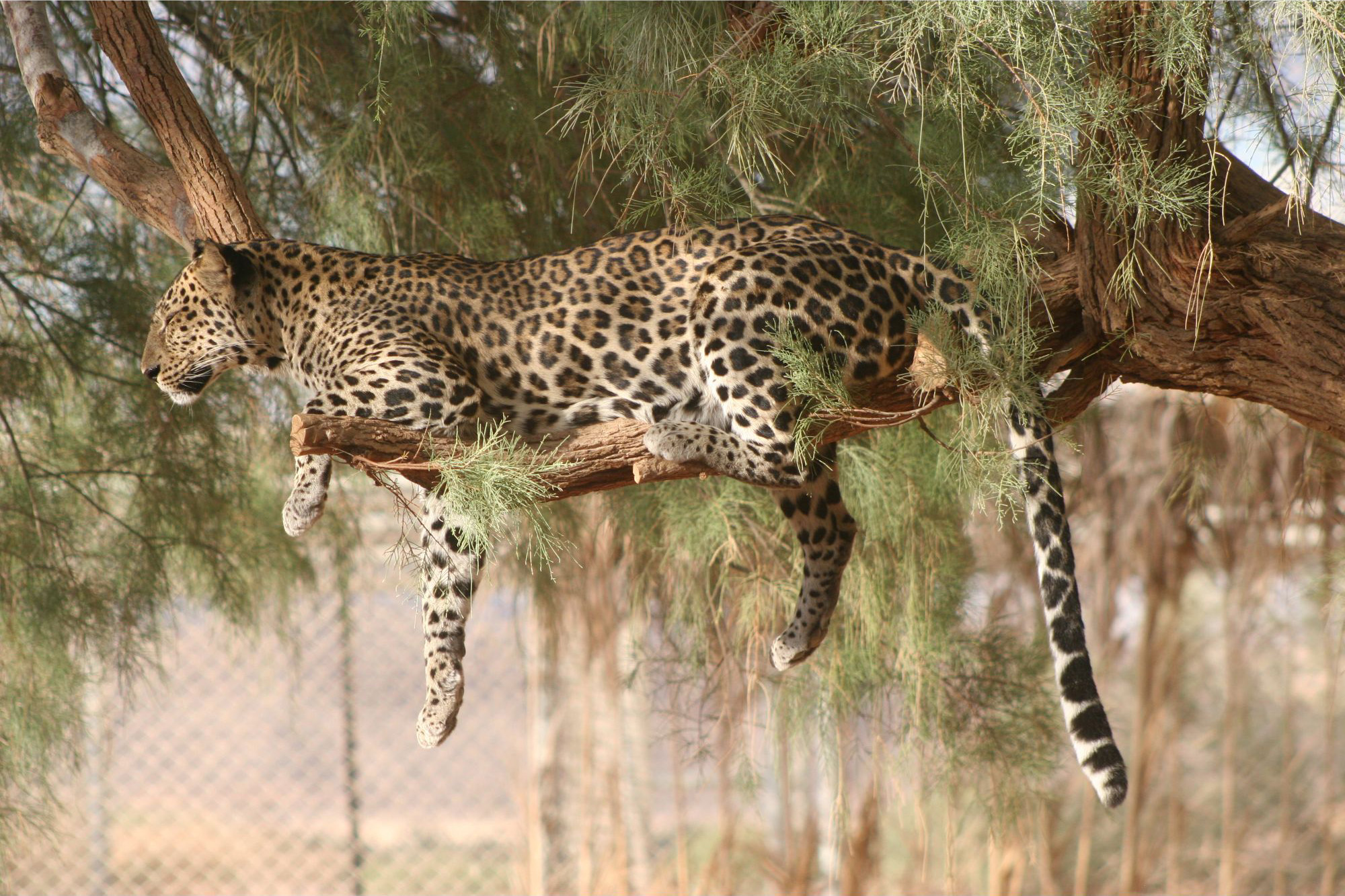
Research on the critically endangered Arabian leopard indicates that reintroducing carefully selected, captive-bred individuals into the wild could substantially aid in the recovery of their decreasing numbers and help prevent extinction.
The authors of a major study on the Critically Endangered Arabian leopard suggest that releasing captive-bred animals, carefully chosen based on their genetic makeup, can significantly aid in the recovery of the rapidly declining wild population and help prevent their extinction.
An international collaboration led by scientists from the Durrell Institute of Conservation and Ecology (DICE) at the University of Kent, University of East Anglia (UEA), University College London (UCL), Nottingham-Trent University (NTU), and the Diwan of Royal Court in Oman, surveyed the remote Dhofar mountain range of southern Oman to determine how many of Arabia’s last big cat survive.
Genetic Study Findings
By deploying camera traps to identify individual leopards and performing DNA analyses from wild leopard scat alongside samples from the captive population, the team estimates there could be only 51 wild leopards remaining in Oman, distributed between three isolated, genetically impoverished but distinct subpopulations.
Despite revealing extremely low levels of genetic diversity in the wild leopard population in Oman, the team discovered higher levels of genetic diversity in captive leopards across the region, in particular among several individuals originating from neighboring Yemen that helped found today’s captive-breeding population. This important genetic resource has the potential for a major role in the successful recovery of the Arabian leopard.
The team’s research showed that the dwindling regional wild population could most effectively be recovered through ‘genetic rescue’, namely, the introduction of offspring from captive-bred leopards — which harbor the greatest amount of genetic diversity — into the wild population. However, their predictions indicate that for genetic rescue to establish the most viable populations through leopard reintroductions, the benefit that new genes can bring needs to be carefully assessed, in particular because captive leopards may already be in-bred.
The study used conservation genetic analysis at DICE, cutting-edge computer simulations developed at UEA, and extensive fieldwork in Oman, to closely examine Arabian leopard DNA and assess the risk of future extinction, as well as forecast how genetic rescue can secure the leopard’s viability. The authors say their findings, published on May 23 in Evolutionary Applications, could help other threatened species.
Detailed Genetic Analysis
Professor Jim Groombridge, who led the research at Kent’s DICE, explained how the genetic analysis was carried out: ‘In collaboration with the Diwan of Royal Court in Oman, we surveyed and collected leopard scats from across the Dhofar mountain range, and extracted DNA from them which we analyzed using microsatellite DNA markers to quantify genetic diversity.
‘Using the genetic information, we were able to determine the number of leopard individuals that remain in the wild. We could then compare levels of genetic diversity between the wild leopard population and those in captivity.’
Dr Hadi Al Hikmani, Arabian leopard Conservation Lead at the Royal Commission for AlUla in Saudi Arabia, described the motivation for this study: ‘The Arabian leopard is one of the world’s rarest carnivores and is extraordinarily elusive. The only way to monitor these leopards in the wild is to deploy camera traps high up across the mountain ranges where the leopards live, and to collect the scats they leave behind on the mountain passes, for DNA analysis.’
Thomas Birley, a PhD researcher at UEA who performed the computer simulations for genetic rescue, said: ‘By using the genetic information from the wild and captive populations, we were able to forecast the best plan for genetic rescue to ensure long-term viability for this Critically Endangered big cat.’
Professor Cock van Oosterhout, of the School of Environmental Sciences at UEA, added: ‘The problem is that all individuals are somehow related to each other. They are the descendants of the few ancestors that managed to survive a major population crash. Hence, it becomes virtually impossible to stop inbreeding, and this exposes ‘bad’ mutations, what we call genetic load. In turn, this can increase the mortality rate, causing further population collapse.’
‘The genetic load poses a severe threat, but it can be alleviated by genetic rescue, and our study has projected the best way to do this. The wild population needs ‘genetic rescue’ from more genetically diverse leopards bred in captivity. These leopards are genetically more diverse, and they can help to reduce the level of inbreeding and genetic load. However, there is a risk that we could introduce other bad mutations from the captive population into the wild, so we will need a careful balance.’
Reference: “Can genetic rescue help save Arabia’s last big cat?” by Hadi Al Hikmani, Cock van Oosterhout, Thomas Birley, Jim Labisko, Hazel A. Jackson, Andrew Spalton, Simon Tollington and Jim J. Groombridge, 23 May 2024, Evolutionary Applications.
DOI: 10.1111/eva.13701
Never miss a breakthrough: Join the SciTechDaily newsletter.
Follow us on Google and Google News.