

New dinosaur Enigmacursor clarifies taxonomy and highlights overlooked species in the Morrison Formation.
A small dinosaur that once sprinted along ancient riverbanks in North America has now taken up residence in London.
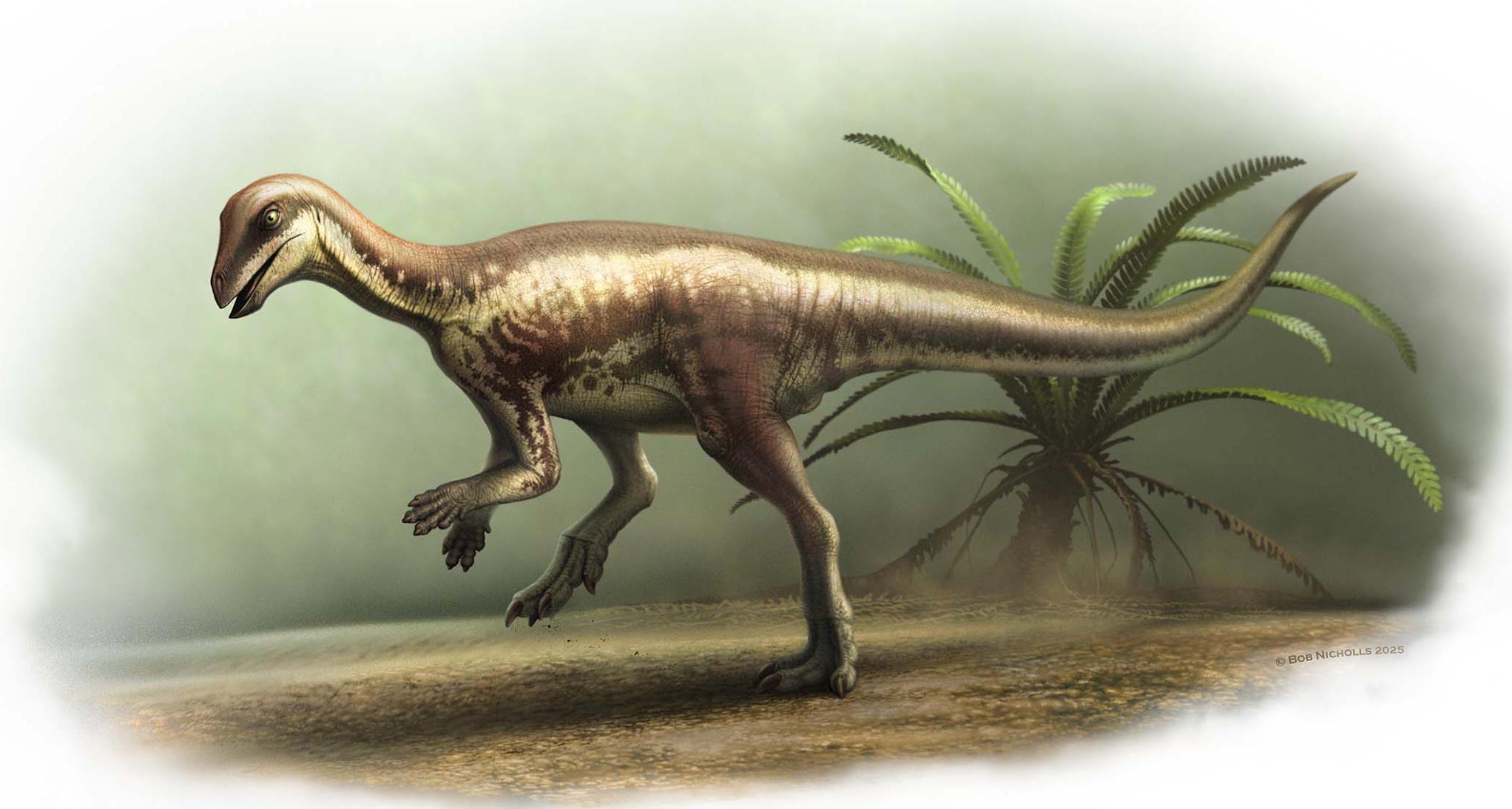
This newly identified species, Enigmacursor mollyborthwickae, represents the most complete named specimen of its type and is now permanently exhibited at the Natural History Museum.
The discovery of Enigmacursor brings resolution to a taxonomic puzzle that has persisted for more than a hundred years.
The Morrison Formation in the United States is renowned for yielding iconic dinosaurs like Allosaurus and Stegosaurus. However, many of the smaller plant-eating species from this region have received far less scientific attention.
Researchers have now officially described one of these overlooked herbivores, naming it Enigmacursor mollyborthwickae. They hope that this finding will help bring greater recognition to lesser-known species in the formation and encourage the discovery of others still waiting to be studied.
Professor Susannah Maidment, a dinosaur specialist and co-lead author of the study, notes that this species may be the first of many small-bodied dinosaurs yet to be uncovered in the western United States.
“While the Morrison Formation has been well-known for a long time, most of the focus has been on searching for the biggest and most impressive dinosaurs,” Susannah says. “Smaller dinosaurs are often left behind, meaning there are probably many still in the ground.”
“Enigmacursor shows that there’s still plenty to discover in even this well-studied region, and highlights just how important it is to not take historic assumptions about dinosaurs at face value.”
The paper was published in the journal Royal Society Open Science, and visitors can now see the new dinosaur on show on our Earth Hall Mezzanine.
What was Enigmacursor like?
The origins of Enigmacursor trace back to the final stages of the Late Jurassic period, roughly 152 to 145 million years ago. During this era, the Morrison Formation was a sprawling expanse of rivers and floodplains that covered much of what is now the western United States.
Massive herbivorous dinosaurs like Diplodocus would have wandered these lowlands, while predators such as Ceratosaurus patrolled the water’s edge. Among these giants lived smaller dinosaurs, including Enigmacursor, which likely relied on speed and agility to avoid becoming prey.
Equipped with long legs, this nimble herbivore was probably well adapted for quick escapes, a trait reflected in its name. Enigmacursor translates to “mysterious runner,” and the species name honors Molly Borthwick, whose generous contribution made it possible to acquire and exhibit the fossil.
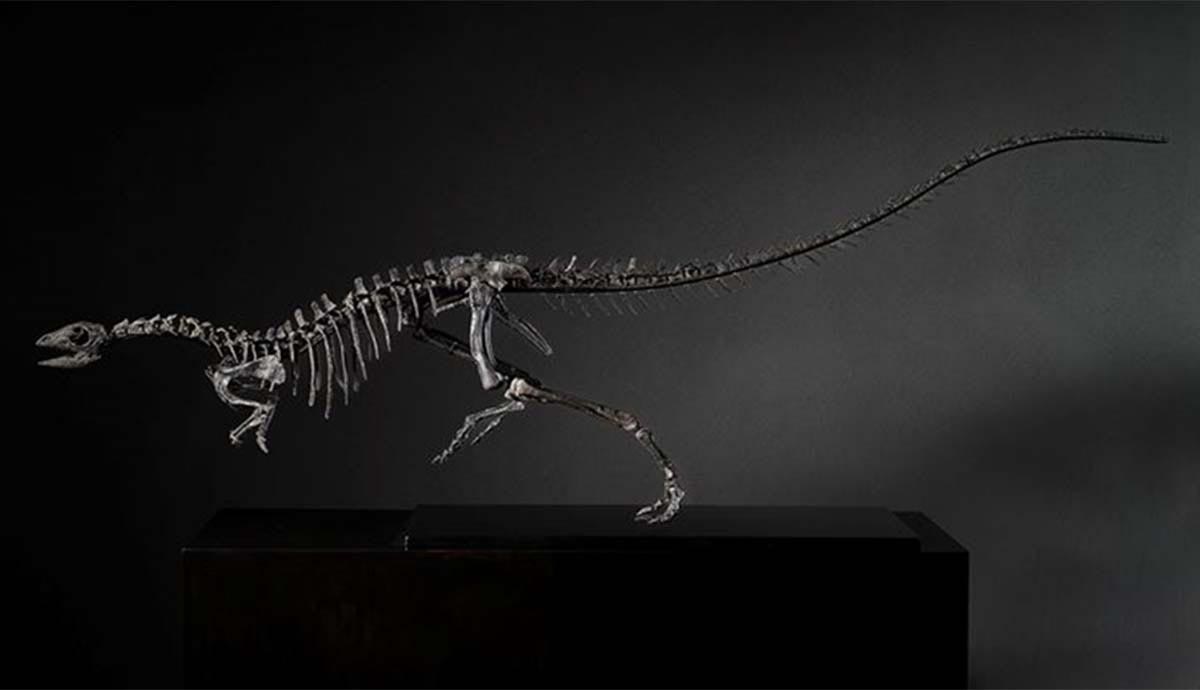
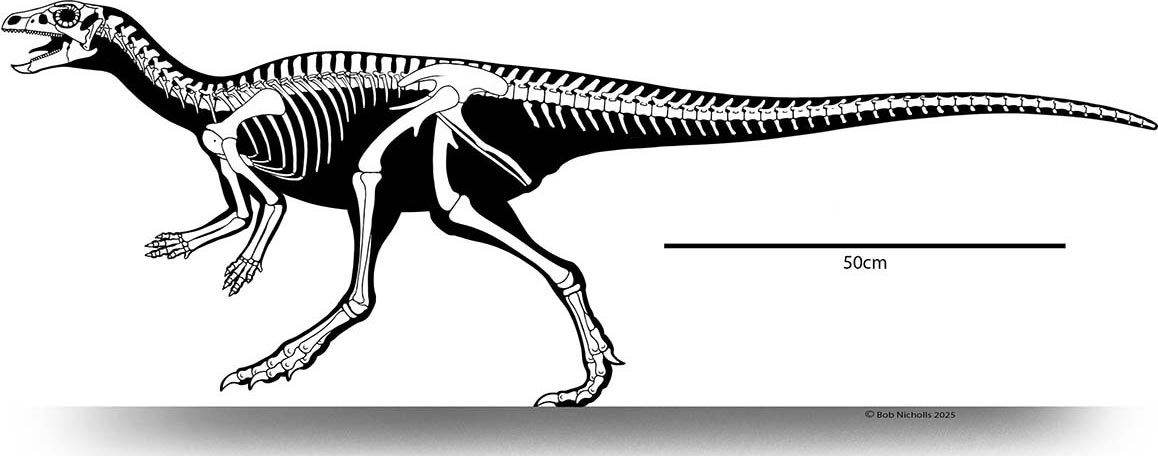
Although the specimen measures only about one meter in length, it shows indications of immaturity, according to co-lead author Professor Paul Barrett.
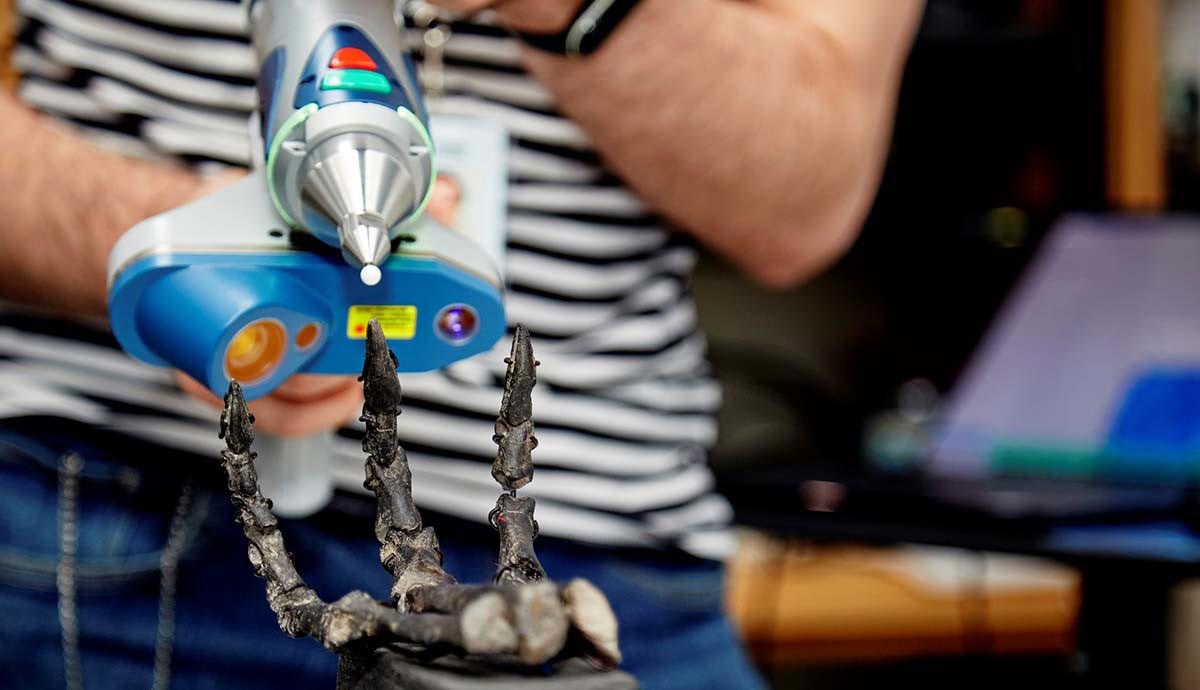
“One feature we look at in dinosaurs are the neural arches,” Paul explains. “These are the top section of vertebrae, and form separately from the lower parts. They gradually merge as an animal gets older, so by examining them you can see whether it was still growing.”
“We can speculate that Enigmacursor probably wasn’t that old, as it doesn’t seem to have many of its neural arches fused in place. However, the way the fossil was prepared before it was acquired by the Natural History Museum has obscured some of these details, so we can’t be certain.”
It’s also unclear exactly how the animal died, as there are no obvious signs of injury or illness in the bones. In any case, the remains of Enigmacursor ended up buried within the Morrison Formation, waiting to be found millions of years later.
From Nanosaurus to Enigmacursor
The new fossils were unearthed on private land between 2021 and 2022, and put up for sale through a commercial fossil dealer. They were initially advertised as being from an animal called Nanosaurus, a poorly known species of dinosaur first named in the 1870s.
It was then brought it to the attention of Susannah and Paul, who were interested in finding out more about this enigmatic animal. After the fossils were purchased by the Natural History Museum, the palaeontologists began digging into Nanosaurus’s past, and were shocked by what they found.
“Nanosaurus wasn’t named based on many fossilized bones, but largely the preserved impressions of bones pressed into hardened sand that are very difficult to study,” Paul says. “So, we turned to the other bones that have been referred to the group over the past century, but these weren’t particularly well-preserved either.”
“It just goes to show how much palaeontology has changed in the past 150 years,” Susannah adds. “When Nanosaurus was named in 1877, there weren’t that many named dinosaurs so the few characteristics that its fossils preserved would have been unique.”
“Now, however, we have found hundreds of small dinosaurs from all over the world and know that the fossils of Nanosaurus just aren’t that useful, let alone enough to name a species with. As a result, it made sense to put them to one side and name Enigmacursor as a new species instead.”
While Nanosaurus is no longer considered a species, some of its fossils still have scientific value. The few features that can be identified in the various historic fossils show that they’re different to Enigmacursor. This suggests that further small dinosaur species could be discovered from the Morrison.
Some of these fossils may have already been uncovered. Susannah and Paul are aware of several well-preserved skeletons held in museums around the world that haven’t yet been formally named, and might represent these missing dinosaurs.
The researchers hope to study some of these fossils in the future, and help to further clear up the muddled history of these dinosaurs.
“Taxonomic work is generally overlooked and not treated as a particularly important or employable skill,” Susannah adds. “However, it’s the foundation that all paleontology is built on. If it’s wrong, then everything else collapses.”
“We need more funding and support to ensure that this vital work doesn’t stop, so that we can better understand how life on Earth evolved.”
Reference: “Enigmacursor mollyborthwickae, a neornithischian dinosaur from the Upper Jurassic Morrison Formation of the western USA” by Susannah C. R. Maidment and Paul M. Barrett, 25 June 2025, Royal Society Open Science.
DOI: 10.1098/rsos.242195
Never miss a breakthrough: Join the SciTechDaily newsletter.
Follow us on Google and Google News.