
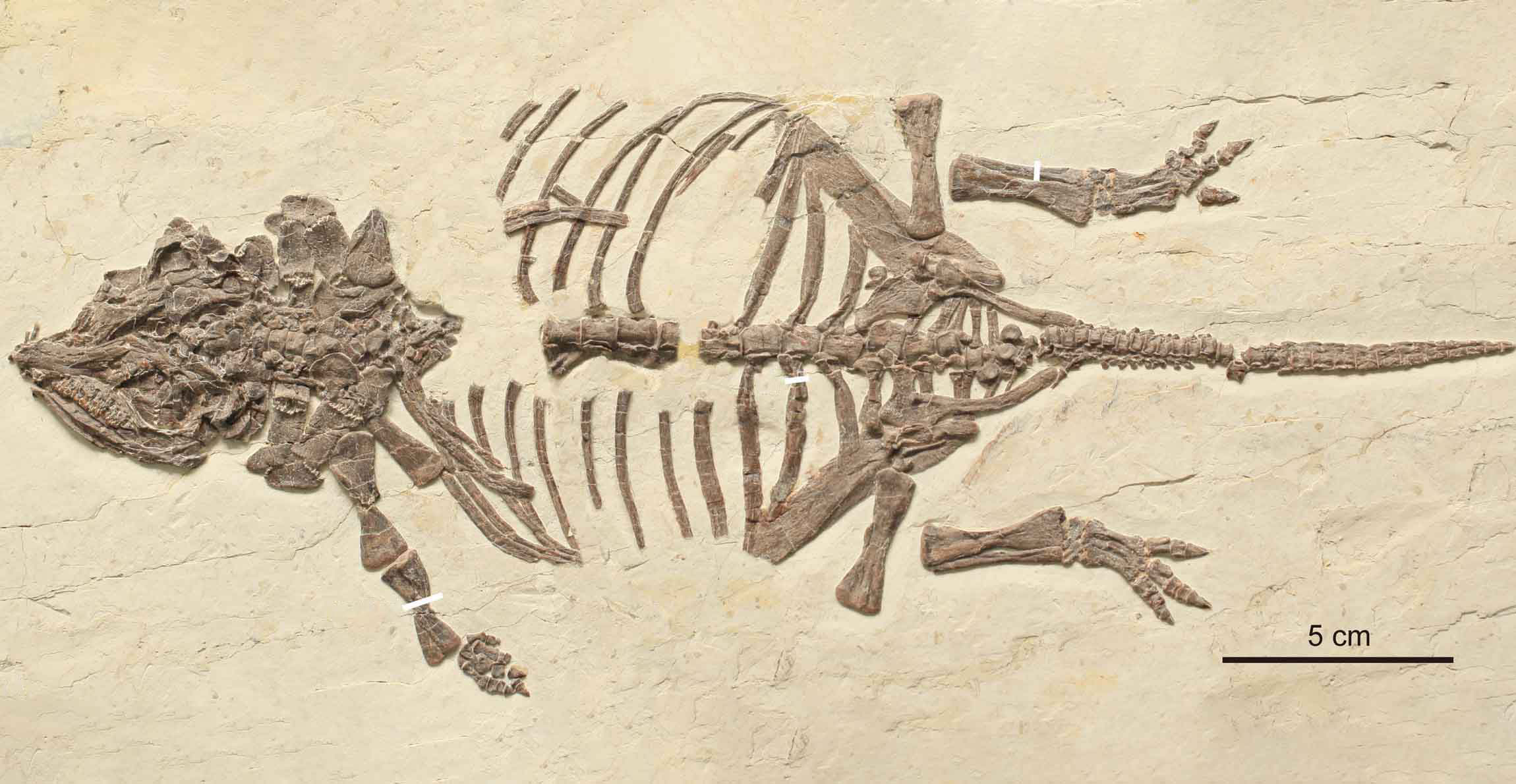
Fossil bone analysis shows that mysterious tiny Liaoningosaurus specimens are actually hatchling ankylosaurs, offering rare evidence of early armored dinosaur development.
A long-standing puzzle involving dozens of unusually small dinosaur fossils has finally been resolved.
Specimens once believed to represent a tiny species of armored dinosaur are now understood to be the remains of baby ankylosaurs. The finding provides scientists with rare clues about how these heavily armored dinosaurs grew during the earliest stages of life.
For more than twenty years, paleontologists have debated the identity of fossils belonging to a dinosaur known as Liaoningosaurus paradoxus. The species has puzzled researchers since its initial description in 2001, when it was classified as a type of armored dinosaur called an ankylosaur.
Over the years, several fossils attributed to Liaoningosaurus have been uncovered. However, each specimen measures less than 40 centimeters in length. This is extremely small compared with adult ankylosaurs, which commonly grow to lengths of three meters or more.
Because no larger skeletons have ever been discovered, some researchers suggested that Liaoningosaurus might represent the first known miniature ankylosaur species. Others even proposed that the dinosaur may have lived partly in water.
A new study published in the Journal of Vertebrate Paleontology has now challenged those ideas. The research suggests that the fossils do not represent small adults at all. Instead, they likely belong to very young ankylosaurs. One specimen even displays evidence that it had only recently hatched, making it the youngest ankylosaur yet identified in the fossil record.
Professor Paul Barrett, a dinosaur expert and a coauthor of the study, says, “Liaoningosaurus has caused a lot of debate because there is a lot we don’t know about this species and we haven’t managed to identify an adult.”
“But our research confirms that these are baby dinosaurs rather than small adults. Fossils of young ankylosaurs are rare, so there is a lot that these remains can tell us about the early development of armored dinosaurs.”
How do we know the fossils are young ankylosaurs?
Since all known Liaoningosaurus specimens are roughly the same small size, body length alone could not determine whether they were miniature adults or juvenile animals. To estimate their age more accurately, researchers examined the microscopic structure of the bones.
Bone tissue preserves growth lines that function much like the rings inside a tree trunk. Each line corresponds to roughly one year of growth. By counting these lines and measuring the spacing between them, scientists can estimate both the age of an animal and how quickly it was growing.
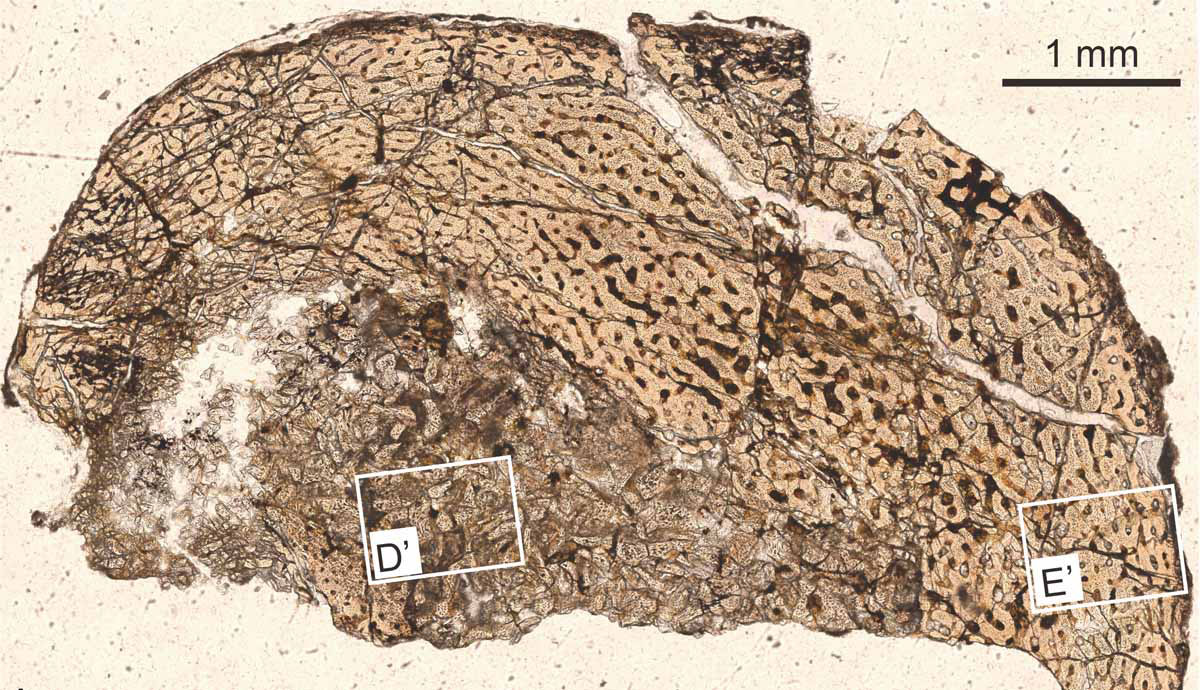
For this analysis, researchers collected bone samples from two Liaoningosaurus fossils. One specimen represented the largest individual yet discovered, while the other was among the smallest.
When the bones were examined, scientists found no visible growth lines in either sample. This result indicates that both animals were less than one year old at the time they died. The microscopic structure of the smaller fossil also closely matched the bone patterns seen in other very young dinosaurs.
“The smaller fossil showed characteristics that we can see in other newborn dinosaurs, such as the presence of a hatching line,” says Paul.
“This is a small, ring-like feature in the bone that is laid down at the time the animal hatches from the egg. So, we can say that this individual had very recently hatched at the time of its death, which would make it the first hatchling ankylosaur we’ve ever discovered.”
What do we know about these dinosaurs?
All known Liaoningosaurus fossils come from Liaoning Province in northeastern China. This region has produced many remarkable fossils from the Cretaceous Period, which lasted from about 145 to 66 million years ago. Among the discoveries are famous feathered dinosaurs such as Microraptor and Sinornithosaurus.
The Liaoningosaurus fossils were preserved in a similar way. After the animals died, their remains settled into the bottom of a shallow lake. Frequent volcanic activity in the region covered the lakebeds with ash, which helped preserve the fossils with extraordinary detail. These conditions have allowed scientists to reconstruct a vivid picture of life in this ancient ecosystem.
Even though no adult Liaoningosaurus fossils have been found, the specimens still offer important information about how ankylosaurs developed.
Young ankylosaur fossils are extremely rare, and many known juvenile specimens lack the heavy armor plates seen in adult animals. Because of this, some researchers previously proposed that ankylosaurs developed their armor only later in life. The Liaoningosaurus fossils suggest a different story, showing that at least some armor was already present shortly after hatching.
“As we have found so few fossil babies, Liaoningosaurus is really the only good window we have into what ankylosaurs are like just after they hatch,” says Paul.
“The Liaoningosaurus fossils had already developed some armour. Now that we know they are babies and not miniature adults, we can say that these kinds of features came in quite early during the animal’s growth.”
“But what would give us even bigger insights is if we also found an adult. Then we can find the differences between the adults and babies of the same species and see how these features are developing.”
Reference: “Bone histology of Liaoningosaurus paradoxus (Ornithischia: Ankylosauria) from the Lower Cretaceous of Liaoning Province, China” by Wenjie Zheng, Qi Zhao, Paul M. Barrett and Xing Xu, 27 October 2025, Journal of Vertebrate Paleontology.
DOI: 10.1080/02724634.2025.2566325
Never miss a breakthrough: Join the SciTechDaily newsletter.
Follow us on Google and Google News.