
Close Menu
    Facebook X (Twitter) Instagram
    SciTechDaily
    • Biology
    • Chemistry
    • Earth
    • Health
    • Physics
    • Science
    • Space
    • Technology
    Facebook X (Twitter) Pinterest YouTube RSS
    SciTechDaily
    Home»Science»Shocking Scientists: Fossilized Plesiosaur Skin Cells Discovered After 183 Million Years
    Science

    Shocking Scientists: Fossilized Plesiosaur Skin Cells Discovered After 183 Million Years

    By Lund UniversityFebruary 19, 2025No Comments4 Mins Read
    Facebook Twitter Pinterest Telegram LinkedIn WhatsApp Email Reddit
    Share
    Facebook Twitter LinkedIn Pinterest Telegram Email Reddit
    Skeleton of the New Plesiosaur at the Urwelt Museum Hauff in Holzmaden, Germany
    Skeleton of the new plesiosaur at the Urwelt-Museum Hauff in Holzmaden, Germany. Credit: Klaus Nilkens/Urwelt-Museum Hauff

    Scientists at Lund University analyzed soft tissue from a 183-million-year-old plesiosaur fossil, discovering both smooth and scaly skin.

    Researchers at Lund University in Sweden have analyzed the soft tissue of a fossilized plesiosaur for the first time, revealing that the long-necked marine reptile had both smooth and scaly skin. This combination likely helped it swim efficiently while also allowing movement along rough seabeds.

    Plesiosaurs inhabited the world’s oceans throughout much of the Mesozoic Era (203–66 million years ago). These reptiles, which could grow up to 12 meters long, fed primarily on fish and propelled themselves using four paddle-like flippers, similar to sea turtles. Until now, little has been known about their external anatomy.
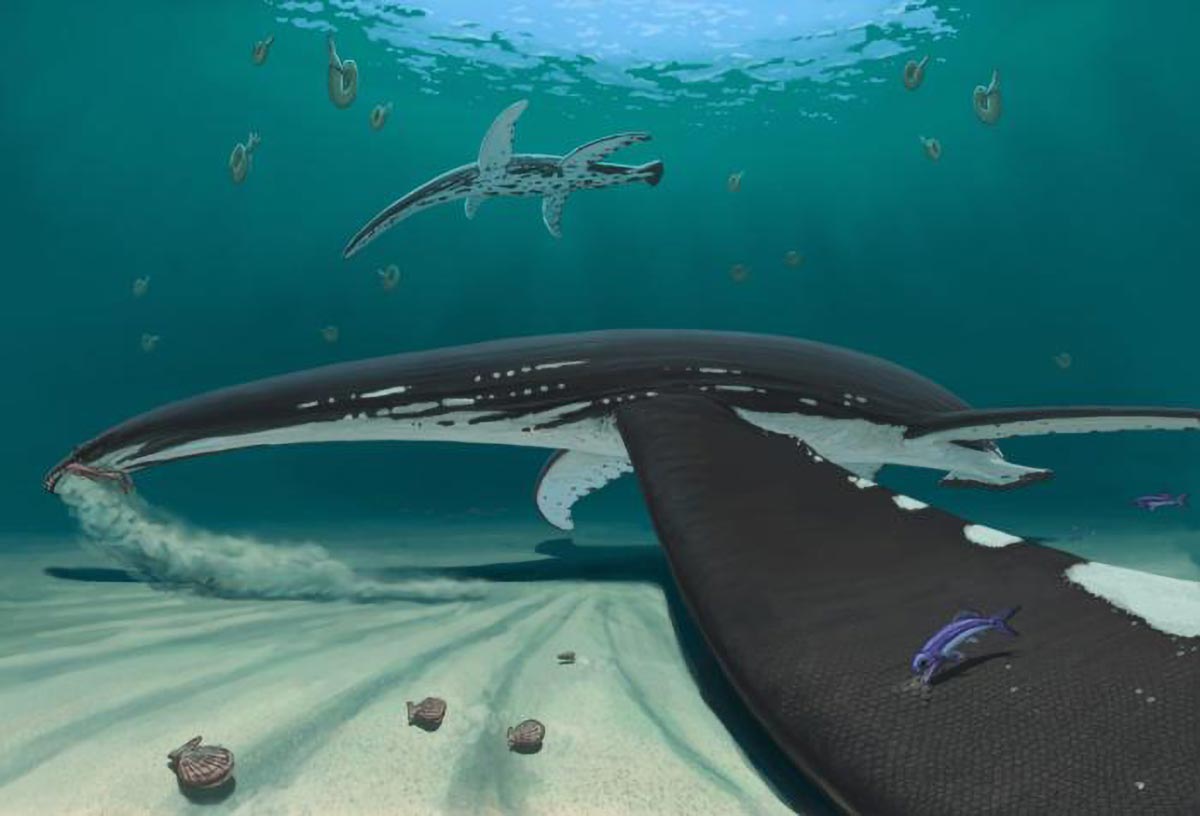
    Reconstruction of the New Plesiosaur
    Reconstruction of the new plesiosaur with scales on the flipper and smooth scale-less skin along the body as informed by this new plesiosaur fossil. This is a significant update to how we reconstruct plesiosaurs which has otherwise not change substantially since their initial discovery more than 200 years ago. Credit: Joschua Knüppe

    However, in a new study published in the scientific journal Current Biology, a research team led by scientists from Lund University has managed to analyze soft tissue from a 183-million-year-old plesiosaur found near Holzmaden, Germany.

    “Fossilized soft tissue, such as skin and internal organs, is exceptionally rare. We used a broad range of techniques to identify smooth skin in the tail region as well as scales along the rear edge of the flippers. This provided us with unparalleled insights into the appearance and biology of these long-extinct reptiles,” says Miguel Marx, a PhD student in geology at Lund University and the lead author of the study.

    Skin From the Bottom Half of the Tail in the New Plesiosaur
    Skin from the bottom half of the tail in the new plesiosaur. The skin as preserved is beige in color with some parts showing a pitted surface. This pitted surface represents the underside of the skin, with the outer surface facing into the rock matrix. Credit: Klaus Nilkens/Urwelt-Museum Hauff

    The results reveal an unusual combination of smooth and scaly skin on different parts of the body. The researchers believe this variation could be related to different functions.

    The plesiosaur needed to swim efficiently to catch fish and squid-like animals, a task made easier by its smooth and hydrodynamic skin. However, it also needed to move across rough seafloors, which the scaly flippers would have likely allowed it to do.
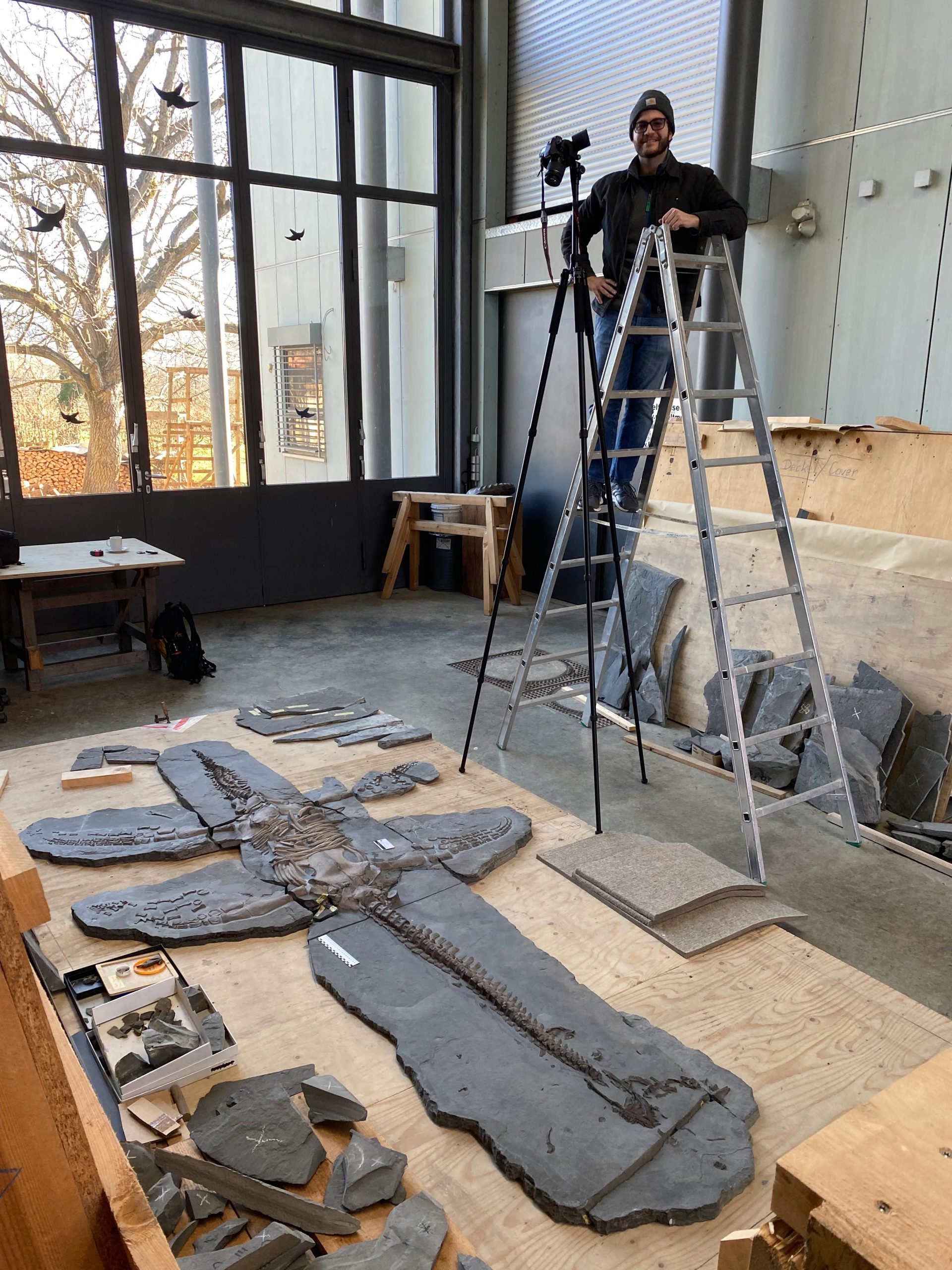
    Miguel Marx Photographing the Skeleton at the Urwelt Museum Hauff in Holzmaden, Germany
    Miguel Marx photographing the skeleton at the Urwelt-Museum Hauff in Holzmaden, Germany. Credit: Miguel Marx

    Enhancing Our Understanding of Prehistoric Life

    “Our findings help us create more accurate life reconstructions of plesiosaurs, something that has been extremely difficult since they were first studied over 200 years ago. Also, the well-preserved German fossil really highlights the potential for soft tissue in providing valuable insights into the biology of these long-extinct animals,” explains Miguel Marx.

    By reconstructing the appearance of ancient animals, researchers can enhance our understanding of macroevolution and the adaptations required to survive in specific environments. In recreating the past, we can also better understand Earth’s history and where we are headed.
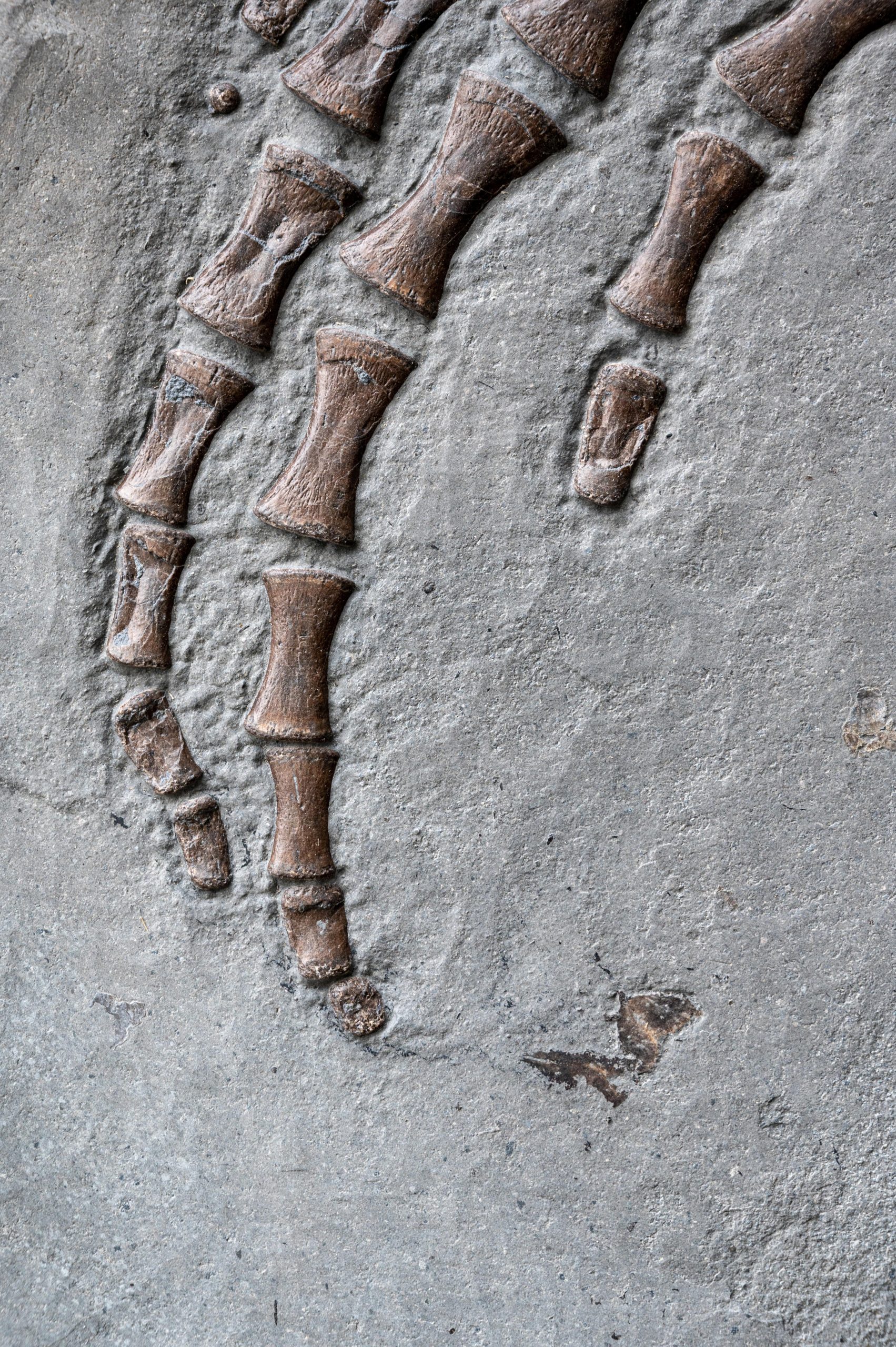
    The Tip of the Right Flipper With Two Scales Along the Trailing Edge
    The tip of the right flipper with two scales along the trailing edge. Credit: Klaus Nilkens/Urwelt-Museum Hauff

    “Apart from the mosaic of smooth skin and scales, it was an incredible moment to visualize the cells in thin sections of the fossilized plesiosaur’s skin. I was shocked when I saw skin cells that had been preserved for 183 million years. It was almost like looking at modern skin,” says Miguel Marx.

    Reference: “Skin, scales, and cells in a Jurassic plesiosaur” by Miguel Marx, Peter Sjövall, Benjamin P. Kear, Martin Jarenmark, Mats E. Eriksson, Sven Sachs, Klaus Nilkens, Michiel Op De Beeck and Johan Lindgren, 6 February 2025, Current Biology.
    DOI: 10.1016/j.cub.2025.01.001

    The following institutions and organizations participated in the study: Lund University, Uppsala University, RISE (Research Institutes of Sweden), Naturkunde-Museum Bielefeld, and Urwelt-Museum Hauff.

    Never miss a breakthrough: Join the SciTechDaily newsletter.
    Follow us on Google and Google News.

    Fossils Geology Jurassic Period Lund University Paleontology Popular
    Share. Facebook Twitter Pinterest LinkedIn Email Reddit

    Related Articles

    Scientists Discover 132-Million-Year-Old Dinosaur Tracks on South Africa’s Coast

    These Alien-Looking Fossils May Explain the Origins of Complex Life

    New 190-Million-Year-Old “Sword Dragon” Rewrites Ichthyosaur Evolution

    “A Paleontologist’s Dream”: The Breakthrough That Changes How We Date Dinosaurs

    The Great Dinosaur Deception: Fossil Gaps Rewrite Extinction History

    Rewriting the Story of Human Evolution: Apes Lived in Open Habitats 10 Million Years Earlier Than Expected

    Cretaceous Period Sankofa Pyrenaica Fossilized Eggs Are Unusually Shaped

    Microraptor Feathers Were Black With Iridescent Sheen

    Hundreds of Lost Fossils From the Darwin Collection Rediscovered by the British Geological Survey

    Leave A Reply Cancel Reply

    • Facebook
    • Twitter
    • Pinterest
    • YouTube

    Don't Miss a Discovery

    Subscribe for the Latest in Science & Tech!

    Trending News

    Scientists May Have Found the Key to Jupiter and Saturn’s Moon Mystery

    Scientists Uncover Brain Changes That Link Pain to Depression

    Saunas May Do More Than Raise Body Temperature – They Activate Your Immune System

    Exercise in a Pill? Metformin Shows Surprising Effects in Cancer Patients

    Hidden Oceans of Magma Could Be Protecting Alien Life

    New Study Challenges Alzheimer’s Theories: It’s Not Just About Plaques

    Artificial Sweeteners May Harm Future Generations, Study Suggests

    Splashdown! NASA Artemis II Returns From Record-Breaking Moon Mission

    Follow SciTechDaily
    • Facebook
    • Twitter
    • YouTube
    • Pinterest
    • Newsletter
    • RSS
    SciTech News
    • Biology News
    • Chemistry News
    • Earth News
    • Health News
    • Physics News
    • Science News
    • Space News
    • Technology News
    Recent Posts
    • Scientists Discover Unexpected Climate Benefit Hidden in Forest Soils
    • The Grand Canyon’s “Swiss Cheese” Rocks Hold a Critical Secret
    • Scientists Discover 430,000-Year-Old Wooden Tools, Rewriting Human History
    • Scientists Make Breakthrough on 40-Year-Old 2D Physics Puzzle
    • As Cities Invade the Amazon, Yellow Fever Makes a Dangerous Comeback
    Copyright © 1998 - 2026 SciTechDaily. All Rights Reserved.
    • Science News
    • About
    • Contact
    • Editorial Board
    • Privacy Policy
    • Terms of Use

    Type above and press Enter to search. Press Esc to cancel.