
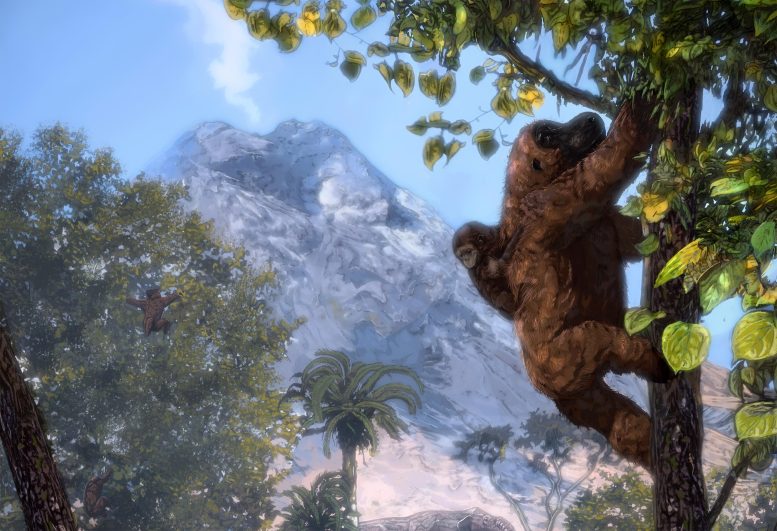
Researchers shift the narrative of human evolution through paleontological and geological fieldwork.
According to new research led by the University of Minnesota, the story of human evolution is not as simple as previously thought. Two studies have found that early apes lived in a wide variety of habitats, including open habitats like scrublands and wooded grasslands, that existed 10 million years earlier than previously known. The research has led to a new framework for future studies regarding ape evolutionary origins. The findings suggest that modern ape anatomy may have evolved in open woodlands among leaf-eating apes rather than in forest-dwelling fruit-eating apes.
The story of human evolution has long been a tale of a forested Africa that gradually became drier, giving rise to open grasslands and causing our forest-loving ape ancestors to abandon the trees and become bipedal. Even though ecological and fossil evidence suggested this narrative was too simplistic, the theory remains prominent in many evolutionary scenarios.
Early Apes in Unexpected Habitats
Two new studies recently published in the journal Science led by researchers at the University of Minnesota put this idea to rest. The findings outline paleoecological reconstructions of early ape fossil sites in eastern Africa dated to the early Miocene Epoch — between 23 and 16 million years ago — showing early apes lived in a wide variety of habitats, including open habitats like scrublands and wooded grasslands that existed 10 million years earlier than previously known.
Research findings include:
- Some of these habitats included substantial C4 plant biomass, grasses that today characterize tropical savannas, but were thought previously to have become dominant only 10 million years ago.
- Modern ape anatomy may have evolved in open woodlands among leaf-eating apes rather than in forest-dwelling fruit-eating apes.
- The combination of open habitats with significant C4 biomass in the Early Miocene suggests that traditional scenarios regarding the evolution of animal and plant communities in Africa, including the origin of hominins, need to be reconsidered.
Researchers across nine fossil site complexes — which included 30 experts from African, North American, and European institutions — conducted paleontological and geological fieldwork, collecting thousands of fossil plant and animal remains and sampling fossil deposits for multiple lines of evidence to reconstruct the ancient habitats.
Piecing Together the 4D Puzzle of the Past
“None of us could have reached these conclusions working in isolation at our individual fossil sites,” said Kieran McNulty, a professor of Anthropology in the College of Liberal Arts, lead author and organizer of the decade-long Research on East African Catarrhine and Hominoid Evolution (REACHE) project. “Working in the fossil record is challenging. We discover hints about past life and need to assemble and interpret them across space and time. It’s like a 4D puzzle, where each team member can only see some of the pieces.”

“You go into a project like this not knowing for sure what you will find out, which is exciting. In this case, we realized we were looking at a picture of Early Miocene communities in eastern Africa that is quite different than what we had expected,” said David Fox, a professor in the Earth and Environmental Sciences Department in the College of Science and Engineering. “There was no single ‘ah ha moment’ but over years of field seasons and the steady accumulation of new fossils and new data, we realized that the environments of the earliest apes varied significantly from the traditional picture of forested habitats.”
Implications for Ape Anatomy and Evolution
“The findings have transformed what we thought we knew about early apes, and the origin for where, when and why they navigate through the trees and on the ground in multiple different ways,” said Robin Bernstein, program director for biological anthropology at the National Science Foundation. “For the first time, by combining diverse lines of evidence, this collaborative research team tied specific aspects of early ape anatomy to nuanced environmental changes in their habitat in eastern Africa, now revealed as more open and less forested than previously thought. The effort outlines a new framework for future studies regarding ape evolutionary origins.”
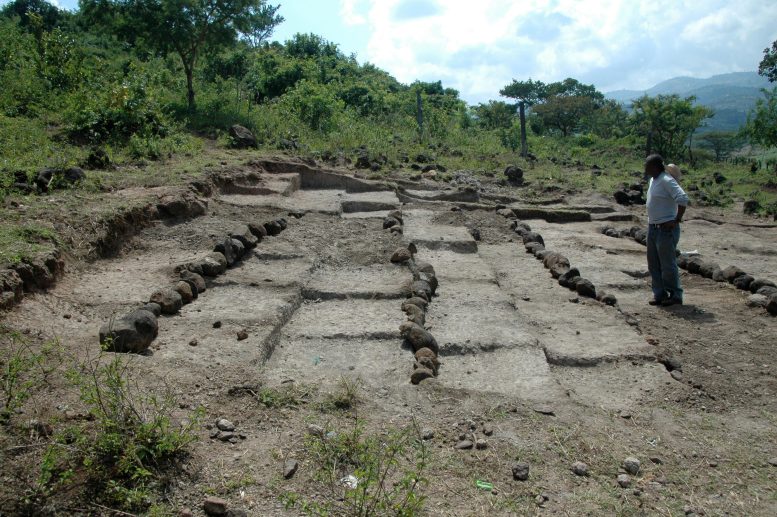
Continued research at these fossil sites will enhance our understanding of these habitats, especially of finer-grained changes in space and time. Likewise, similar collaborations focused on earlier and later time periods are needed to fully understand the interactions between fossil species and their environments.
“This level of cooperation among different teams is unique in paleoanthropology,” said McNulty. “These two studies highlight the importance of extending collaboration and dialog beyond our immediate research partners.”
References:
“Oldest evidence of abundant C4 grasses and habitat heterogeneity in eastern Africa” by Daniel J. Peppe, Susanne M. Cote, Alan L. Deino, David L. Fox, John D. Kingston, Rahab N. Kinyanjui, William E. Lukens, Laura M. MacLatchy, Alice Novello, Caroline A. E. Strömberg, Steven G. Driese, Nicole D. Garrett, Kayla R. Hillis, Bonnie F. Jacobs, Kirsten E. H. Jenkins, Robert M. Kityo, Thomas Lehmann, Fredrick K. Manthi, Emma N. Mbua, Lauren A. Michel, Ellen R. Miller, Amon A. T. Mugume, Samuel N. Muteti, Isaiah O. Nengo, Kennedy O. Oginga, Samuel R. Phelps, Pratigya Polissar, James B. Rossie, Nancy J. Stevens, Kevin T. Uno and Kieran P. McNulty, 13 April 2023, Science.
DOI: 10.1126/science.abq2834
“The evolution of hominoid locomotor versatility: Evidence from Moroto, a 21 Ma site in Uganda” by Laura M. MacLatchy, Susanne M. Cote, Alan L. Deino, Robert M. Kityo, Amon A. T. Mugume, James B. Rossie, William J. Sanders, Miranda N. Cosman, Steven G. Driese, David L. Fox, April J. Freeman, Rutger J. W. Jansma, Kirsten E. H. Jenkins, Rahab N. Kinyanjui, William E. Lukens, Kieran P. McNulty, Alice Novello, Daniel J. Peppe, Caroline A. E. Strömberg, Kevin T. Uno, Alisa J. Winkler and John D. Kingston, 14 April 2023, Science.
DOI: 10.1126/science.abq2835
The research was funded by the National Science Foundation, Leakey Foundation, McKnight Land-Grant Fellowship, and Leverhulme Trust Fellowship.
Never miss a breakthrough: Join the SciTechDaily newsletter.
Follow us on Google and Google News.
2 Comments
Am so thankful for the out come
It’s good thing working together and seeing the out come
Good job
I wish you wouldn’t stoop to using clickbait titles. “Rewriting the Story of Human Evolution” sounds like a major revision is needed, but “Apes Lived in Open Habitats 10 Million Years Earlier Than Expected” sounds like tweaking a minor detail at most.