
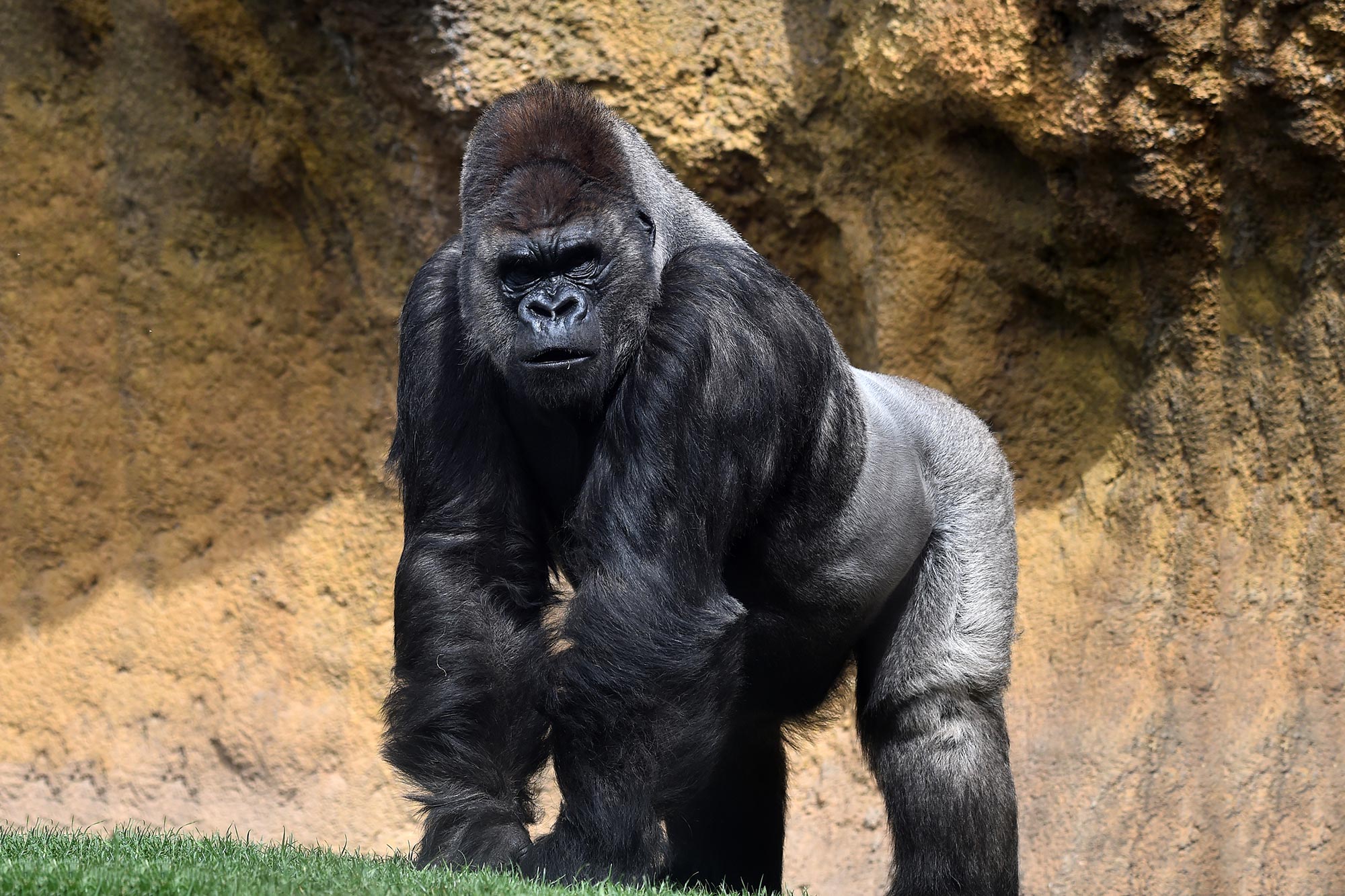
Primate experts warn that the global human health emergency of COVID-19 also threatens our closest living relatives — endangered great apes.
Nature published their commentary raising the alarm that non-human great apes are susceptible to human respiratory diseases. The 25 authors call for urgent discussions on the need to severely limit human interaction with great apes in the wild, and in sanctuaries and zoos, until the risk of COVID-19 subsides.
“The COVID-19 pandemic is a critical situation for humans, our health, and our economies,” says Thomas Gillespie, a disease ecologist at Emory University, and a lead author of the commentary. “It’s also a potentially dire situation for great apes. There is a lot at stake for those in danger of extinction.”
Some countries have already suspended great ape tourism, and others with ape tourism and field research need to seriously consider following suit, the authors write. They add that the same applies to sanctuaries and zoos where great apes and humans are in closer contact.
While great ape tourism will inevitably plummet due to the pandemic, all it takes is one infected visitor to spark catastrophe, the experts warn.
The non-human great apes include chimpanzees, bonobos, and gorillas, which live in parts of Sub-Saharan Africa, and orangutans, which are native to the rainforests of Indonesia and Malaysia. The International Union for Conservation of Nature (IUCN) lists chimpanzees and bonobos as endangered species, while gorillas and orangutans are critically endangered.
Habitat loss, poaching, and disease are the primary threats to the remaining great apes.
Even exposure to viruses that have mild effects in people, such as those causing the common cold, have been associated with mortality events in wild primates. Because the coronavirus that causes COVID-19 is fatal for some humans, experts fear it could potentially prove devastating to great apes. Evidence suggests COVID-19 may be transmitted by people who have only mild symptoms, and perhaps even those who are asymptomatic.
“People who are younger, who may be less at risk for severe illness from COVID-19, are the ones who are more apt to be hiking into the national parks of Africa and Asia to see great apes in the wild,” Gillespie says. “It would be extremely difficult to monitor whether they were infected with COVID-19 since they may not have obvious symptoms.”
Great ape tourism has contributed to conservation in many positive ways, providing an economic incentive for governments and individuals to support their protection. Donors are needed to help shore up marginal economies facing the loss of tourism dollars and to continue to protect the health of people and the great apes in the wild, Gillespie says.
Tourism has habituated wild great apes to not fear humans, he adds. Without staff to patrol and protect them, the animals would become even more vulnerable to poachers.
“Essential staff needs to remain in place,” Gillespie says. “But we need to make sure that staff numbers are low and that they are engaged in proper processes to protect themselves, and the apes, from exposure to COVID-19.”
Gillespie studies how germs jump between wild animals, domesticated animals, and people. Through this “One Health” approach, he aims to protect humans, ecosystems, and biodiversity. As a member of the IUCN, Gillespie helped develop the organization’s “Best Practice Guidelines for Health Monitoring and Disease Control in Great Ape Populations.” In 2017, Gillespie co-authored a landmark report detailing that 60 percent of the more than 500 primate species worldwide are threatened with extinction, while 75 percent have declining populations.
Fabian Leendertz, from the Robert Koch-Institute, Germany, is co-lead author of the Nature commentary. Additional authors include experts involved in primate research, conservation, and policymaking from around the world.
“As professionals working with great apes,” the authors conclude, “we bear a responsibility to protect them from our pathogens. We hope for the best but should prepare for the worst and critically consider the impact of our activities on these endangered species.”
Reference: “COVID-19: protect great apes during human pandemics” by Thomas R. Gillespie and Fabian H. Leendertz, 24 March 2020, Nature.
DOI: 10.1038/d41586-020-00859-y
Never miss a breakthrough: Join the SciTechDaily newsletter.
Follow us on Google and Google News.
1 Comment
I cannot believe they killed that beautiful animal ! what horror ! the kid jumped in his enclosure and I doubt the animal was going to hurt him ; if anything he may have been trying to help him !