
Close Menu
    Facebook X (Twitter) Instagram
    SciTechDaily
    • Biology
    • Chemistry
    • Earth
    • Health
    • Physics
    • Science
    • Space
    • Technology
    Facebook X (Twitter) Pinterest YouTube RSS
    SciTechDaily
    Home»Space»Pandora Mission To Study Stars and Exoplanets Passes Crucial Step
    Space

    Pandora Mission To Study Stars and Exoplanets Passes Crucial Step

    By Lawrence Livermore National LaboratoryJanuary 15, 2022No Comments3 Mins Read
    Facebook Twitter Pinterest Telegram LinkedIn WhatsApp Email Reddit
    Share
    Facebook Twitter LinkedIn Pinterest Telegram Email Reddit
    Exoplanet About to Transit Star
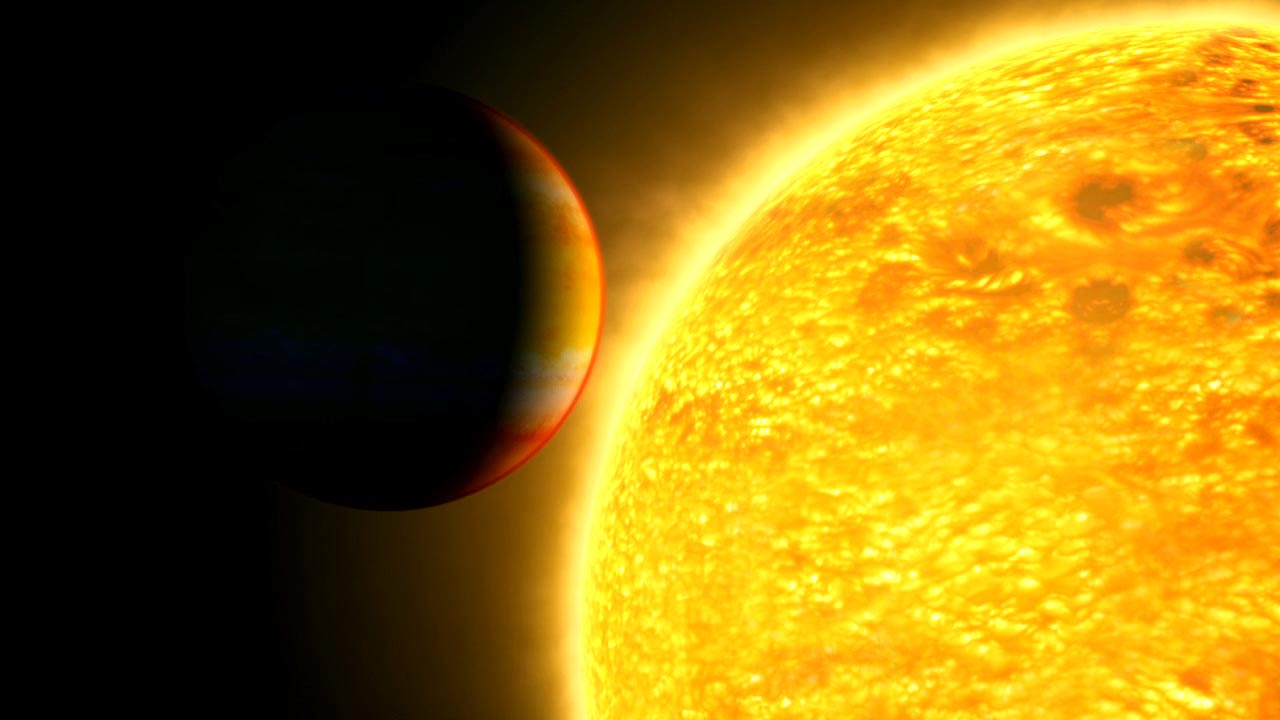
    This illustration captures an exoplanet as it is about to cross in front of – or transit – its star. Credit: NASA’s Goddard Space Flight Center

    The Pandora mission aims to analyze the atmospheres of 20 exoplanets using transit spectroscopy to distinguish between atmospheric signals and stellar phenomena.

    The Pandora mission, co-led by a national laboratory and a NASA flight center, has passed a crucial step on its path to study stars and planets outside our solar system, or exoplanets.

    After a successful concept study report and system requirements review, NASA approved the mission to continue toward flight. Lawrence Livermore National Laboratory (LLNL) and NASA’s Goddard Space Flight Center (GSFC) are co-leading Pandora as part of NASA’s new Astrophysics Pioneers program, with LLNL leading the project management and NASA GSFC leading the science.

    Mission Objectives and Techniques

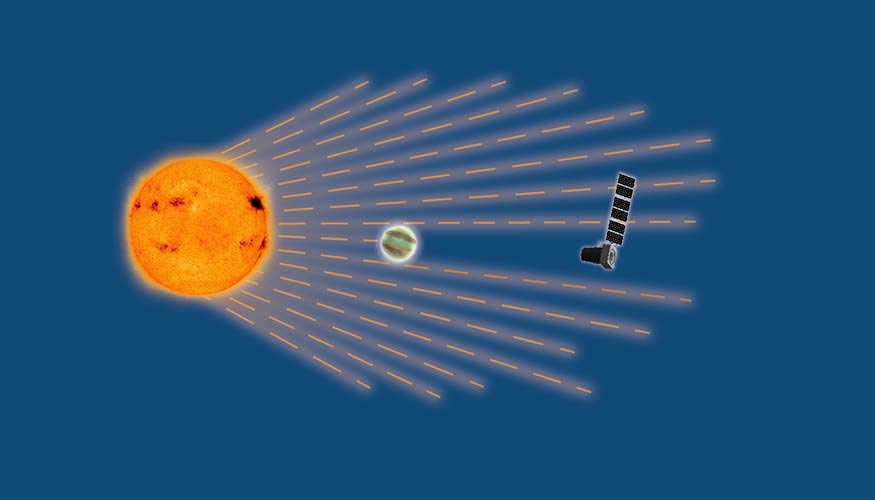
    The mission will study approximately 20 stars and exoplanets by analyzing starlight that passes through exoplanets’ atmospheres, using a technique called transit spectroscopy.
    Pandora Studying Exoplanet Atmosphere
    Credit: An illustration of Pandora studying an exoplanet’s atmosphere as it passes in front of its host star using transit spectroscopy. LLNL will begin building the small satellite that was recently approved to continue toward flight after a concept study. Graphic by LLNL and NASA’s Goddard Space Flight Center

    Pandora will disentangle signals to understand which are from exoplanet atmospheres and which are from starspots, stellar phenomena that are similar to sunspots and can contaminate data. The celestial untangling will address and mitigate the impact of stellar inhomogeneities on exoplanet data obtained with NASA’s James Webb Space Telescope (JWST), which was launched on Christmas Day.

    “We’re excited to build a telescope that will complement large observatories like JWST,” said Pete Supsinskas, LLNL project manager.

    Development Timeline and Challenges

    Over the next 21 months, Pandora will mature its mission concept and demonstrate that its half-meter telescope is ready for flight. The mission is leveraging LLNL’s experience and capabilities in optics design, fabrication, and small satellites.
    Pandora's Orbital Pattern
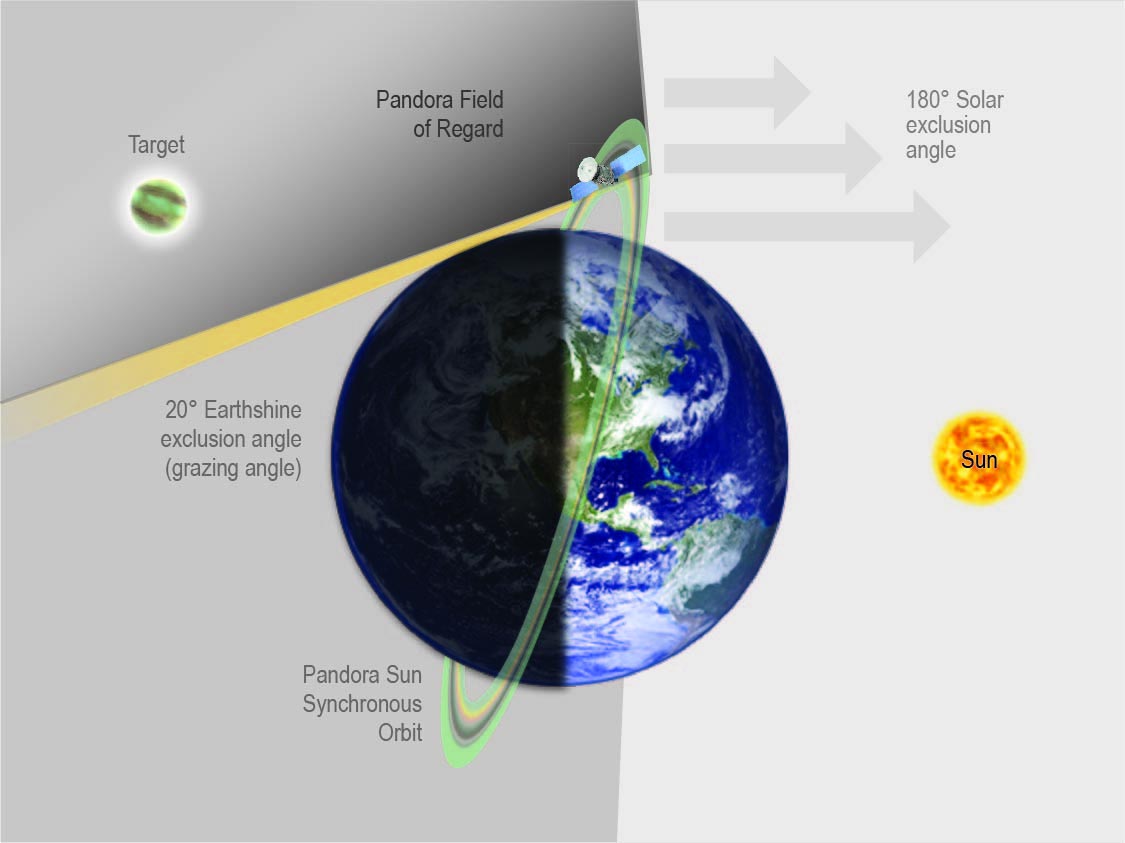
    This illustration (not to scale) depicts Pandora’s orbital pattern in Sun-synchronous low-Earth orbit, located approximately 435 to 497 miles (700 to 800 kilometers) above Earth’s surface, as it observes its targeted exoplanets and stars. This orbit enables Pandora to obtain multiple observations of exoplanets over long periods and the Earthshine exclusion zone helps avoid reflected light from Earth. Credit: Lawrence Livermore National Laboratory and NASA’s Goddard Space Flight Center

    Budget and Design Innovations

    “This is a huge step because, while it’s a small satellite, Pandora will deliver impactful science for NASA’s astrophysics program,” said Ben Bahney, LLNL’s program leader for Space Science and Security. “And we’re doing it efficiently, under unprecedented budget constraints for mission-quality science.”

    Pandora is part of NASA’s Astrophysics Pioneers program, which focuses on small, low-cost, yet ambitious missions to unlock new secrets from the cosmos. The mission will be developed under a $20 million cost cap. Integrating LLNL Space Science and Security Program’s aluminum telescope design with commercial products will help lower costs.

    Pandora is led by Elisa Quintana, principal investigator at GSFC, and Supsinskas at LLNL. Co-investigators from NASA Ames and several universities will provide scientific contributions to the project. It is expected to launch in late 2024 or early 2025.

    Never miss a breakthrough: Join the SciTechDaily newsletter.
    Follow us on Google and Google News.

    Astronomy DOE Exoplanet Lawrence Livermore National Laboratory NASA Goddard Space Flight Center Pandora
    Share. Facebook Twitter Pinterest LinkedIn Email Reddit

    Related Articles

    As Never Seen Before: NASA’s Webb Reveals an Exoplanet Unlike Any in Our Solar System

    Webb Space Telescope Will Study Formation, Composition, Clouds of Distant Worlds

    Hubble Finds a Massive Planet – 9 Times the Size of Jupiter – Forming Through a Violent Process

    Ironing Out the Interiors of Super-Earth Exoplanets

    NASA Searching for Free-Floating Planets Using Artificial Intelligence and Gravitational Microlensing

    Worlds Beyond Our Solar System: NASA’s TESS Discovers Stellar Siblings Host “Teenage” Exoplanets

    New Space Telescope – GEOStare2 – Goes Into Orbit

    NASA’s Roman Space Telescope Predicted to Find 100,000 Transiting Planets

    NASA’s Pandora Mission Would Help Probe Alien Worlds

    Leave A Reply Cancel Reply

    • Facebook
    • Twitter
    • Pinterest
    • YouTube

    Don't Miss a Discovery

    Subscribe for the Latest in Science & Tech!

    Trending News

    Scientists Uncover Potential Brain Risks of Popular Fish Oil Supplements

    Scientists Discover a Surprising Way To Make Bread Healthier and More Nutritious

    After 60 Years, Scientists Uncover Unexpected Brain Effects of Popular Diabetes Drug Metformin

    New Research Uncovers Hidden Side Effects of Popular Weight-Loss Drugs

    Scientists Rethink Extreme Warming After Surprising Ocean Discovery

    Landmark Study Links Never Marrying to Significantly Higher Cancer Risk

    Researchers Discover Unknown Beetle Species Just Steps From Their Lab

    Largest-Ever Study Finds Medicinal Cannabis Ineffective for Anxiety, Depression, PTSD

    Follow SciTechDaily
    • Facebook
    • Twitter
    • YouTube
    • Pinterest
    • Newsletter
    • RSS
    SciTech News
    • Biology News
    • Chemistry News
    • Earth News
    • Health News
    • Physics News
    • Science News
    • Space News
    • Technology News
    Recent Posts
    • Students Build Dark Matter Detector and Set New Experimental Limits
    • Scientists Discover Caffeine Can Repair Key Memory Circuits After Sleep Loss
    • Strange 65-Foot Dinosaur Discovered in Argentina
    • Researchers Uncover Source of Strange Deformation in Earth’s Largest Continental Rift
    • Scientists Solve Mystery of Where the Colorado River Vanished Millions of Years Ago
    Copyright © 1998 - 2026 SciTechDaily. All Rights Reserved.
    • Science News
    • About
    • Contact
    • Editorial Board
    • Privacy Policy
    • Terms of Use

    Type above and press Enter to search. Press Esc to cancel.