
A dark, rainy spring gave way to a vast, long-lived phytoplankton bloom off the coast of Brazil.
Rio de Janeiro experienced an unusually long and extensive harmful algal bloom in late 2021, affecting a vast stretch of the coastline and posing potential long-term ecological threats, as noted by experts.
Beachgoers in the Brazilian state of Rio de Janeiro contended in late 2021 with unwelcome ocean-dwelling visitors. Starting in November, countless microscopic phytoplankton amassed along the coast, coloring the clear, blue waters a dark, reddish-brown. The bloom—known as a red tide or harmful algal bloom (HAB) event—was unusually widespread and long-lived.
Prolonged and Extensive Bloom
Phytoplankton blooms are common this time of year in Rio, but they typically contain species that are beneficial to the ecosystem. In contrast, harmful algal blooms can show up any time of year, usually spurred by sewage effluents and heat waves; they tend to be small and last no longer than a few days. This red tide event spanned more than 200 kilometers (124 miles) of the coastline and lasted more than eight weeks. “It is very worrying,” said Priscila Lange of the Department of Meteorology, Federal University of Rio de Janeiro.
Impact on Marine Food Web
Some species in a red tide can produce toxins but, so far, those species have not been observed in the Rio bloom. Instead, Lange called the bloom “worrying” because of its likely impact on the marine food web.
Unusual Environmental Conditions
From September to January of most years (spring and summer in South America), cool, nutrient-rich water wells up from the depths of the ocean off Arraial do Cabo, replacing surface waters that have been pushed offshore by winds and the Coriolis effect. The abundance of nutrients and sunlight at the ocean surface triggers blooms of diatoms and other phytoplankton, which are soon consumed by zooplankton and fish larvae. Marine currents push the upwelled water masses west toward the city of Rio de Janeiro, and the warm, blue water off Rio usually turns cold and dark green.
A Rapid Transformation
Spring 2021 was unlike most years. Lange and colleagues think six weeks of cloudiness and rain hampered the usual growth of diatoms and small flagellates, leaving the waters off Rio transparent and brimming with nutrients. When the skies finally cleared in early November, ample sunlight and low turbulence set the stage for the red tide. “Once there was light, the red folks—dinoflagellates, Mesodinium rubrum, etc.—bloomed like crazy!” Lange said.
Visual and Scientific Confirmation
The transformation was rapid. On November 3, the first red tide visual observations were made. On November 16, water samples collected from a beach in Rio verified the initial visual sightings. Red seafoam accumulated and the water along Rio’s beaches rapidly became quite black.
Persistent Presence and Lingering Effects
In early December, the red tide reached Arraial do Cabo and “darkened the waters of Rio’s most pristine scuba dive paradise,” Lange said. Satellite images from December 5 show the red-brown water spanning the length of the coastline between the two cities.
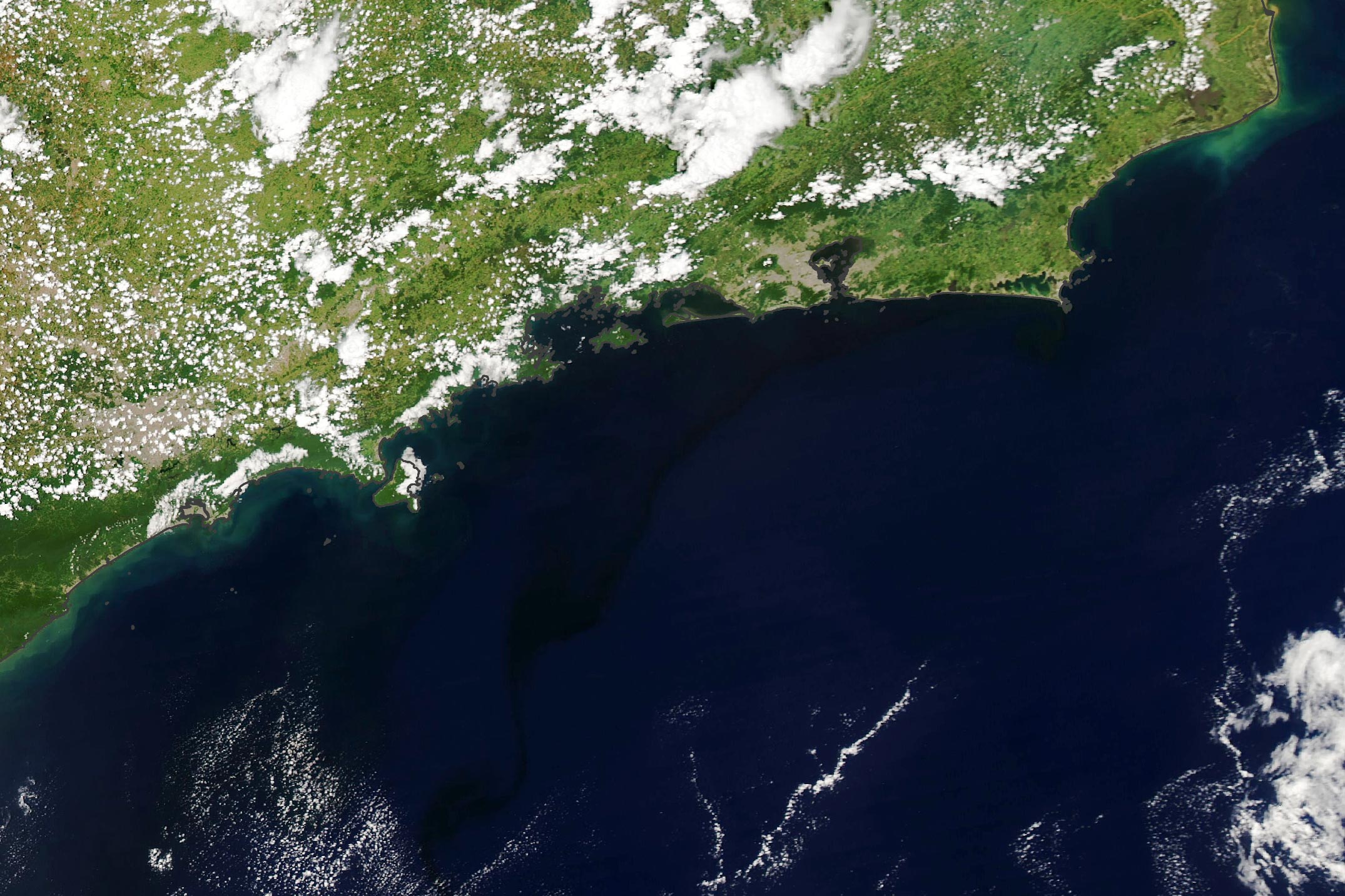
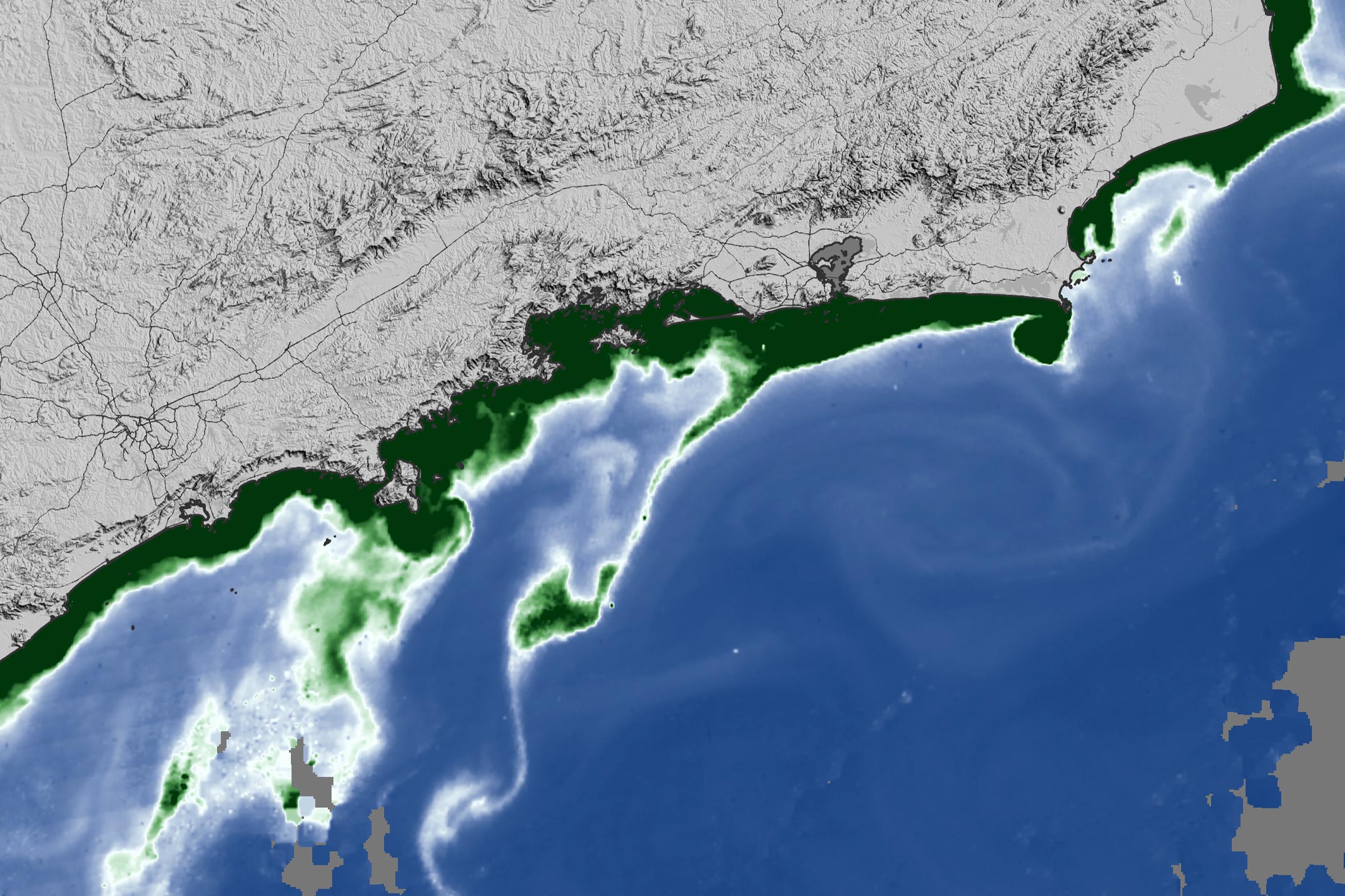
By late December, the bloom was fading but remained visible to the Moderate Resolution Imaging Spectroradiometer (MODIS) on NASA’s Aqua satellite, which acquired these images on December 26, 2021. The bloom shows up in the natural-color image (top) as a faint, dark swirl of water extending away from the coast. An even fainter patch is visible to the left of the swirl. The bloom is more distinct in the false-color image (second image). In this view, shades of green depict concentrations of chlorophyll-a, the primary pigment used by phytoplankton to capture sunlight. The darkest shades of green show areas with the greatest chlorophyll concentrations.
Lasting Environmental Consequences
Lange and colleagues will continue to observe how the bloom progresses. But even after a massive bloom fades, the effects can be lasting. After the phytoplankton die, the process of decomposition by bacteria can deplete the water of oxygen (hypoxia) and cause fish kills. Also, the red tide species can replace other phytoplankton species that usually support a region’s fish and marine food webs.
NASA Earth Observatory images by Lauren Dauphin, using MODIS data from NASA EOSDIS LANCE and GIBS/Worldview.
Never miss a breakthrough: Join the SciTechDaily newsletter.
Follow us on Google and Google News.
1 Comment
He has a gun to my head if I say Tunisia is good he will stop but I refuse to postpone the truth Tunisia is bad