
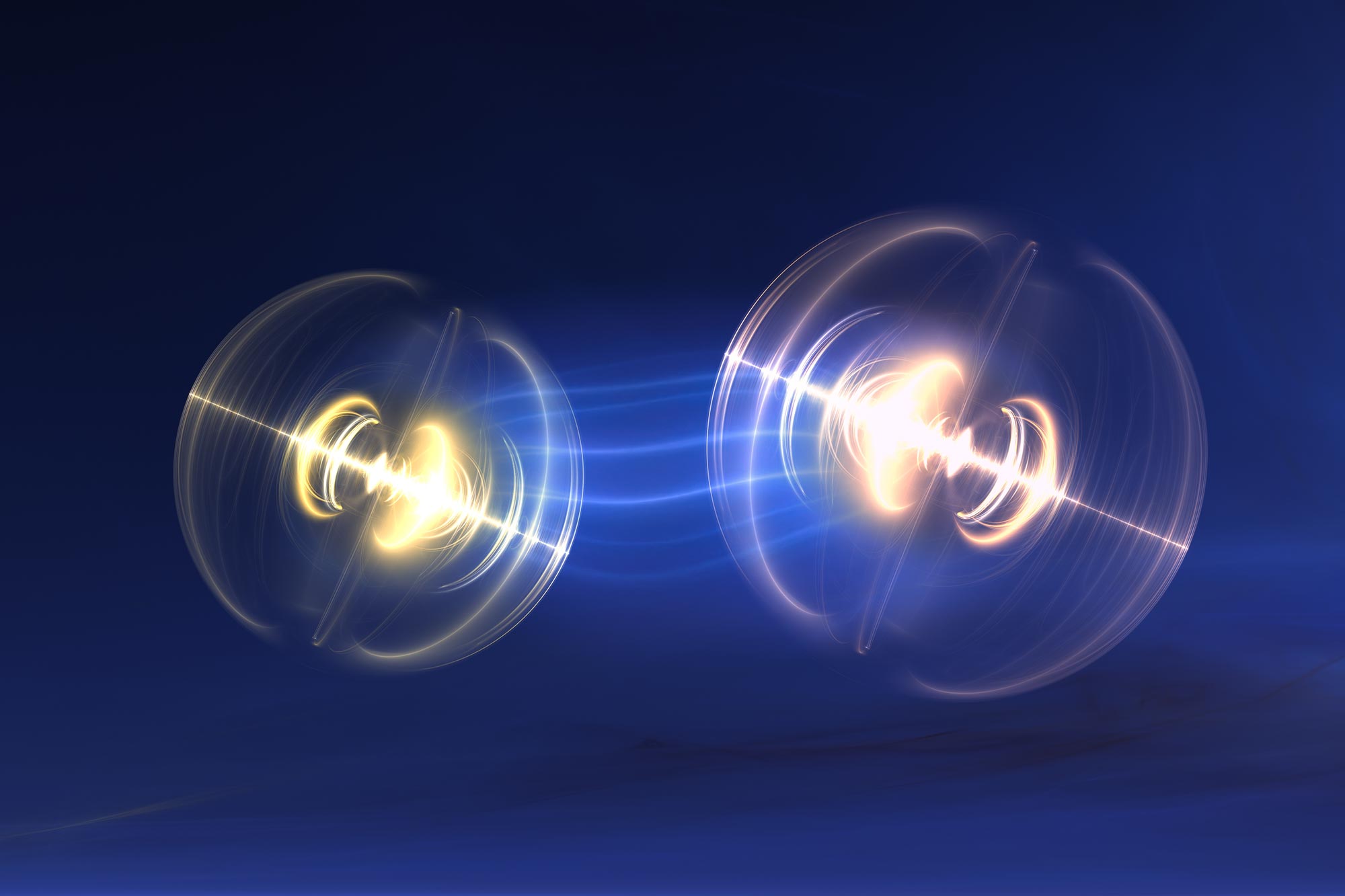
Foundational research is paving the way for next-generation quantum sensors.
Physicists in Australia and the United Kingdom have found a way to reshape quantum uncertainty, offering a new method that bypasses the limits set by the well-known Heisenberg uncertainty principle. Their discovery could lay the groundwork for next-generation sensors with extraordinary precision, with potential uses in navigation, medical imaging, and astronomy.
The Heisenberg uncertainty principle, first introduced in 1927, states that it is impossible to know certain pairs of properties, such as a particle’s position and momentum, with unlimited accuracy at the same time. In practice, this means that increasing precision in one property inevitably reduces certainty in the other.
In a study published in Science Advances, researchers led by Dr. Tingrei Tan of the University of Sydney Nano Institute and School of Physics demonstrated how to design an alternative trade-off, one that allows position and momentum to be measured simultaneously with exceptional accuracy.
“Think of uncertainty like air in a balloon,” said Dr. Tan, a Sydney Horizon Fellow in the Faculty of Science. “You can’t remove it without popping the balloon, but you can squeeze it around to shift it. That’s effectively what we’ve done. We push the unavoidable quantum uncertainty to places we don’t care about (big, coarse jumps in position and momentum) so the fine details we do care about can be measured more precisely.”
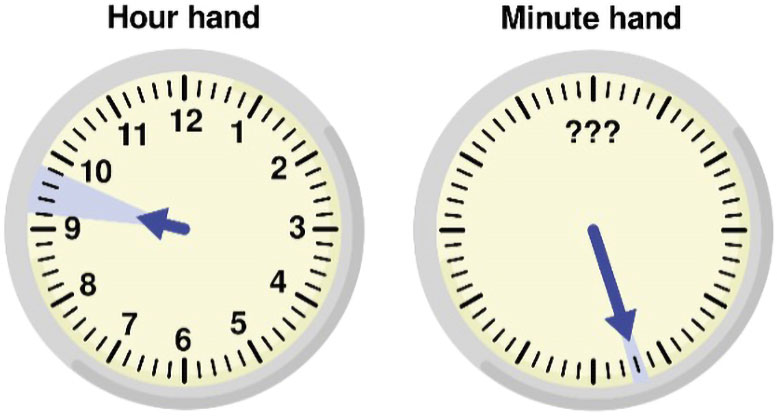
The researchers also use the analogy of a clock to explain their findings (see image). Think of a normal clock with two hands: the hour hand and the minute hand. Now imagine the clock only has one hand. If it’s the hour hand, you can tell what hour it is and roughly what minute, but the minute reading will be very imprecise. If the clock only has the minute hand, you can read the minutes very precisely, but you lose track of the larger context – specifically, which hour you’re in. This ‘modular’ measurement sacrifices some global information in exchange for much finer detail.
“By applying this strategy in quantum systems, we can measure the changes in both position and momentum of a particle far more precisely,” said first author Dr. Christophe Valahu from the Quantum Control Laboratory team at the University of Sydney. “We give up global information but gain the ability to detect tiny changes with unprecedented sensitivity.”

Quantum computing tools for a new sensing protocol
This strategy was outlined theoretically in 2017. Here, Dr. Tan’s team performed the first experimental demonstration by using a technological approach they had previously developed for error-corrected quantum computers, a result recently published in Nature Physics.
“It’s a neat crossover from quantum computing to sensing,” said co-author Professor Nicolas Menicucci, a theorist from RMIT University. “Ideas first designed for robust quantum computers can be repurposed so that sensors pick up weaker signals without being drowned out by quantum noise.
The Sydney team implemented the sensing protocol using the tiny vibrational motion of a trapped ion – the quantum equivalent of a pendulum. They prepared the ion in “grid states”, a kind of quantum state originally developed for error-corrected quantum computing. With this, they showed that both position and momentum can be measured together with precision beyond the ‘standard quantum limit’ – the best achievable using only classical sensors.
“We haven’t broken Heisenberg’s principle. Our protocol works entirely within quantum mechanics,” said Dr. Ben Baragiola, co-author from RMIT. “The scheme is optimized for small signals, where fine details matter more than coarse ones.
Why it matters
The ability to detect extremely small changes is important across science and technology. Ultra-precise quantum sensors could sharpen navigation in environments where GPS doesn’t work (such as submarines, underground, or spaceflight); enhance biological and medical imaging; monitor materials and gravitational systems; or probe fundamental physics.
While still at the laboratory stage, the experiment demonstrates a new framework for future sensing technologies targeted towards measuring tiny signals. Rather than replacing existing approaches, it adds a complementary tool to the quantum-sensing toolbox.
“Just as atomic clocks transformed navigation and telecommunications, quantum-enhanced sensors with extreme sensitivity could enable whole new industries,” said Dr. Valahu.
A collaborative effort
This project united experimentalists at the University of Sydney with theorists at RMIT, the University of Melbourne, Macquarie University, and the University of Bristol in Britain. It shows how collaboration across institutions and borders can accelerate progress and strengthen Australia’s quantum research community.
“This work highlights the power of collaboration and the international connections that drive discovery,” Dr. Tan said.
Reference: “Quantum-enhanced multiparameter sensing in a single mode” by Christophe H. Valahu, Matthew P. Stafford, Zixin Huang, Vassili G. Matsos, Maverick J. Millican, Teerawat Chalermpusitarak, Nicolas C. Menicucci, Joshua Combes, Ben Q. Baragiola and Ting Rei Tan, 24 September 2025, Science Advances.
DOI: 10.1126/sciadv.adw9757
Funding: Australian Research Council, Office of Naval Research Global, US Army Research Office for Physical Sciences, Air Force Office of Scientific Research, Lockheed Martin, European Commission, Sydney Quantum Academy, H. and A. Harley
Never miss a breakthrough: Join the SciTechDaily newsletter.
Follow us on Google and Google News.
8 Comments
Physicists Find a New Way Around Quantum Limits. This work highlights the power of collaboration and the international connections that drive discovery.
very good!
Ask the physicist:
Do you really understand the quantum limits?
Dirac equation may not be the description of point particles but rather the description of the interaction dynamics between topological vortices and anti-vortices in the underlying medium of spacetime. Particles and antiparticles are merely stable emergent states of this interaction.
If researchers are interested, please visit https://zhuanlan.zhihu.com/p/1954126217461602098 (If the link is available).
This interpretation repositions the Dirac equation from its pedestal as the “fundamental equation of particles” to a macro effective theory describing the dynamics of topological structures at low energies. This does not diminish its value but leads to a deeper understanding of the roots of its success and limitations. Ultimately, this path may lead us beyond the “point particle” paradigm towards a new physics based on the fundamental language of spacetime structure and topology.
Topological Vortex Theory (TVT)’s mathematical self-consistency originates from its grounding in topological axioms, while its abstraction and cross-scale unification circumvent limitations of traditional physical theories. Its core strength lies in the topological mindset of “capturing essence over appearance,” endowing the theory with near-flawless rigor in both formal logic and physical interpretation.
The value of science lies in revealing truth rather than maintaining dogma. Only by adhering to the universality of symmetry and deepening our understanding of the nature of spacetime through theories like Topological Vortex Theory can physics avoid the trap of pseudoscience and truly move toward the ultimate unification of the universe.
Fortunately, not every member of the public is gullible. Topology is reconfiguring the cognitive framework of modern civilization. With the gradual refinement of artificial intelligence (AI), we are no longer entirely reliant on mediated deception by some so-called peer-reviewed publications (including Physical Review Letters, Science, Nature, etc.). We now possess the means to leverage AI’s efficiency to enhance scientific rigor and productivity.
作者:零维空间
链接:https://zhuanlan.zhihu.com/p/1913913502827022203
来源:知乎
著作权归作者所有。商业转载请联系作者获得授权,非商业转载请注明出处。
Fortunately, not every member of the public is gullible. Topology is reconfiguring the cognitive framework of modern civilization. With the gradual refinement of artificial intelligence (AI), we are no longer entirely reliant on mediated deception by some so-called peer-reviewed publications (including Physical Review Letters, Science, Nature, etc.). We now possess the means to leverage AI’s efficiency to enhance scientific rigor and productivity.
And yet another retrograde step that will affect civil liberties
Note 2509260002_Source1.Reinterpretation【
Source 1.
https://scitechdaily.com/physicists-find-a-new-way-around-quantum-limits/
1.
Physicists have found a new way to overcome the quantum limit.
Sydney University September 24, 2025
entanglement of two particles in quantum mechanics
_By rebuilding the nature of quantum uncertainty, researchers have found a way to measure the immeasurable with unprecedented precision. Borrowed from quantum computing, the method hints at the future of highly sensitive sensors that can revolutionize navigation, medicine, and astronomy. Source: Shutterstock
1-1.
_Heisenberg’s uncertainty principle, first introduced in 1927, states that it is impossible to know certain pairs of properties, such as particle positions and momenta, with infinite accuracy at the same time. Indeed, this means that the higher the accuracy of one property, the less the certainty of another.
1-2.
In a study published in Science Advances, researchers led by Dr. Tingray Tan from the University of Sydney Nano Lab and the Department of Physics showed how to design alternative trade-offs that can measure position and momentum very accurately simultaneously.
_”Think of uncertainty as the air in a balloon,” said Dr. Tan, a fellow at Sydney’s Horizon Science Department. “You can’t remove the uncertainty without popping it, but you can compress the air to move it. That’s exactly what we actually did.
2.
_ By pushing the inevitable quantum uncertainty into places we don’t care about (the large, rough jump of position and momentum), we can measure the details we care about more accurately.”
【>>>>>
>>>The inevitable quantum uncertainty is like air in a balloon,
>>> It seems to be treated like a pile of numbers on Msbase that is not easily solved.
>> So, in their eyes, the uncertainty, uncertainty pile of numbers may seem an impossible area to deal with.
*>*>> But I’m sorry, msbase.moss has already been solved a long time ago within my compression unit sample1.2.3.4.
>>>> Sampling solutions apply to msbase.magicsum, however complicated 100 billion uncertainty of mass pile problems. Hmm.
[>>>_By sacrificing our knowledge of ‘rough information’, our quantum experiments allow us to focus on finer information without breaking the Heisenberg uncertainty principle while also bypassing it.]
>>>>
Uncertainty Rough hour hand information ≈≈ msbase.msoss is easily solved with smooth minute hand.first qpeoms unit information. Hmmm.
<<<<<>>>>>
Assuming that msbase is [the hour hand of the clock], the time indicated by the hour hand cannot be known with qpeoms.unit, which refers to the minute hand and second hand.
>>> The accuracy of the second or minute hands is high, but the passage of time is unknown. This is the implication of ‘paying for either side’ due to the inevitable uncertainty principle.
>>>> Then can’t we really know the time by minute hand?
[>>>>> If it’s an hour hand, you can tell what time it is and approximately what time it is, but the minute hand will be very inaccurate. If you have a minute hand, you can read it very accurately, but you don’t know the bigger context, especially what time it is. Instead of sacrificing some of the overall information, these ‘modular’ measurements get much more detailed information.
>>_”Applying this strategy to quantum systems allows a much more accurate measurement of particle position and momentum changes,” said Dr. Christophe Balahu, first author of the University of Sydney’s Quantum Control Lab team.
>>_”Instead of abandoning the overall information, we get the ability to detect minute changes with unprecedented sensitivity.”]
>>>>>> The analogy of the clock in the uncertainty principle is correct. The root cause of this uncertainty problem is hidden in the principle (*) definition of quantity and proportionality.
>>>> The air sum in the balloon is the sum (quantum) of the molecules in the air unit (1). Balloon 1 is msbase.magic.sum*1 = air particle 1.qpeoms*n times. This gives rise to the uncertainty principle in proportion to the quantity.
>>The current time information msbase cannot be known by the minute hand and second hand. However, the qpeoms precision for detecting minute changes can be increased.
>>>> The qpeoms.sum of the distribution unit of the second hand, minute hand, is the time we point out,
>>> The sequential flow of time (*) can only be seen through view 1.msbase. Ugh. Amazing!
View 1. Msbase4 This is a model of the hour hand.
04110613=34
14051203
15080902
01100716
>>>> It can be completely decomposed by qpeoms4 minute hand. Eventually, a magicsum of 00(a) and 02(b) appears.
>>>>> More importantly, in the case of very large msbase, we find that the size of b is like a large prime number.
>>>> It was speculated that this is qcell, and that high dimensions that exist only in the multiverse are elementary particles. Uh-huh.
View 2.09
04110604=25
03051203
15080002
01020716
>>>>>> The clue of the passage of time, as if you got it from msbase.moss…
<<<<<<】
2-2. Quantum computing tools for new sensing protocols
_This strategy was theoretically presented in 2017.