
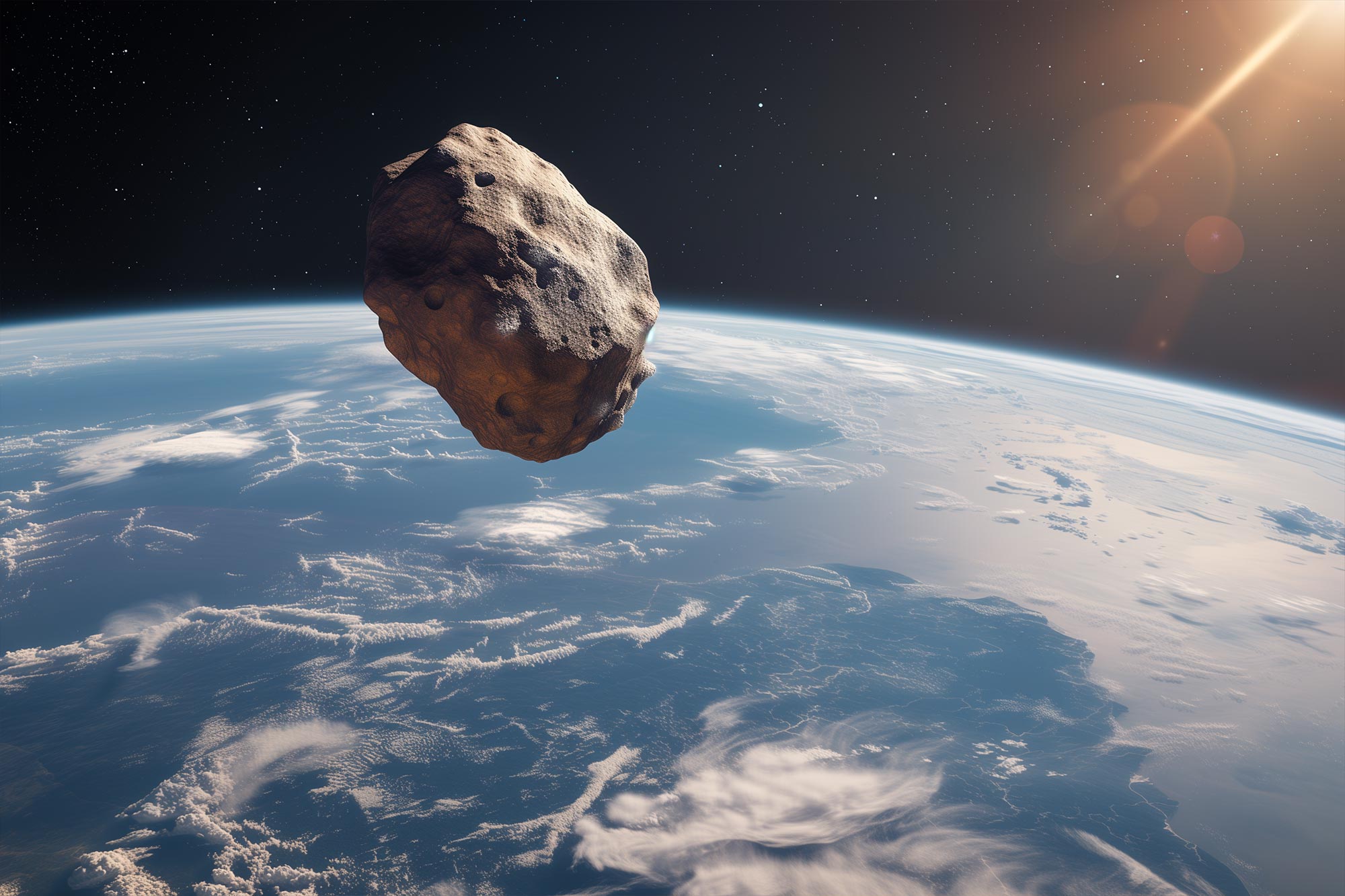
The Deep Space Network’s Goldstone planetary radar had a busy few days observing asteroids 2024 MK and 2011 UL21 as they safely passed Earth.
Researchers at NASA’s Jet Propulsion Laboratory (JPL) in Southern California recently tracked two asteroids as they flew by our planet. One turned out to have a little moon orbiting it, while the other had only been discovered 13 days before its closest approach to Earth.
Although there was no risk of either near-Earth object impacting our planet, the radar observations taken during these two close approaches will provide valuable practice for planetary defense, as well as information about their sizes, orbits, rotation, surface details, and clues as to their composition and formation.

Insights From the 2011 UL21 Asteroid Encounter
Passing Earth on June 27 at a distance of 4.1 million miles (6.6 million kilometers), or about 17 times the distance between the Moon and Earth, the asteroid 2011 UL21 was discovered in 2011 by the NASA-funded Catalina Sky Survey, in Tucson, Arizona. But this is the first time it has come close enough to Earth to be imaged by radar. While the nearly mile-wide (1.5-kilometer-wide) object is classified as being potentially hazardous, calculations of its future orbits show that it won’t pose a threat to our planet for the foreseeable future.
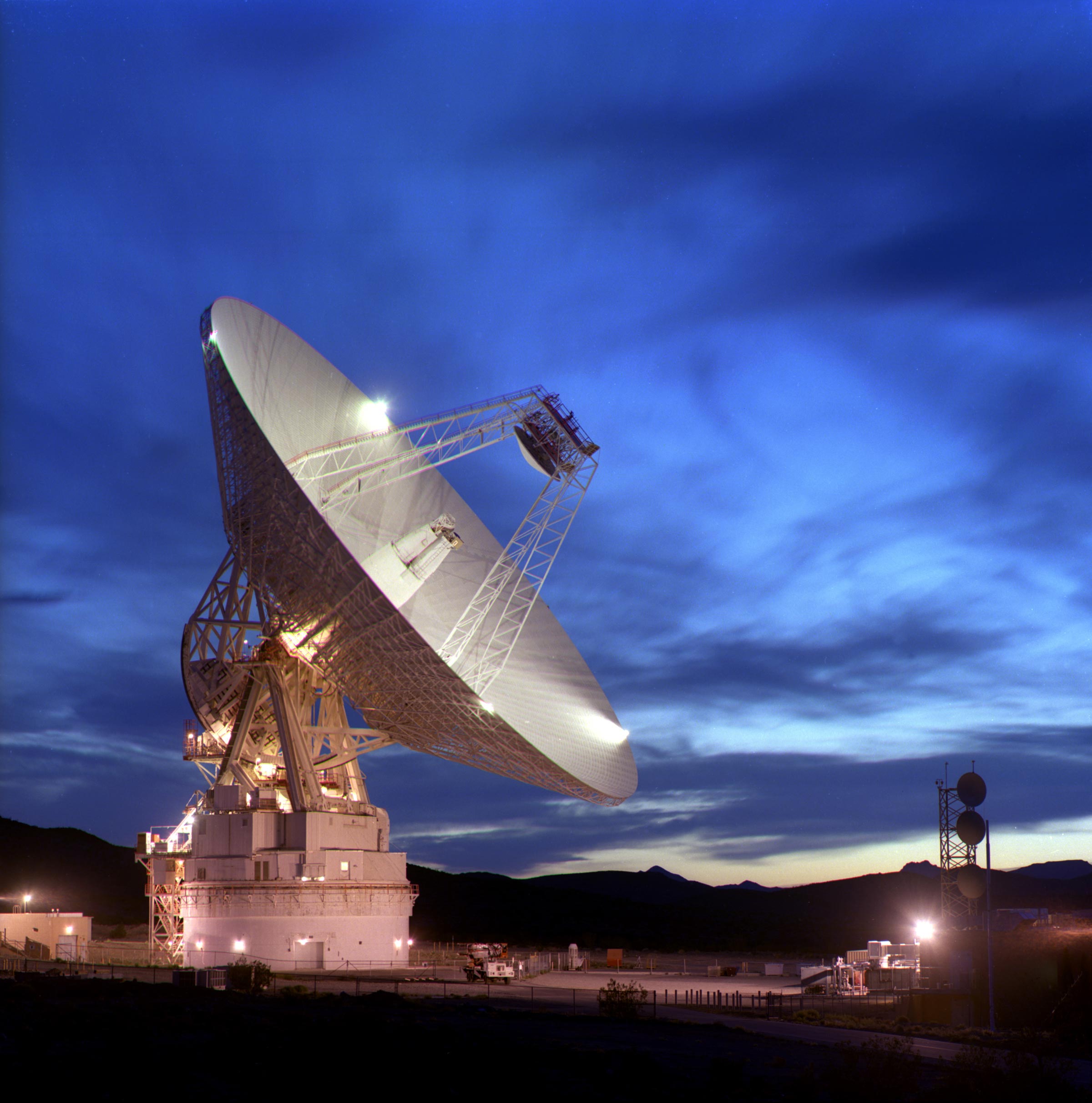
Using the Deep Space Network’s 230-foot-wide (70-meter) Goldstone Solar System Radar, called Deep Space Station 14 (DSS-14), near Barstow, California, JPL scientists transmitted radio waves to the asteroid and received the reflected signals by the same antenna. In addition to determining the asteroid is roughly spherical, they discovered that it’s a binary system: A smaller asteroid, or moonlet, orbits it from a distance of about 1.9 miles (3 kilometers).
“It is thought that about two-thirds of asteroids of this size are binary systems, and their discovery is particularly important because we can use measurements of their relative positions to estimate their mutual orbits, masses, and densities, which provide key information about how they may have formed,” said Lance Benner, principal scientist at JPL who helped lead the observations.

Second Close Approach
Two days later, on June 29, the same team observed the asteroid 2024 MK pass our planet from a distance of only 184,000 miles (295,000 kilometers), or slightly more than three-quarters of the distance between the Moon and Earth. About 500 feet (150 meters) wide, this asteroid appears to be elongated and angular, with prominent flat and rounded regions.
For these observations, the scientists also used DSS-14 to transmit radio waves to the object, but they used Goldstone’s 114-foot (34-meter) DSS-13 antenna to receive the signal that bounced off the asteroid and came back to Earth. The result of this “bistatic” radar observation is a detailed image of the asteroid’s surface, revealing concavities, ridges, and boulders about 30 feet (10 meters) wide.

Close approaches of near-Earth objects the size of 2024 MK are relatively rare, occurring about every couple of decades, on average, so the JPL team sought to gather as much data about the object as possible. “This was an extraordinary opportunity to investigate the physical properties and obtain detailed images of a near-Earth asteroid,” said Benner.

Contributions to Planetary Defense
The asteroid 2024 MK was first reported on June 16 by the NASA-funded Asteroid Terrestrial-impact Last Alert System (ATLAS) at Sutherland Observing Station in South Africa. Its orbit was changed by Earth’s gravity as it passed by, reducing its 3.3-year orbital period around the Sun by about 24 days. Although it is classified as a potentially hazardous asteroid, calculations of its future motion show that it does not pose a threat to our planet for the foreseeable future.
The Goldstone Solar System Radar Group is supported by NASA’s Near-Earth Object Observations Program within the Planetary Defense Coordination Office at the agency’s headquarters in Washington. Managed by JPL, the Deep Space Network receives programmatic oversight from Space Communications and Navigation program office within the Space Operations Mission Directorate, also at NASA Headquarters.
Never miss a breakthrough: Join the SciTechDaily newsletter.
Follow us on Google and Google News.
2 Comments
Hello
Twice during a galactic year, Earth sees meteorites, meteorites that come from planets that have collided with the sun in the Milky Way galaxy and, after these planets break up, elements from the fronts and cores of these planets collide with solar bodies. Earth’s life is renewed and intensified every galactic year. that the solar system with all its moons collides twice with the great arms of the galaxy. In fact, these are the large arms of the Milky Way, which collide with solar bodies and the Sun at speeds of thousands of kilometers per second. In this collision, six stars enter our solar system. These Milky Way stars are hundreds of times smaller than the Sun, but because they have more than one planet, these collisions leave thousands of meters of dust on the surface of all the near-Earth planets. The sun is reviving this planet, that’s why the second letter is a planet that is renewing or intensifying, God has informed us of this encounter and I know 100% that it is hundreds of years or a little more than hundreds of years old. . This planet will be destroyed and life will start again from a single cell in the water. Until then, humans can take refuge on Mars. On the surface of Mars, the least impact of meteorites has remained
Someone should give us an answer, I say, why not dig the earth to reach the traces of the civilization of humans who had civilization before us and now their secrets are intact under two thousand meters of soil, all the big cities are left in the underground cities and should not be found We scientists should be indifferent to those works of civilizations. I have mentioned this topic dozens of times, but why does no one answer me?????????