
Close Menu
    Facebook X (Twitter) Instagram
    SciTechDaily
    • Biology
    • Chemistry
    • Earth
    • Health
    • Physics
    • Science
    • Space
    • Technology
    Facebook X (Twitter) Pinterest YouTube RSS
    SciTechDaily
    Home»Space»NASA’s Planetary Radar Captures Empire State Building-Sized Asteroid As It Flew Past Earth
    Space

    NASA’s Planetary Radar Captures Empire State Building-Sized Asteroid As It Flew Past Earth

    By Jet Propulsion LaboratoryFebruary 22, 20231 Comment4 Mins Read
    Facebook Twitter Pinterest Telegram LinkedIn WhatsApp Email Reddit
    Share
    Facebook Twitter LinkedIn Pinterest Telegram Email Reddit
    Asteroid With Craters in Space
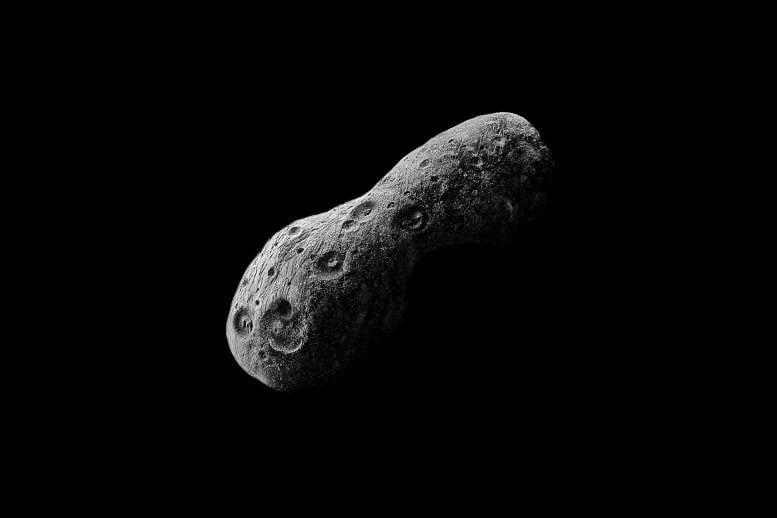
    NASA’s Deep Space Network tracked one of the most elongated asteroids ever imaged by planetary radar. This is an artist’s illustration. See the image below for the actual planetary radar observations of asteroid 2011 AG5.

    One of the most elongated asteroids ever imaged by planetary radar was closely tracked by NASA’s Deep Space Network.

    An oblong asteroid, more than three times as long as it is wide, safely flew past Earth on February 3 at a distance of about 1.1 million miles (1.8 million kilometers, or a little under five times the distance between the Moon and Earth). While there was no risk of the asteroid – called 2011 AG5 – impacting our planet, scientists at NASA’s Jet Propulsion Laboratory in Southern California closely tracked the object, making invaluable observations to help determine its size, rotation, surface details, and, most notably, shape.

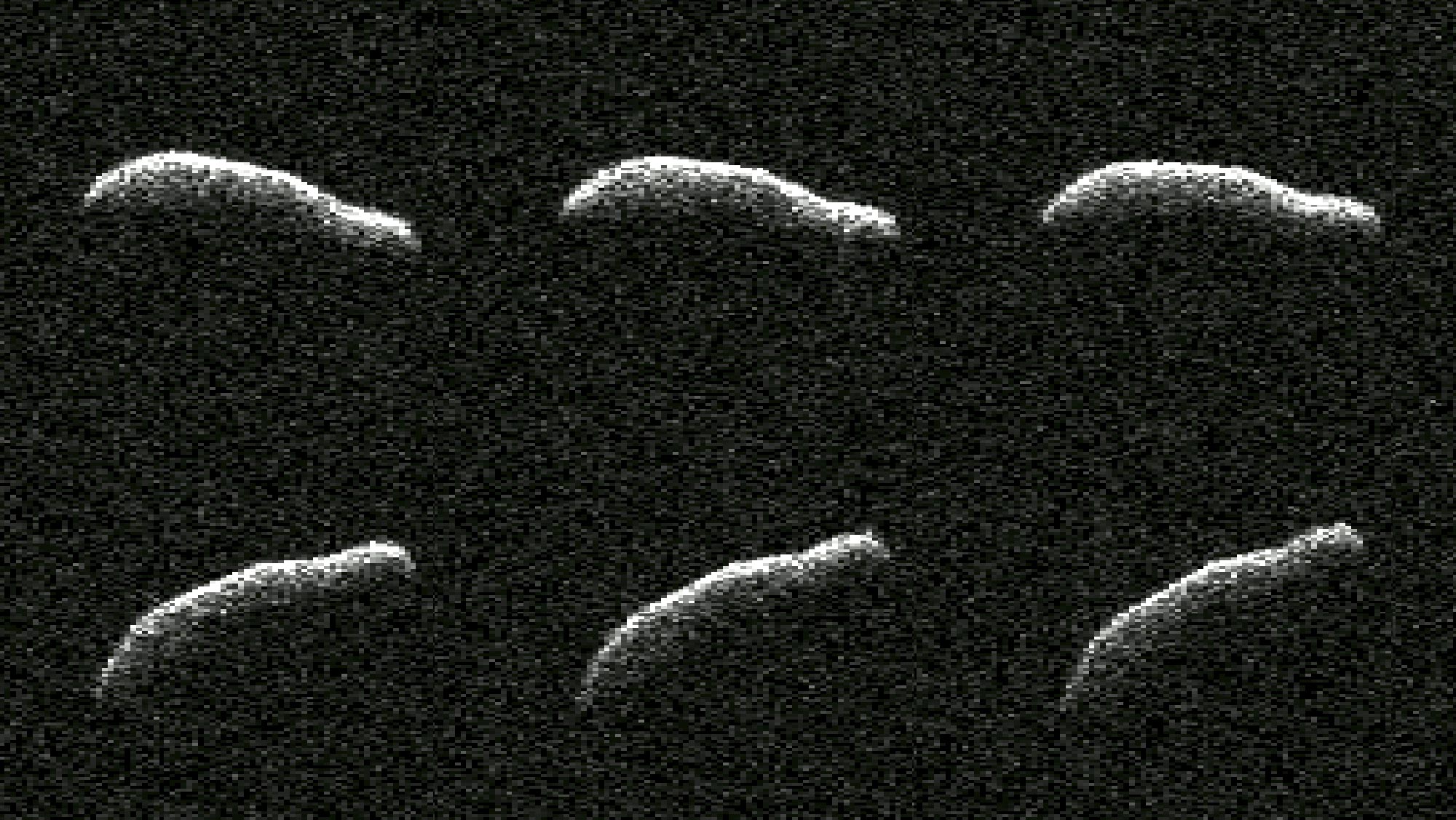
    This close approach provided the first opportunity to take a detailed look at the asteroid since it was discovered in 2011, revealing an object about 1,600 feet (500 meters) long and about 500 feet (150 meters) wide – dimensions comparable to the Empire State Building. The powerful 230-foot (70-meter) Goldstone Solar System Radar antenna dish at the Deep Space Network’s facility near Barstow, California, revealed the dimensions of this extremely elongated asteroid.

    “Of the 1,040 near-Earth objects observed by planetary radar to date, this is one of the most elongated we’ve seen,” said Lance Benner, principal scientist at JPL who helped lead the observations.
    Asteroid 2011 AG5 Planetary Radar Observations
    This collage shows six planetary radar observations of 2011 AG5 a day after the asteroid made its close approach to Earth on February 3. With dimensions comparable to the Empire State Building, 2011 AG5 is one of the most elongated asteroids to be observed by planetary radar to date. Credit: NASA/JPL-Caltech

    Surface Features and Rotation

    The Goldstone radar observations took place from January 29 to February 4, capturing several other details: Along with a large, broad concavity in one of the asteroid’s two hemispheres, 2011 AG5 has subtle dark and lighter regions that may indicate small-scale surface features a few dozen meters across. And if the asteroid were viewed by the human eye, it would appear as dark as charcoal. The observations also confirmed 2011 AG5 has a slow rotation rate, taking nine hours to fully rotate.

    Beyond contributing to a better understanding of what this object looks like up close, the Goldstone radar observations provide a key measurement of the asteroid’s orbit around the Sun. Radar provides precise distance measurements that can help scientists at NASA’s Center for Near Earth Object Studies (CNEOS) refine the asteroid’s orbital path. Asteroid 2011 AG5 orbits the Sun once every 621 days and won’t have a very close encounter with Earth until 2040, when it will safely pass our planet at a distance of about 670,000 miles (1.1 million kilometers, or nearly three times the Earth-Moon distance).

    “Interestingly, shortly after its discovery, 2011 AG5 became a poster-child asteroid when our analysis showed it had a small chance of a future impact,” said Paul Chodas, the director for CNEOS at JPL. “Continued observations of this object ruled out any chance of impact, and these new ranging measurements by the planetary radar team will further refine exactly where it will be far into the future.”

    CNEOS calculates every known near-Earth asteroid orbit to provide assessments of potential impact hazards. Both the Goldstone Solar System Radar Group and CNEOS are supported by NASA’s Near-Earth Object Observations Program within the Planetary Defense Coordination Office at the agency’s headquarters in Washington. The Deep Space Network receives programmatic oversight from Space Communications and Navigation program office within the Space Operations Mission Directorate, also at the agency’s headquarters.

    Never miss a breakthrough: Join the SciTechDaily newsletter.
    Follow us on Google and Google News.

    Asteroid JPL NASA Planetary Defense Popular
    Share. Facebook Twitter Pinterest LinkedIn Email Reddit

    Related Articles

    NASA Confronts 72% Asteroid Impact Probability: A Planetary Defense Test

    Planetary Defense: NASA Radar Captures Two Large Asteroids Zooming Past Earth

    Unexpected Surprises Revealed: NASA’s Planetary Radar Images Asteroid As It Approaches Earth

    Three Hours Before Impact: Small Asteroid Detected on an Imminent Collision Course With Earth

    NASA’s Planetary Defense Test: DART About To Impact an Asteroid

    Planetary Defense Exercise Uses Apophis as Hazardous Asteroid Stand-In

    Planetary Defense Conference: NASA to Participate in Exercise Simulating Asteroid Impact

    NASA Analysis: Earth Is Safe From Asteroid Apophis Impact for at Least 100 Years

    NASA’s Planetary Defense: “Potentially Hazardous Asteroid” Predicted to Safely Pass by Earth on March 21

    1 Comment

    1. Michel on February 22, 2023 6:50 pm

      Where’s the real picture. This is obviously a “generated” picture. How was this picture take?

      Reply
    Leave A Reply Cancel Reply

    • Facebook
    • Twitter
    • Pinterest
    • YouTube

    Don't Miss a Discovery

    Subscribe for the Latest in Science & Tech!

    Trending News

    Collapsing Plasma May Hold the Key to Cosmic Magnetism

    This Breakthrough Solar Panel Generates Power From Both Sunlight and Raindrops

    Scientists Uncover New Metabolic Effects Beyond Weight Loss of Mounjaro

    Scientists Discover Cancer Tumors Are “Addicted” to This Common Antioxidant

    1,800 Miles Down: Scientists Uncover Mysterious Movements at the Edge of Earth’s Core

    Scientists Discover Hidden “Good Fats” in Green Rice That Could Transform Nutrition

    Your Child’s Clothes Could Contain Toxic Lead, Study Finds

    Researchers Break a 150-Year-Old Math Law With a Surprising Donut Discovery

    Follow SciTechDaily
    • Facebook
    • Twitter
    • YouTube
    • Pinterest
    • Newsletter
    • RSS
    SciTech News
    • Biology News
    • Chemistry News
    • Earth News
    • Health News
    • Physics News
    • Science News
    • Space News
    • Technology News
    Recent Posts
    • Natural Oils vs. Antibiotics: The Swine Study That Could Change Farming
    • The Biggest Volcanic Event in Earth’s History Transformed an Entire Oceanic Plate
    • Scientists Warn: Humanity Has Pushed the Planet Past Its Limits
    • Stronger Flu Shot Linked to Nearly 55% Lower Alzheimer’s Risk, Study Finds
    • Researchers Say That Eating Mango With Avocado Offers Surprising Heart Benefits
    Copyright © 1998 - 2026 SciTechDaily. All Rights Reserved.
    • Science News
    • About
    • Contact
    • Editorial Board
    • Privacy Policy
    • Terms of Use

    Type above and press Enter to search. Press Esc to cancel.