
Close Menu
    Facebook X (Twitter) Instagram
    SciTechDaily
    • Biology
    • Chemistry
    • Earth
    • Health
    • Physics
    • Science
    • Space
    • Technology
    Facebook X (Twitter) Pinterest YouTube RSS
    SciTechDaily
    Home»Space»Unexpected Surprises Revealed: NASA’s Planetary Radar Images Asteroid As It Approaches Earth
    Space

    Unexpected Surprises Revealed: NASA’s Planetary Radar Images Asteroid As It Approaches Earth

    By Jet Propulsion LaboratoryFebruary 29, 20241 Comment4 Mins Read
    Facebook Twitter Pinterest Telegram LinkedIn WhatsApp Email Reddit
    Share
    Facebook Twitter LinkedIn Pinterest Telegram Email Reddit
    Asteroid 2008 OS7 Close Approach With Earth
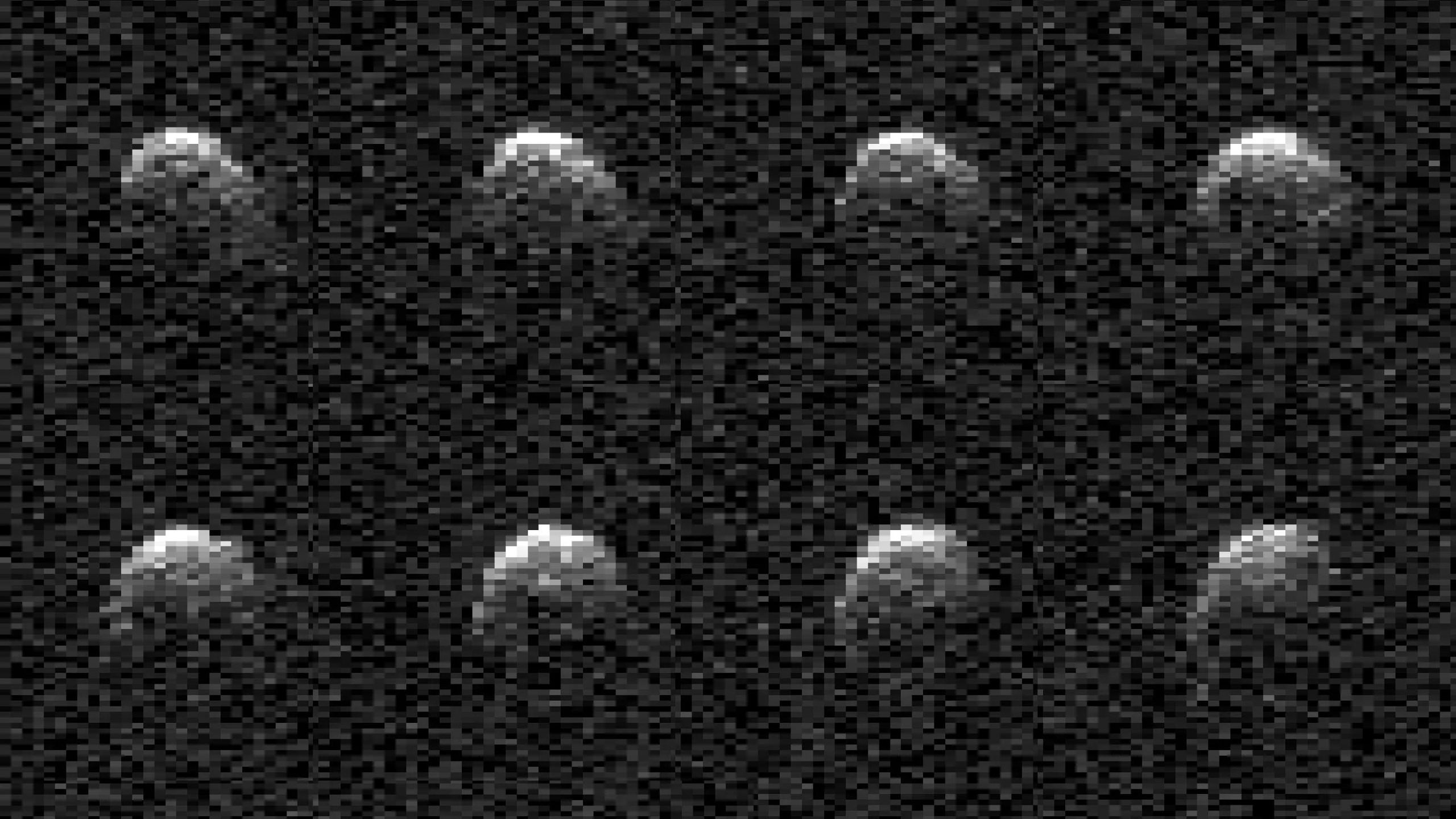
    The day before asteroid 2008 OS7 made its close approach with Earth on Feb. 2, this series of images was captured by the powerful 230-foot (70-meter) Goldstone Solar System Radar antenna near Barstow, California. Credit: NASA/JPL-Caltech

    During the close approach of 2008 OS7 with Earth on February 2, the agency’s Deep Space Network planetary radar gathered the first detailed images of the stadium-size asteroid.

    On February 2, a large asteroid safely drifted past Earth at a distance of about 1.8 million miles (2.9 million kilometers, or 7 ½ times the distance between Earth and the Moon). There was no risk of the asteroid – called 2008 OS7 – impacting our planet, but scientists at NASA’s Jet Propulsion Laboratory in Southern California used a powerful radio antenna to better determine the size, rotation, shape, and surface details of this near-Earth object (NEO). Until this close approach, asteroid 2008 OS7 had been too far from Earth for planetary radar systems to image it.

    Discovery and Observations

    The asteroid was discovered on July 30, 2008, during routine search operations for NEOs by the NASA-funded Catalina Sky Survey, which is headquartered at the University of Arizona in Tucson. After discovery, observations of the amount of light reflected from the asteroid’s surface revealed that it was roughly between 650 to 1,640 feet (200 and 500 meters) wide and that it is comparatively slow rotating, completing one rotation every 29 ½ hours.

    The rotational period of 2008 OS7 was determined by Petr Pravec, at the Astronomical Institute of the Czech Academy of Sciences in Ondřejov, Czech Republic, who observed the asteroid’s light curve – or how the brightness of the object changes over time. As the asteroid spins, variations in its shape change the brightness of reflected light astronomers see, and those changes are recorded to understand the period of the asteroid’s rotation.
    Solar System Radar Group DSS 14
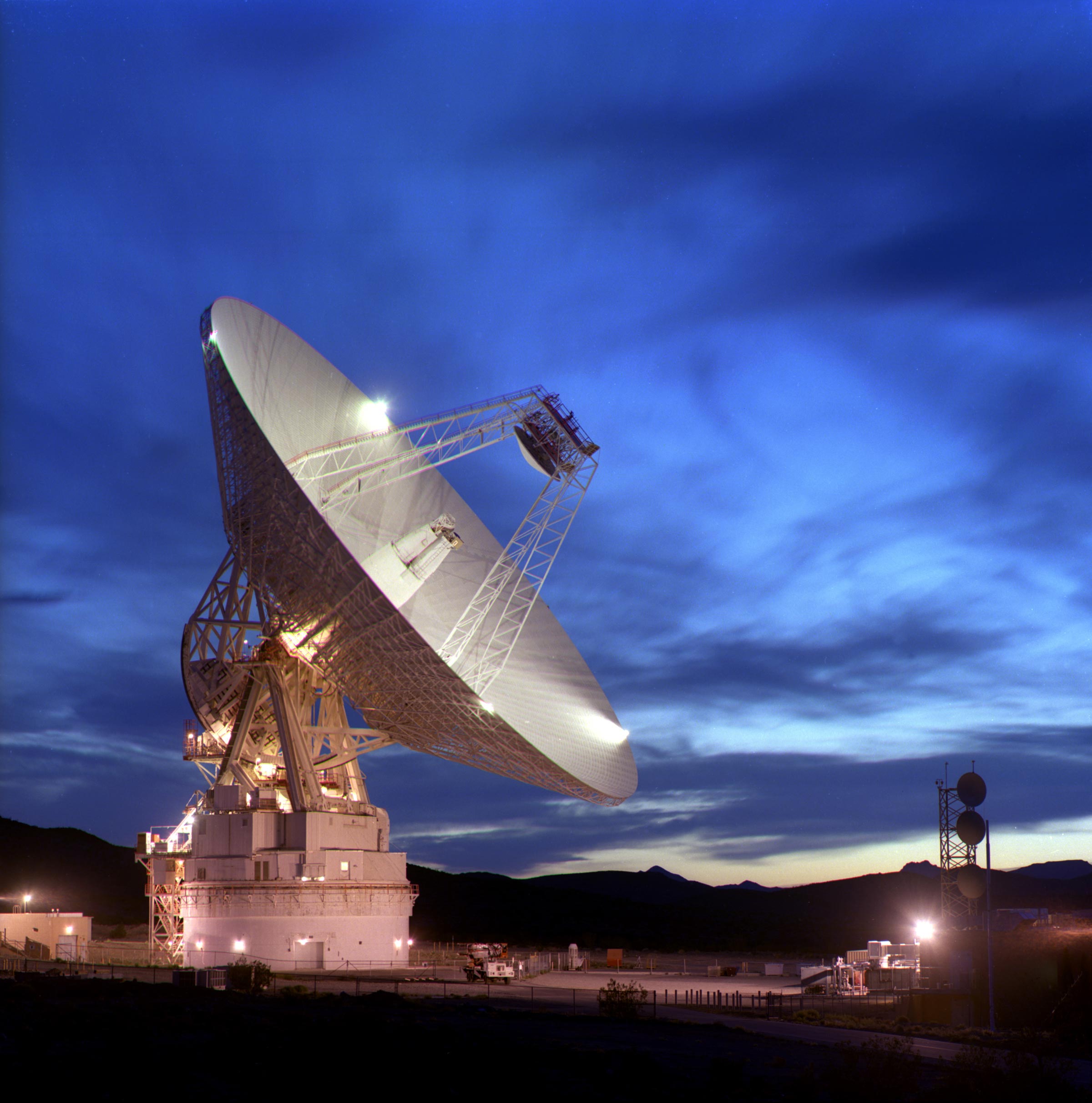
    The Goldstone Solar System Radar (GSSR) is a large radar system used for investigating objects in the Solar System. Located in the desert near Barstow, California, it comprises a 500-kW X-band (8500 MHz) transmitter and a low-noise receiver on the 70-m DSS 14 antenna at the Goldstone Deep Space Communications Complex. Credit: NASA

    Radar Imaging Reveals Details

    During the February 2 close approach, JPL’s radar group used the powerful 230-foot (70-meter) Goldstone Solar System Radar antenna dish at the Deep Space Network’s facility near Barstow, California, to image the asteroid. What scientists found was that its surface has a mix of rounded and more angular regions with a small concavity. They also found the asteroid is smaller than previously estimated – about 500 to 650 feet (150 to 200 meters) wide – and confirmed its uncommonly slow rotation.

    Potentially Hazardous but Safe for Now

    The Goldstone radar observations also provided key measurements of the asteroid’s distance from Earth as it passed by. Those measurements can help scientists at NASA’s Center for Near Earth Object Studies (CNEOS) refine calculations of the asteroid’s orbital path around the Sun. Asteroid 2008 OS7 orbits the Sun once every 2.6 years, traveling from within the orbit of Venus and past the orbit of Mars at its farthest point.

    CNEOS, which is managed by JPL, calculates every known NEO orbit to provide assessments of potential impact hazards. Due to the proximity of its orbit to that of the Earth and its size, 2008 OS7 is classified as a potentially hazardous asteroid, but the February 2 close approach is the nearest it will come to our planet for at least 200 years.

    While NASA reports on NEOs of all sizes, the agency has been tasked by Congress with detecting and tracking objects 460 feet (140 meters) in size and larger that could cause significant damage on the ground if they should impact our planet.

    The Goldstone Solar System Radar Group and CNEOS are supported by NASA’s Near-Earth Object Observations Program within the Planetary Defense Coordination Office at the agency’s headquarters in Washington. The Deep Space Network receives programmatic oversight from Space Communications and Navigation (SCaN) program office within the Space Operations Mission Directorate, also at the agency’s headquarters.

    Never miss a breakthrough: Join the SciTechDaily newsletter.
    Follow us on Google and Google News.

    Asteroid JPL NASA Planetary Defense Popular
    Share. Facebook Twitter Pinterest LinkedIn Email Reddit

    Related Articles

    NASA Confronts 72% Asteroid Impact Probability: A Planetary Defense Test

    Planetary Defense: NASA Radar Captures Two Large Asteroids Zooming Past Earth

    Three Hours Before Impact: Small Asteroid Detected on an Imminent Collision Course With Earth

    NASA’s Planetary Radar Captures Empire State Building-Sized Asteroid As It Flew Past Earth

    NASA’s Planetary Defense Test: DART About To Impact an Asteroid

    Planetary Defense Exercise Uses Apophis as Hazardous Asteroid Stand-In

    Planetary Defense Conference: NASA to Participate in Exercise Simulating Asteroid Impact

    NASA Analysis: Earth Is Safe From Asteroid Apophis Impact for at Least 100 Years

    NASA’s Planetary Defense: “Potentially Hazardous Asteroid” Predicted to Safely Pass by Earth on March 21

    1 Comment

    1. Icepilot on March 2, 2024 9:16 am

      “Unexpected surprises”? As opposed to “expected surprises”? Redundant.
      Further, what surprise?
      Absolutely nothing in this article was a surprise.

      Reply
    Leave A Reply Cancel Reply

    • Facebook
    • Twitter
    • Pinterest
    • YouTube

    Don't Miss a Discovery

    Subscribe for the Latest in Science & Tech!

    Trending News

    Artificial Sweeteners May Harm Future Generations, Study Suggests

    Splashdown! NASA Artemis II Returns From Record-Breaking Moon Mission

    What If Consciousness Exists Beyond Your Brain

    Scientists Finally Crack the 100-Million-Year Evolutionary Mystery of Squid and Cuttlefish

    Beyond “Safe Levels”: Study Challenges What We Know About Pesticides and Cancer

    Researchers Have Found a Dietary Compound That Increases Longevity

    Scientists Baffled by Bizarre “Living Fossil” From 275 Million Years Ago

    Your IQ at 23 Could Predict Your Wealth at 27, Study Finds

    Follow SciTechDaily
    • Facebook
    • Twitter
    • YouTube
    • Pinterest
    • Newsletter
    • RSS
    SciTech News
    • Biology News
    • Chemistry News
    • Earth News
    • Health News
    • Physics News
    • Science News
    • Space News
    • Technology News
    Recent Posts
    • Why Losing Too Much Fat Can Be Just As Dangerous as Obesity
    • Beef vs. Chicken: Surprising Results From New Prediabetes Study
    • Alzheimer’s Breakthrough: Scientists Discover Key Protein May Prevent Toxic Protein Clumps in the Brain
    • Scientists Discover New Way To Make Protein Shakes Taste Better
    • Scientists Break Optical Limits With Quantum Dot-Powered Nanoscopy
    Copyright © 1998 - 2026 SciTechDaily. All Rights Reserved.
    • Science News
    • About
    • Contact
    • Editorial Board
    • Privacy Policy
    • Terms of Use

    Type above and press Enter to search. Press Esc to cancel.