
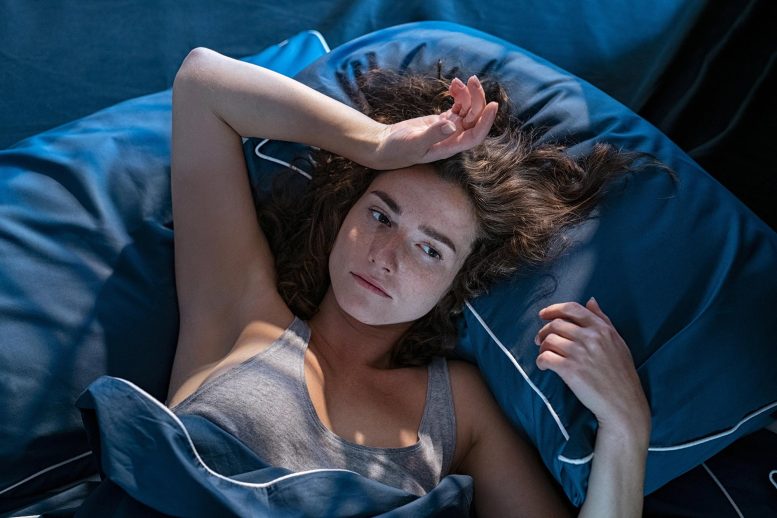
A meta-analysis of seven studies reveals that sleep deprivation weakens vaccine responses, suggesting individuals should aim for at least six hours of sleep before and after vaccination.
In reviewing data from previous studies, a team lead by researchers at the University of Chicago and the French National Institute of Health and Medical Research (Inserm) found that individuals who had fewer than six hours of sleep per night in the days surrounding vaccination had a blunted antibody response. That indicates efforts to promote healthy sleep duration ahead of an immunization could be an easy way to improve vaccine effectiveness. The study was published on March 13 in the journal Current Biology.
“Insufficient sleep is a behavioral factor that can be corrected before vaccination and may not only strengthen, but also extend, the vaccine response.” Eve Van Cauter, PhD
The latest work builds off a 2002 study by members of the team showing that restricting sleep in participants diminished their antibody response to influenza vaccination, leading to about half of the antibody levels seen in controls at 10 days after an inoculation. Their interest in the work was revived during the COVID-19 pandemic lockdowns in 2020, when they began to connect with others who had studied this question and started to pull together the meta-analysis.
Sleep and Antibody Response
Across seven studies, which examined the impact of sleep duration on vaccination against viral illnesses such as influenza and hepatitis, the researchers found that insufficient sleep (defined as under six hours of sleep per night) in the days surrounding vaccination resulted in a decreased antibody response.
“Insufficient sleep is a behavioral factor that can be corrected before vaccination and may not only strengthen, but also extend, the vaccine response,” said Eve Van Cauter, PhD, Professor Emeritus of Medicine at UChicago and senior author on the meta-analysis. “We know that people respond differently to vaccination according to their age, sex, existing medical conditions and other factors that cannot be readily changed. Having an easily modifiable behavior that you can adjust around the time of your appointment gives you something you can control that is likely to improve your body’s response.”
Importantly, the association was seen only in studies that objectively assessed sleep duration using wearable activity trackers or sleep studies in the laboratory. Self-reported sleep duration was not a predictor of vaccine response. The researchers noted that while the association was strong for men, it was weaker and not statistically significant for women. They argue this was likely due to the fact that none of the studies in women accounted for variations in sex hormone levels by menstrual cycle, use of contraceptives and menopausal status.
Implications for Shift Workers and Sleep Planning
“The link between sleep and vaccine effectiveness could be a major concern for people with irregular work schedules, especially for shift workers who typically have reduced sleep duration,” said Van Cauter. “This is something people should consider planning around, to ensure that they are getting enough sleep in the week before and after their vaccines.”
Using the results of the meta-analysis and comparing them to known data on the antibody response to the Pfizer-BioNTech COVID-19 vaccine, the researchers estimated that the effects of insufficient sleep on the vaccine response would be equivalent to two months of waning antibodies after vaccination.
“Interestingly, we saw the same outcomes in both influenza, which is a respiratory virus, and hepatitis, which affects the liver, suggesting that this effect could extend to all kinds of viruses, including coronaviruses like SARS-CoV-2,” said Karine Spiegel, PhD, first author on the study and a research scientist at Inserm. “Overall, we see these results as a call to action.”
The researchers hope that the study will inspire more research into the phenomenon to clarify the effects on men and women, as well as to better understand how different vaccines may be impacted by sleep duration and how sleep might be optimized to promote a better vaccine response.
“We need much larger studies that control for the sex hormone environment in women in particular,” said Spiegel. “We also need a better definition of how many days of short sleep duration affect the antibody response, and whether it is just before the vaccine, or also during and after. Large-scale studies that consider behavioral, demographic and hormonal characteristics should provide new insights that will translate to measurable impacts on vaccine efficacy.”
Sleep: A Low-Cost Solution to Boost Immune Health
“The immune system is not the only one modulated by sleep,” said Van Cauter. “Insufficient sleep is linked to other health issues such as an increased risk of developing obesity, diabetes or hypertension. Vaccines are an important tool for preventing and reducing the impacts of infectious diseases, and we think that you may be able to implement a simple behavioral change — getting enough sleep — to derive an immediate benefit. It’s cheap, and there is no adverse effect.”
For more on this research, see Sleep and Vaccination: The Critical Connection You Should Know About.
Reference: “A meta-analysis of the associations between insufficient sleep duration and antibody response to vaccination” by Karine Spiegel, Amandine E. Rey, Anne Cheylus, Kieran Ayling, Christian Benedict, Tanja Lange, Aric A. Prather, Daniel J. Taylor, Michael R. Irwin and Eve Van Cauter, 13 March 2023, Current Biology.
DOI: 10.1016/j.cub.2023.02.017
The study included the additional authors Amandine E. Rey and Anne Cheylus of Inserm; Kieran Ayling of the University of Nottingham; Christian Benedict of Uppsala University; Tanja Lange of University of Lübeck; Aric A. Prather of the University of California San Francisco; Daniel J. Taylor of the University of Arizona; and Michael R. Irwin of the University of California Los Angeles.
Never miss a breakthrough: Join the SciTechDaily newsletter.
Follow us on Google and Google News.