
Close Menu
    Facebook X (Twitter) Instagram
    SciTechDaily
    • Biology
    • Chemistry
    • Earth
    • Health
    • Physics
    • Science
    • Space
    • Technology
    Facebook X (Twitter) Pinterest YouTube RSS
    SciTechDaily
    Home»Earth»Predicting Future Explosions at the Yellowstone Caldera
    Earth

    Predicting Future Explosions at the Yellowstone Caldera

    By SciTechDailySeptember 21, 20121 Comment2 Mins Read
    Facebook Twitter Pinterest Telegram LinkedIn WhatsApp Email Reddit
    Share
    Facebook Twitter LinkedIn Pinterest Telegram Email Reddit
    yellowstone-caldera
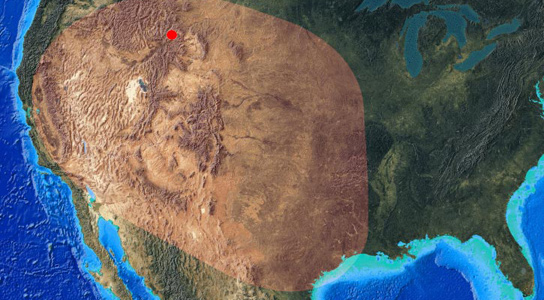
    The Yellowstone caldera has had some of the largest eruptions in the past.

    Scientists have been trying to figure out exactly what the future entails for the Yellowstone caldera. Unlike other more speculative theories, this most recent study tries to unlock the future by examining the past.

    The scientists published their findings in the journal GSA. The Yellowstone caldera has had some large eruptions in the past, but most of these are actually anomalous compared to the vast number of smaller eruptions that have occurred over the last few million years.
    potentional-eruptions-yellowstone
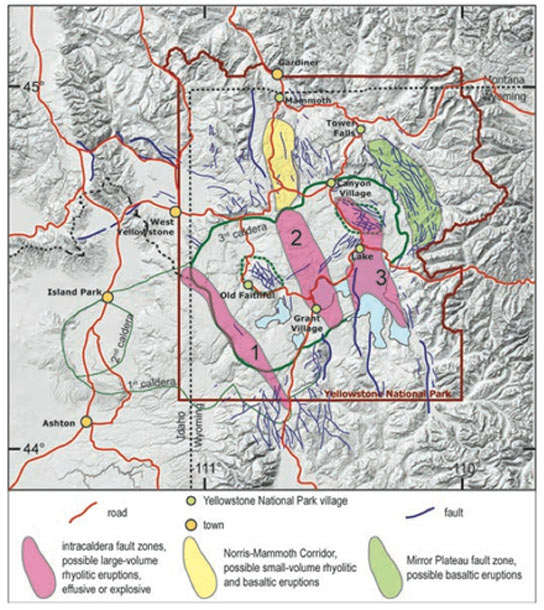
    Zones for potential future eruptions at Yellowstone defined by Girard and Stix

    The caldera system has had plenty of smaller eruptions, so these are the most likely to occur in the near future. Guillaume Girard and John Stix suggest this and state that small, dome-forming eruptions that are phreato-magmatic (water influenced) will follow pre-existing faults in the caldera, especially along the western ring.

    The latest very large eruption happened 640,000 years ago, and since then there have been many smaller explosions that occurred between 174,000 and 70,000 years ago. At least 600 km3 (150 mi³) of rhyolite lavas have erupted in the Central Plateau. The reservoir under Yellowstone, based upon the most recent measures, is 10 to 16 km (6 to 10 mi) below the surface and is only 5% to 15% molten. Some of the other extensions of the reservoir reach as shallow as 6 km (4 mi) but are less than 30% molten.

    The lowest percentage of molten magma for an eruption to occur from a crystal mush is estimated to be between 40% and 45%, implying that none of the magma is ready for an eruption.

    There are three areas of the caldera that could yield potential eruptions. These could present potential hazards, however, the scenarios are unlikely to occur.

    Reference: “Future volcanism at Yellowstone caldera: Insights from geochemistry of young volcanic units and monitoring of volcanic unrest” by Guillaume Girard and John Stix, September 2012, GSA Today.
    DOI: 10.1130/GSATG143A.1

    Never miss a breakthrough: Join the SciTechDaily newsletter.
    Follow us on Google and Google News.

    Eruption Volcano Yellowstone
    Share. Facebook Twitter Pinterest LinkedIn Email Reddit

    Related Articles

    Is Yellowstone Going To Erupt? New Research Reveals That the Volcano Is Venting

    Risk of a Catastrophic Volcano Eruption Is Startlingly High – And the World Is “Woefully Unprepared”

    Is Reawakened Steamboat Geyser a Harbinger for Explosive Yellowstone Volcanic Eruptions?

    The First Complete View of the Yellowstone Magmatic System

    Kilauea’s Halema’uma’u Lava Lake At Highest Level

    Volcanic Eruption at Fuego in Guatemala Intensifies

    Colombian Volcano Nevado del Ruiz Has Increased Activity

    Italian Volcano Etna Has Its Third Eruption of 2012

    Little Ice Age Sparked by Volcanoes, Sustained by Sea-Ice Feedback

    1 Comment

    1. Daniel McClenning on March 27, 2026 9:13 am

      Awesome article, 🔥🌋

      Reply
    Leave A Reply Cancel Reply

    • Facebook
    • Twitter
    • Pinterest
    • YouTube

    Don't Miss a Discovery

    Subscribe for the Latest in Science & Tech!

    Trending News

    Popular Supplement Ingredient Linked to Shorter Lifespan in Men

    Scientists May Have Found a Way To Repair Nerve Damage in Multiple Sclerosis

    “Totally Unexpected” – Scientists Discover Pancreatic Cancer’s Fatal Addiction

    A Strange Quantum Effect May Explain One of Biology’s Greatest Mysteries

    James Webb Telescope Reveals the Universe’s Hidden Cosmic Web in Stunning Detail

    Scientists Identify Simple Supplement That Greatly Reduces Alzheimer’s Damage

    You May Have a Dangerous Type of Cholesterol Even if Your Tests Look Normal

    Your Blood Pressure Reading Could Be Wrong Because of One Simple Mistake

    Follow SciTechDaily
    • Facebook
    • Twitter
    • YouTube
    • Pinterest
    • Newsletter
    • RSS
    SciTech News
    • Biology News
    • Chemistry News
    • Earth News
    • Health News
    • Physics News
    • Science News
    • Space News
    • Technology News
    Recent Posts
    • After 50 Years of Mystery, Researchers Identify New Human Blood Group
    • Leading Climate Scientist Rebuts “Factually Incorrect” US Government Climate Claims
    • You’re Breathing Plastic: Study Finds 4% of City Air Pollution Is Microplastics
    • Cancer Mystery Solved: Scientists Discover How Melanoma Becomes “Immortal”
    • Scientists Uncover Cancer-Fighting Power of Popular Fatty Liver Drug
    Copyright © 1998 - 2026 SciTechDaily. All Rights Reserved.
    • Science News
    • About
    • Contact
    • Editorial Board
    • Privacy Policy
    • Terms of Use

    Type above and press Enter to search. Press Esc to cancel.