
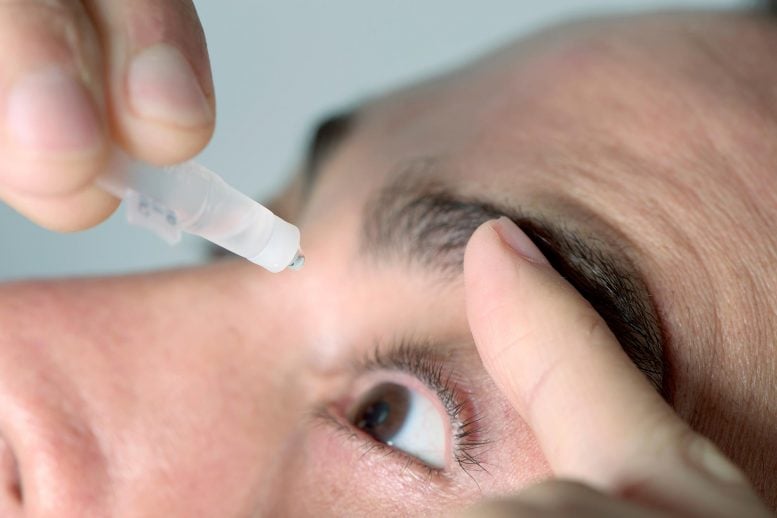
Ophthalmologists encouraged to take extra precautions while working with patients who have conjunctivitis.
A case of pink eye is now a reason to be tested for COVID-19, according to University of Alberta researchers.
Coughing, fever, and difficulty breathing are common symptoms of the illness, but a recent case study involving an Edmonton woman and published in the Canadian Journal of Ophthalmology has determined that conjunctivitis and keratoconjunctivitis can also be primary symptoms.
In March, a 29-year-old woman arrived at the Royal Alexandra Hospital’s Eye Institute of Alberta with a severe case of conjunctivitis and minimal respiratory symptoms. After the patient had undergone several days of treatment with little improvement—and after it had been determined that the woman had recently returned home from Asia—a resident ordered a COVID-19 test. The test came back positive.
“What is interesting in this case, and perhaps very different to how it had been recognized at that specific time, was that the main presentation of the illness was not a respiratory symptom. It was the eye,” said Carlos Solarte, an assistant professor of ophthalmology at the U of A.
“There was no fever and no cough, so we weren’t led to suspect COVID-19 at the beginning. We didn’t know it could present primarily with the eye and not with the lungs.”
According to Solarte, academic studies at the outset of the pandemic identified conjunctivitis as a secondary symptom in about 10 to 15 percent of COVID-19 cases. Since then, scientists have gained a greater knowledge of how the virus can transmit through and affect the body’s mucous membrane system, of which the conjunctiva—the clear, thin membrane that covers the front surface of the eye—is an extension. Conjunctivitis and keratoconjunctivitis are now recognized by Alberta Health Services as possible primary symptoms of COVID-19.
While the finding provides important new health information for the public, it also makes eye exams more complicated for ophthalmologists and staff.
“The patient in this case eventually recovered well without any issues. But several of the residents and staff who were in close contact with the patient had to be under quarantine,” said Solarte. “Fortunately, none who were involved in her care also tested positive.”
Patients coming into an eye clinic with conjunctivitis and keratoconjunctivitis are now treated as potential cases of COVID-19 and extra precautions are taken by staff. Workers performing an eye exam are strongly advised to wear personal protective equipment to minimize potential exposure to the illness.
“It’s important to ensure that everyone is well protected. Our residents are now using gloves, gowns, and facial masks every time they see one of these patients,” said Solarte. “We need to be really careful about protective measures to examine these patients.”
Reference: “Keratoconjunctivitis as the initial medical presentation of the novel coronavirus disease 2019 (COVID-19)” by Marvi Cheema, MD; Helya Aghazadeh, MD; Samir Nazarali, MD; Andrew Ting, MD, FRCSC; Jennifer Hodges, MD, FRCSC; Alexandra McFarlane, MD, FRCP(C); Jamil N. Kanji, MD, DTM&H, FRCP(C); Nathan Zelyas, MD, MSc, D(ABMM), FRCP(C); Karim F. Damji, MD, FRCSC and
Carlos Solarte, MD, MPH, 10 April 2020, Canadian Journal of Ophthalmology.
DOI: 10.1016/j.jcjo.2020.03.003
Never miss a breakthrough: Join the SciTechDaily newsletter.
Follow us on Google and Google News.
2 Comments
I was looking for a good article on this topic and found this one. My wife developed fever/headache, a clear symptom of Covid-19 (let’s call it day 1) and later tested +ve. Due to proximity, I was expecting to be infected too, but I didn’t develop any symptom. But, on day 3, I had very mild diarrhea (only for half day, non-noticeable) and day 4 had eye irritation (mild conjunctivitis), which lasted for 3 days. I had no other symptoms and I was wondering if I got covid + or not. Reading this article, I am convinced, I was +ve. I Didn’t get tested because I knew result would be -ve due to delay in testing appointment.
I’ve been diagnosed with various kinds of conjunctivitis (allergic, bacteria, viral, acute) since the last week in January. It finally cleared up the last week of May. Four months with no successful treatments (antibiotics, antivirals, steroids). None of the six doctors mentioned Coronavirus. Wow!