
Close Menu
    Facebook X (Twitter) Instagram
    SciTechDaily
    • Biology
    • Chemistry
    • Earth
    • Health
    • Physics
    • Science
    • Space
    • Technology
    Facebook X (Twitter) Pinterest YouTube RSS
    SciTechDaily
    Home»Space»Preparing for Webb Launch: Testing Progress Continues for the Most Powerful Space Science Telescope Ever Built
    Space

    Preparing for Webb Launch: Testing Progress Continues for the Most Powerful Space Science Telescope Ever Built

    By Thaddeus Cesari, NASA's Goddard Space Flight CenterJuly 17, 2021No Comments3 Mins Read
    Facebook Twitter Pinterest Telegram LinkedIn WhatsApp Email Reddit
    Share
    Facebook Twitter LinkedIn Pinterest Telegram Email Reddit
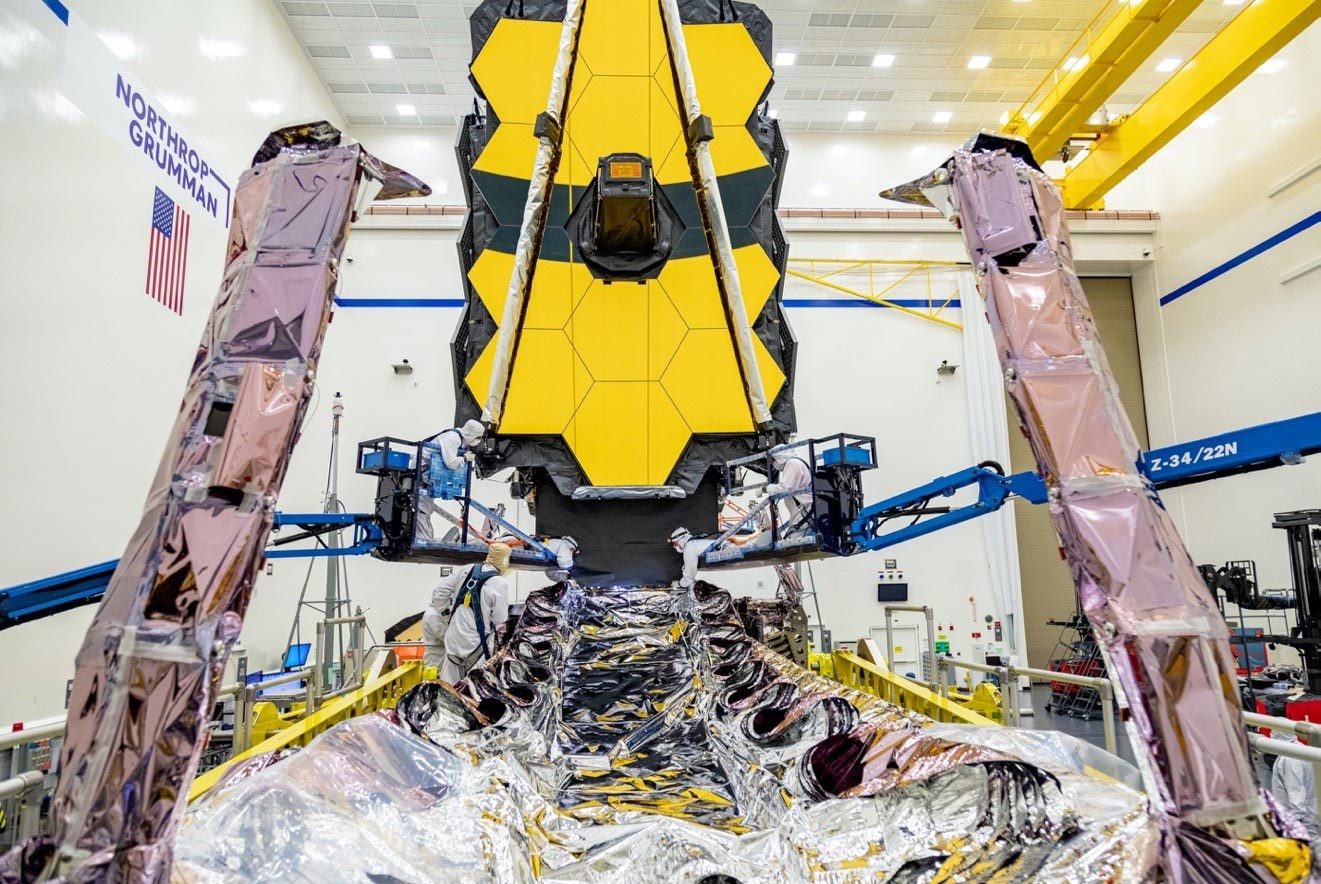
    James Webb Space Telescope Testing Teams
    Testing teams can be seen carefully working a critical part of the observatory known as the deployable tower assembly that helps Webb maintain its sub-zero operating temperature by separating its cold optics from its warm spacecraft bus. Credit: NASA/Chris Gunn

    Engineers have made considerable progress in checking off NASA’s James Webb Space Telescope’s final series of tests. Three big milestones have recently been completed, bringing the world’s most complex and powerful space science telescope ever built much closer to being fully prepared for its million-mile journey to orbit. These three testing milestones are outlined below:
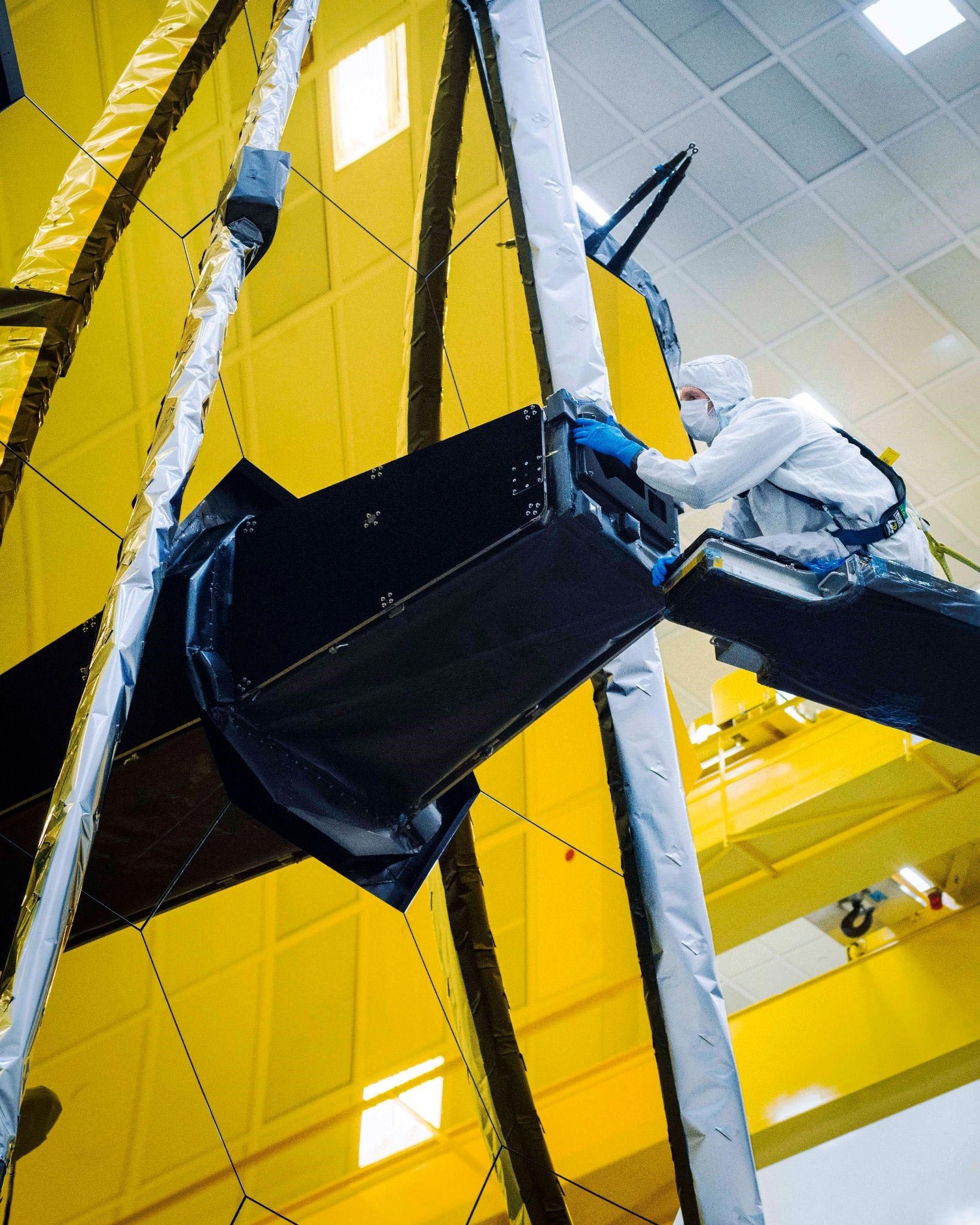
    James Webb Space Telescope Lens Cap Removal
    Here, Ball Aerospace technician Larkin Carey can be seen carefully removing Webb’s “lens cap” from the Aft Optics Subsystem which has kept the observatory’s sensitive instruments clean, contaminant-free, and protected from stray light throughout the integration and test process. Credit: NASA/Chris Gunn

    Deployable Tower Assembly Testing: Completed

    This telescoping tower helps Webb maintain its necessary super cool operating temperatures by separating its mirrors and instruments from the comparatively warmer Sun-facing side and spacecraft bus. When fully deployed, the tower reaches ten feet in length, which also gives the observatory’s sunshield just enough room to unfold its complex mechanisms. Recently this tower was fully extended for the very last time in testing, just as it would once in space. Testing teams then lowered the tower and locked it into place to prepare for launch later this year. The next time this tower will deploy will be when Webb is in space.

    AOS (Aft Optics Subsystem) Cover: Removed

    Webb’s “lens cap” has been removed! A technician can be seen carefully removing what’s known as Webb’s aft optics subsystem cover. This important piece of protective equipment has kept the observatory’s instruments clean, contaminant-free, and safe from stray light while it was assembled and fully prepared for flight. Now that launch is so close, the cover has been removed to allow engineers freedom to continue packing up the rest of the observatory into its flight-like formation.

    Unitized Pallet Structure: Stowed for Launch

    Webb’s tennis court-sized sunshield folds up perfectly to rest on what is known as a unitized pallet structure. These long support structures are part of the observatory’s complex folding mechanism that allows it to just barely fit inside an Ariane 5 rocket for launch. Now that Webb’s lens cap has been removed, engineers were free to finish the process of folding the pallets upward into their final configuration for launch. In the accompanying picture, Webb’s pallet structures can be seen partially lifted, but they have since been fully raised and locked in place for launch later this year.
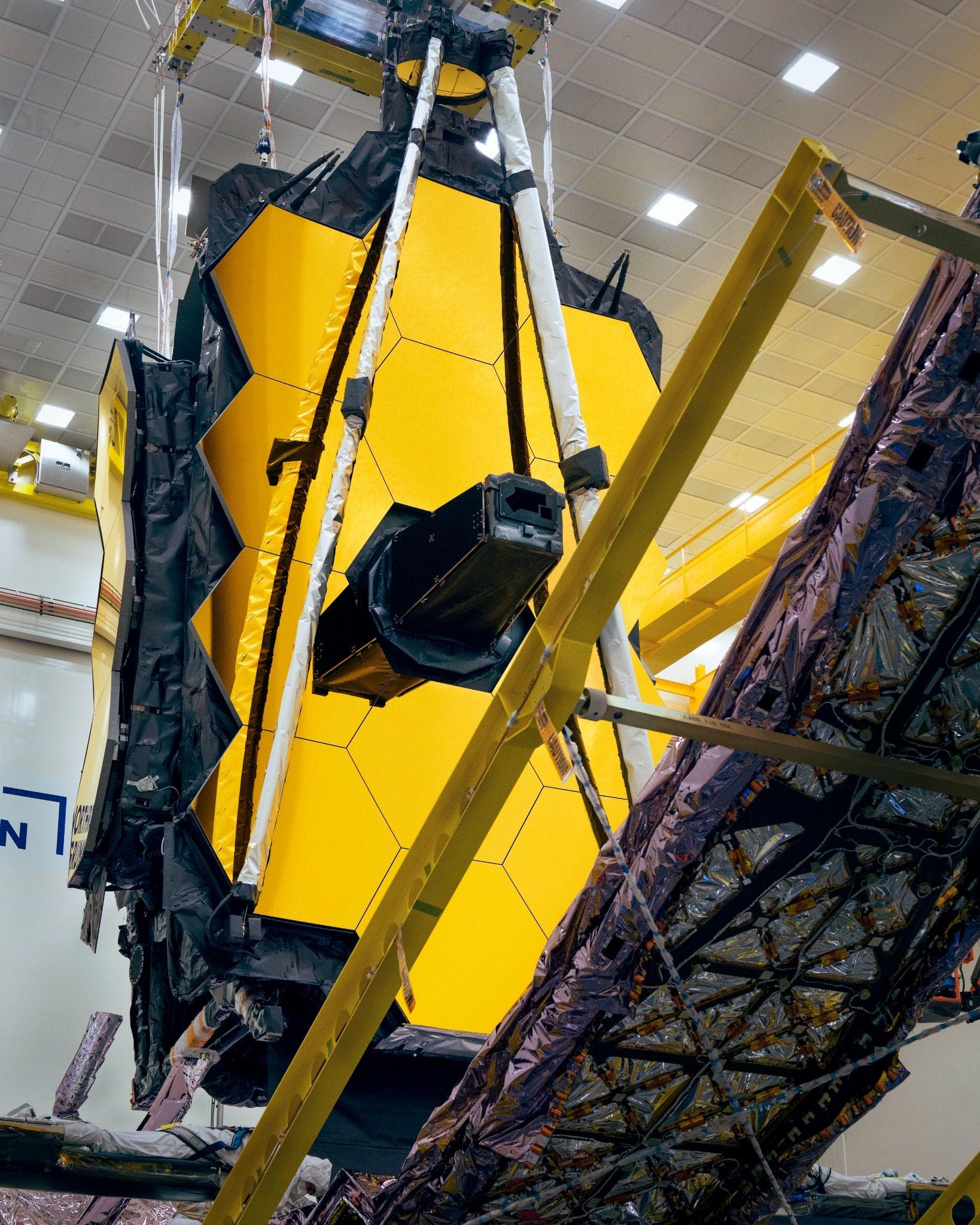
    Folding James Webb Space Telescope
    After the removal of the James Webb Space Telescope’s “lens cap” engineers were freed to fold up the long support structures that keep the observatory’s sunshield safe and secure during transport and deployment. Credit: Northrop Grumman

    The testing was conducted in a clean room at Northrop Grumman in Redondo Beach, California.

    The James Webb Space Telescope will be the world’s premier space science observatory when it launches in 2021. Webb will solve mysteries in our solar system, look beyond to distant worlds around other stars, and probe the mysterious structures and origins of our universe and our place in it. Webb is an international program led by NASA with its partners, ESA (European Space Agency) and the Canadian Space Agency.

    Never miss a breakthrough: Join the SciTechDaily newsletter.
    Follow us on Google and Google News.

    Astronomy James Webb Space Telescope NASA NASA Goddard Space Flight Center
    Share. Facebook Twitter Pinterest LinkedIn Email Reddit

    Related Articles

    NASA’s Webb Telescope Reveals an Eerie Nebula That Looks Like a Giant Brain

    Webb Telescope Uncovers Star Birth Struggles in a Magnetic Maze at the Milky Way’s Core

    Webb Space Telescope Uncovers Star Birth Secrets at Galaxy’s Edge

    NASA’s James Webb Space Telescope Completes First Full Systems Evaluation

    NASA Gravity Assist: Puffy Planets and Powerful Telescopes

    NASA’s James Webb Space Telescope Fully Stowed in Launch Configuration

    NASA’s New $10 Billion Space Telescope Successfully Deploys Massive Mirror

    NASA’s New Star-Watching Technology Has Thousands of Tiny Shutters

    NASA’s Webb Telescope Will Penetrate Space Dust to Reveal Milky Way’s Center

    Leave A Reply Cancel Reply

    • Facebook
    • Twitter
    • Pinterest
    • YouTube

    Don't Miss a Discovery

    Subscribe for the Latest in Science & Tech!

    Trending News

    Millions Take These IBS Drugs, But a New Study Finds Serious Risks

    Scientists Unlock Hidden Secrets of 2,300-Year-Old Mummies Using Cutting-Edge CT Scanner

    Bread Might Be Making You Gain Weight Even Without Eating More Calories

    Scientists Discover Massive Magma Reservoir Beneath Tuscany

    Europe’s Most Active Volcano Just Got Stranger – Here’s Why Scientists Are Rethinking It

    Alzheimer’s Symptoms May Start Outside the Brain, Study Finds

    Millions Take This Popular Supplement – Scientists Discover a Concerning Link to Heart Failure

    The Universe Is Expanding Too Fast and Scientists Can’t Explain Why

    Follow SciTechDaily
    • Facebook
    • Twitter
    • YouTube
    • Pinterest
    • Newsletter
    • RSS
    SciTech News
    • Biology News
    • Chemistry News
    • Earth News
    • Health News
    • Physics News
    • Science News
    • Space News
    • Technology News
    Recent Posts
    • U.S. Waste Holds $5.7 Billion Worth of Crop Nutrients
    • Scientists Say a Hidden Structure May Exist Inside Earth’s Core
    • Doctors Surprised by the Power of a Simple Drug Against Colon Cancer
    • Why Popular Diabetes Drugs Like Ozempic Don’t Work for Everyone: The “Genetic Glitch”
    • Scientists Create Improved Insulin Cells That Reverse Diabetes in Mice
    Copyright © 1998 - 2026 SciTechDaily. All Rights Reserved.
    • Science News
    • About
    • Contact
    • Editorial Board
    • Privacy Policy
    • Terms of Use

    Type above and press Enter to search. Press Esc to cancel.