
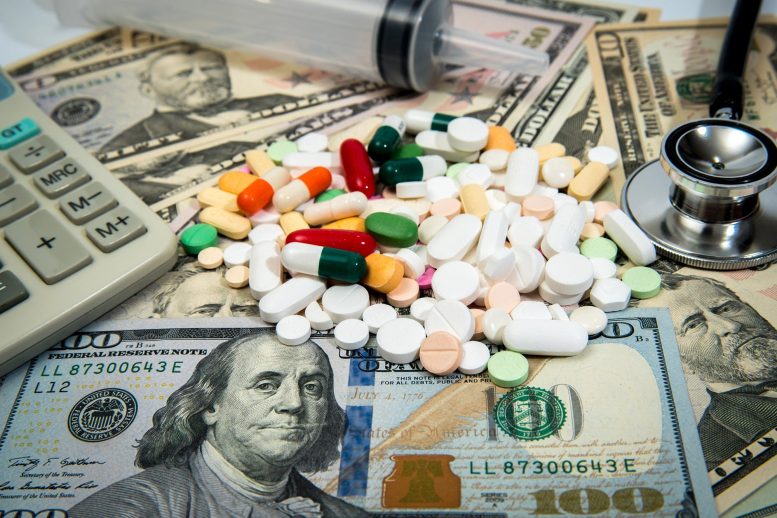
Preventing pandemics through conservation and surveillance is more cost-effective than controlling them later.
We can pay now or pay far more later. That’s the takeaway of a new peer-reviewed study, published on February 4, 2022, in the journal Science Advances, that compares the costs of preventing a pandemic to those incurred trying to control one.
Investing in Prevention
“It turns out prevention really is the best medicine,” said Stuart Pimm, Doris Duke Professor of Conservation Ecology at Duke University, who was co-lead author of the study. “We estimate we could greatly reduce the likelihood of another pandemic by investing as little as 1/20th of the losses incurred so far from COVID-19 into conservation measures designed to help stop the spread of these viruses from wildlife to humans in the first place.”
A smart place to start, the study shows, would be investing in programs to end tropical deforestation and international wildlife trafficking, stop the wild meat trade in China, and improve disease surveillance and control in wild and domestic animals worldwide.
Deforestation and Wildlife Trade
COVID, SARS, HIV, Ebola, and many other viruses that have emerged in the last century originated in wild places and wild animals before spreading to humans, the study’s authors note. Tropical forest edges where humans have cleared more than 25% of the trees for farming or other purposes are hotbeds for these animal-to-human virus transmissions, as are markets where wild animals, dead or alive, are sold.
“The bottom line is, if we don’t stop destroying the environment and selling wild species as pets, meat, or medicine, these diseases are just going to keep coming. And as this current pandemic shows, controlling them is inordinately costly and difficult,” Pimm said. “It’s been two years since COVID emerged and the cure still isn’t working. Not enough people are vaccinated in the U.S., where shots are available and we can afford them, and not enough vaccines are going to other countries that can’t afford them.”
The Economic Case for Prevention
The new study, by epidemiologists, economists, ecologists, and conservation biologists at 21 institutions, calculates that by investing an amount equal to just 5% of the estimated annual economic losses associated with human deaths from COVID into environmental protection and early-stage disease surveillance, the risks of future zoonotic pandemics could be reduced by as much as half. That could help save around 1.6 million lives a year and reduce mortality costs by around $10 trillion annually.
“We’re talking about an investment of tens of billions of dollars a year. Governments have that kind of money,” Pimm said.
One key recommendation of the new study is to use some of this money to train more veterinarians and wildlife disease biologists.
Another key recommendation is to create a global database of virus genomics that could be used to pinpoint the source of newly emerging pathogens early enough to slow or stop their spread, and, ultimately, speed the development of vaccines and diagnostic tests.
Aaron Bernstein of Boston Children’s Hospital and the Center for Climate, Health and the Global Environment at Harvard T.H. Chan School of Public Health, and Andrew Dobson of Princeton University were co-lead authors of the study with Pimm.
The need to put preventive measures in place as soon as possible is increasingly urgent, said Dobson. “Epidemics are occurring more frequently, they are getting larger, and spreading to more continents.”
“Prevention is much cheaper than cures,” noted Bernstein. Compared to the costs and social and economic disruptions associated with trying to control pathogens after they have already spread to humans, “preventing epidemics before they break out is the ultimate economic bargain.”
Reference: “The costs and benefits of primary prevention of zoonotic pandemics” by Aaron S. Bernstein, Amy W. Ando, Ted Loch-Temzelides, Mariana M. Vale, Binbin V. Li, Hongying Li, Jonah Busch, Colin A. Chapman, Margaret Kinnaird, Katarzyna Nowak, Marcia C. Castro, Carlos Zambrana-Torrelio, Jorge A. Ahumada, Lingyun Xiao, Patrick Roehrdanz, Les Kaufman, Lee Hannah, Peter Daszak, Stuart L. Pimm and Andrew P. Dobson, 4 February 2022, Science Advances.
DOI: 10.1126/sciadv.abl4183
Researchers at 17 additional universities, medical centers, environmental nonprofits or government agencies in the United States, China, Brazil, South Africa, and Kenya coauthored the study.
The coauthors include Binbin V. Li, assistant professor of environmental science at Duke Kunshan University in China, who holds a secondary appointment at Duke’s Nicholas School of the Environment.
Funding for the study came from Johnson & Johnson; the U.S. Department of Agriculture; the Norwegian Agency for Development Cooperation; Brazil’s National Institute for Scientific and Technological Development; the U.S. Agency for International Development, and the National Natural Science Foundation of China.
Never miss a breakthrough: Join the SciTechDaily newsletter.
Follow us on Google and Google News.