
Close Menu
    Facebook X (Twitter) Instagram
    SciTechDaily
    • Biology
    • Chemistry
    • Earth
    • Health
    • Physics
    • Science
    • Space
    • Technology
    Facebook X (Twitter) Pinterest YouTube RSS
    SciTechDaily
    Home»Space»Proba-2 Satellite Sees the Moon Eclipse the Sun Twice [Video]
    Space

    Proba-2 Satellite Sees the Moon Eclipse the Sun Twice [Video]

    By European Space Agency (ESA)April 13, 2024No Comments2 Mins Read
    Facebook Twitter Pinterest Telegram LinkedIn WhatsApp Email Reddit
    Share
    Facebook Twitter LinkedIn Pinterest Telegram Email Reddit
    Proba-2 Satellite 2024 Solar Eclipse
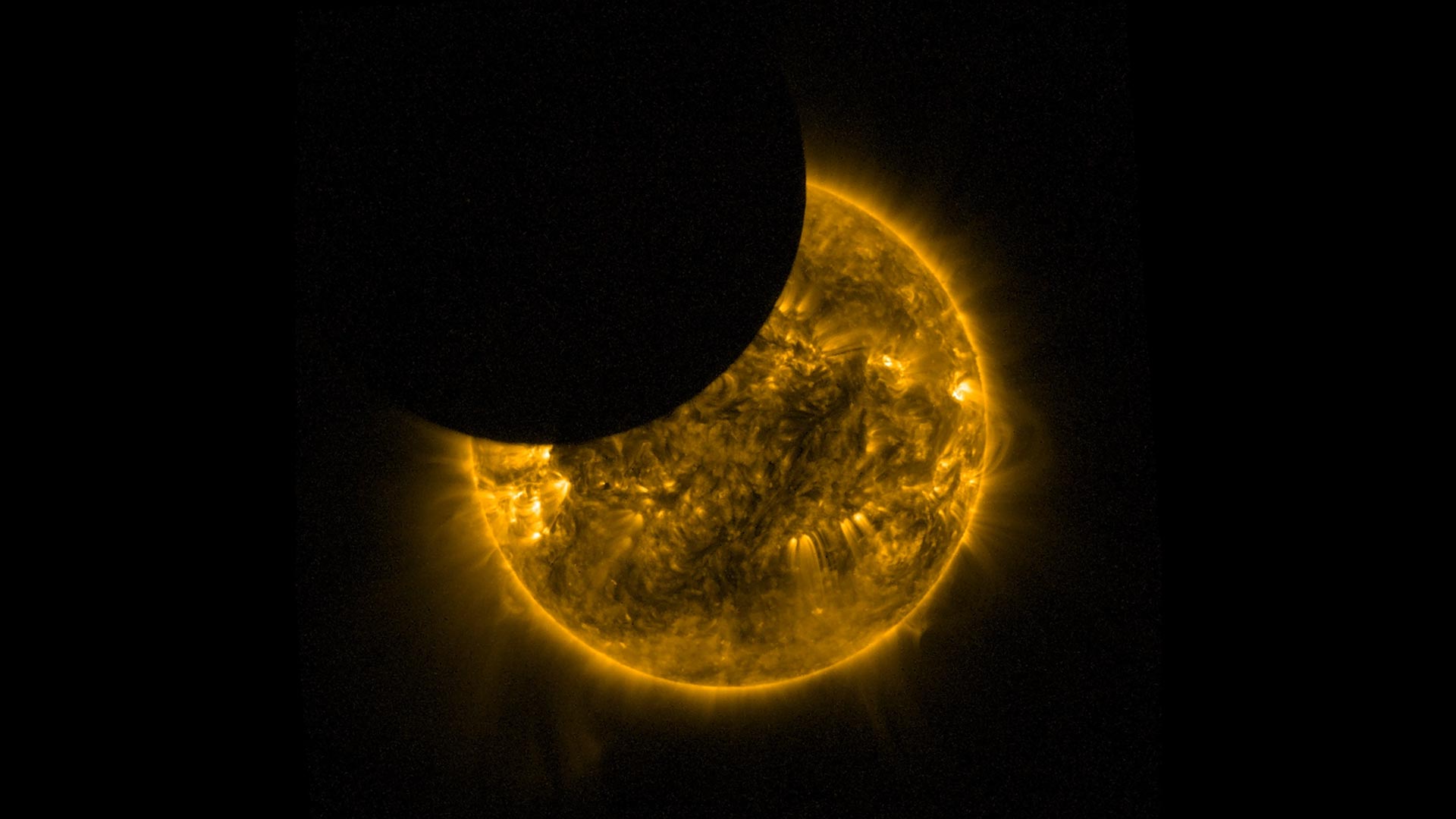
    On April 8, 2024, ESA’s Proba-2 satellite recorded two partial solar eclipses, providing insights into the Sun’s corona through images captured in extreme ultraviolet light. Credit: ESA/Royal Observatory of Belgium

    ESA’s Proba-2 satellite observed two partial solar eclipses, enhancing our understanding of the Sun’s atmosphere.

    ESA’s Proba-2 captured two partial solar eclipses on April 8, 2024.

    A solar eclipse occurs when the Moon passes between Earth and the Sun, totally or partially blocking the Sun from Earth’s point of view. On April 8, lucky viewers across North America witnessed the Moon blocking out the Sun in its entirety for a few minutes, while those north and south of the ‘total eclipse path’ witnessed a partial eclipse.

    Throughout the eclipse period, the Moon crossed Proba-2’s field of view twice, appearing as a partial solar eclipse. The satellite flies around 700 km (435 miles) above Earth’s surface in what is called a Sun-synchronous orbit, each orbit lasting around 100 minutes.

    The video was produced from images taken by Proba-2’s SWAP telescope, which observes the Sun in extreme ultraviolet light. At these wavelengths, the turbulent nature of the Sun’s surface and corona – the Sun’s extended atmosphere – become visible. These measurements have to be made from space, because Earth’s atmosphere doesn’t allow such short wavelengths of light to pass through.

    A total solar eclipse provides a unique opportunity to see the Sun’s corona from Earth’s surface, using visible light. As the Moon blocks most of the Sun’s bright light, the faint corona can be discerned. By comparing the SWAP ultraviolet images to what is seen by (visible light) telescopes on Earth, we can learn about the temperature and behavior of different structures in the corona.

    Other solar missions also made the most of the unique measurement opportunities provided by the eclipse. For example, ESA’s Solar Orbiter was positioned close to the Sun and at a 90-degree angle from Earth’s view throughout the eclipse. This allowed it to complement Earth-based observations by monitoring the Sun’s corona side-on, including any solar eruptions pointing in Earth’s direction.

    Never miss a breakthrough: Join the SciTechDaily newsletter.
    Follow us on Google and Google News.

    Eclipse European Space Agency Popular Solar Eclipse
    Share. Facebook Twitter Pinterest LinkedIn Email Reddit

    Related Articles

    Total Solar Eclipse 2024: The Science Behind the Sun’s Disappearance

    Don’t Get Blinded by the Light: Total Solar Eclipse Safety Guide

    2024 Total Solar Eclipse: Broader Path, Longer Totality, and Increased Solar Activity

    Astronomers Capture First Radio Images of a “Ring of Fire” Solar Eclipse

    A “Ring of Fire” in the Sky: The Solar Eclipse Experience

    Don’t Miss: A “Ring of Fire” in the Sky

    Don’t Miss Eclipses: NASA Releases New Map of Upcoming Solar Eclipses

    Proba-2 Spacecraft Captures Two Partial Solar Eclipses in One Day

    NASA’s ACE Mission: Total Solar Eclipses Shine a Light on the Solar Wind

    Leave A Reply Cancel Reply

    • Facebook
    • Twitter
    • Pinterest
    • YouTube

    Don't Miss a Discovery

    Subscribe for the Latest in Science & Tech!

    Trending News

    Don’t Miss: A Brilliant Venus and Glowing Harvest Moon Light Up the Sky

    New Twist on the Einstein Problem Reveals Unexpected Physics

    JWST Captures Stunning Evidence of How Supermassive Black Holes Feed

    Early Exercise May Permanently Change How Much Energy the Body Uses To Move

    New Molecule Wipes Out Aggressive Lymphoma Tumors in Mice in Just 11 Days

    The Human Family Tree May Need a Major Rewrite

    Scientists Find a Surprising Cancer-Fighting Effect in Dark Sweet Cherries

    New AI Detects Hidden Warning Signs of Solar Eruptions Hours Before They Emerge

    Follow SciTechDaily
    • Facebook
    • Twitter
    • YouTube
    • Pinterest
    • Newsletter
    • RSS
    SciTech News
    • Biology News
    • Chemistry News
    • Earth News
    • Health News
    • Physics News
    • Science News
    • Space News
    • Technology News
    Recent Posts
    • Africa’s Giant Herbivores Were Disappearing Millions of Years Before Humans Could Hunt Them
    • This Utah Mountain Is Hiding Enough Ice To Fill 600 Olympic Pools
    • Vagus Nerve Stimulation Could Unlock the Brain’s Hidden Learning Potential
    • Your Mother’s Age May Leave a Biological Mark That Lasts for Generations
    • Women Who Ate More Antioxidants Had Strikingly Lower Rates of Cervical Cancer
    Copyright © 1998 - 2026 SciTechDaily. All Rights Reserved.
    • Science News
    • About
    • Contact
    • Editorial Board
    • Privacy Policy
    • Terms of Use

    Type above and press Enter to search. Press Esc to cancel.