
Close Menu
    Facebook X (Twitter) Instagram
    SciTechDaily
    • Biology
    • Chemistry
    • Earth
    • Health
    • Physics
    • Science
    • Space
    • Technology
    Facebook X (Twitter) Pinterest YouTube RSS
    SciTechDaily
    Home»Space»Probing the Universe: ESA’s Groundbreaking Missions Launching in 2024 [Video]
    Space

    Probing the Universe: ESA’s Groundbreaking Missions Launching in 2024 [Video]

    By European Space Agency (ESA)January 6, 2024No Comments4 Mins Read
    Facebook Twitter Pinterest Telegram LinkedIn WhatsApp Email Reddit
    Share
    Facebook Twitter LinkedIn Pinterest Telegram Email Reddit
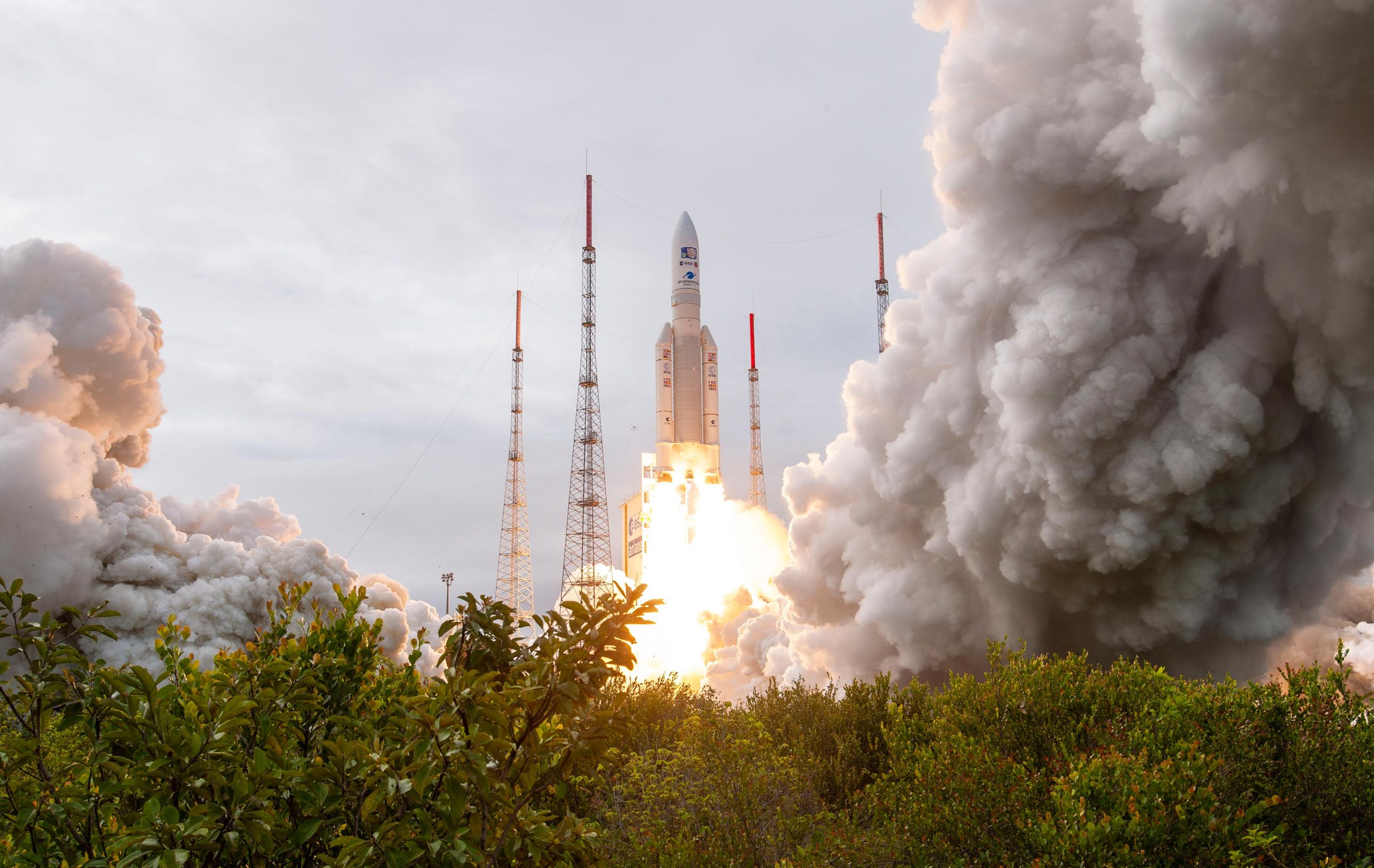
    Ariane 5 Launches Juice Space Probe for ESA
    ESA’s interplanetary mission, Juice, lifted off on an Ariane 5 rocket from Europe’s Spaceport in French Guiana on April 14, 2023, to begin its eight-year journey to Jupiter, where it will study in detail the gas giant planet’s three large ocean-bearing moons: Ganymede, Callisto, and Europa. Credit: Arianespace

    ESA’s 2024 agenda includes launching the Ariane 6 rocket, collaborating with NASA on Artemis, unveiling data from the Euclid telescope, and deploying several Earth observation satellites. The Galileo system will be expanded, and new astronauts will be mission-ready.

    As 2024 kicks into gear, the European Space Agency (ESA) invites you to look ahead and see what awaits us in the coming 12 months.

    After Ariane 5’s retirement in 2023, Europe’s new and versatile heavy-duty launcher Ariane 6 will continue the Ariane legacy of excellence and reliability. After years of development and construction, Ariane 6 will be ready for its first flight from Europe’s Spaceport in Kourou.


    The European Space Agency (ESA) has a busy year ahead in 2024. Highlights include the first flight of Ariane 6, the return of Vega-C, collaborations with NASA on the Artemis program, and the launch of Proba-3 for solar studies. ESA will reveal data from the Euclid telescope, launch the Hera mission, and deploy several Earth observation satellites. The Galileo navigation system will expand, and the latest astronaut class will complete training, with Marcus Wandt scheduled for a space mission in January. Credit: ESA

    In 2024, we’ll see a return-to-flight for Vega-C. Vega-C will continue to provide Europe with its own affordable lightweight launcher. Together both projects guarantee Europe’s independent access to space.

    We also continue to collaborate internationally with NASA on the Artemis lunar program. This Spring, another European Service Module, ESM-3, for the third Artemis mission will be shipped to the United States for mating with its Orion capsule.

    Proba-3
    The two satellites of Proba-3 will fly in formation to form an external coronagraph in space, one satellite eclipsing the Sun to allow the second to study the otherwise invisible solar corona. Credit: ESA – P. Carril, 2013

    In 2024, Proba-3 will be launched, the first precision formation-flying mission. The Coronagraph and Occulter spacecraft will fly together forming a 144 m coronagraph studying the Sun’s corona closer to the solar rim than ever before.

    At the beginning of the year, the first scientific data gathered by our latest space telescope, Euclid, will be revealed. Euclid was designed to explore the composition and evolution of dark matter and dark energy.
    Hera CubeSats Didymos
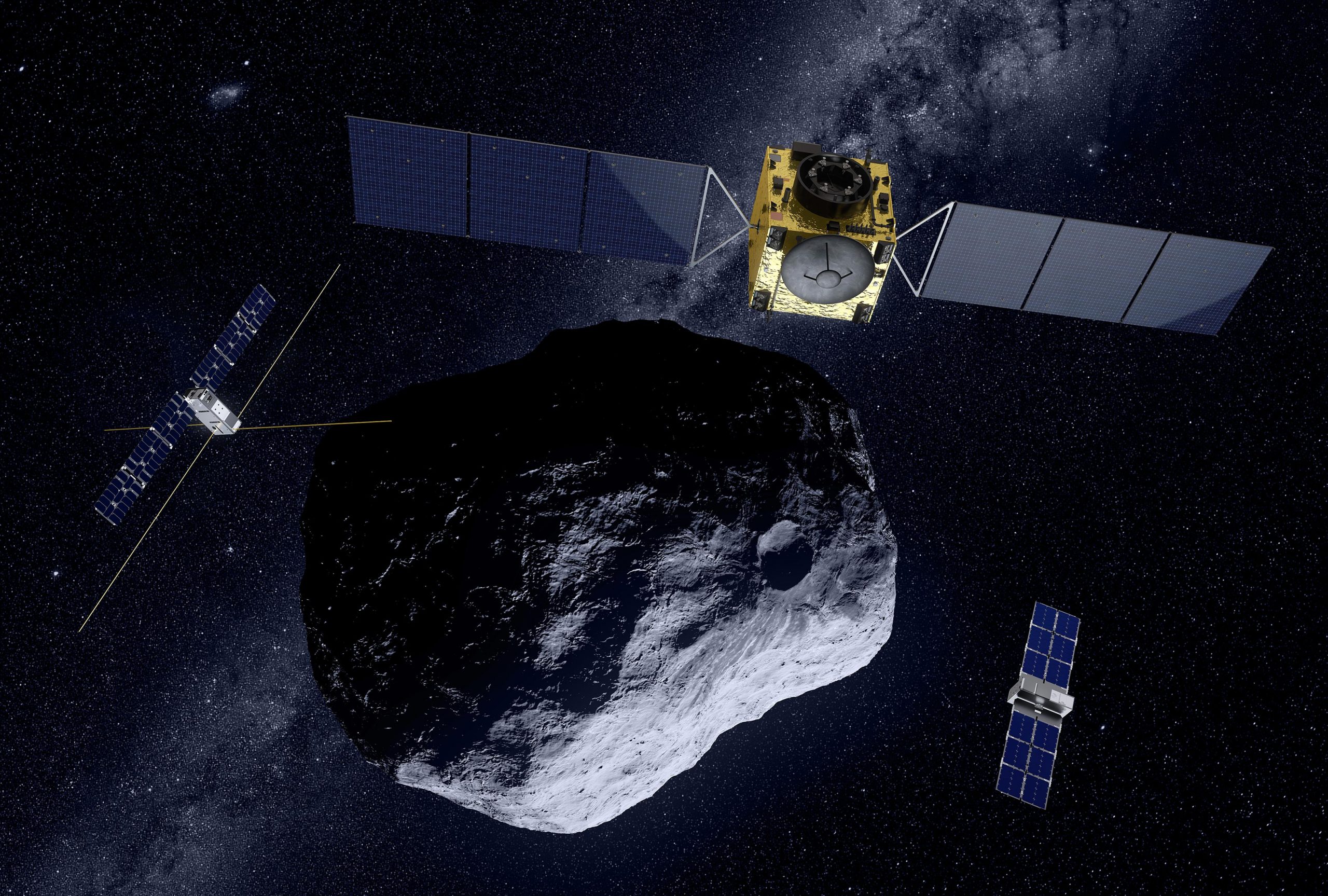
    Hera, her CubeSats, and their rocky target destination. Credit: ESA/Science Office

    Another exciting mission that will launch later in 2024 is the Hera mission. This mission will fly to the binary asteroid system of Dimorphos and Didymos to observe the aftermath of the impact made by NASA’s Dart mission.

    In Earth observation, there are several satellites ready to be launched: the ESA/JAXA mission EarthCARE mission, the Arctic Weather Satellite mission, and the European Union’s Copernicus Sentinel-1C and Sentinel-2C satellites.

    2024 will bring new developments as well for Galileo: two more first-generation satellites are to be launched in April, followed by two more later in the year. These will expand the constellation and help guarantee Galileo’s optimal performance. Meanwhile, the first hardware deliveries will take place for the second-generation Galileo satellites.
    ESA Project Astronaut Marcus Wandt Crop
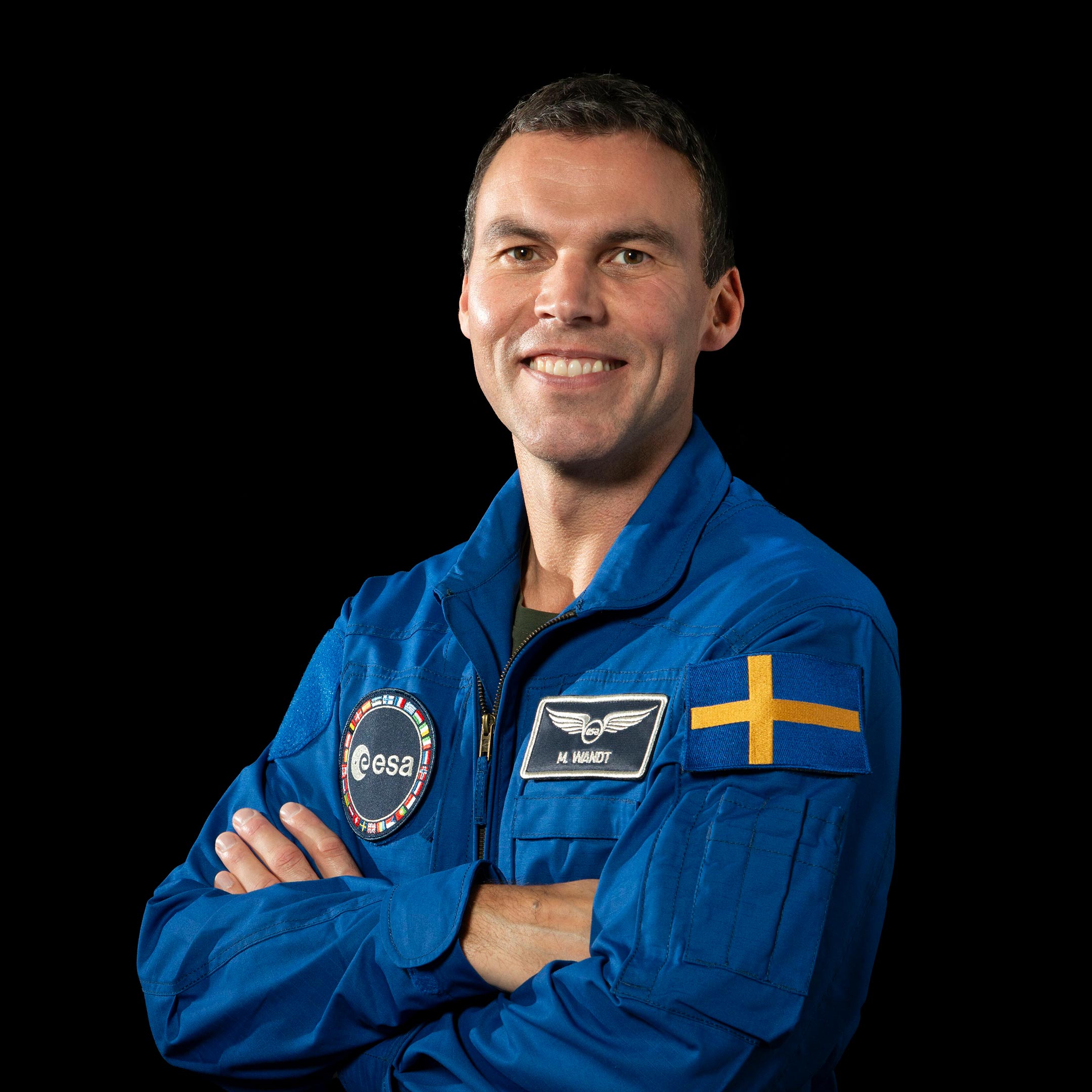
    ESA project astronaut Marcus Wandt from Sweden will travel to the International Space Station on Axiom Mission 3 (Ax-3) no earlier than January 2024. Credit: ESA–P. Sebirot

    The five career astronauts from the 2022 astronaut class will finish their basic training this year and then be ready for mission assignments.

    For Swedish project astronaut Marcus Wandt, there is no such wait. In January, he will be launched to the Space Station as a mission specialist on the Axiom-3 commercial mission — just time to catch up in space with his Danish colleague, ESA astronaut Andreas Mogensen, who is scheduled to return to Earth after a six-month stay on the Space Station in February.

    Never miss a breakthrough: Join the SciTechDaily newsletter.
    Follow us on Google and Google News.

    European Space Agency Proba-3
    Share. Facebook Twitter Pinterest LinkedIn Email Reddit

    Related Articles

    Rare Solar Eruptions Explode From the Sun in New Space Time Lapse

    ESA Just Faked a Solar Eclipse – And Caught the Sun’s Hidden Halo

    Breaking Free in Space: ESA’s Proba-3 Satellites Separate for Historic Mission

    Solar Eclipses on Demand: Proba-3’s Precision Satellites Enter Orbit

    Proba-3 Takes on the Sun: A Bold Mission To Track Solar Energy

    Behind the Cosmic Veil: Proba-3’s Pioneering Solar Eclipse Technology

    Dancing With the Stars: Corridor Test of Proba-3’s Formation Flying Sensors

    ESA’s Hershel Space Telescope Captures Incredible Views of Eagle Nebula

    Hubble Reaches New Milestone: 10,000th Scientific Paper Published

    Leave A Reply Cancel Reply

    • Facebook
    • Twitter
    • Pinterest
    • YouTube

    Don't Miss a Discovery

    Subscribe for the Latest in Science & Tech!

    Trending News

    New Study Reveals Why Ozempic Works Better for Some People Than Others

    Climate Change Is Altering a Key Greenhouse Gas in a Way Scientists Didn’t Expect

    New Study Suggests Gravitational Waves May Have Created Dark Matter

    Scientists Discover Why the Brain Gets Stuck in Schizophrenia

    Scientists Engineer “Tumor-Eating” Bacteria That Devour Cancer From Within

    Even “Failed” Diets May Deliver Long-Term Health Gains, Study Finds

    NIH Scientists Discover Powerful New Opioid That Relieves Pain Without Dangerous Side Effects

    Collapsing Plasma May Hold the Key to Cosmic Magnetism

    Follow SciTechDaily
    • Facebook
    • Twitter
    • YouTube
    • Pinterest
    • Newsletter
    • RSS
    SciTech News
    • Biology News
    • Chemistry News
    • Earth News
    • Health News
    • Physics News
    • Science News
    • Space News
    • Technology News
    Recent Posts
    • The Surprising Reason You Might Want To Sleep Without a Pillow
    • Household Cats Could Hold the Secret to Fighting Breast Cancer
    • Scientists Say This Natural Hormone Reverses Obesity by Targeting the Brain
    • This 15,000-Year-Old Discovery Changes What We Know About Early Human Creativity
    • 35-Million-Year-Old Mystery: Strange Arachnid Discovered Preserved in Amber
    Copyright © 1998 - 2026 SciTechDaily. All Rights Reserved.
    • Science News
    • About
    • Contact
    • Editorial Board
    • Privacy Policy
    • Terms of Use

    Type above and press Enter to search. Press Esc to cancel.