

A study reveals that densely planted sunflowers use random movements to ensure optimal sunlight capture, highlighting circumnutation’s role in plant growth and mutual support.
A team of researchers from Tel Aviv University has discovered that plants growing in dense environments can optimize sunlight capture and minimize mutual shading through inherent random movements, known as circumnutations. This research, conducted in collaboration with the University of Colorado, Boulder, reveals the importance of these movements in enhancing photosynthesis on a collective level, solving a long-standing scientific puzzle dating back to Darwin’s initial observations.
Insights into Plant Movement and Growth Patterns
“Previous studies have shown that if sunflowers are densely planted in a field where they shade each other they grow in a zigzag pattern – one forward and one back – so as not to be in each other’s shadow. This way they grow side by side to maximize illumination from the sun, and therefore photosynthesis, on a collective level. In fact, plants know how to distinguish between the shadow of a building and the green shadow of a leaf,” said lead researcher Prof. Yasmine Meroz from the School of Plant Sciences and Food Security, Wise Faculty of Life Sciences at Tel Aviv University.
“If they sense the shadow of a building – they usually don’t change their growth direction, because they “know” that will have no effect. But if they sense the shadow of a plant, they will grow in a direction away from the shadow.”
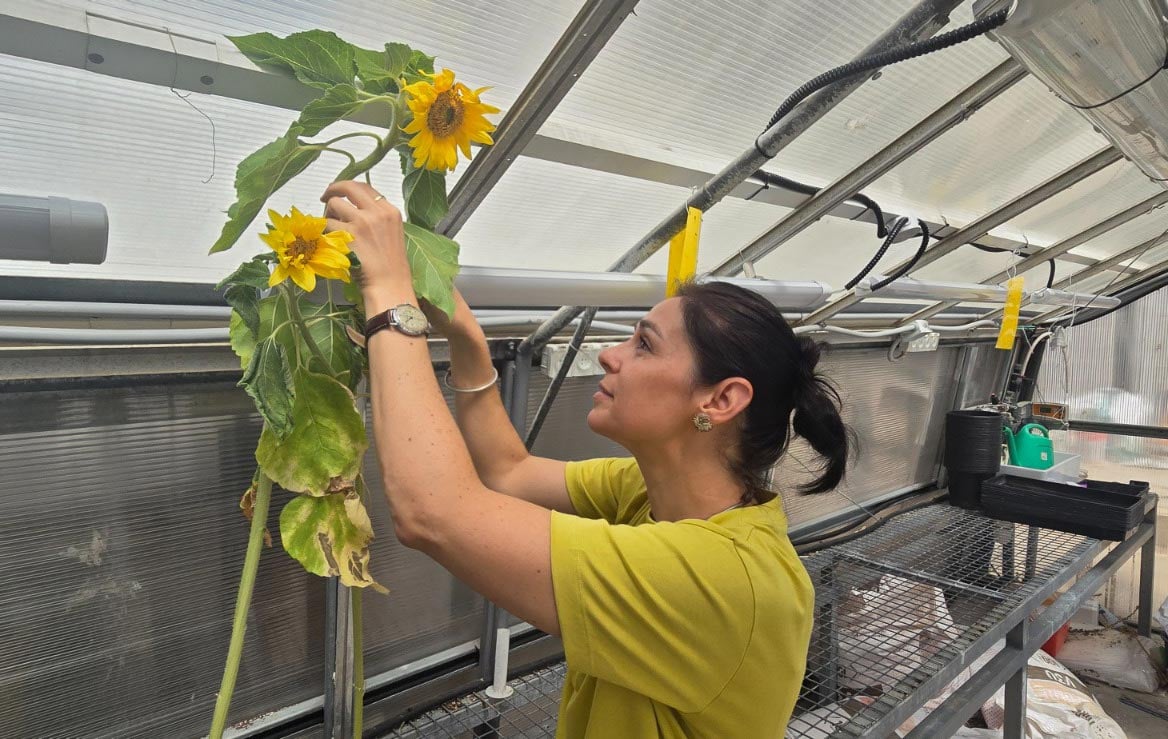
In the current study, recently published in Physical Review X, the researchers investigated how sunflowers “know” to grow in an optimal way (i.e. maximize capture of sunlight for the collective) and analyzed the growth dynamics of the sunflowers in the laboratory, where they exhibit a zig-zag pattern. Prof. Meroz and her team grew sunflowers in a high-density environment and photographed them during growth, taking pictures every few minutes. The photographs were then combined to create a time-lapse movie. By following the movement of each individual sunflower, the researchers observed that the flowers were “dancing” a lot.
Scientific Findings on Sunflower Movement
According to the researchers, Darwin was the first to recognize that all plants grow while exhibiting a kind of cyclical movement (“circumnutation”) – both stems and roots show this behavior. But until today, – except for a few cases such as climbing plants, which grow in huge circular movements to look for something to grab onto – it was not clear whether it was an artifact or a critical feature of growth. Why would a plant invest energy to grow in random directions?
Implications of Circumnutation in Sunflowers
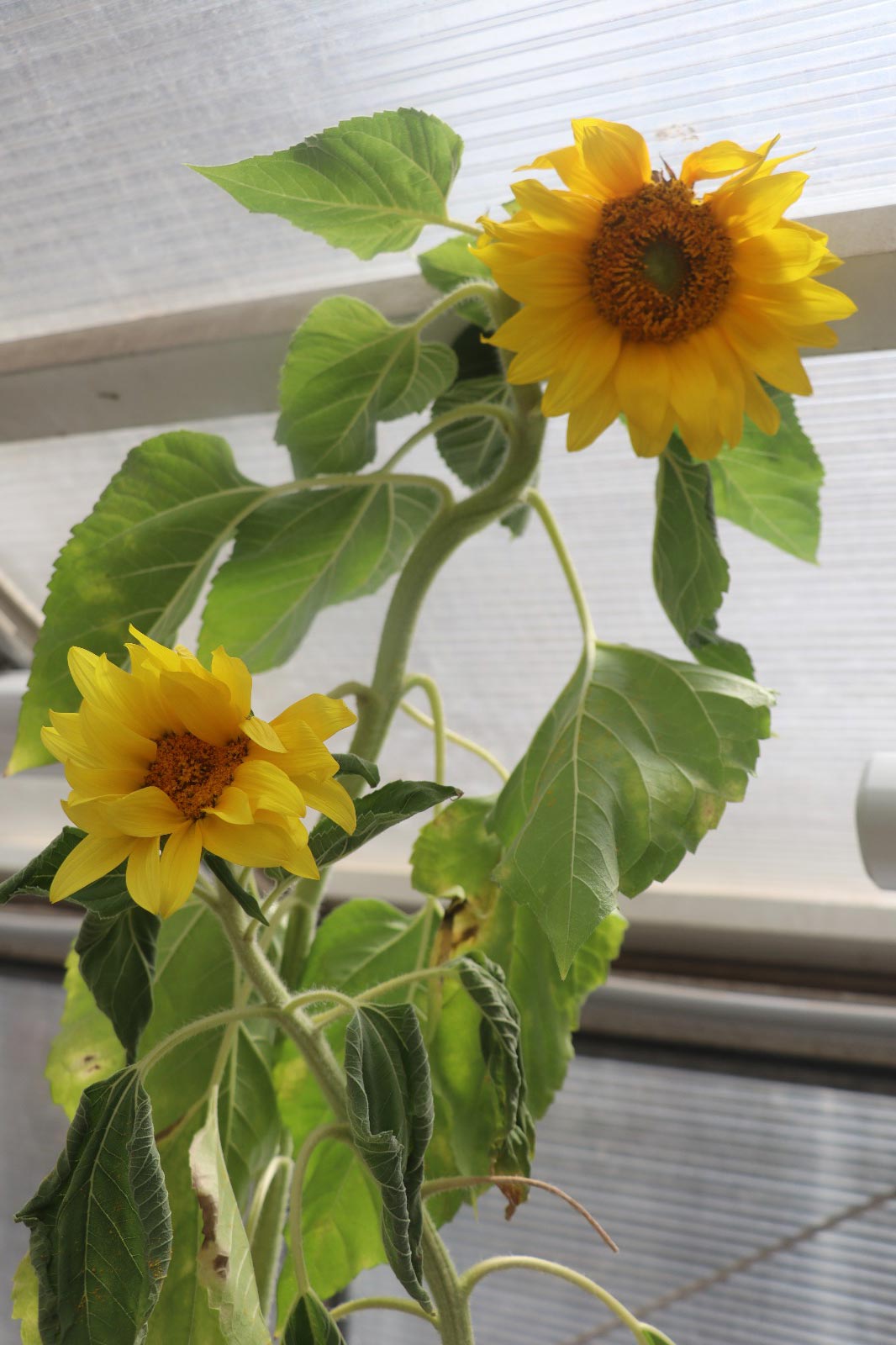
Prof. Meroz explained: “As part of our research, we conducted a physical analysis that captured the behavior of each sunflower within the sunflower collective, and we saw that the sunflowers ‘dance’ to find the best angle so each flower would not block the sunlight of their neighbor. We quantified this movement statistically and showed through computer simulations that these random movements are used collectively to minimize the amount of shadow. It was also very surprising to find that the distribution of the sunflower’s “steps” was very wide, ranging over three orders of magnitude, from close to zero displacement to a movement of two centimeters every few minutes in one direction or another.”
Conclusion and Observations on Plant Dynamics
In conclusion, Prof. Meroz adds: “The sunflower plant takes advantage of the fact that it can use both small and slow steps as well as large and fast ones to find the optimum arrangement for the collective. That is, if the range of steps was smaller or larger the arrangement would result in more mutual shading and less photosynthesis. This is somewhat like a crowded dance party, where individuals dance around to get more space: if they move too much they will interfere with the other dancers, but if they move too little the crowding problem will not be solved, as it will be very crowded in one corner of the square and empty on the other side. Sunflowers show a similar communication dynamic – a combination of response to the shade of neighboring plants, along with random movements regardless of external stimuli.”
Reference: “Noisy Circumnutations Facilitate Self-Organized Shade Avoidance in Sunflowers” by Chantal Nguyen, Imri Dromi, Ahron Kempinski, Gabriella E. C. Gall, Orit Peleg and Yasmine Meroz, 15 August 2024, Physical Review X.
DOI: 10.1103/PhysRevX.14.031027
Never miss a breakthrough: Join the SciTechDaily newsletter.
Follow us on Google and Google News.
2 Comments
Great observation by scientists, long observed by farmers, seen in tropical dense forests where trees jostled fo sunlight…but, where did that mechanism come from?
We can say all we want, but man never gets the message about mechanisms. These did not “evolve” .
I’ve always had the feeling that sunflowers are looking at me. Can sunflowers actually see? And help each other. That is really something. Thanks for the article!