
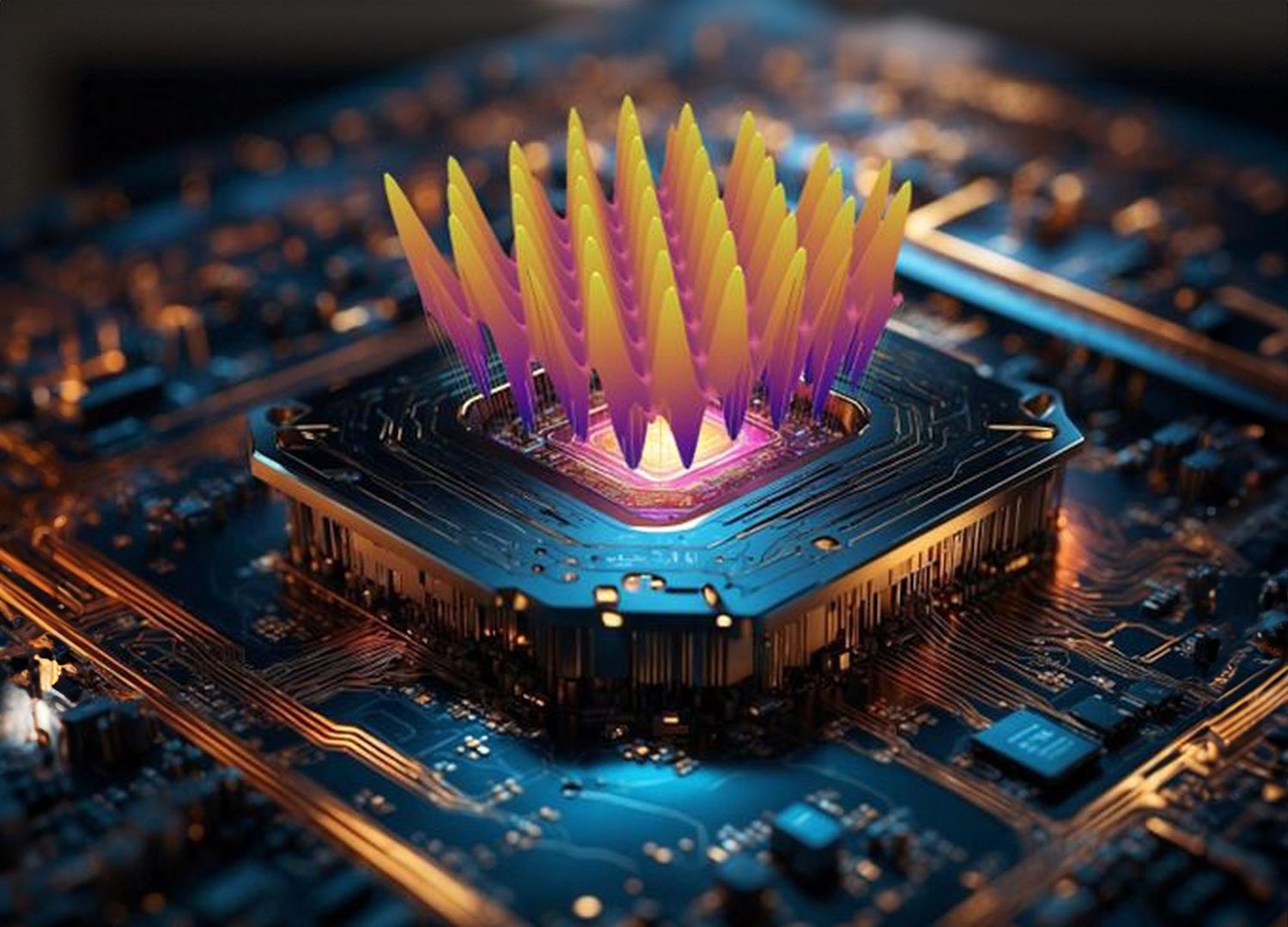
Scientists have utilized a quantum annealer to simulate quantum materials effectively, marking a crucial development in applying quantum computing in material science and enhancing quantum memory device performance.
Physicists have long been pursuing the idea of simulating quantum particles with a computer that is itself made up of quantum particles. This is exactly what scientists at Forschungszentrum Jülich have done together with colleagues from Slovenia. They used a quantum annealer to model a real-life quantum material and showed that the quantum annealer can directly mirror the microscopic interactions of electrons in the material. The result is a significant advancement in the field, showcasing the practical applicability of quantum computing in solving complex material science problems. Furthermore, the researchers discovered factors that can improve the durability and energy efficiency of quantum memory devices.
Richard Feynman’s Legacy in Quantum Computing
In the early 1980s, Richard Feynman asked whether it was possible to model nature accurately using a classical computer. His answer was: No. The world consists of fundamental particles, described by the principles of quantum physics. The exponential growth of the variables that must be included in the calculations pushes even the most powerful supercomputers to their limits. Instead, Feynman suggested using a computer that was itself made up of quantum particles. With his vision, Feynman is considered by many to be the Father of quantum computing.
Scientists at Forschungszentrum Jülich in Germany, together with colleagues from Slovenian institutions, have now shown that this vision can actually be put into practice. The application they are looking at is a so-called many-body system. Such systems describe the behavior of a large number of particles that interact with each other. In the context of quantum physics, they help to explain phenomena such as superconductivity or quantum phase transitions at absolute zero. At a temperature of 0 Kelvin, instead of thermal fluctuations, only quantum fluctuations occur when a physical parameter like the magnetic field changes.
Challenges and Techniques in Quantum Material Research
“One challenge in researching quantum materials is to quantitatively measure and model the phase transitions of many-body systems,” explains Dragan Mihailović from the Jožef Stefan Institute in Slovenia. In this study, the scientists investigated the quantum material 1T-TaS2, which is used in a wide range of applications, including superconducting electronics and energy-efficient storage devices.
Jaka Vodeb from the Jülich Supercomputing Centre describes the approach: “We have placed the system in a non-equilibrium state and observed how the electrons in the solid-state lattice rearrange themselves after a non-equilibrium phase transition, both experimentally and through simulations.”
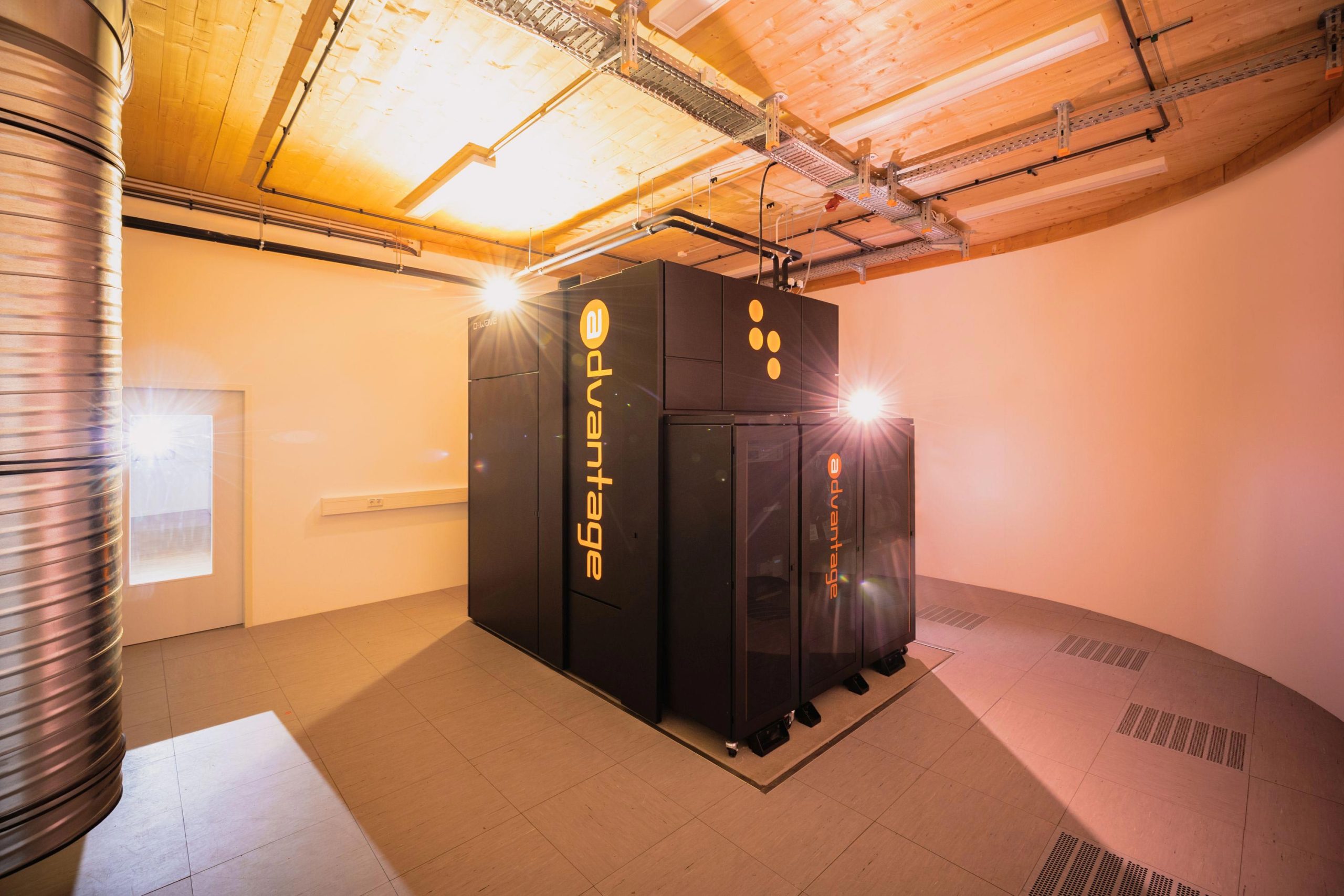
All calculations were conducted using the quantum annealer from the company D-Wave, which is integrated into the Jülich Unified Infrastructure for Quantum Computing, JUNIQ.
Advancing Quantum Technology and Efficiency
The researchers could successfully model the crossover from temperature-driven to noisy quantum fluctuation dominated dynamics. Furthermore, the scientists demonstrated that the quantum annealer’s qubit interconnections can directly mirror the microscopic interactions between electrons in a quantum material. Only one single parameter in the quantum annealer must be modified. The outcome aligns closely with the experimental findings.
However, the research also has practical applications. For instance, a deeper understanding of 1T-TaS2-based memory devices can lead to a practical quantum memory device, implemented directly on a quantum processing unit (QPU). Such devices can contribute to the development of energy-efficient electronic devices, thereby significantly reducing the energy consumption of computing systems.
Impact and Applications of Quantum Annealers
The research highlights the potential of quantum annealers in solving practical problems, paving the way for their broader application in various fields such as cryptography, material science, and complex system simulations. Moreover, the findings have direct implications for the development of energy-efficient quantum memory devices.
Reference: “Non-equilibrium quantum domain reconfiguration dynamics in a two-dimensional electronic crystal and a quantum annealer” by Jaka Vodeb, Michele Diego, Yevhenii Vaskivskyi, Leonard Logaric, Yaroslav Gerasimenko, Viktor Kabanov, Benjamin Lipovsek, Marko Topic and Dragan Mihailovic, 6 June 2024, Nature Communications.
DOI: 10.1038/s41467-024-49179-z
Never miss a breakthrough: Join the SciTechDaily newsletter.
Follow us on Google and Google News.
1 Comment
Physicists have long been pursuing the idea of simulating quantum particles with a computer that is itself made up of quantum particles.
Very nice!
Please ask researchers to think deeply:
1. Do you understand the natural essence of quantum?
2. Is what you observe in the experiment necessarily the physical reality of quantum physics?
3. Is quantum a mathematical concept or a physical reality?
4. Where is the exact moment when mathematical probability is handed over to physical reality?
If researchers are really interested in science and physics, you can browse https://zhuanlan.zhihu.com/p/693933588 and https://zhuanlan.zhihu.com/p/595280873.
A minimal error or deviation may result in wide divergence. Scientific research guided by correct theories can help humanity avoid detours and failures.